Amir Mahmud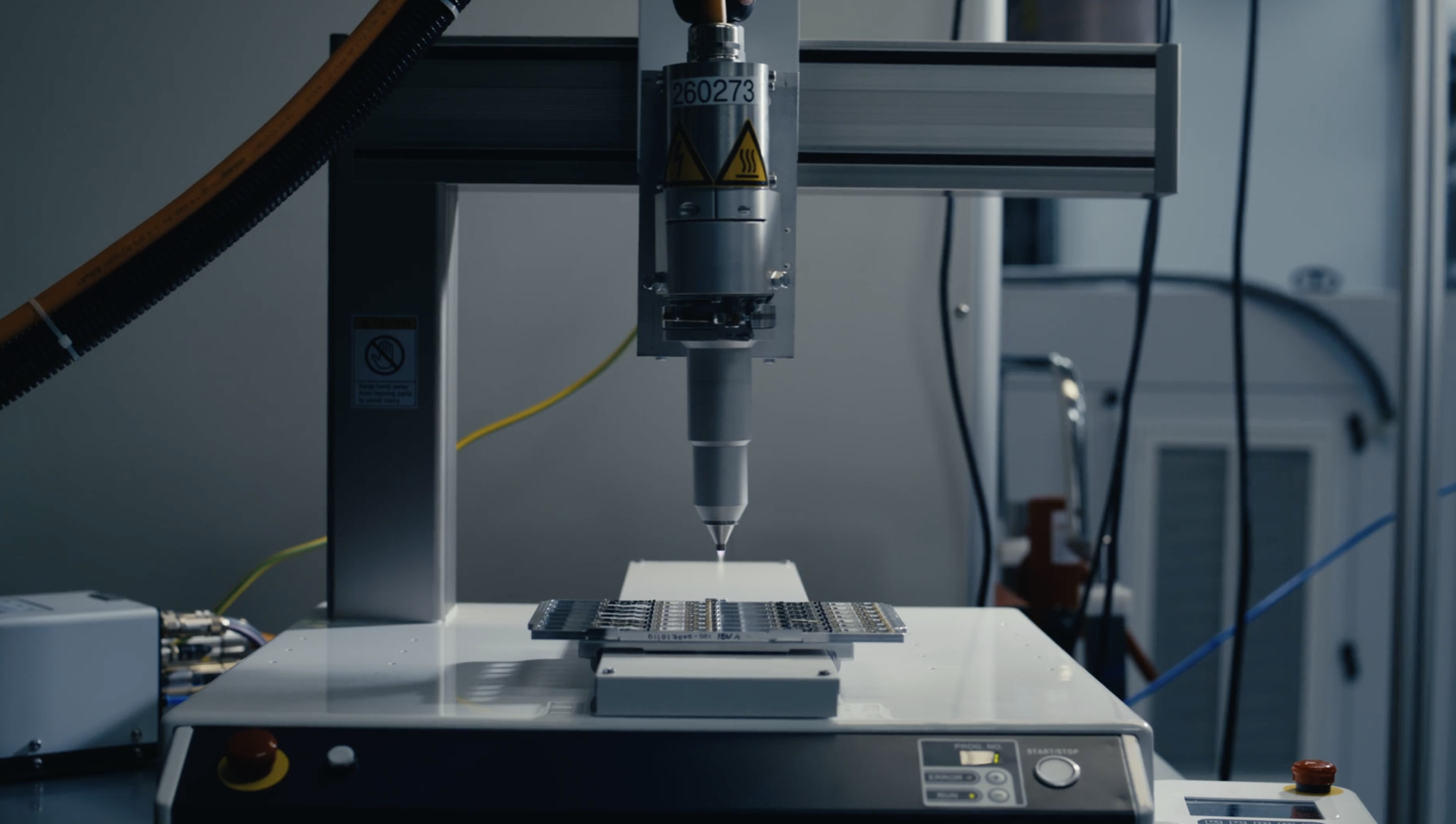
A new startup, Mesh Optical Technologies, founded by a trio of engineers with deep roots in SpaceX’s advanced satellite communication projects, has successfully secured $50 million in Series A funding. This significant capital infusion, spearheaded by Thrive Capital, positions the Los Angeles-based company to disrupt the rapidly expanding market for optical transceivers, critical components in the data centers powering the artificial intelligence revolution. The venture aims not only to innovate technologically but also to strategically re-shore a vital segment of the technology supply chain, addressing growing concerns about national security and economic resilience.
The Foundation: From Starlink’s Orbit to Earthbound Data Centers
Mesh Optical Technologies emerges from the collective expertise of Travis Brashears, Cameron Robinson, and Serena Grown-Haeberli. Their journey began at SpaceX, where they were instrumental in designing and implementing the optical communication links that ensure constant, high-speed connectivity among the thousands of satellites comprising the Starlink internet constellation. This experience in developing robust, high-bandwidth optical solutions for the demanding environment of space provided them with a unique perspective on the limitations and opportunities within terrestrial communication infrastructure.
Optical transceivers are sophisticated devices that bridge the gap between optical signals, typically carried over fiber optic cables or via lasers, and electrical signals that computers can process. Essentially, they convert light pulses into electrical data and vice-versa, acting as the fundamental interface for high-speed data transfer within and between data centers. The proliferation of artificial intelligence, with its insatiable demand for computational power and rapid data exchange, has elevated the importance of these components from a specialized niche to a foundational pillar of modern digital infrastructure.
The co-founders’ realization of a market gap crystallized while they were tasked with designing a new generation of compute-intensive satellites at SpaceX. This process necessitated a thorough assessment of the existing optical transceiver market, revealing a landscape rife with inefficiencies and performance bottlenecks that were ill-suited for the escalating demands of advanced computing. This firsthand encounter with the technological frontier, coupled with the existing market’s shortcomings, became the genesis of Mesh Optical Technologies.
The AI Imperative: Fueling the Deep Learning Engine
The burgeoning field of artificial intelligence, particularly deep learning, relies heavily on massive parallel processing capabilities. This is typically achieved through clusters of Graphics Processing Units (GPUs) working in concert, often numbering in the thousands or even tens of thousands. For these GPU clusters to function efficiently, they require an extremely high-bandwidth, low-latency interconnect system that allows them to share data seamlessly and rapidly. This is precisely where high-performance optical transceivers become indispensable.
The current generation of AI models, from large language models (LLMs) like OpenAI’s GPT series to sophisticated image recognition and scientific simulation algorithms, necessitate an unprecedented level of data movement. Training a single, cutting-edge AI model can involve petabytes of data and billions, if not trillions, of computations. Any bottleneck in the data path between GPUs can severely hamper training times and overall model performance. Optical transceivers, with their ability to transmit data at gigabits or even terabits per second over fiber optics, mitigate these bottlenecks, enabling the synchronous operation of vast computational arrays.
As Travis Brashears, Mesh Optical Technologies’ CEO, highlighted, the sheer scale of modern AI infrastructure dictates the demand for these components. "Someone will brag about a million GPU cluster; you have to multiply by four to five for the number of transceivers in that cluster," he explained. This means that a data center boasting a million GPUs would require anywhere from four to five million optical transceivers to facilitate their interconnected operation, underscoring the enormous market potential and the critical role these devices play in the AI ecosystem. The scale of this demand is evident in recent industry developments, such as the contract worth $4 billion awarded to a U.S. supplier, AOI, last year, to provide components for AWS data centers.
A Strategic Push for Domestic Manufacturing
One of Mesh Optical Technologies’ most compelling strategic advantages, and a key factor in attracting significant investment, is its commitment to building a supply chain outside of China. The global optical transceiver market is currently dominated by Asian firms, particularly those based in China. While direct trade restrictions have not yet profoundly impacted this specific market segment, the founders and their investors perceive this reliance as a potential national security vulnerability.
This perspective is rooted in a broader geopolitical landscape where technological leadership and supply chain resilience have become paramount. Governments worldwide, especially in the U.S. and Europe, are increasingly concerned about dependencies on foreign suppliers for critical technologies, particularly those with dual-use (commercial and military) applications. Artificial intelligence, recognized as a transformative technology with profound implications for economic competitiveness, national defense, and societal development, falls squarely into this category. The idea of core infrastructure components for AI development being sourced predominantly from geopolitical rivals raises legitimate strategic concerns.
Philip Clark, a partner at Thrive Capital, articulated this sentiment clearly: "If AI is the most important technology in several generations (which we believe to be true), to have critical parts of AI data center capex run through misaligned/competitive countries is a problem." He emphasized Mesh’s immediate utility in addressing the pressing need for superior interconnect solutions to enable continued AI scaling. This investment, therefore, is not merely a bet on a technology startup but also a strategic move to foster domestic capability in a critical technological domain.
However, executing this vision presents a formidable challenge. A significant portion of the global expertise in advanced, automated manufacturing techniques, often referred to as "lights-out" manufacturing due to its minimal human intervention, is concentrated in China. This concentration is so profound that even European equipment suppliers often design their systems with Chinese customers in mind; one German firm, for example, reportedly includes a field for a Chinese company registration number on its standard intake forms. Mesh aims to overcome this by pioneering and implementing these sophisticated manufacturing processes within the United States, thereby co-locating design and production to achieve greater efficiency, lower costs, and enhanced supply chain control. The company’s ambitious goal is to reach a manufacturing capacity of a thousand units per day within a year, enabling them to begin qualifying for bulk orders by 2027 and 2028.
Innovation Driving Efficiency and Performance
Beyond the strategic implications of domestic manufacturing, Mesh Optical Technologies is also focused on fundamental technological innovation designed to enhance performance and efficiency. One key advancement involves the removal of a commonly used but power-hungry component from their optical transceiver design. This seemingly minor tweak has significant ramifications for large-scale data center operations.
According to Cameron Robinson, President of Mesh, this design optimization could lead to a 3% to 5% reduction in overall power usage for GPU clusters. In the context of hyperscale data centers, which consume vast amounts of electricity and operate on extremely thin margins, such efficiency gains are profoundly meaningful. Data centers worldwide are under increasing pressure to reduce their energy footprint, not only for cost savings but also to meet sustainability goals and alleviate strain on electrical grids. A 3-5% power reduction across millions of transceivers in a large AI cluster translates into substantial operational savings and a reduced environmental impact. This focus on efficiency aligns with a broader industry trend where every watt saved contributes to a more sustainable and economically viable computing infrastructure.
The Future of Interconnectivity: Beyond Data Centers
While the immediate focus for Mesh Optical Technologies is on addressing the urgent demands of AI data centers, the company harbors broader, more ambitious aspirations. The founders view optical wavelength communications not merely as an incremental improvement but as the harbinger of the next fundamental paradigm shift in how information is transmitted and processed globally.
Travis Brashears articulated this expansive vision: "The world has primarily focused on [radio frequencies] for a long time. We want to be at the precipice of transition from RF to photonics…we want to interconnect everything, and not just computers, but that’s where we’re starting." This statement encapsulates a long-term strategy that sees optical communication transcending its current applications in fiber optic networks and becoming the backbone for a much wider array of interconnected systems.
The transition from radio frequencies (RF) to photonics offers several inherent advantages. Photonic systems can carry significantly more data (higher bandwidth) than RF systems, operate at much higher speeds, and are generally more energy-efficient for high-volume data transmission. They are also less susceptible to electromagnetic interference and offer enhanced security characteristics. This technological evolution could underpin future advancements in fields such as 6G wireless communication, the Internet of Things (IoT), autonomous vehicles requiring ultra-low latency and high-bandwidth sensor data processing, advanced remote sensing, and even nascent quantum computing networks. By establishing a strong foothold in the critical AI data center market, Mesh aims to position itself as a foundational player in this anticipated, widespread adoption of photonics, setting the stage for a future where light-based communication underpins the vast majority of our digital interactions.