Amir Mahmud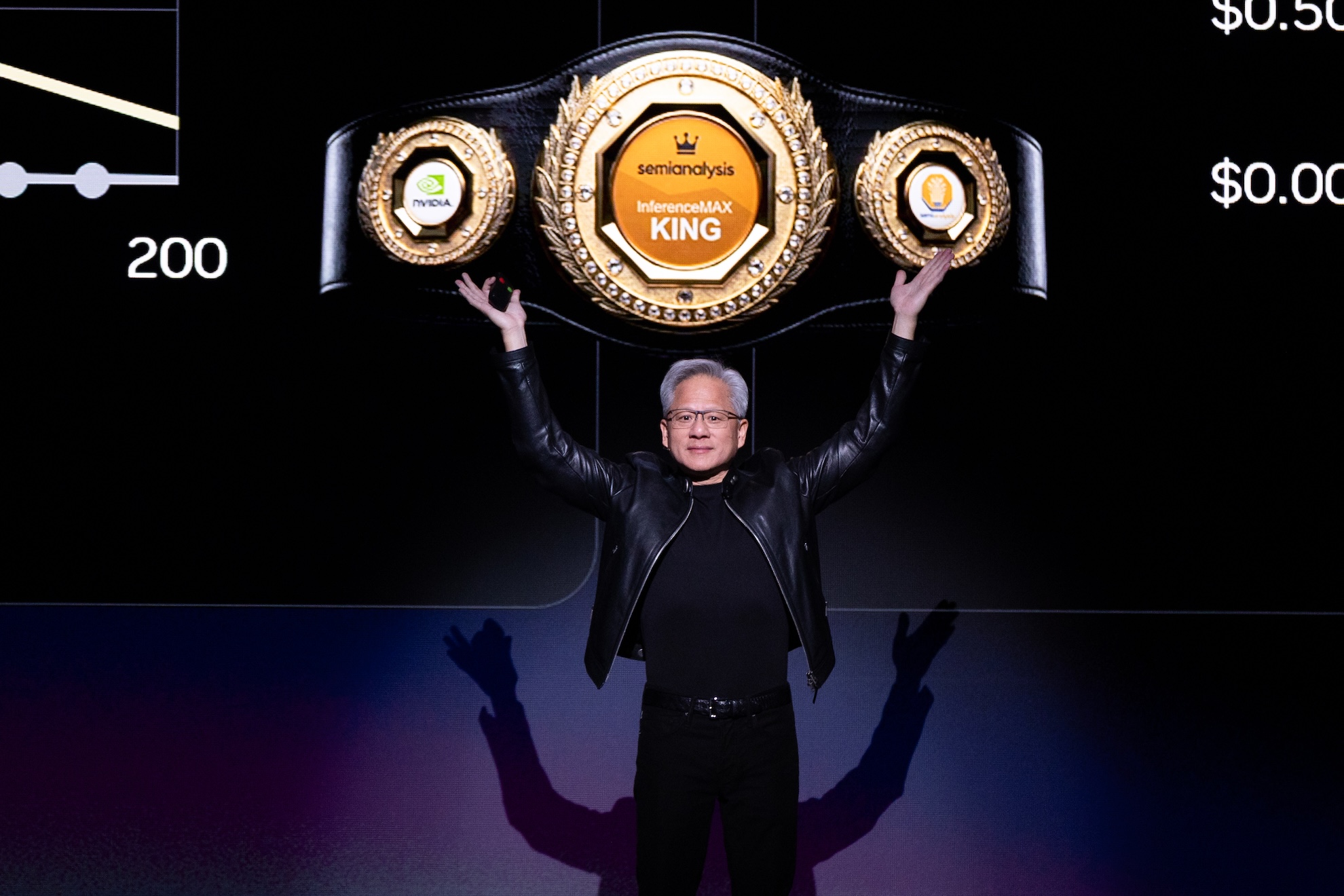
When Nvidia CEO Jensen Huang presented his annual GTC keynote on Monday, a highly anticipated event in the technology calendar, the market’s reaction was notably subdued. Despite the visionary leader’s characteristically bullish 2.5-hour address, the company, valued at approximately $4 trillion at the time, saw its stock begin to dip, reflecting a stark divergence between the vibrant optimism of Silicon Valley and the cautious skepticism of financial markets. Investors on Wall Street, it appeared, weighed the dizzying future of artificial intelligence against prevailing uncertainties and the specter of an economic bubble, prioritizing prudence over immediate enthusiasm.
Nvidia’s GTC Unveiling: A Glimpse into the Future
Nvidia’s GPU Technology Conference (GTC) has, over the years, evolved into a pivotal platform for announcing groundbreaking advancements in AI, graphics, and accelerated computing. Historically, the company, founded in 1993, began its journey revolutionizing 3D graphics for gaming, a domain it continues to lead. However, its strategic pivot and relentless investment in parallel processing capabilities, initially for graphics, found an unforeseen and explosive application in the nascent field of AI, specifically deep learning. This foresight transformed Nvidia from a gaming hardware giant into the undisputed leader in AI infrastructure, a shift epitomized by its GTC announcements.
During his keynote, often delivered in his signature leather jacket, Huang outlined a sweeping vision for an AI-powered future, backed by a torrent of new technologies and ambitious market projections. He detailed the company’s latest innovations, including advancements in video game graphics technology aimed at boosting photo-realism with generative AI, significantly updated networking infrastructure crucial for high-speed data transfer in AI data centers, and new partnerships in the autonomous vehicle sector. A key highlight was the introduction of a new chip designed in collaboration with Groq, specifically engineered to accelerate AI inference within the Vera Rubin system, signaling Nvidia’s continuous drive to optimize every facet of the AI computation pipeline.
Beyond the technological unveilings, Huang presented staggering figures on the potential scale of the AI economy. He confidently projected the AI agent ecosystem to become a colossal $35 trillion market and the physical AI and robotics industry to reach an even more astounding $50 trillion. Furthermore, he set an audacious target, expecting $1 trillion worth of purchase orders for the company’s cutting-edge Blackwell and Vera Rubin chips—just two offerings within Nvidia’s extensive product portfolio—by the end of 2027. Such pronouncements typically ignite investor excitement, promising unprecedented growth. Yet, the market’s reaction suggested a more complex narrative at play.
Wall Street’s Measured Response: Decoding the Skepticism
The immediate decline in Nvidia’s stock following such a monumental presentation underscored a palpable tension within the financial community. Despite the technological prowess and the vast market potential articulated by Huang, investors appeared to prioritize caution. This hesitation stems from several interwoven factors, primarily the inherent uncertainty surrounding the long-term trajectory and profitability of the burgeoning AI sector, coupled with persistent fears of an overinflated valuation bubble.
Nvidia’s market capitalization, already among the world’s largest, has seen an explosive trajectory driven by the AI boom. This rapid ascent naturally invites scrutiny regarding whether its future growth is already "priced in," leaving little room for upside even with groundbreaking announcements. Analysts draw parallels, albeit cautiously, to historical periods of speculative exuberance, such as the dot-com bubble of the late 1990s, where promising technologies outpaced concrete business models and sustainable earnings. While AI’s foundational impact is undeniable, the speed of its development and deployment, combined with the often-unclear return on investment (ROI) for enterprise applications, creates an environment ripe for investor apprehension.
Daniel Neuman, CEO of Futurum, a prominent industry analysis firm, offered critical insights into this market dynamic. He explained that the very attributes that make AI so transformative—its profound capabilities and blistering pace of innovation—also generate a profound sense of uncertainty. "AI is so good, so transformational, and moving so fast that we don’t actually understand what it’s going to mean for all the things that are the societal constructs that we’ve come to understand," Neuman commented. He further elaborated that financial markets inherently dislike uncertainty, and the unprecedented speed of AI innovation has paradoxically created a novel form of ambiguity that many market participants did not anticipate. This analytical commentary highlights that investor skepticism isn’t necessarily a repudiation of AI’s power but rather a struggle to quantify and integrate its rapid evolution into traditional valuation models.
The Underlying Strength: Beyond Immediate Fluctuations
Despite the immediate market jitters, a deeper look at Nvidia’s operational performance and strategic position reveals a company that continues to expand its foundational role in the global economy. The skepticism expressed by some Wall Street factions contrasts sharply with Nvidia’s undeniable financial momentum. The company has consistently not only met but often exceeded its ambitious financial targets, reporting robust revenue growth figures. In the most recent quarter, for instance, Nvidia’s revenue surged by an impressive 73% year-over-year, a clear indicator of sustained, high demand for its products and services.
This strong financial performance also challenges certain prevailing narratives about the pace of AI adoption within the enterprise sector. Neuman noted that headlines suggesting low enterprise AI adoption might not be painting a complete picture. Based on his firm’s ongoing conversations with industry leaders, he believes that "enterprise AI adoption is going to hit inflection and scale very quickly." He clarified that while immediate, measurable ROI might still be "undefined" for many companies, and aggregated survey data often lags by several months, the underlying investment in AI infrastructure is unequivocally occurring. Companies are actively purchasing Nvidia’s cutting-edge technology, laying the groundwork for future AI-driven transformations, even if the full economic benefits are yet to materialize or be fully articulated in traditional financial reports.
Concrete evidence of this underlying demand emerged with the announcement that Amazon, a cloud computing titan, plans to acquire 1 million GPUs, alongside other critical AI infrastructure, from Nvidia by the end of 2027 for its Amazon Web Services (AWS) division. This colossal deal underscores the non-negotiable requirement for powerful processing units to fuel the expanding universe of AI applications, from large language models to complex data analytics.
Kevin Cook, a senior equity strategist at Zacks Investment Research, echoed Neuman’s sentiment, emphasizing Nvidia’s indispensable role. He quipped that regardless of short-term investor sentiment, Nvidia effectively underpins the entire stock market, providing the essential technological rails upon which countless businesses operate. Cook vividly described the global economy as "sort of orbiting around Nvidia," highlighting the company’s fundamental contribution to building necessary infrastructure across diverse industries. From traditional hardware and software firms to emerging sectors like physical AI and robotics – even industrial giants like Caterpillar are integrating AI into their operations, all leveraging Nvidia’s platforms. This pervasive integration solidifies Nvidia’s position as a critical enabler of the ongoing technological revolution.
Navigating the AI Landscape: Opportunities and Challenges
The dichotomy between Silicon Valley’s unbridled optimism and Wall Street’s cautious pragmatism highlights the complex and rapidly evolving nature of the artificial intelligence landscape. While the transformative potential of AI is broadly acknowledged, the challenges of predicting its precise trajectory, market penetration, and economic impact remain substantial. The innovation cycle in AI appears to be moving at an unprecedented pace, often outstripping the ability of traditional investment frameworks to fully comprehend and value its long-term implications.
The societal and cultural implications of AI are also vast, extending far beyond financial markets. It is poised to reshape industries, redefine job roles, and fundamentally alter daily life, generating both immense excitement for its potential to solve complex problems and apprehension regarding ethical concerns, job displacement, and data privacy. Nvidia, through its platform strategy, positions itself not merely as a component supplier but as a foundational architect for this new era. As Jensen Huang stated in his keynote, "Nvidia, as you know, is a platform company. We have technology. We have our platforms. We have a rich ecosystem, and today there are probably 100% of the $100 trillion dollars of industry here." This vision underscores the company’s ambition to be the universal enabler of AI across virtually every economic sector.
Ultimately, while the immediate market reaction to Nvidia’s GTC conference may have reflected investor anxiety about future uncertainty or potential overvaluation, it does not diminish the company’s strategic importance or its operational momentum. The fundamental demand for AI infrastructure remains robust, driven by a global push towards intelligence augmentation across all sectors. The question of an "AI bubble" will undoubtedly persist, but Nvidia’s role as the central nervous system for this epochal technological shift appears increasingly entrenched, propelling the global economy forward even as markets grapple with the sheer scale and speed of this transformation.