Amir Mahmud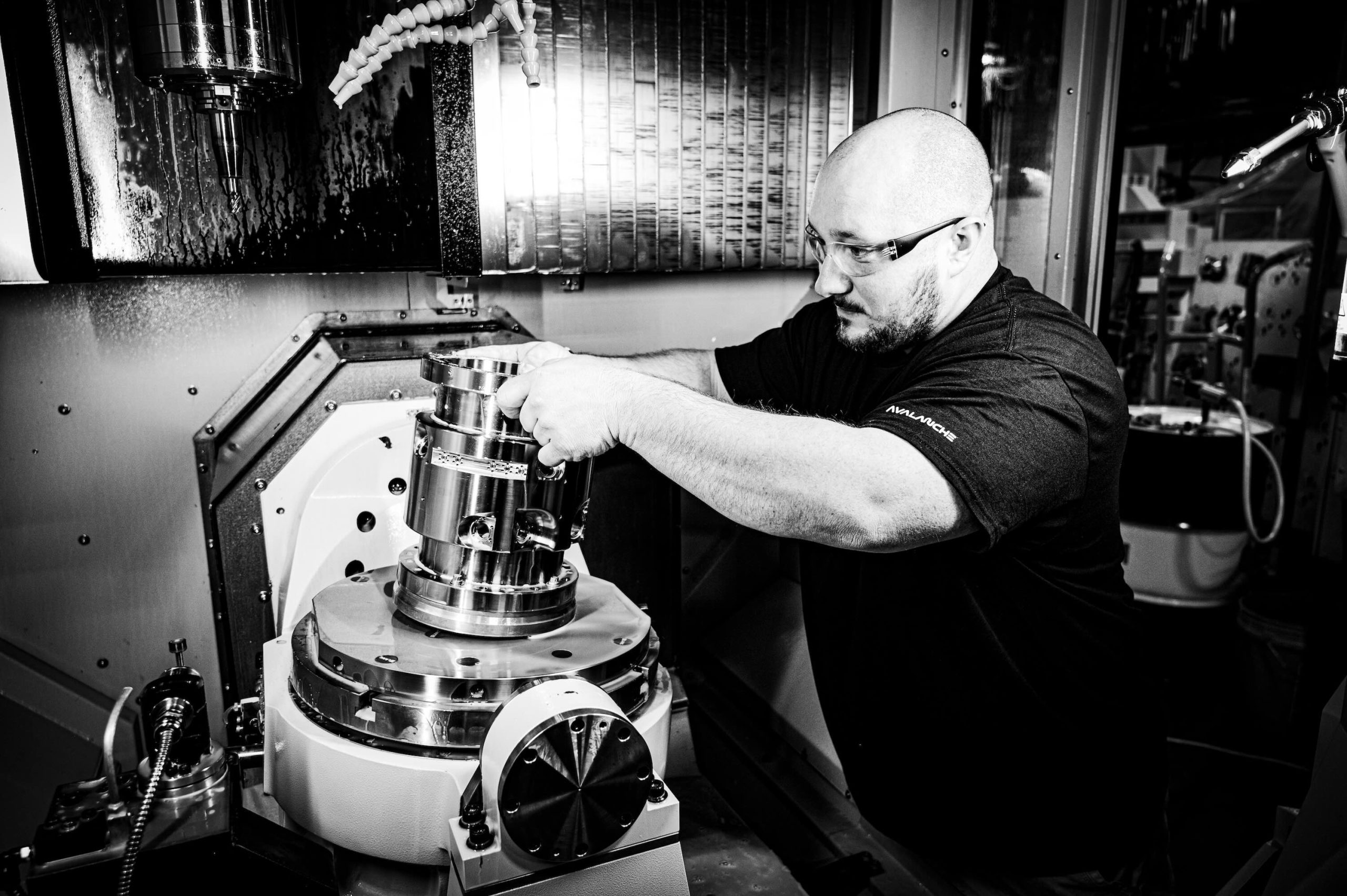
For decades, the promise of nuclear fusion, the process powering stars, has captivated scientists and engineers, offering the tantalizing prospect of limitless, clean energy. While the popular imagination often conjures images of gargantuan reactors or vast arrays of powerful lasers, a burgeoning approach championed by companies like Avalanche Fusion suggests a radically different path: thinking smaller. At the heart of Avalanche’s strategy, co-founder and CEO Robin Langtry and his team are pursuing a miniaturized version of fusion, believing that a compact design holds the key to accelerating development and overcoming the industry’s notoriously challenging hurdles.
The Grand Challenge of Fusion Power
Harnessing fusion energy involves recreating the extreme conditions found within the core of the Sun, where atomic nuclei fuse together, releasing immense amounts of energy. On Earth, this typically means heating a plasma – an ionized gas – to temperatures exceeding 100 million degrees Celsius and containing it long enough and at sufficient density for fusion reactions to occur. The primary fuels, isotopes of hydrogen like deuterium and tritium, are abundant, and the fusion process itself produces no long-lived radioactive waste, making it an incredibly attractive alternative to fossil fuels and traditional nuclear fission.
However, the journey to practical fusion power has been protracted and arduous. Early conceptual work on fusion began in the mid-20th century, spurred by the atomic age, but the scientific and engineering challenges proved far greater than initially anticipated. Major international projects like the International Thermonuclear Experimental Reactor (ITER) in France, a collaboration involving 35 nations, represent decades of effort and billions of dollars invested in tokamak designs – large, doughnut-shaped magnetic confinement devices. These massive endeavors underscore the sheer scale and complexity inherent in mainstream fusion research, often requiring unprecedented levels of precision engineering and materials science at colossal scales. The immense power requirements to initiate and sustain these reactions, coupled with the difficulty of containing ultra-hot plasma, have made fusion a famously unforgiving field, pushing the boundaries of human ingenuity.
Diverse Methodologies in the Fusion Landscape
The global pursuit of fusion energy has fostered a vibrant ecosystem of diverse technological approaches, each grappling with the core challenge of plasma confinement and heating. Beyond the tokamak, which uses powerful magnetic fields to trap plasma, other prominent methods include inertial confinement fusion (ICF), epitomized by facilities like the National Ignition Facility (NIF) in the U.S. Here, high-energy lasers bombard small fuel pellets, compressing and heating them to ignition. Another notable contender, Commonwealth Fusion Systems (CFS), also utilizes a tokamak design but incorporates advanced high-temperature superconducting magnets, aiming for a more compact and powerful device than traditional tokamaks. Companies like Helion, backed by Sam Altman, explore magnetic field reversal configurations, attempting to merge and compress plasma rings.
Against this backdrop of large-scale, often multi-billion-dollar initiatives, Avalanche Fusion distinguishes itself with an approach that is both unique and strategically contrarian. Rather than building ever-larger machines to achieve the necessary conditions, Avalanche employs electric current at extremely high voltages to draw plasma particles into a tightly controlled orbit around a central electrode. While their system also incorporates some magnets for stability, these are significantly less powerful than those required for tokamak-based systems. As the plasma particles accelerate and their orbits constrict, they collide with sufficient force to induce fusion reactions. This innovative methodology allows for a much smaller physical footprint, challenging the conventional wisdom that bigger is inherently better in fusion research.
The Iteration Advantage: A "New Space" Philosophy
The genesis of Avalanche’s compact approach is deeply rooted in experiences gleaned from the "new space" industry, a sector renowned for its rapid innovation cycles and lean development strategies. Robin Langtry’s tenure at Blue Origin, the aerospace company founded by Jeff Bezos, alongside co-founder Brian Riordan, profoundly influenced Avalanche’s operational philosophy. The success stories of companies like SpaceX and Blue Origin have demonstrated that agile development, characterized by quick prototyping, testing, and iteration, can dramatically accelerate progress in highly complex engineering fields.
This "new space" mindset translates directly into Avalanche’s fusion research. The ability to conduct experiments and implement design changes with remarkable frequency is a cornerstone of their strategy. Langtry notes that the company has been testing modifications to its compact devices "sometimes twice a week," a pace that would be prohibitively expensive, time-consuming, and logistically challenging with larger-scale reactors. This rapid-fire experimentation allows Avalanche to gather data, identify optimal configurations, and refine their technology at an unprecedented rate, potentially shortening the development timeline significantly compared to more traditional, capital-intensive approaches. The current Avalanche reactor, remarkably, measures only nine centimeters in diameter. However, plans are underway for a new version, projected to expand to 25 centimeters and generate approximately one megawatt of power. This scale-up is anticipated to deliver a "significant bump in confinement time," a crucial factor for achieving a power output ratio (Q) greater than one – the coveted "breakeven point" where a fusion device produces more energy than it consumes.
Investment and Industry Context
The audacious vision of compact fusion has garnered significant investor confidence. Avalanche recently secured an additional $29 million in a funding round spearheaded by R.A. Capital Management, with notable participation from firms such as 8090 Ventures, Congruent Ventures, Founders Fund, Lowercarbon Capital, Overlay Capital, and Toyota Ventures. This latest infusion brings Avalanche’s total raised capital to $80 million. While a substantial sum in its own right, this figure remains relatively modest within the broader fusion industry, where several companies have attracted investments ranging from several hundred million to billions of dollars.
The current wave of private investment in fusion, a stark contrast to the decades when government funding dominated the field, reflects a growing belief that commercial fusion power is no longer a distant dream but a tangible near-term possibility. Advances in materials science, computational modeling, and magnet technology have reignited optimism, attracting venture capital eager to capitalize on what could be the ultimate clean energy solution. For investors, Avalanche’s comparatively smaller capital requirement for its development phase might suggest a more efficient use of funds, potentially offering a faster return on investment if their iterative strategy proves successful. This influx of private capital signifies not just a belief in the technology itself, but also a strategic bet on diverse approaches to unlock this transformative energy source, driven by urgent global demands for decarbonization and energy security.
FusionWERX and the Road Ahead
To further accelerate its research and development, Avalanche has established FusionWERX, a dedicated commercial testing facility. Beyond serving Avalanche’s internal needs, FusionWERX is designed to be an open platform, available for rent to other fusion companies, fostering a collaborative environment within the competitive landscape. This strategic move could help de-risk and democratize access to critical testing infrastructure, benefiting the entire fusion sector. A significant milestone for FusionWERX is its projected licensing by 2027 to handle tritium, a radioactive isotope of hydrogen essential as fuel for many proposed fusion reactors aiming for commercial power generation. The ability to work with tritium safely and efficiently is a critical step toward validating the viability of fusion systems for grid-scale energy production.
The journey to commercial fusion power is punctuated by several key milestones, none more iconic than achieving a "Q" value greater than one (Q>1). This breakeven point signifies that the fusion reactions themselves generate more energy than is required to heat and sustain the plasma. While Langtry refrains from committing to a specific date for Avalanche to achieve this critical milestone, he expresses optimism that the company is on a timeline comparable to its more heavily funded competitors, such as CFS and Helion. He anticipates "a lot of really exciting things happening in fusion in 2027 to 2029," a period many industry experts view as pivotal for demonstrating net energy gain across various fusion approaches.
Beyond Q>1, however, lies a complex array of engineering and economic challenges. Sustained operation, efficient conversion of fusion energy into electricity, reactor material durability under extreme neutron flux, and ultimately, the cost-effectiveness of fusion power plants must all be addressed before fusion can become a commercially viable energy source. Neutral analytical commentary suggests that while achieving Q>1 is a monumental scientific and engineering triumph, it represents just one, albeit critical, step on a much longer path toward widespread energy deployment.
Broader Implications of a Fusion Future
The successful development of commercial fusion power holds profound implications for humanity. Environmentally, it offers a carbon-free energy source with virtually limitless fuel, mitigating climate change and reducing air pollution. Unlike fission reactors, fusion reactors inherently pose a lower risk of runaway chain reactions and produce significantly less long-lived radioactive waste. Economically, a fusion industry could unlock unprecedented opportunities, creating new markets, high-tech jobs, and fostering energy independence for nations worldwide. The geopolitical landscape could be fundamentally reshaped as reliance on finite fossil fuels diminishes.
Avalanche Fusion’s innovative "small is better" approach represents a compelling deviation from traditional fusion research paradigms. By prioritizing rapid iteration and a compact design, they aim to accelerate the learning curve and potentially bring fusion power to fruition faster and more cost-effectively. While the inherent challenges of fusion remain formidable, the confluence of technological advancements, increased private investment, and novel methodologies like Avalanche’s inject renewed optimism into the decades-long quest for clean, abundant energy. The coming years, as Langtry suggests, are indeed poised to be transformative for the fusion industry, potentially ushering in an era where humanity finally harnesses the power of the stars on Earth.