Amir Mahmud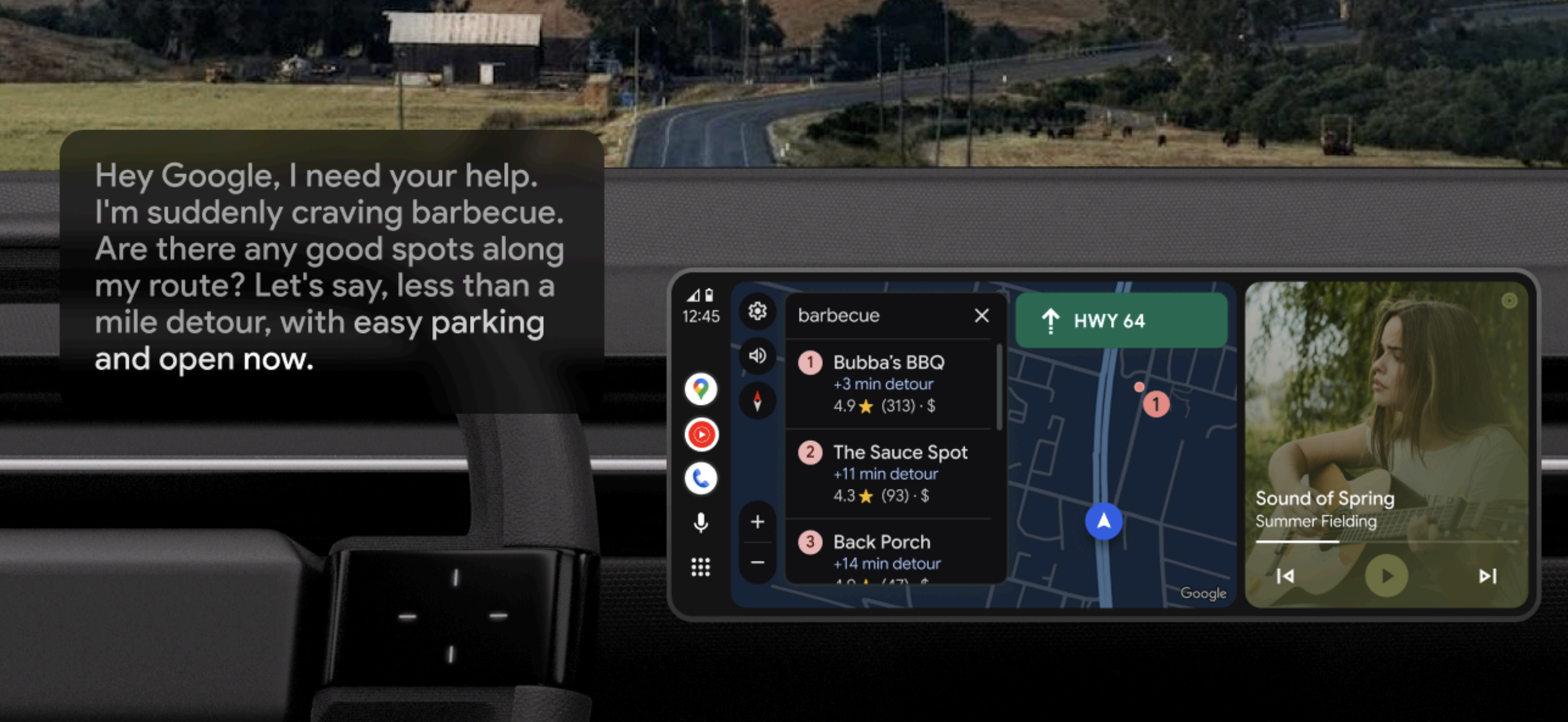
A significant shift is underway in the landscape of in-car digital assistants as Google commences the worldwide deployment of Gemini, its advanced artificial intelligence model, to Android Auto. This strategic integration marks the official transition away from Google Assistant within the popular smartphone projection technology, which is embedded in millions of vehicles, including cars, trucks, and SUVs, globally. The move, announced by Google, targets Android Auto users who have already adopted Gemini on their mobile devices, paving the way for a more sophisticated and intuitive driving experience.
The Evolution of In-Car AI: From Assistant to Gemini
The journey toward intelligent in-car systems has been a dynamic one, driven by the increasing demand for seamless connectivity and enhanced driver assistance. Android Auto, first introduced by Google in 2015, emerged as a critical solution for bringing smartphone functionalities safely into the vehicle’s dashboard display. Designed to minimize driver distraction, it projects essential features like navigation, music streaming, and messaging from an Android-based smartphone directly onto the car’s infotainment screen, enabling hands-free operation through voice commands and simplified interfaces. Its widespread adoption underscored a clear market need for integrated digital experiences within the automotive environment.
For years, Google Assistant served as the primary voice interface for Android Auto, providing a convenient way for drivers to interact with their vehicles and phones. Launched in 2016, Google Assistant quickly became ubiquitous, extending its reach from smartphones to smart speakers, smart home devices, and eventually into cars. It offered a range of capabilities, from playing music and making calls to providing directions and answering simple queries. However, as AI technology advanced, the limitations of rule-based or more constrained conversational models like Google Assistant became apparent, particularly in the context of complex, multi-turn interactions or nuanced requests. While effective for direct commands, its ability to maintain context across a longer conversation or understand highly specific, colloquial language sometimes fell short of user expectations in an increasingly AI-fluent world.
Enter Gemini, Google’s next-generation large language model, unveiled as a foundational step in the company’s "AI-first" strategy. Designed to be natively multimodal, Gemini can understand and operate across various types of information, including text, code, audio, image, and video. Its architecture allows for more natural, nuanced, and human-like interactions, marking a substantial leap from its predecessors. Google’s overarching vision involves replacing Google Assistant with Gemini across all its devices and platforms, a strategic pivot that signals a profound commitment to generative AI. The integration into Android Auto was a long-anticipated development, first teased in May, and now materializing to bring this advanced conversational capability directly into the driving experience. This transition represents not just an upgrade but a fundamental re-imagining of how drivers will interact with their vehicles and digital lives on the road.
Enhanced Capabilities for Drivers
The introduction of Gemini to Android Auto promises a significant upgrade in how drivers interact with their vehicle’s digital interface, moving beyond simple commands to more fluid, natural conversations. This enhanced capability is designed to make complex tasks manageable on the go, improving both convenience and safety.
One of Gemini’s most compelling features is its ability to facilitate advanced navigation and local search queries. Drivers can now engage in natural, back-and-forth dialogue to find specific points of interest along their route. For instance, instead of merely searching for "restaurants," a user could articulate a more complex need: "Hey Google, I’m suddenly craving barbecue. Any good spots along my route that are open now, near my destination?" Gemini can then process this multi-faceted request, filter results based on real-time data like operating hours and proximity, and even delve deeper to provide additional context, such as a restaurant’s most popular dish or its pet-friendly status. This level of granular interaction significantly enhances spontaneity and reduces the need for drivers to manually input detailed search criteria, thereby minimizing distractions.
Communication management also receives a substantial boost. Gemini allows for more intuitive handling of messages, enabling users to reply to texts, get summaries of lengthy conversations, or even translate messages into different languages before sending them. A driver stuck in traffic could simply instruct, "Let my friend know I’m stuck in traffic and add my estimated arrival time to the message." This hands-free, intelligent processing of communications is a critical safety feature, ensuring drivers can stay connected without diverting their attention from the road.
Beyond communication, Gemini extends its utility to integrated productivity tasks. For instance, drivers can now access their emails within Gmail to retrieve crucial information. A user planning for a trip might ask, "I have a hotel booked for tonight. I think the address is in my email. Can you check and navigate there?" Gemini can locate the relevant email, extract the address, and initiate navigation, or even provide a summary of unread emails, keeping drivers informed without requiring them to physically interact with their phone or email client.
Entertainment experiences are also set for personalization. Gemini can intelligently curate music playlists based on specific instructions, tapping into popular streaming services like YouTube Music and Spotify. A request like, "Can you give me a road trip playlist? Ideally something upbeat, about 3 hours long, that’s good for both me and the kids," demonstrates Gemini’s capacity to understand nuanced preferences and generate tailored content, transforming the car into a more personalized entertainment hub.
Finally, the "Go Live with Gemini" feature, activated by saying "Hey Google, let’s chat," unlocks a broader range of generative AI capabilities. This allows users to engage in open-ended conversations for brainstorming, learning, or simply passing the time. A driver en route to an unfamiliar city might request, "Alright, I’m driving to St. Louis for a wedding. Can you be my tour guide and share some fun facts about it?" Following this, they could seamlessly transition to a new topic: "Thanks for teaching me all about St. Louis. Changing topics, the rehearsal dinner is at his parents’ house, and I’d like to get them a small something. What are some good ideas?" This adaptability underscores Gemini’s potential to serve as a versatile companion, enhancing both utility and engagement during drives.
Broader Implications: Safety, Convenience, and Competition
The integration of Gemini into Android Auto carries significant implications for driver safety, user convenience, and the competitive landscape of in-car technology. From a safety perspective, the ability to engage in more natural, conversational interactions with an AI significantly reduces the cognitive load on drivers. Traditional voice assistants often required specific phrasing or rigid commands, leading to frustration and potential distraction when a command wasn’t understood. Gemini’s capacity for multi-turn dialogue and contextual understanding means drivers can keep their hands on the wheel and eyes on the road more consistently, leading to a safer driving environment. The reduced need to physically manipulate a smartphone or car display for complex tasks directly contributes to fewer instances of distracted driving, a leading cause of accidents.
In terms of user experience and convenience, Gemini elevates the car from a mere mode of transport to an intelligent, personalized extension of one’s digital life. The seamless access to information, communication tools, and entertainment, all orchestrated through intuitive voice commands, transforms mundane commutes into more productive or enjoyable journeys. This level of integration enhances the overall quality of time spent in a vehicle, catering to the modern expectation of constant connectivity and personalized service.
The move also intensifies the competition within the rapidly evolving in-car tech sector. Apple CarPlay, Android Auto’s primary rival, offers a similar smartphone projection experience, and both companies are in a race to integrate the most advanced AI capabilities into their platforms. Beyond these projection systems, many automotive manufacturers are investing heavily in developing their own native infotainment and voice assistant systems, often powered by partnerships with major tech firms or proprietary AI. Google’s deployment of Gemini positions it strongly in this contest, offering a state-of-the-art AI experience that could influence consumer choices when purchasing new vehicles or deciding between connected car platforms. The battle for AI dominance in the automotive space is ultimately a battle for user loyalty and market share in the increasingly connected car ecosystem.
However, the proliferation of powerful AI in cars also brings considerations regarding data privacy and security. As Gemini processes more complex queries and accesses personal data like emails or location history, questions naturally arise about how this data is collected, stored, and utilized. Maintaining user trust through transparent data practices and robust security measures will be paramount for Google as it rolls out these advanced features.
The Road Ahead: Future of Automotive AI
The integration of Gemini into Android Auto is not merely an incremental update; it signals a foundational shift in the trajectory of automotive artificial intelligence. Looking forward, the potential for deeper integration between advanced AI models and vehicle systems is immense. While currently focused on projecting smartphone features, the trend in the automotive industry is moving towards native, deeply embedded AI systems that interact directly with the car’s hardware and software. Gemini’s multimodal capabilities could eventually extend beyond infotainment, potentially assisting with vehicle diagnostics, predictive maintenance alerts, or even providing contextual information related to driving conditions or upcoming road hazards.
The continuous learning capabilities of generative AI suggest a future where the in-car assistant becomes even more personalized, anticipating driver needs and preferences with greater accuracy. This could lead to proactive suggestions for routes, music, or even temperature adjustments based on learned habits and real-time environmental data. The distinction between projected smartphone interfaces and the car’s native intelligence may blur, leading to a unified, highly intelligent vehicle experience. This evolution reflects the broader market trend towards increasingly intelligent, connected car experiences, where the vehicle is not just a mode of transport but a sophisticated, adaptive digital companion.
Accessing the New AI
For users eager to experience the enhanced capabilities of Gemini in their vehicles, the global rollout has commenced, initially available in 45 languages. To access this advanced AI, users must first ensure they have upgraded to the Gemini app on their Android smartphone. Once the feature is enabled for their device and region, a tooltip will typically appear on the car’s display to indicate its availability. Interaction with Gemini in Android Auto is designed to be intuitive and familiar: drivers can activate the AI by uttering the classic "Hey Google" hotword, pressing the microphone button on their car’s screen, or long-pressing the voice control button conveniently located on their steering wheel. This phased global deployment ensures a smooth transition for millions of drivers worldwide, ushering in a new era of intelligent, conversational in-car technology.