Amir Mahmud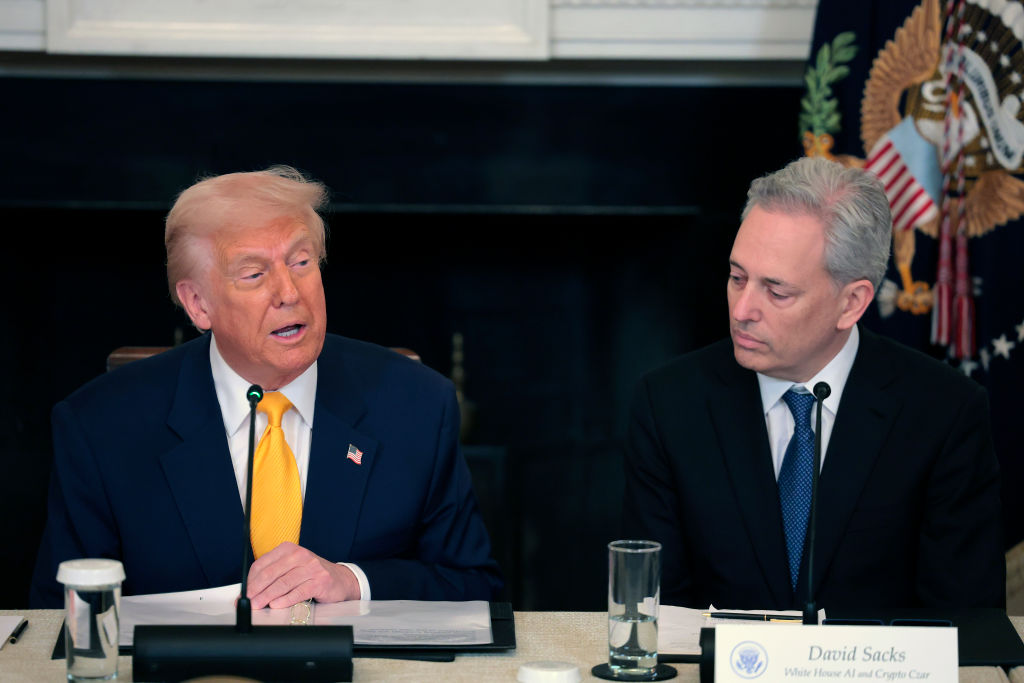
David Sacks, the prominent entrepreneur, investor, and podcast host, has concluded his tenure as a special government employee advising the administration on artificial intelligence and cryptocurrency. After a non-consecutive 130-day period in a direct advisory capacity, Sacks confirmed his shift to a new role: co-chair of the President’s Council of Advisors on Science and Technology (PCAST), where he will serve alongside senior White House technology adviser Michael Kratsios. This move signals a significant realignment in his involvement with federal policy, transitioning from a direct, influential "czar" position to a more expansive, yet inherently advisory, role within the scientific and technological landscape.
From Direct Influence to Broadened Scope
The change in Sacks’s position marks a notable pivot in his engagement with federal technology policy. As the "AI and crypto czar," a role that carried considerable weight and a direct line to the highest levels of government, Sacks was positioned to directly shape policy and offer immediate recommendations. This direct channel afforded him a unique vantage point and considerable leverage in guiding the administration’s nascent strategies concerning these rapidly evolving sectors. His previous role underscored the growing importance of emerging technologies, particularly AI and digital assets, in national policy discussions. Governments worldwide are grappling with how to regulate, foster, and secure these technologies, and the appointment of dedicated advisors like Sacks reflected an urgent need for specialized expertise at the federal level.
In his new capacity as co-chair of PCAST, Sacks anticipates an expanded remit. He communicated that this role would allow him to provide recommendations on a broader spectrum of technological issues, extending beyond just AI and crypto to encompass a wider array of scientific and technological advancements. While this offers a wider lens, it inherently positions him further from the immediate levers of power in Washington. PCAST operates as a federal advisory body, tasked with studying complex issues, producing comprehensive reports, and submitting recommendations up the bureaucratic chain. Crucially, it does not possess the authority to enact policy directly, a fundamental distinction from a direct advisory role with policy-shaping capabilities. This structural difference suggests a move towards a more deliberative, consensus-driven approach to tech guidance rather than immediate, executive-level policy influence.
The Enduring Legacy of PCAST: A Historical Perspective
The President’s Council of Advisors on Science and Technology, in various forms, boasts a rich history stretching back to the administration of President Franklin D. Roosevelt. Its origins lie in the recognition that scientific and technological advancements are critical to national security, economic prosperity, and societal well-being. Over the decades, PCAST has evolved, adapting its structure and focus to meet the specific challenges and opportunities presented by each era.
During President Eisenhower’s administration, for instance, the council played a vital role in responding to the Sputnik crisis, emphasizing the need for robust scientific education and research. Later iterations, such as during the Cold War, concentrated on defense technologies and space exploration. Each presidential administration has molded PCAST to reflect its priorities and philosophical approach to science and technology. President Obama’s version of PCAST is often cited as one of the most productive, churning out 36 detailed reports over eight years. These reports covered diverse topics from advanced manufacturing to cybersecurity, with at least two directly leading to concrete policy changes, including a landmark FDA rule that opened the market for over-the-counter hearing aids, significantly impacting accessibility and affordability for millions.
In contrast, President Trump’s first-term council faced challenges in establishing its footing, taking nearly three years to name its initial members. It ultimately produced a limited number of reports and did not leave a significant policy footprint. President Biden’s PCAST, while active, leaned heavily towards an academic composition, drawing from Nobel laureates, MacArthur fellows, and members of national academies. This academic emphasis produced a modest number of reports, often focusing on foundational research and long-term scientific strategy. The current iteration, however, is distinct, signaling a deliberate shift in composition and perhaps, in potential impact.
A New Breed of Advisors: The Star-Studded Lineup
Sacks made a point to highlight that this particular configuration of PCAST boasts an unprecedented level of "star power," a claim that is difficult to dispute given the caliber of its initial 15 members. The roster reads like a who’s who of the technology industry’s most influential figures, including Jensen Huang, CEO of Nvidia; Mark Zuckerberg, CEO of Meta Platforms; Larry Ellison, Chairman and CTO of Oracle; Google co-founder Sergey Brin; prominent venture capitalist Marc Andreessen; Lisa Su, CEO of AMD; and Michael Dell, Chairman and CEO of Dell Technologies. This assembly of industry titans is a departure from previous PCASTs, which often blended academic experts, government scientists, and a more diverse range of industry leaders.
The inclusion of such high-profile executives from companies at the forefront of technological innovation presents both unique opportunities and potential challenges. On one hand, these individuals possess unparalleled real-world experience, deep technical understanding, and a direct pulse on market trends and challenges. Their insights could prove invaluable in formulating pragmatic and forward-looking recommendations that genuinely address the complexities of modern technology development and deployment. Their collective influence extends beyond mere advice; their companies drive the very advancements PCAST seeks to guide.
On the other hand, the concentration of leaders from companies with significant market power raises questions about potential conflicts of interest. While their expertise is undeniable, their companies are also subject to the very regulations and policy frameworks that PCAST will advise on. This dynamic requires careful navigation to ensure that recommendations serve the broader public interest rather than the specific commercial agendas of the member companies. The previous scrutiny Sacks faced regarding ethics waivers to maintain financial stakes in AI and crypto companies while advising on federal policy underscores these ongoing concerns about the blurred lines between private interests and public service in the tech sector.
Priorities for the New Council: Shaping the Future of Technology
Sacks indicated that the council’s agenda would span critical areas including artificial intelligence, advanced semiconductors, quantum computing, and nuclear power. These domains represent not only the cutting edge of technological innovation but also areas of intense geopolitical competition and significant societal impact.
A near-term priority for PCAST will be to champion the administration’s national AI framework, which was recently unveiled. This framework aims to provide a unified approach to AI regulation, a critical objective given the current "patchwork" of state-level rules. As Sacks described, the existence of "50 different states regulating this in 50 different ways" creates a complex and often contradictory compliance landscape for innovators, potentially stifling development and hindering the competitiveness of U.S. tech companies on a global stage. A national framework could streamline regulations, foster a more predictable environment for investment and innovation, and establish clear guidelines for ethical AI development and deployment. However, crafting such a framework involves intricate trade-offs between fostering innovation, ensuring safety and fairness, and addressing national security concerns, requiring broad consensus and careful consideration of diverse viewpoints.
Beyond AI, the focus on advanced semiconductors highlights their foundational role in nearly all modern technologies, from consumer electronics to defense systems. The global competition for semiconductor manufacturing capabilities has intensified, making strategic guidance in this area crucial for national economic and security interests. Quantum computing, while still largely nascent, promises revolutionary advancements across fields like medicine, materials science, and cryptography, necessitating early strategic planning. Finally, the inclusion of nuclear power underscores a renewed interest in clean energy and energy independence, exploring advanced reactor designs and the role of nuclear technology in addressing climate change and energy security challenges.
The Unspoken Transition: Geopolitical Commentary and Its Ramifications
While Sacks publicly framed his transition as an opportunity for broader engagement, the timing of his departure from the "czar" role has prompted speculation regarding recent events. Earlier this month, Sacks made headlines for his comments on the popular "All In" podcast, which he co-hosts. During the podcast, he publicly urged the administration to seek an exit from the U.S.-backed conflict with Iran, outlining a series of escalating scenarios—including attacks on critical infrastructure and the potential for nuclear escalation—and advocating for a diplomatic resolution.
These comments, coming from an individual then holding a direct advisory role within the administration, were notable. President Trump subsequently informed reporters that Sacks had not discussed the war with him directly. When questioned about the issue, Sacks distanced himself from foreign policy matters, stating he was "not on the foreign policy team or the national security team" and that his podcast comments represented his personal views, not official policy. This incident highlights the delicate balance public figures must strike when serving in government, especially those with established media platforms. The perceived blurring of lines between personal commentary and official capacity can create friction and raise questions about an advisor’s alignment with administration policy. While Sacks’s transition may simply be a planned evolution of his government service, the proximity of these events inevitably invites analytical consideration regarding their potential interconnectedness.
Ethical Considerations and Future Outlook
The composition of the new PCAST and Sacks’s prior ethical waivers underscore ongoing discussions about conflicts of interest when high-ranking industry figures serve in government. The original article noted that Sacks had obtained waivers to maintain financial stakes in AI and crypto companies while actively shaping federal policy in those very areas. This arrangement had drawn sharp criticism from ethics experts and lawmakers, who argued it created a direct conflict between personal financial gain and public duty. Moving to an advisory body like PCAST, while still influential, might alleviate some of the direct policy-making conflict, but the inherent financial interests of the council members in the technologies they advise on remain a central point of discussion.
Looking ahead, the effectiveness of this new PCAST will hinge on its ability to transcend individual corporate interests and deliver cohesive, actionable recommendations that genuinely serve the national interest. The sheer "star power" could either lead to unprecedented insights and a rapid understanding of complex technological landscapes or it could create a forum where competing industry agendas vie for influence. The challenge for Sacks and Kratsios will be to harness the immense talent and experience within the council while maintaining impartiality and focusing on long-term national strategic goals.
David Sacks’s transition signifies a new chapter in his engagement with federal tech policy. While moving from a direct "czar" role to an advisory co-chair position on PCAST implies a different kind of influence, his new role, supported by an unprecedented gathering of tech industry leaders, positions him at the heart of critical discussions shaping the future of science and technology in the United States. The impact of this star-studded council on policy, innovation, and ethical governance remains to be seen, but its formation marks a compelling moment in the evolving relationship between Silicon Valley and Washington.