Amir Mahmud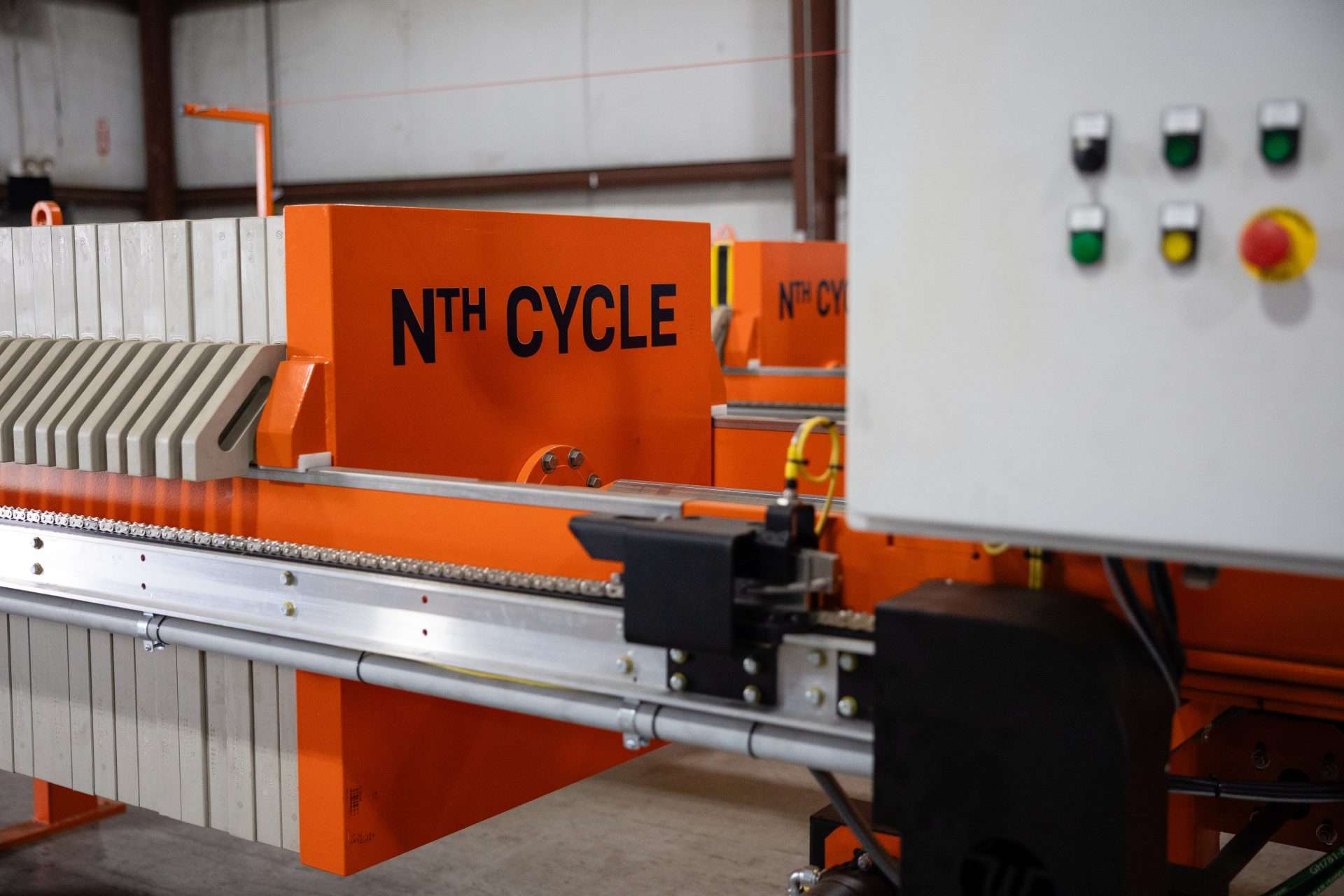
A landmark $1.1 billion agreement between advanced refining technology company Nth Cycle and commodity trading giant Trafigura signals a pivotal moment for Western nations striving to re-establish domestic control over critical mineral supply chains. The deal aims to dramatically expand North American and European capacity for refining essential materials like nickel, moving away from a heavy reliance on Asian processors, particularly those with significant Chinese influence. This strategic partnership underscores a broader, urgent global initiative to secure the raw materials indispensable for the burgeoning electric vehicle (EV) industry, renewable energy infrastructure, defense applications, and countless electronic devices.
The Geopolitical Imperative of Critical Minerals
The modern economy and national security are increasingly tethered to a handful of vital raw materials, collectively known as critical minerals. Nickel, a primary focus of this new agreement, exemplifies this dependency. It is an indispensable component in high-performance lithium-ion batteries, crucial for electric vehicles and grid-scale energy storage. Beyond the automotive sector, nickel finds extensive use in stainless steel production, specialized alloys for aerospace and defense, and a wide array of consumer electronics. The vulnerability of supply chains for such fundamental resources has become a pressing concern for governments across the U.S. and Europe.
For decades, the United States and its allies have grappled with a significant "nickel problem." The challenges have been multifaceted, primarily stemming from stringent environmental regulations, high labor costs, and complex permitting processes that have hindered the development of domestic mining and refining operations. Consequently, the refining landscape for nickel and other critical minerals shifted predominantly to Southeast Asia, particularly Indonesia, and mainland China. This geographical concentration has created a substantial strategic bottleneck. Digging deeper into the global market reveals that Chinese companies exert considerable control, managing approximately 75% of Indonesia’s nickel refining capacity. This consolidation effectively grants China command over more than half of the world’s refined nickel supply, creating a concentrated point of geopolitical leverage.
The implications of this supply chain dominance are profound. As geopolitical tensions have escalated, particularly between the U.S. and China, the imperative to diversify and localize critical mineral processing has intensified. Leaders in industry and government now recognize the inherent risks of relying on a single, potentially adversarial, source for materials vital to economic stability and national security. This recognition has catalyzed a concerted effort to invest in and innovate domestic processing capabilities.
A New Era for Domestic Refining
Nth Cycle, a startup at the forefront of this re-shoring movement, has developed an innovative electrochemical system designed to refine nickel, alongside other crucial elements such as cobalt, copper, and rare earths. Megan O’Connor, co-founder and CEO of Nth Cycle, highlights the urgency: "A lot of companies are starting to really look at how do we how do we start to refine here in the U.S.?" This sentiment reflects a significant paradigm shift among corporations re-evaluating their global metal supply chains.
Just over a year ago, Nth Cycle commenced operations at an Ohio facility capable of processing up to 3,100 metric tons of scrap material annually. The new $1.1 billion agreement with Trafigura is set to dramatically scale up this capacity. This substantial investment will enable Nth Cycle to construct two new facilities – one in South Carolina and another in the Netherlands – which combined will process 18,000 metric tons of scrap per year. This expansion represents a more than five-fold increase over the initial Ohio plant’s output, signifying a powerful commitment to building resilient domestic and allied supply chains.
The deal with Trafigura, a multinational commodity trading company, is particularly noteworthy. Trafigura’s involvement provides not only significant capital but also deep market expertise and access to a global network of raw material sources and end-users. This partnership lends considerable credibility and momentum to Nth Cycle’s mission, demonstrating how established players are adapting to the changing geopolitical and environmental landscape of critical minerals.
Innovation in the Face of Traditional Challenges
One of the core challenges in establishing refining capacity in the U.S. and Europe has traditionally been the sheer capital intensity and environmental footprint of conventional refining processes. Traditional hydrometallurgical and pyrometallurgical refineries are enormous, expensive to build, and often face considerable public opposition due to their environmental impact.
Nth Cycle’s solution is a modular, electric electrochemical system, which represents a significant departure from these legacy methods. O’Connor emphasizes, "You can’t translate traditional, centralized refining that works really well overseas, in all parts of Asia… You translate that here and it’s just too capital intensive." The company’s technology offers several key advantages:
- Reduced Capital Expenditure (CAPEX): Nth Cycle’s system is considerably smaller, roughly five to ten times smaller than a traditional refinery. This reduced footprint translates directly into lower construction costs and a faster path to profitability. The company states its system can operate profitably at volumes as low as 6,000 metric tons per year, a figure far below the economies of scale typically required by conventional plants.
- Modularity and Scalability: The modular design allows Nth Cycle to add capacity incrementally as the supply of raw materials, particularly battery scrap, increases. This flexibility is critical, as the anticipated "tidal wave" of end-of-life EV batteries has not yet fully materialized and is not expected to before the end of the decade. This adaptability mitigates the risk of over-investing in massive facilities that might initially be underutilized.
- Environmental Benefits: Electrochemical refining generally offers a cleaner, more efficient process compared to traditional methods, which often involve high temperatures and significant chemical waste. This aspect is crucial for navigating the strict environmental regulations and community concerns prevalent in Western countries.
Nth Cycle sources its raw materials from various streams, including "black mass"—a mixture of metals derived from shredded batteries—and catalysts from the oil and gas industry. This diversified feedstock strategy helps ensure a steady supply in the short to medium term while the volume of end-of-life EV batteries continues to grow.
The Broader Landscape of Recycling and Re-shoring
The deal between Nth Cycle and Trafigura is part of a larger trend to localize not only refining but also recycling processes. Currently, a substantial portion of end-of-life batteries from the U.S. and Europe are shipped overseas, predominantly to China, for processing. This practice means valuable materials are exported, only to be repurchased later as refined metals. "These are really valuable resources that we’re currently mostly shipping to China. You don’t necessarily want to be giving up that value material and then having to buy it back," O’Connor noted.
Other companies are also pursuing domestic refining and recycling solutions. Westwin Elements, for instance, operates a smaller refinery in Oklahoma and has plans to expand with a new facility in Georgia. However, Westwin’s expansion efforts have encountered local opposition, highlighting the persistent challenges of public acceptance and environmental concerns that new industrial projects often face.
The evolving market dynamics for battery materials also play a significant role. While the long-term outlook for battery recycling is robust, the immediate supply of end-of-life EV batteries is still developing. Some major players, like Redwood Materials, have even diversified their operations to include reusing old batteries rather than solely recycling them, after discovering many cells still retain significant life. This demonstrates the need for flexibility and adaptability in the critical minerals sector, where technologies and market conditions are rapidly evolving.
Market, Social, and Cultural Impact
The re-shoring of critical mineral refining carries significant market, social, and cultural implications. Economically, it promises to create new jobs, stimulate regional development, and foster a more robust industrial base. Reducing reliance on foreign supply chains can also enhance price stability and insulate domestic industries from geopolitical shocks. The Inflation Reduction Act and the Bipartisan Infrastructure Law in the U.S., for example, include substantial incentives for domestic processing and manufacturing of critical minerals, underscoring government commitment to these goals.
Socially and culturally, the emphasis on cleaner, modular refining technologies like Nth Cycle’s addresses a critical concern: environmental stewardship. Public opposition to large-scale industrial operations, often dubbed the "Not In My Backyard" (NIMBY) phenomenon, is a significant hurdle. By offering processes that are more efficient and less polluting, companies can potentially gain greater community acceptance and streamline the permitting process. Furthermore, developing domestic refining capacity aligns with broader sustainability goals, promoting a circular economy where valuable materials are recovered and reused, reducing the need for virgin mining.
Analytical Commentary and Future Outlook
The Nth Cycle-Trafigura deal is a strong indicator of private sector confidence in the viability of domestic critical mineral processing. It represents a strategic response to the dual pressures of geopolitical supply chain risks and the escalating demand for materials driven by the global energy transition. The modular approach taken by Nth Cycle is particularly insightful, offering a scalable solution that can adapt to the unpredictable pace of battery waste generation. This contrasts with traditional approaches that rely heavily on massive economies of scale, leaving them vulnerable during periods of lower waste volumes. "That’s how you change and really get refining capacity here [in the U.S.] – you match the volumes," O’Connor concludes.
However, challenges remain. The U.S. and Europe must continue to address issues related to skilled labor shortages, the complexities of permitting processes, and the significant capital investment still required, even for more efficient technologies. A robust ecosystem of domestic mining, refining, and recycling will require sustained public and private investment, supportive regulatory frameworks, and continued technological innovation.
The strategic importance of critical minerals will only grow. Deals like the Nth Cycle-Trafigura agreement are not merely financial transactions; they are foundational investments in the future economic resilience, technological independence, and national security of Western nations, paving the way for a more secure and sustainable supply of the materials that power modern life.