Amir Mahmud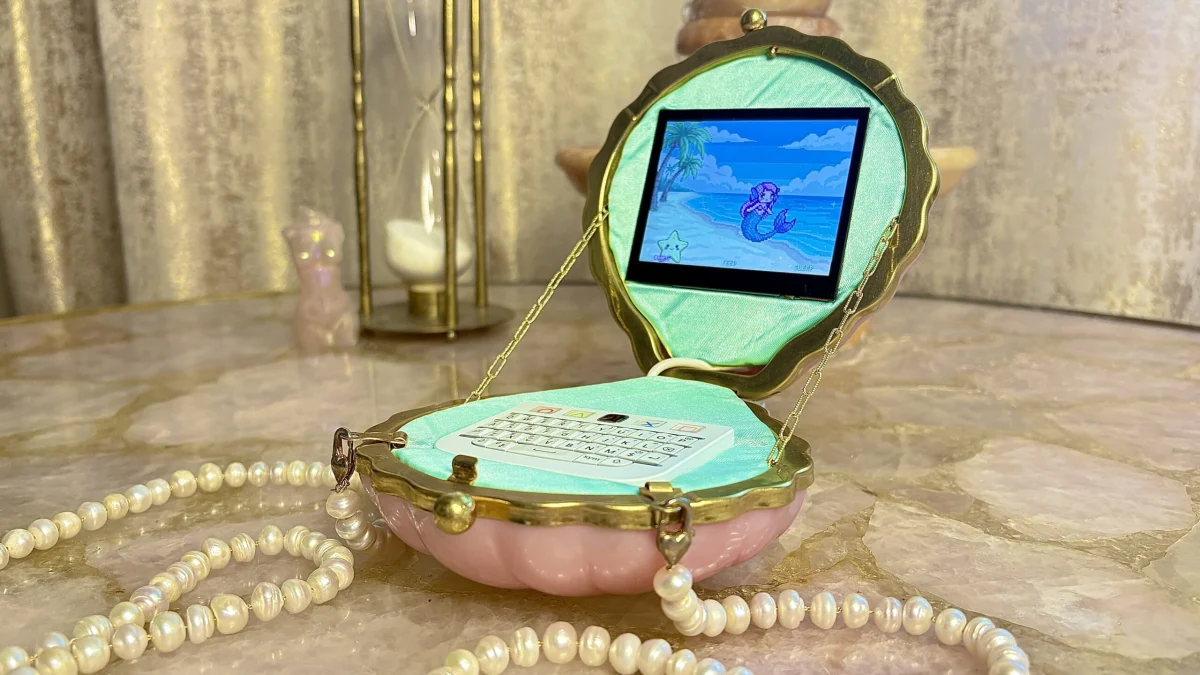
A vibrant counterculture is emerging within the tech landscape, pushing back against the sleek, standardized devices offered by corporate giants. At its heart are "cyberdecks"—small, custom-built computers that blend cutting-edge functionality with deeply personal aesthetics. This burgeoning movement, once a niche pursuit for hardware enthusiasts, has recently exploded in popularity, largely propelled by women on social media who are transforming these DIY machines into artistic statements, often adorned with hyper-feminine touches and a clear intention to defy the prevailing norms of Silicon Valley.
One prominent figure in this movement is CC, a self-described "open source baddie" and creator behind the blog "Bimbo Tech." Her innovative projects include a seashell-encased cyberdeck, which she describes as a multi-functional device: "It’s a Tamagotchi. It’s also an e-reader. It’s networked to my vault and my servers, so it has access to all of my server data, which has all my PDFs, and books, and notes, and everything… It’s also connected to my local AI setup at home." CC, despite lacking formal training in software engineering or computer science, meticulously documents her building processes, empowering other women to delve into hardware creation, even if they’re starting from scratch. Her work embodies the spirit of accessibility and creative liberation that defines the modern cyberdeck movement.
The Cyberdeck’s Fictional Origins and Real-World Emergence
The conceptual blueprint for the cyberdeck can be traced back to the gritty, dystopian visions of cyberpunk literature. Science fiction author William Gibson’s seminal 1984 novel, "Neuromancer," introduced readers to the "deck," a portable console used by hackers to interface directly with cyberspace. These fictional devices were often rugged, improvised, and deeply personal extensions of their users’ identities, far removed from the polished, mass-produced electronics of today. Gibson’s vision sparked the imagination of countless tech enthusiasts, laying the groundwork for a future where personal computing could be a deeply customized, almost organic experience.
For decades, translating this fictional concept into reality remained largely confined to advanced hobbyists and specialized engineers. The turning point arrived in the early 2010s with the introduction of credit card-sized single-board computers like the Raspberry Pi. These affordable, versatile microcomputers democratized access to hardware development, making it possible for individuals with varying skill levels to build their own functional computing devices from the ground up. Suddenly, the vision of a personalized, portable computer, once a literary fantasy, became a tangible project. Online communities dedicated to sharing designs, troubleshooting tips, and showcasing completed cyberdecks began to flourish, fostering a collaborative environment for innovation.
Aesthetics and Empowerment: A New Digital Canvas
While early cyberdecks often prioritized function over form, reflecting a utilitarian, hacker aesthetic, the current wave sees a significant emphasis on artistic expression. Social media platforms, particularly TikTok and Instagram, have become vibrant galleries for these unique creations. Users are sharing tutorials, build logs, and finished products that defy conventional tech design. Examples range from a cyberdeck crafted from wood and moss, capable of running classic Game Boy Color games, to a desert-inspired MP3 player encased in a 3D-printed fossil. Other notable projects include a Barbie dollhouse that cleverly conceals a fully functional mini-computer and a duck figurine repurposed into a voice recorder.
This artistic evolution is not merely superficial. It represents a conscious rebellion against the monochromatic, uniform aesthetic that has long dominated the tech industry. As CC articulates, there’s an underlying critique of the lack of diversity in design: "I have a running joke that there’s this underlying misogyny in tech — because whenever they release a pro model, or an elite model… I’m always like, let me guess, it’s black or silver. It’s never going to come in pink." The embrace of vibrant colors, unconventional materials, and whimsical themes, often labeled "hyper-feminine," serves as a powerful statement, challenging the unspoken rules of tech aesthetics and reclaiming creative agency.
The "Bimbo Tech" movement, spearheaded by CC, exemplifies this shift towards making technology more approachable and inclusive. By breaking down complex hardware concepts into digestible, encouraging content, these creators are dismantling barriers that have historically deterred women and other underrepresented groups from engaging with hands-on tech. The focus on aesthetics and personal expression makes the learning process more appealing, transforming what might seem intimidating into an exciting creative endeavor.
The Anti-Surveillance Imperative and "Radical Ownership"
Beyond aesthetics, a profound motivation driving the cyberdeck resurgence is a growing distrust of "big tech" and a desire for digital autonomy. In an era marked by pervasive data collection, targeted advertising, and the "black box" nature of most consumer electronics, cyberdecks offer a tangible form of resistance. As TikTok creator Sarahbelle Kim eloquently puts it, "I don’t want Meta AI glasses. I want to pirate books in a tiny embellished shell. No one can surveil you there. You can get some basic parts at the thrift store or eBay and just customize it." This sentiment highlights a craving for devices that are not only personally expressive but also fundamentally private and controllable by their owners.
The prevailing model of consumer electronics often comes with limitations—software restrictions, warranty voids for modifications, and sealed designs that discourage repair or customization. This "walled garden" approach frustrates users who feel they don’t truly "own" the devices they purchase. Cyberdecks, by contrast, embody "radical ownership." They are built from the ground up, component by component, fostering a deep understanding of their inner workings. This hands-on approach directly counters the abstract, opaque nature of modern devices, allowing users to configure their machines precisely to their needs and values, free from corporate oversight or predetermined functionalities.
CC emphasizes this aspect of empowerment: "I think that’s such a refreshing thing for people who were sold these devices that are like Apple’s… If you try to jailbreak it, if you try to do anything to this phone that you paid $1,000 for, that you own, it’s out of warranty. So I just love seeing people taking the power back into their hands, taking the control back into their hands, which obviously always means creativity when people are given the means to go outside of the black box." This perspective aligns cyberdecks with the broader "right-to-repair" movement and the growing demand for open-source hardware and software, where users have the freedom to inspect, modify, and distribute technology.
Weaving Technology’s Forgotten History: Maro Vardanyan’s Contributions
Adding another layer of historical depth and artistic innovation to the cyberdeck movement is Maro Vardanyan, a blockchain developer who has found a unique way to bridge fiber art and computing. Vardanyan, who previously collected and repurposed old computer parts for art and jewelry, was inspired by the cyberdeck trend to create functional, wearable tech. She refers to her craft as "crocheting with computers" or "macrame motherboards," a deliberate nod to the often-overlooked historical relationship between textile arts and early computing.
Vardanyan’s work consciously highlights the pivotal, yet frequently uncredited, role of women in the foundational stages of computing. Before the advent of silicon processors, some early computers relied on magnetic-core memory. This intricate form of memory involved precisely threading copper wires through tiny magnetic rings to encode binary data. A prime example is the Apollo Guidance Computer, which played a crucial role in landing humans on the moon. Its complex core rope memory was meticulously hand-woven by skilled women textile workers, often referred to as "human computers." These women translated complex schematics into physical patterns, effectively programming the spacecraft through their precise needlework.
By weaving Raspberry Pis into purses and corsets using conductive thread and encasing them in protective acrylic, Vardanyan not only creates functional art but also reclaims this forgotten history. Her projects are a powerful symbolic gesture, reminding the tech world of its origins in what was often considered "women’s labor." "The original processor was handwoven by seamstresses, not by engineers or anybody else," Vardanyan notes, emphasizing the full-circle nature of her fashion-meets-technology creations.
Unsurprisingly, Vardanyan’s innovative approach has not been without its critics. When she shared her "macrame motherboards" on platforms like X, she encountered dismissive comments from some men in the tech community, questioning the practicality and integrity of her designs. Remarks like, "This is such a waste of the Raspberry Pi," or "what about the rain?" were common. However, Vardanyan, armed with her technical knowledge, was quick to defend her work, explaining how components were preserved in acrylic shells and how conductive thread ensured full functionality, effectively silencing her detractors. CC has faced similar condescension, particularly regarding her use of Raspberry Pis during a perceived RAM shortage, but has similarly leveraged her expertise to educate and challenge skeptical voices.
Cultural Impact and a Vision for Inclusive Tech
The cyberdeck phenomenon, with its embrace of artistic expression, personalization, and digital independence, represents more than just a fleeting trend. It signifies a deeper cultural shift, a collective yearning for a more human-centric and less corporatized relationship with technology. The deliberate "impracticality and inefficiency" of some cyberdeck designs can be seen as a radical act in a Silicon Valley culture that prioritizes optimization and efficiency above all else. It’s a rejection of the relentless pursuit of speed and minimalist design in favor of something more tactile, more personal, and perhaps, more meaningful.
This movement is also playing a crucial role in making the tech world more diverse and welcoming. For too long, hardware and DIY tech have been perceived as male-dominated domains. The visibility of women like CC and Maro Vardanyan, who are not only building but also teaching and inspiring others, is breaking down these stereotypes. "Ten years ago, I would walk into a conference, there would be three girls, and people would literally just be like, ‘Were you hired for the marketing team?’" Vardanyan recalls. "I can’t even tell you how amazing it is seeing so many girls all over my social media and Instagram being into hardware, being into software, and then educating [each other], and that’s definitely the energy that we’re missing on every level in society."
The rise of cyberdecks signifies a broader re-engagement with the physical aspects of computing, transforming abstract digital experiences into tangible, personal artifacts. By fostering communities of creators who prioritize control, customization, and creative expression over passive consumption, this movement is not just building unique computers; it’s building a more inclusive, independent, and imaginative future for technology itself.