Amir Mahmud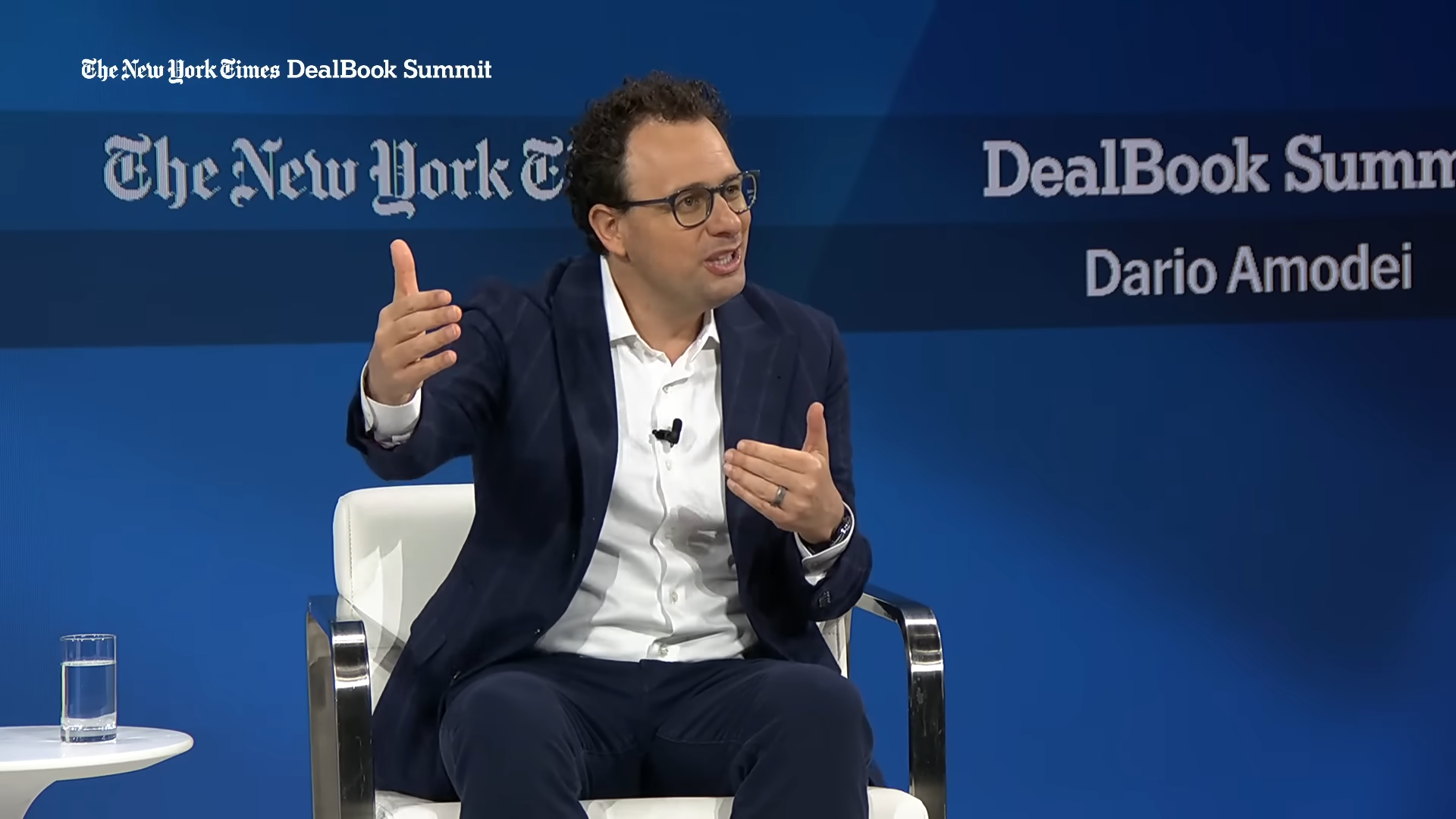
At a pivotal moment for the burgeoning artificial intelligence industry, Anthropic CEO Dario Amodei offered a measured perspective on the swirling debates surrounding a potential AI market bubble and the aggressive risk-taking prevalent among some competitors. Speaking at The New York Times DealBook Summit, Amodei navigated the complex economic landscape of AI, declining a simplistic "yes" or "no" on the bubble question, instead providing a nuanced analysis of the industry’s intricate financial dynamics. His remarks underscored a growing dichotomy within the AI sector: between those advocating for cautious, sustainable growth and those pushing for rapid, high-stakes expansion.
The AI Boom and the Shadow of Speculation
The current era of artificial intelligence, particularly driven by advancements in generative AI and large language models (LLMs), has captured the global imagination and spurred unprecedented investment. From Silicon Valley startups to established tech giants, capital has flowed into AI research and development at a staggering pace, pushing company valuations to dizzying heights. This fervor echoes past technological revolutions, yet also invites comparisons to historical speculative bubbles, such as the dot-com bust of the late 1990s or the more recent crypto market surges. The rapid ascent of AI, characterized by exponential growth in capabilities and widespread predictions of transformative societal impact, has ignited intense debate among economists, investors, and industry leaders about the sustainability of its current trajectory.
Amodei acknowledged his bullish conviction in the long-term potential of AI technology, viewing it as a fundamentally transformative force. However, he cautioned that despite this immense promise, certain players within the ecosystem might encounter a "timing error," leading to "bad things" when it comes to realizing economic payoffs. This "timing error" refers to a misalignment between the immediate, substantial investments required to build and scale AI infrastructure and the potentially delayed or uncertain economic returns on those investments. The core issue, as he articulated, is the inherent risk associated with an unclear timeline for when the true economic value of AI will materialize and become widely monetized across various sectors.
Navigating the Risk Spectrum: From Prudence to "YOLO"
The competitive landscape in AI is intense, fueled by a race to achieve technological breakthroughs and secure market dominance. Amodei highlighted that companies are compelled to take risks to stay ahead, not only against commercial rivals but also in response to geopolitical pressures, making a clear reference to the perceived threat from authoritarian adversaries like China. This geopolitical dimension adds another layer of urgency and complexity to investment decisions, potentially pushing some entities toward more aggressive strategies.
However, Amodei expressed significant concern that not all participants are "managing that risk well," suggesting that some are taking "unwise risks." He elaborated on this by stating that while Anthropic strives to manage this genuine dilemma as responsibly as possible, there are "some players who are ‘YOLO-ing,’ who pull the risk dial too far, and I’m very concerned." The slang term "YOLO" (You Only Live Once), often associated with impulsive, high-risk behavior, served as a stark metaphor for what Amodei perceives as an excessively speculative or imprudent approach to investment and expansion within the AI space. This perspective suggests a divide between firms prioritizing long-term sustainability and ethical development, and those perhaps more focused on short-term market capture at potentially greater financial peril.
The Compute Conundrum: Infrastructure and Obsolescence
A critical challenge for AI companies lies in accurately forecasting and investing in the vast computational resources needed to train and deploy advanced models. This involves immense capital expenditure on data centers, specialized hardware like Graphics Processing Units (GPUs), and the associated energy infrastructure. Amodei pointed to the uncertainty surrounding how quickly the economic value of AI will grow and the significant lag times involved in building and scaling these massive data centers. This creates a strategic tightrope walk: under-investing risks an inability to meet future customer demand and losing market share, while over-investing could lead to crippling costs or, in a worst-case scenario, bankruptcy.
Adding to this complexity is the rapid pace of technological innovation in AI hardware. Amodei specifically addressed the issue of "AI chips’ deprecation timelines," a hot-button topic in the industry. He clarified that the concern isn’t the physical lifespan of the chips, which can remain operational for many years. Instead, the problem arises from the relentless development of newer, faster, and more energy-efficient chips. This constant evolution means that older generations of GPUs, even if fully functional, rapidly decline in value, effectively becoming obsolete ahead of schedule. For companies making multi-billion-dollar investments in compute clusters, this rapid depreciation represents a substantial financial risk, necessitating continuous upgrades and capital outlays just to maintain competitive performance. This dynamic underscores the challenge of long-term asset planning in a field where the technological frontier shifts almost quarterly.
Anthropic’s Conservative Path Amidst Explosive Growth
Despite the industry’s speculative currents, Anthropic has charted a course characterized by conservative assumptions and responsible planning. This approach, however, has not hindered its remarkable commercial success. Amodei proudly reported that Anthropic’s revenue has experienced a tenfold increase year-over-year for the past three years, growing from zero to $100 million in 2023, then from $100 million to $1 billion in 2024, with projections placing this year’s revenue between $8 billion and $10 billion. These figures represent an extraordinary trajectory, demonstrating that a cautious strategic posture can coexist with explosive market penetration and financial growth.
Yet, even with such impressive figures, Amodei emphasized a commitment to prudence. He stated it would be "really dumb" to simply assume this pattern would continue indefinitely. The future, he admitted, remains "very uncertain," whether revenue reaches $20 billion or $50 billion a year from now. This acknowledgment of inherent unpredictability reinforces Anthropic’s strategy of planning for the "lower side" of projections, even finding it "very disconcerting." This conservative stance allows the company to build resilience against potential market downturns or unforeseen technological shifts, ensuring it can weather various economic scenarios.
The Broader Market Impact and Competitive Philosophies
Amodei’s comments, particularly his pointed references to "YOLO-ing" and "liking big numbers," were widely interpreted as veiled criticisms directed at OpenAI and its CEO, Sam Altman. This interpretation gained further traction in light of a recent incident involving OpenAI’s CFO, who had suggested the U.S. government should "backstop" the company’s infrastructure loans, effectively asking taxpayers to cover potential losses if OpenAI failed to meet its obligations. This controversial proposal, which was later walked back after public outcry, highlighted the immense financial scale of AI infrastructure investments and the potential systemic risks they could pose. Altman himself has been widely reported to be pursuing multi-trillion-dollar initiatives to develop advanced AI chips and expand compute capabilities on an unprecedented scale.
This divergence in philosophies – Anthropic’s emphasis on responsible risk management and long-term sustainability versus OpenAI’s more aggressive, high-stakes expansionist vision – reflects a fundamental debate within the AI leadership about the optimal path forward. The choice between these approaches has profound implications not only for the companies involved but also for the broader market. An industry dominated by "YOLO" strategies could lead to rapid innovation but also increased volatility, potential market corrections, and consolidation. Conversely, a more prudent approach might foster a more stable, albeit potentially slower, pace of development.
The social and cultural impact of these differing strategies is also significant. Aggressive expansion, while potentially accelerating the deployment of powerful AI systems, could also heighten concerns around ethical guardrails, safety protocols, and equitable access. A more conservative stance, prioritizing stability and deliberate development, might allow for greater attention to these critical non-economic factors, potentially shaping a more responsible trajectory for AI’s integration into society.
A Call for Balanced Foresight
Dario Amodei’s address at the DealBook Summit served as a crucial intervention in the ongoing dialogue about the AI industry’s future. His message was a call for balanced foresight: acknowledging AI’s immense, transformative potential while simultaneously urging caution against unbridled exuberance and unsustainable risk-taking. As the AI "gold rush" continues, the industry stands at a critical juncture, balancing the imperative for innovation with the necessity for strategic prudence. The choices made by leading AI firms today, particularly regarding their investment philosophies and risk management strategies, will undoubtedly shape the economic landscape of artificial intelligence for decades to come, determining whether the sector evolves into a stable, impactful force or succumbs to the pitfalls of speculative excess. The unfolding narrative will reveal which approach ultimately fosters the most enduring and beneficial advancements in this defining technology of our era.