Amir Mahmud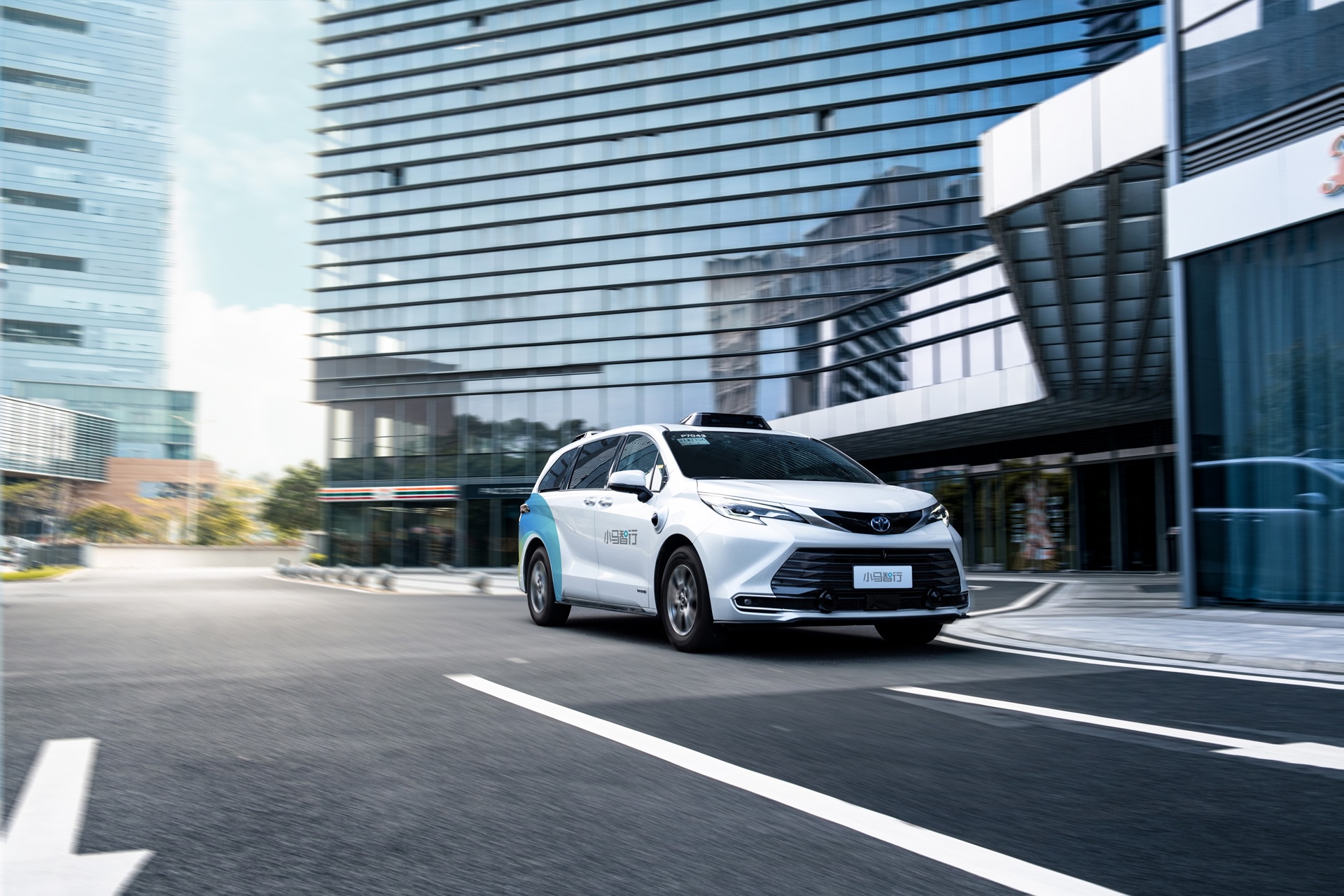
The Chinese autonomous vehicle technology firm, Pony.ai, has unveiled an ambitious strategy to substantially expand its global robotaxi fleet, aiming to surpass 3,000 vehicles by the close of 2026. This bold declaration, made during its third-quarter earnings report, signals a significant acceleration in the company’s growth trajectory and its aspirations to become a dominant force in the burgeoning self-driving mobility sector. Currently operating a fleet of approximately 961 robotaxis, Pony.ai has set an immediate milestone of reaching 1,000 vehicles by the end of the current year, illustrating a clear roadmap for rapid deployment and commercialization. This expansion is not merely about increasing vehicle count; it represents a deep commitment to scaling autonomous operations, enhancing service accessibility, and solidifying its position within a highly competitive global market.
The Global Race for Autonomy: A Historical Perspective
The pursuit of fully autonomous vehicles has been a defining technological quest of the 21st century, rooted in decades of research and development. Early pioneers, including projects stemming from the DARPA Grand Challenges in the mid-2000s, laid the groundwork for the sophisticated systems we see today. Companies like Google’s Waymo, established in 2009, brought the concept of self-driving cars into the public consciousness, demonstrating the potential for vehicles to navigate complex environments without human intervention. This initial spark ignited a global race, attracting massive investment from tech giants, traditional automakers, and innovative startups alike.
The autonomous vehicle (AV) industry has experienced cycles of immense hype, significant investment, and sobering realities. While the promise of safer roads, reduced congestion, lower emissions, and enhanced mobility remains compelling, the technical and regulatory hurdles have proven more formidable than initially anticipated. High-profile setbacks, such as the winding down of Ford and Volkswagen’s Argo AI venture, underscore the capital-intensive nature and inherent risks of developing truly ubiquitous self-driving technology. Despite these challenges, the long-term vision persists, with companies like Pony.ai continuing to push the boundaries of what is technologically and commercially feasible. China, in particular, has emerged as a critical hub for AV development, driven by proactive government support, vast urban landscapes ideal for data collection, and a large consumer base eager for innovative solutions. This environment fosters intense competition among domestic players like Baidu Apollo, AutoX, and WeRide, all vying for market share and technological supremacy.
Strategic Expansion and Commercialization Milestones
Pony.ai’s strategic roadmap centers on aggressive commercialization, both within its home market and internationally. The company has spent the past year significantly ramping up its commercial robotaxi services across key Chinese megacities. Customers in Beijing, Shanghai, Guangzhou, and Shenzhen can now hail a Pony.ai robotaxi, paying for rides that are facilitated by the company’s autonomous driving technology. This transition from mere testing to revenue-generating operations is a crucial step for any AV company, signaling a move towards sustainable business models.
The company’s business model is strategically diversified across three core pillars: robotaxi services, autonomous freight logistics (robotrucks), and licensing its proprietary technology. This multi-pronged approach mitigates risks associated with relying solely on one segment of the nascent AV market. The robotruck division, for instance, has demonstrated significant revenue potential, often benefiting from less complex, fixed-route operations compared to urban passenger transport. Furthermore, licensing its advanced autonomous driving stack to other companies allows Pony.ai to leverage its technological expertise beyond its direct operational footprint, creating additional revenue streams and broader industry influence.
Beyond China’s borders, Pony.ai harbors significant international aspirations, a testament to its global outlook. The company is actively pursuing expansion into eight countries, with Qatar and Singapore highlighted as initial target markets. This global outreach is being facilitated through strategic partnerships with local entities and established ride-hailing platforms such as Bolt and Uber. Collaborating with existing ride-hailing giants provides immediate access to vast customer bases, operational infrastructure, and invaluable local market insights, accelerating market penetration and reducing the inherent complexities of entering new territories. The decision to expand internationally also reflects a broader industry trend of seeking diverse regulatory environments and market opportunities, as different regions present unique challenges and receptiveness to autonomous technology. This cross-border strategy is not without its hurdles, encompassing varying regulatory frameworks, distinct traffic cultures, and the need to adapt technology to diverse road conditions and data privacy regulations.
Navigating the Financial Landscape and Investment Imperatives
The expansion of commercial operations has had a dual impact on Pony.ai’s financial performance, simultaneously boosting revenue and escalating operational costs—a common characteristic of companies in the high-growth, pre-profitability phase of the autonomous vehicle industry. In the third quarter, the company reported revenue of $25.4 million, marking a substantial 72% increase compared to the $14.8 million generated in the same period of the previous year. This growth underscores the increasing traction of its commercial services and the successful diversification of its revenue streams.
A detailed breakdown of the revenue reveals the emerging strengths of different business units. Robotaxi services contributed $6.7 million, reflecting the growing adoption and scaling of its passenger mobility offerings. Notably, the self-driving trucks, or robotrucks, generated $10.2 million, surpassing the revenue from robotaxis. This highlights the significant commercial viability of autonomous logistics, often seen as a quicker path to profitability due to more predictable routes and less dynamic environments compared to urban robotaxi operations. Additionally, Pony.ai secured $8.6 million from licensing and application fees, showcasing the value of its proprietary technology stack to external partners.
Despite this impressive revenue growth, the company’s expenses continue to outpace its income, resulting in a net loss of $61.6 million for the third quarter. This represents a 46% increase in losses compared to the same period in 2024. Such losses are typical for autonomous vehicle developers, which require massive investments in research and development, fleet acquisition, infrastructure build-out, and operational scaling before achieving widespread profitability. The company’s cash and cash equivalents, along with short-term investments, stood at $587.7 million as of September 30, a decrease from $747.7 million in the second quarter. Pony.ai attributed half of this decrease to a significant one-off cash outflow, primarily an investment into its joint venture with Toyota. This strategic investment is geared towards supporting the production and deployment of its advanced Gen-7 vehicles, a critical step towards mass-market readiness and future scale. The market’s reaction to these financial disclosures was largely positive, with shares of Pony.ai experiencing a more than 6% surge on the Nasdaq following the earnings report, indicating investor confidence in the company’s long-term growth prospects and strategic direction despite current losses.
Technological Milestones and Future Outlook
The core of Pony.ai’s ambitious fleet expansion hinges on its technological prowess and continuous innovation. The company’s investment in the joint venture with Toyota for the production and deployment of its Gen-7 vehicle signifies a pivotal technological milestone. Each generation of autonomous vehicles typically represents significant advancements in sensor fusion capabilities, AI algorithms for perception and prediction, path planning, and vehicle control systems. The Gen-7 vehicle likely incorporates a more robust and cost-effective sensor suite, enhanced computational power, and refined software architecture designed for scalability and safety in diverse operating conditions.
Achieving a fleet of over 3,000 robotaxis demands not only advanced technology but also robust manufacturing, maintenance, and operational logistics. This includes the ability to rapidly produce and integrate the autonomous driving hardware and software into a growing number of vehicles, establish efficient charging and maintenance depots, and manage a sophisticated operational control center. The company’s focus on city-wide "UE breakeven," as mentioned in its earnings report, suggests a strategic emphasis on optimizing unit economics to reach profitability per vehicle operation. This involves driving down the cost per mile while maximizing vehicle utilization and operational efficiency.
The future outlook for Pony.ai, and indeed the entire AV industry, is intricately tied to public trust and regulatory clarity. Safety remains paramount, and rigorous testing, transparent reporting of incidents, and a demonstrable safety record are crucial for widespread public acceptance. As the technology matures, the industry anticipates a shift from highly constrained operational design domains (ODDs) to more expansive, all-weather, all-condition autonomous driving. The journey from 1,000 to over 3,000 vehicles will serve as a critical proving ground for Pony.ai’s ability to not only develop cutting-edge technology but also to deploy and operate it safely and efficiently at scale.
Challenges and Opportunities Ahead
Despite Pony.ai’s impressive progress and ambitious plans, the path to widespread autonomous vehicle adoption is fraught with challenges. Regulatory hurdles remain a significant obstacle, with a patchwork of varying laws and approval processes across different countries and even within regions of the same country. This fragmented regulatory landscape necessitates extensive engagement with policymakers and often requires tailoring technological deployments to specific local requirements. Furthermore, the inherent complexity of autonomous driving technology means that "edge cases"—unusual or unpredictable scenarios that AVs might encounter—continue to pose engineering challenges, demanding continuous refinement of software and sensor capabilities.
The competitive landscape is also intensely fierce. Pony.ai faces formidable rivals globally, including well-funded startups and established tech giants with deep pockets and extensive resources. Sustained capital intensity is another pressing concern; developing and deploying autonomous vehicles at scale requires enormous investment, and companies must either secure ongoing funding rounds or demonstrate a clear path to profitability to become self-sustaining. The social implications, such as potential job displacement for human drivers and ethical considerations in accident scenarios, also represent ongoing dialogues that the industry must address responsibly.
Nevertheless, the opportunities are immense. The global market for autonomous mobility, encompassing ride-hailing, logistics, and last-mile delivery, is projected to be worth trillions of dollars in the coming decades. Companies that can achieve first-mover advantage in key geographies or specific service types stand to capture significant market share. For Pony.ai, its diversified business model and strategic international partnerships offer avenues for resilient growth. By tripling its robotaxi fleet, Pony.ai is not just expanding its operations; it is actively shaping the future of urban mobility, logistics, and the broader integration of artificial intelligence into everyday life, positioning itself as a key player in the transformative autonomous revolution.