Amir Mahmud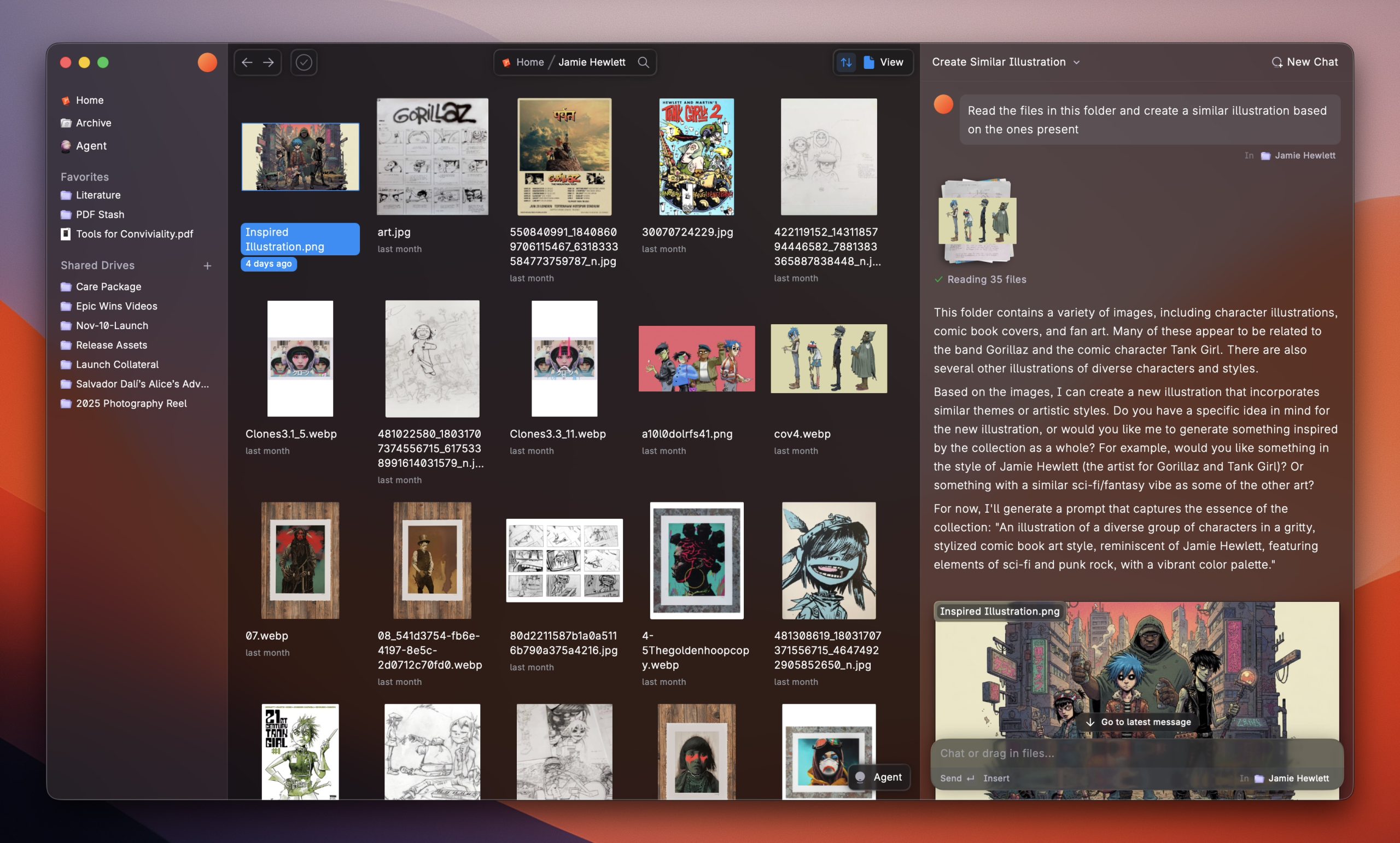
In an era defined by an ever-growing deluge of digital information, the challenge of effectively managing and retrieving files has become a universal pain point for individuals and enterprises alike. Acknowledging this pervasive issue, Poly, a startup initially recognized for its ventures in AI-generated 3D assets, has strategically pivoted its focus, emerging from stealth with a reimagined cloud-hosted file storage platform that integrates advanced artificial intelligence for natural language search and comprehensive data management. This significant reintroduction positions Poly as a formidable contender in the evolving landscape of digital productivity tools, aiming to centralize and simplify how users interact with their vast digital archives.
From 3D Art to Intelligent Document Hub: Poly’s Evolution
Poly’s journey began in 2022, co-founded by Abhay Agarwal and Sam Young, with its initial foray into the burgeoning field of AI-driven content creation. At the time, the startup, a participant in the prestigious Y Combinator accelerator program, focused on empowering users to generate intricate 3D assets through simple textual prompts. This early vision was aligned with the rapid advancements in generative AI, particularly in the visual domain, which promised to democratize content creation. However, the landscape of AI image and asset generation quickly became hyper-competitive, attracting substantial investment and a proliferation of well-funded players. This intense market saturation prompted a critical reevaluation of Poly’s strategic direction.
The decision to pivot, a common yet challenging maneuver for startups, was not made lightly. Abhay Agarwal, who previously contributed to vision AI research at Microsoft, recounts that the team recognized the unsustainable pace of competition in their original niche. Instead of attempting to outcompete an increasingly crowded and well-capitalized market, Poly undertook a deep dive into user needs. Extensive interviews with their target audience revealed a consistent and pressing unmet need: the pervasive difficulty in organizing and locating specific files within personal and professional digital ecosystems. This insight proved to be the catalyst for Poly’s transformation.
By 2023, the startup had made the definitive choice to cease operations on its 3D asset generation platform. Entering a period of intense, confidential development, Poly redirected its entire focus toward building a novel cloud-based file organizer infused with cutting-edge AI capabilities. This period of quiet innovation culminated in a closed beta testing phase, preparing the company for its public relaunch. The reintroduction marks a strategic shift from a creative tool to a foundational productivity platform, addressing a fundamental problem in the modern digital workflow.
Addressing Digital Clutter: Poly’s Core Proposition
The contemporary digital environment is characterized by an exponential increase in data volume. From documents and spreadsheets to images, videos, and audio files, individuals and organizations accumulate vast repositories of information across multiple platforms and devices. Traditional file systems, often relying on hierarchical folder structures and keyword-based searches, frequently fall short in helping users quickly pinpoint specific information, leading to wasted time and diminished productivity. This "digital clutter" is precisely the problem Poly aims to solve.
Poly’s new iteration positions itself as a comprehensive cloud storage solution enhanced by an intelligent AI search engine. The fundamental premise is straightforward: provide a centralized repository where users can deposit all their digital assets, then leverage AI to make every piece of information instantly discoverable through natural language queries. This moves beyond the limitations of exact filename matching or rigid folder navigation, allowing users to interact with their data more intuitively, much like conversing with an intelligent assistant.
Upon its public launch, Poly immediately offers a compelling incentive: a generous 100GB of storage for users on its free tier. This substantial offering stands in stark contrast to the often more restrictive free storage limits imposed by many established cloud storage providers, potentially attracting a significant user base looking for both capacity and advanced functionality without an immediate financial commitment. For those requiring greater storage, a premium tier offers 1TB for a monthly fee, demonstrating a clear value proposition.
Features and Functionality: Beyond Basic Storage
Poly is engineered to be more than just a digital locker; it’s an active assistant designed to streamline interaction with diverse data types. The platform currently supports a wide array of file formats, including text documents, PDFs, various office suite files, images, audio, video, and even web content via URLs. This broad compatibility ensures that users can consolidate virtually all their digital assets into a single, searchable environment.
The heart of Poly’s offering lies in its AI-powered capabilities. Users can upload files, and the AI system automatically processes and indexes their content. This allows for natural language queries, meaning users can ask questions about their files in plain English, rather than struggling with specific keywords or file paths. Beyond simple retrieval, the AI assistant can perform several value-added tasks:
- Summarization: Quickly condense lengthy documents, reports, or even video transcripts into concise overviews.
- Translation: Break down language barriers by translating content directly within the platform.
- Organization: Proactively suggest and execute file organization tasks, such as creating new folders or renaming files based on their content and context, thereby reducing manual effort.
- Tagging: Intelligently apply relevant tags to files, further enhancing discoverability and categorization.
Comparing itself to existing solutions like Google’s NotebookLM, Poly emphasizes its superior capabilities as a file organizer. While NotebookLM excels at project-based insight generation from uploaded documents, Poly aims to serve as the foundational repository and intelligent search layer for an entire digital life. Though it currently lacks features like real-time web knowledge access or audio/video creation from insights, the roadmap for Poly includes ambitious expansions. Future updates are slated to introduce web search integration, tools for creating stylized reports directly within the application, a robust text and markdown editor, and the ability to add custom metadata. Furthermore, the platform intends to support direct integration with Google Docs links and enable AI agents to perform complex calculations and analyses on spreadsheet data, pushing the boundaries of intelligent document interaction.
Collaboration is another key aspect of Poly’s design. The platform allows for the creation of shared drives, where multiple users can contribute files and collectively leverage the AI’s search and analytical capabilities. This feature is particularly valuable for team projects, research groups, or any collaborative effort where shared access to information and collective insights are critical. Future enhancements promise to include granular sharing options for individual files and folders.
Competitive Landscape and Market Position
Poly enters a competitive market populated by established giants and a growing number of AI-focused startups. Major players like Dropbox and Google Drive already offer cloud storage solutions with their own integrated search functionalities. However, Poly aims to differentiate itself through the depth and intelligence of its AI-powered search, which early testers suggest outperforms some incumbent systems. The ability to paste a YouTube video link and instantly generate a summary, for instance, highlights a practical utility that goes beyond typical keyword searches.
The competitive advantage extends to its generous free storage offering, which can serve as a significant draw for users accustomed to more restrictive limits. While Poly is not currently positioned as a direct photo syncing alternative, its potential to evolve into a robust Google Photos competitor if such features are introduced is acknowledged, given its substantial storage capacity.
Poly’s strategic focus is on "Gen AI native creators and knowledge workers." This demographic includes researchers, content creators, consultants, and service executives who frequently sift through vast amounts of information—from customer call transcripts to research papers—to extract insights. The emphasis is on enabling users to "think in a clearer way" by making their data instantly accessible and intelligently organized.
Integration is also a priority. Poly offers a Model Context Protocol (MCP) server, allowing users to integrate its capabilities within other AI tools like ChatGPT or Cursor. While direct syncing with external services is not fully implemented yet, the company envisions a future where virtual file references will enable seamless importation of files from various external platforms, further solidifying Poly’s position as a central digital hub.
Investment and Outlook
Poly’s strategic pivot and relaunch are underpinned by significant financial backing. The company has successfully raised $8 million in seed funding, a sum that includes an earlier $3.9 million round secured in 2022. This capital infusion comes from a notable syndicate of investors, including Felicis, Bloomberg Beta, NextView, Figma Ventures, AI Grant, and Wing Ventures. The involvement of such prominent venture capital firms underscores confidence in Poly’s revised vision and its potential to capture a substantial share of the market.
James Cham, a partner at Bloomberg Beta, articulated the investment thesis, noting, "File systems are incredibly powerful and elegant, but most people have forgotten about them. Poly is bringing file systems as the center of interaction. The tool is designed in a way that allows you to use AI to think in a clearer way." This perspective highlights a belief that Poly isn’t just offering another storage solution, but rather fundamentally re-envisioning the user’s relationship with their digital data by leveraging AI to restore the inherent power and utility of organized information.
The relaunch of Poly represents more than just a product update; it signifies a strategic adaptation to the rapidly evolving AI landscape and a renewed commitment to solving a fundamental user problem. By combining substantial cloud storage with advanced AI for natural language search, summarization, and organization, Poly aims to empower knowledge workers and creators to navigate their digital worlds with unprecedented efficiency and clarity. As digital information continues to proliferate, platforms like Poly could play a crucial role in shaping the future of personal and professional productivity, transforming digital clutter into a readily accessible and intelligently managed asset.