Amir Mahmud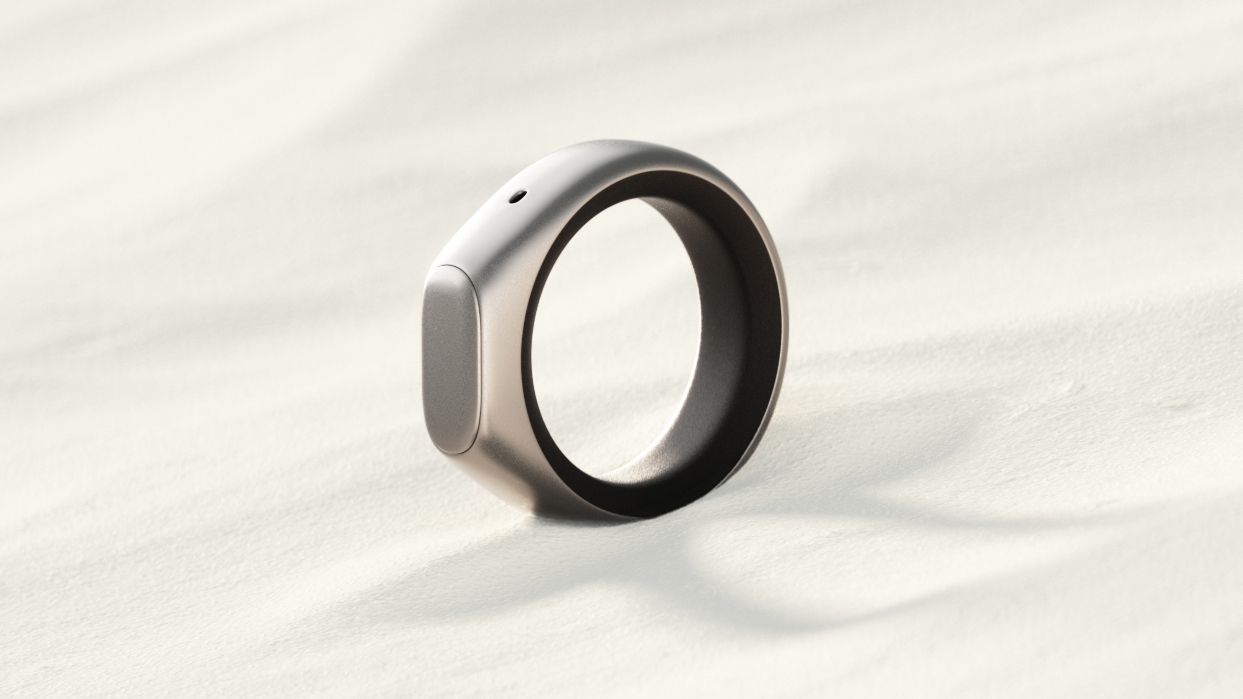
The ubiquitous smartphone, a device that has defined personal technology for over a decade, may be nearing the end of its reign as our primary digital interface, according to Jon Callaghan, co-founder of True Ventures. Callaghan posits that within five years, our engagement with these handheld devices will be fundamentally altered, and within a decade, they could become largely obsolete in their current form. This isn’t mere speculation from an industry observer; it represents a core investment thesis for True Ventures, a venture capital firm known for its prescient and often contrarian bets in the tech landscape.
For two decades, True Ventures has quietly cultivated a reputation for identifying and nurturing groundbreaking companies, ranging from consumer giants like Fitbit, Ring, and Peloton to enterprise software innovators such as HashiCorp and Duo Security. Their track record, boasting 63 profitable exits and seven initial public offerings among some 300 portfolio companies, lends considerable weight to Callaghan’s assertions. Unlike many contemporary venture capitalists who leverage personal branding and extensive public relations, True Ventures has maintained a low profile, preferring to build deep relationships with a tight-knit community of repeat founders. This distinctive approach, focused on long-term vision and foundational behavioral shifts rather than fleeting trends, has consistently positioned them at the forefront of technological evolution.
The Fading Reign of the Smartphone
Since Apple introduced the iPhone in 2007, ushering in the modern smartphone era, these devices have become indispensable extensions of ourselves. They serve as personal computers, communication hubs, cameras, entertainment centers, and navigation tools, fundamentally reshaping how individuals live, work, and interact. The sheer versatility and portability of smartphones propelled them into nearly every pocket and purse across the globe, creating an ecosystem of applications and services that are now deeply embedded in daily life.
However, Callaghan argues that this very ubiquity now exposes a critical limitation: smartphones are inherently inefficient as an interface between humans and the increasingly sophisticated artificial intelligence that underpins much of our digital world. The act of constantly pulling out a device, unlocking it, navigating menus, and typing out messages or emails is a cumbersome and often disruptive process. This screen-centric interaction, while revolutionary for its time, creates a barrier rather than a seamless bridge to intelligence. Critics also point to issues like "tech neck," eye strain, and the constant barrage of notifications that contribute to digital fatigue and a pervasive sense of distraction. The market trends further underscore this shift; while once a hyper-growth sector, the global smartphone market has matured, experiencing annual growth rates barely exceeding 2%. In stark contrast, the burgeoning wearables segment, encompassing smartwatches, rings, and voice-activated devices, is expanding at double-digit rates, signaling a clear consumer appetite for more integrated and less intrusive technological interactions.
A History of Contrarian Bets
True Ventures’ current stance on the future of human-computer interaction is deeply rooted in its two-decade history of identifying and backing disruptive concepts that initially faced skepticism. Operating largely under the radar, the Bay Area firm manages approximately $6 billion across a dozen core seed funds and four "select" opportunity funds, channeling capital into promising portfolio companies as they gain traction. Their success often stems from a willingness to invest in ideas that others deem too niche, too risky, or simply too early.
Consider Fitbit, an early pioneer in the wearables space. When True Ventures invested, the concept of a dedicated fitness tracker was far from mainstream. Many saw it as a novelty, but True recognized the underlying human desire for self-quantification and health monitoring. Fitbit tapped into a nascent cultural shift towards personal wellness, proving that people were ready to integrate technology more intimately into their physical lives. Similarly, Peloton, the connected fitness phenomenon, was famously rejected by hundreds of other venture capitalists. True Ventures, however, saw beyond the stationary bike itself. As Callaghan famously put it, "It’s not about the bike." Instead, they recognized Peloton’s potential to create a powerful community and enable a new, engaging at-home fitness behavior, revolutionizing the exercise industry.
Another compelling example is Ring, the smart doorbell company founded by Jamie Siminoff. Siminoff faced numerous rejections, including a notable dismissal on "Shark Tank," before Amazon eventually acquired his company for over $1 billion. True Ventures saw the potential in Ring’s intuitive approach to home security, offering a more natural and convenient way for homeowners to monitor their properties. In each of these cases, True’s investments appeared unconventional at the outset, yet they consistently capitalized on emerging trends in human interaction with technology, favoring solutions that felt more organic and integrated than existing alternatives. This pattern of backing unconventional hardware that facilitates new behaviors forms the bedrock of their current thesis.
Charting the Next Frontier: Conversational AI and Wearables
Building on this foundational philosophy, True Ventures has dedicated years to exploring the landscape of alternative interfaces, encompassing both hardware and software innovations. The latest manifestation of this strategic focus is Sandbar, a startup developing a hardware device Callaghan describes as a "thought companion." This device, more mundanely characterized as a voice-activated ring worn on the index finger, is designed with a singular, focused purpose: to capture and organize thoughts through voice notes.
Unlike other ambitious, multi-purpose wearables attempting to replace the smartphone, such as the Humane AI Pin, or health-centric devices like the Oura ring, Sandbar’s Stream ring prioritizes a specific human need. "It does one thing really well," Callaghan emphasizes, "but that one thing is a fundamental human behavioral need that is missing from technology today." The intention is not to passively record ambient audio but to serve as an immediate, discreet partner when an idea strikes, providing a seamless conduit for capturing fleeting insights before they vanish. This device, connected to a sophisticated app and leveraging artificial intelligence, represents a departure from the traditional screen-based interaction, favoring an ambient, intuitive engagement with intelligence.
True Ventures’ alignment with Sandbar’s founders, Mina Fahmi and Kirak Hong, runs deep. Both previously worked on neural interfaces at CTRL-Labs, a startup acquired by Meta in 2019, bringing specialized expertise in the subtle nuances of human-computer interaction. This shared vision for enabling new behaviors, rather than merely creating new gadgets, resonated strongly with True’s investment team. The potential social and cultural impact of such devices could be profound, allowing individuals to offload cognitive burdens, enhance creativity, and streamline information capture without the constant pull of a screen, fostering a more present and less distracted existence.
Investment Philosophy in an AI Boom
In an era characterized by fervent AI hype and unprecedented mega-rounds, where AI startups command billion-dollar valuations even before product launch, True Ventures maintains a disciplined and distinct investment strategy. The firm primarily focuses on seed-stage investments, typically writing checks between $3 million and $6 million for a 15% to 20% ownership stake. This measured approach allows them to engage deeply with founders and provide hands-on support during the critical early phases of a company’s development.
Callaghan acknowledges the immense power of the current compute wave driven by AI, even predicting that a company like OpenAI could soon reach a trillion-dollar valuation. However, he also voices concern about the broader capital intensity of the AI infrastructure layer. He points to the "circular financing deals" backing hyperscalers and the staggering $5 trillion in projected capital expenditure (CapEx) for data centers and chips as a potential warning sign. "We’re in a very capital intense part of the cycle, and that is worrisome," he notes, suggesting that such massive investments could lead to market imbalances.
Despite these concerns, Callaghan remains optimistic about where the true value creation will materialize. He firmly believes that the most significant opportunities lie not in the foundational infrastructure of AI, but in the application layer. It is here, he contends, that innovative interfaces will unlock entirely new human behaviors and generate transformative value. This perspective reinforces True’s core thesis: investing in technologies that reshape how humans interact with the digital world, rather than simply powering its underlying machinery. Callaghan encapsulates his investment philosophy with an almost poetic sentiment, stating that early-stage investing done right "should be scary and lonely and you should be called crazy… And it should be really blurry and ambiguous, but you should be with a team that you really believe in." He adds that it takes five to ten years to truly discern if an early bet was visionary.
The Shifting Technological Tides
The market data unequivocally supports Callaghan’s thesis regarding a fundamental shift in technological interaction. The smartphone market, once a bastion of rapid expansion, has reached saturation, with annual growth rates barely creeping past 2%. Meanwhile, the wearables sector, encompassing smartwatches, health trackers, and voice-enabled rings, is experiencing robust double-digit growth. This divergence indicates a clear consumer preference for more integrated, less intrusive forms of technology that blend seamlessly into daily life.
True Ventures’ track record of backing hardware innovations that many others overlooked – from fitness trackers and connected exercise bikes to smart doorbells and now thought-capturing rings – suggests that when Jon Callaghan speaks about the impending obsolescence of the smartphone as a primary interface, the industry should take note. The firm’s ability to consistently identify and invest in the next wave of human-technology interaction positions them as a critical barometer for future digital trends. As technology continues its relentless evolution, the drive to create more natural, intuitive, and less disruptive ways for humans to engage with intelligence will undoubtedly define the next era, and True Ventures is actively shaping what that future might look like.