Amir Mahmud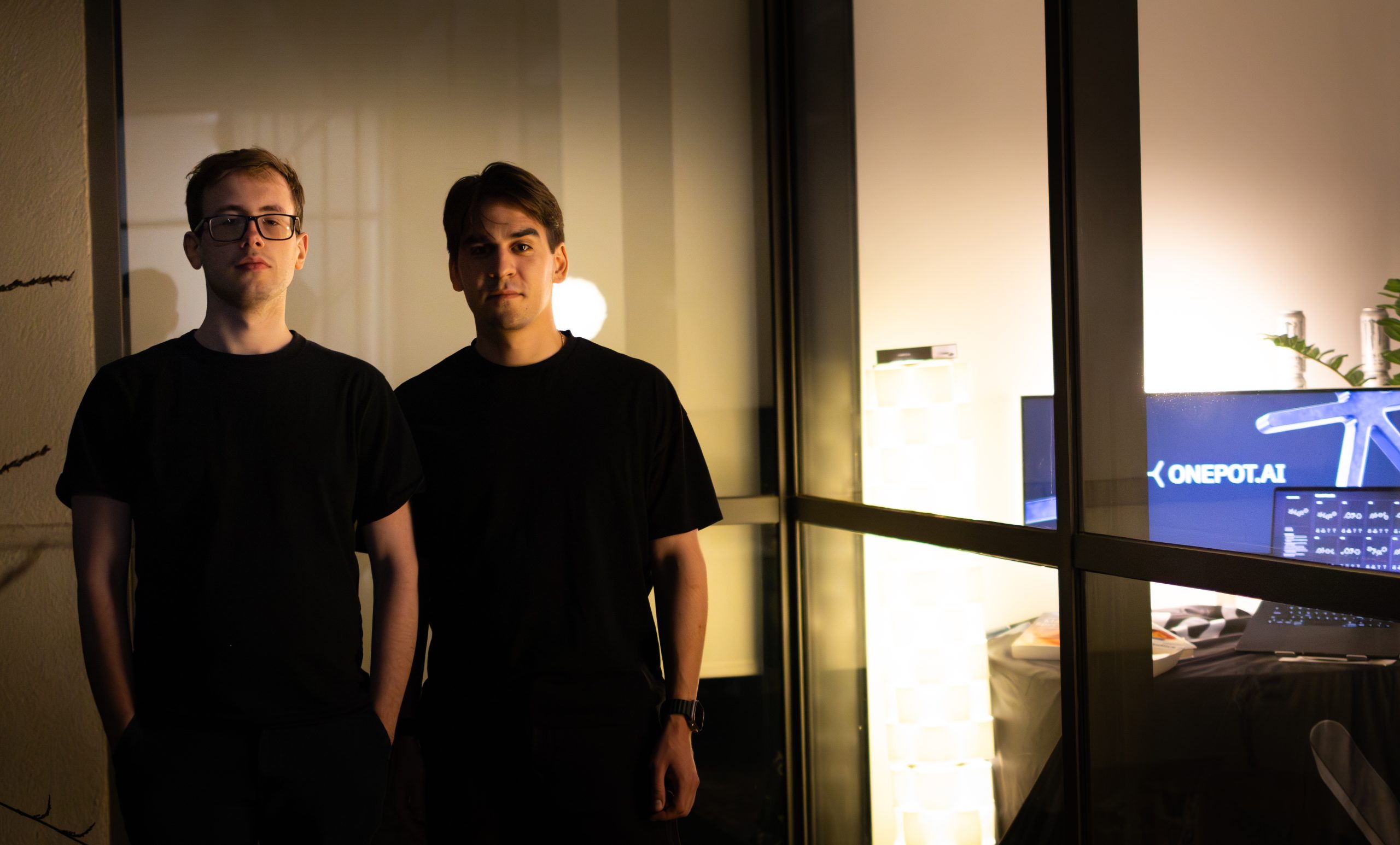
A significant bottleneck in pharmaceutical innovation, the laborious and time-intensive process of chemical synthesis, is now squarely in the sights of Onepot AI, a nascent company that recently emerged from stealth with $13 million in fresh capital. This substantial funding, encompassing both pre-seed and seed rounds led by Fifty Years, underscores a growing industry recognition of the critical need to accelerate the creation of novel chemical compounds, which are the fundamental building blocks of new medicines. Onepot AI aims to revolutionize this foundational stage of drug development by leveraging artificial intelligence and advanced automation, effectively streamlining a process traditionally characterized by extensive manual effort and considerable delays.
The Enduring Challenge of Chemical Synthesis
Chemical synthesis, at its core, involves the intricate process of constructing new molecules through a series of chemical reactions. Imagine it as assembling a complex LEGO model where each tiny brick, or atom, must be precisely connected to form larger, functional structures—the molecules. In the realm of drug discovery, these molecules are typically "small molecules," which are organic compounds with low molecular weight, capable of entering cells and interacting with biological targets to produce a therapeutic effect. The challenge lies in the sheer complexity and unpredictability of these reactions. Chemists must design reaction pathways, meticulously control conditions like temperature and pressure, and then isolate and purify the desired compound from a mixture of byproducts.
Historically, this has been a predominantly manual endeavor, relying heavily on the expertise, intuition, and often trial-and-error approach of organic chemists. A single novel compound can require months of dedicated research, multiple synthesis steps, and significant financial investment, often costing thousands of dollars. This labor-intensive nature means that even the most promising theoretical drug candidates, identified through computational modeling or biological insights, frequently remain untested in the laboratory simply because their synthesis is deemed too difficult, too costly, or too slow. This creates a critical chasm between the speed of computational design and the pace of practical laboratory execution, hindering the progression of potentially life-saving therapies.
A Historical Perspective on Drug Discovery
The journey of drug discovery has seen remarkable transformations over centuries. Early approaches were largely empirical, relying on observations of natural remedies and traditional medicines. The 19th and early 20th centuries brought advancements in organic chemistry, enabling the isolation and synthesis of pure active compounds. The latter half of the 20th century witnessed the rise of "rational drug design," where scientists began to understand disease mechanisms at a molecular level, allowing for the targeted design of molecules intended to interact with specific biological targets.
The advent of high-throughput screening (HTS) in the 1990s dramatically accelerated the testing phase, allowing millions of compounds to be screened against targets in a short period. However, HTS still required a vast library of synthesized compounds. Parallel to this, computational chemistry emerged, using algorithms to predict molecular properties and interactions, enabling in silico (computer-simulated) screening and virtual design. While computational tools could generate thousands of promising molecular ideas in mere hours, the subsequent challenge remained: physically producing these molecules in the lab. This glaring disparity, where computational ideation outpaces physical realization by orders of magnitude, became a persistent frustration for researchers and a significant drag on the drug development timeline.
Onepot AI’s Genesis and Vision
This profound frustration formed the genesis of Onepot AI, co-founded by Daniil Boiko and Andrei Tyrin. Boiko, a Ph.D. candidate specializing in machine learning in chemistry at Carnegie Mellon University with a background in organic chemistry, observed firsthand how promising drug ideas were frequently abandoned, not due to biological limitations, but because their chemical synthesis appeared intractable. "The compounds never even got a chance to be tested," Boiko reflected, highlighting the immense lost potential.
Andrei Tyrin, who studied computer science at MIT and gained experience working on drug discovery computational pipelines, encountered the same disconnect from a different angle. He noted how quickly computational models could propose new molecular structures, only to be met with the reality of labs requiring months to catch up. Both founders converged on a shared realization: while significant investment flowed into molecular design, the harder, equally crucial problem of actually making those molecules was largely overlooked.
Beyond the scientific imperative, Boiko also identified a critical geopolitical dimension. He pointed to the increasing vulnerability of global supply chains and the evolving landscape of international trade and innovation, particularly concerning the United States and China. The founders concluded that establishing robust, efficient small-molecule synthesis capabilities within the United States was not just a matter of scientific advancement but also of strategic national importance, bolstering economic security and fostering domestic innovation.
The AI-Powered Solution: POT-1 and Phil
To address this multifaceted challenge, Boiko and Tyrin established Onepot AI, introducing their core innovation: POT-1, a state-of-the-art small-molecule synthesis laboratory, powered by an AI organic chemist named Phil. Phil is designed to learn from and optimize experimental analysis, dramatically accelerating the compound synthesis process for their early commercial partners, primarily biotech and pharmaceutical companies.
Onepot’s client interaction is designed for simplicity. Clients select desired compounds from Onepot’s expanding catalog of synthesizable molecules. Onepot’s technology then undertakes the synthesis, and the physical compounds—whether dry materials or solutions in plates or vials—are shipped directly to the customer for their own experimental use. This "synthesis-as-a-service" model aims to eliminate the need for clients to invest in extensive in-house chemistry teams or navigate the complexities of traditional contract research organizations (CROs).
The true innovation, however, resides in Onepot’s backend. The founders have meticulously engineered a lab environment where large language model (LLM) agents are granted access to detailed "molecule recipes" and, crucially, learn from real-world experimental data. Every parameter of an experiment—from specific reagents and their quantities to precise temperature profiles—is rigorously captured. This comprehensive data capture ensures that no information is lost, making experiments perfectly reproducible and providing the AI agents with an invaluable, high-fidelity dataset for training. Unlike systems that primarily rely on mining existing scientific literature, Onepot’s AI generates hypotheses directly from the outcomes of actual laboratory experiments, allowing it to understand the practical nuances and challenges of chemical reactions in a way that theoretical data alone cannot.
Redefining the Synthesis Workflow
The traditional paradigm for molecular synthesis in the pharmaceutical industry typically involves either maintaining large, specialized teams of chemists in-house or outsourcing the work to contract research organizations, many of which are located overseas. Both approaches come with significant trade-offs. In-house teams are expensive to build and maintain, requiring substantial infrastructure and highly skilled personnel. Overseas CROs can offer cost advantages but often entail longer lead times, complex logistics, and potential concerns regarding intellectual property and supply chain control.
Regardless of the model, the process itself remains inherently inefficient. Human chemists, even highly experienced ones, dedicate months to research, planning, and executing the synthesis of a single compound. This extensive period is characterized by considerable trial and error, involving the iterative study of various compounds, collection of data on biological activity, analysis of pharmacokinetic properties (how a drug moves through the body), and toxicology reports, all informing subsequent experimental designs. As Tyrin articulated, the primary limiting factor in drug discovery isn’t the testing of these compounds, but the fundamental act of making them in the first place. Onepot’s audacious goal is to compress this months-long timeline down to mere days, drastically accelerating the entire drug development cycle.
This acceleration has profound implications for the pharmaceutical pipeline. Faster synthesis means more compounds can be tested, broader chemical spaces can be explored, and lead optimization—the process of refining a promising compound into a viable drug candidate—can proceed at an unprecedented pace. The rigorous data capture in Onepot’s lab, ensuring reproducibility even years later, addresses a common challenge in chemistry where subtle experimental variations can lead to inconsistent results. By providing AI with clean, comprehensive real-world data, Onepot is building a system that not only synthesizes but also continuously learns and improves its understanding of chemical reactions.
Strategic Investment and Future Trajectory
Onepot AI’s successful emergence from stealth with $13 million in funding reflects strong investor confidence in its vision and technological approach. The seed round was notably led by Fifty Years, a venture capital firm known for backing companies addressing significant global challenges. The roster of additional investors further underscores the company’s credibility and potential, including prominent names like Khosla Ventures, a firm with a strong focus on deep technology, and Speedinvest. High-profile individual investors such as OpenAI co-founder Wojciech Zaremba and Google’s Chief Scientist Jeff Dean, both titans in the AI field, lend significant weight, highlighting the advanced AI capabilities at the heart of Onepot’s operations.
Boiko described the fundraising process as "hectic," recounting how an initial brief meeting with their lead investor evolved into an extensive, multi-hour whiteboard session centered on the industrialization of chemical synthesis. This engagement suggests a shared understanding of the scale of the problem and the transformative potential of Onepot’s solution.
The newly secured capital is earmarked for crucial expansion initiatives. A significant portion will fund the establishment of a second laboratory in San Francisco, which will substantially increase Onepot’s capacity to serve more customers. The company also plans to expand its team, bringing in more expert chemists, engineers, and AI specialists, and to further develop its compound discovery engine, continuously enhancing the intelligence and efficiency of its AI-driven synthesis platform. While Onepot provides a unique AI-powered service, it acknowledges traditional contract research organizations like WuXi AppTec and Enamine as competitors in the broader realm of chemical synthesis services. However, Onepot aims to differentiate itself through its unparalleled speed, data-driven optimization, and commitment to leveraging advanced AI for unprecedented efficiency.
Broader Implications for Pharmaceutical Innovation
The ambitious vision of Daniil Boiko and Andrei Tyrin extends beyond merely accelerating drug discovery; they aim to fundamentally redefine the landscape of what is chemically possible. By making synthesis dramatically faster and more accessible, Onepot AI seeks to enable the exploration of what Boiko terms "weird chemistry"—molecular structures and synthetic pathways that scientists previously deemed too complex or impractical to pursue. This expansion of the "design space" means that entirely new classes of drugs and materials, once considered beyond reach, could now become viable candidates.
The implications for pharmaceutical innovation are profound. A faster, more efficient synthesis pipeline could lead to a more diverse array of drug candidates entering preclinical testing, potentially increasing the success rate of drug development. It could also drastically shorten the time it takes for a promising compound to move from initial concept to clinical trials, ultimately bringing much-needed medicines to patients more quickly. In an era where the cost and time associated with bringing a new drug to market continue to escalate, Onepot AI offers a compelling model for dramatically reducing both. By removing the long-standing bottleneck of chemical synthesis, Onepot AI isn’t just speeding up an existing process; it’s opening doors to a future where the next groundbreaking therapeutic, currently an undiscovered molecule, can finally be brought into existence and tested for its life-changing potential.