Amir Mahmud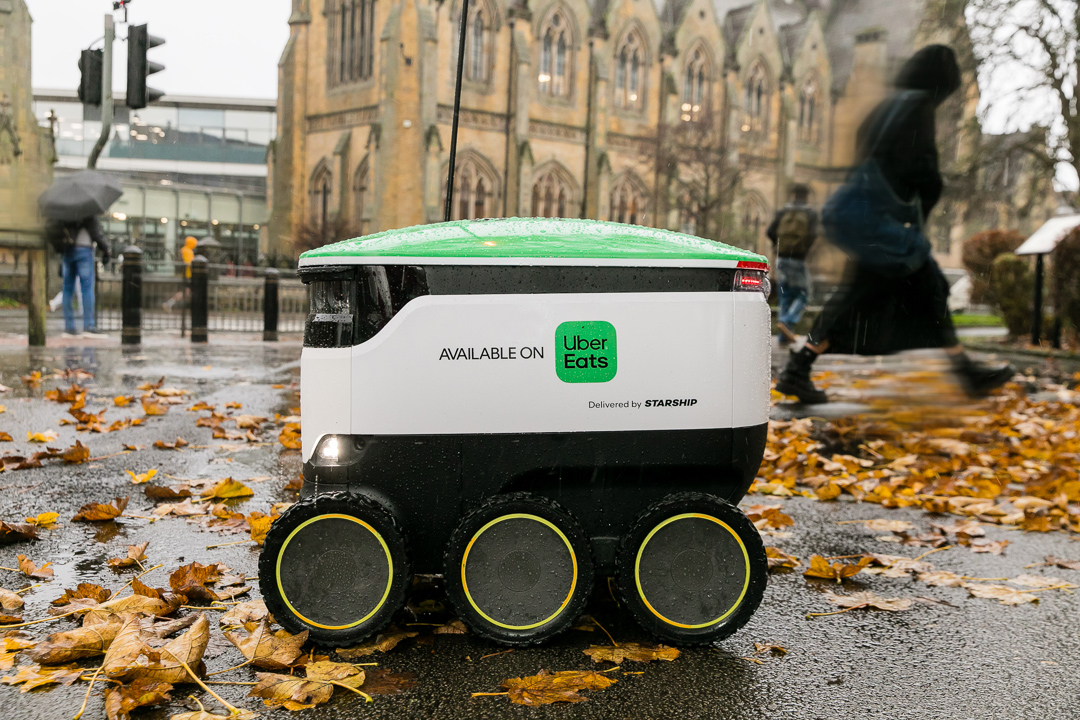
A significant shift in urban logistics is on the horizon for the United Kingdom as Uber Eats announces a strategic collaboration with Starship Technologies, a leading developer of autonomous sidewalk delivery robots. This partnership marks a pivotal moment in the evolution of food delivery, integrating advanced robotics into the last-mile supply chain to enhance efficiency and explore new operational paradigms. The initiative is set to commence later this year, initially rolling out in select cities across the UK.
The Dawn of Autonomous Delivery
The initial phase of this groundbreaking service will launch in the bustling urban centers of Leeds and Sheffield, targeting specific merchants within these areas beginning in December. This measured approach allows both companies to fine-tune operations, gauge consumer reception, and optimize the integration of autonomous robots into the existing delivery ecosystem. Looking beyond the UK, the ambitious plan includes an expansion to additional European markets by 2026, followed by a major push into the United States by 2027. This phased global rollout underscores a long-term vision for robotic delivery, positioning it as a fundamental component of future logistics networks for Uber Eats.
Starship Technologies: A Pioneer in Sidewalk Robotics
Starship Technologies has long been at the forefront of developing and deploying autonomous delivery robots. Founded in 2014 by Skype co-founders Ahti Heinla and Janus Friis, the company has dedicated nearly a decade to perfecting its six-wheeled, cooler-sized robots designed for navigating pedestrian areas. These electric-powered vehicles are equipped with an array of sensors, cameras, and artificial intelligence to perceive their surroundings, detect obstacles, and safely traverse sidewalks. Their operational model emphasizes short-distance deliveries, typically covering no more than two miles, with an impressive average delivery time of under 30 minutes.
With nearly 3,000 robots actively deployed across more than 270 locations globally, Starship has amassed considerable operational experience. Their robots are a common sight on university campuses and in suburban areas in various countries, including the U.S., Germany, and Estonia, where they’ve completed millions of autonomous deliveries. This extensive track record provides a robust foundation for their expansion with Uber Eats, bringing a proven, scalable technology to a major global delivery platform. The partnership leverages Starship’s expertise in hardware and navigation with Uber Eats’ vast network and customer base, creating a powerful synergy.
Uber’s Strategic Push into Automation
This collaboration with Starship Technologies is not an isolated venture but rather the latest move in Uber’s broader, aggressive strategy to integrate autonomous vehicle technology across its various services. For years, Uber has been actively exploring and investing in self-driving solutions, recognizing their potential to revolutionize transportation and logistics. The company’s vision extends beyond ride-hailing to include the future of food and grocery delivery, where automation promises significant operational efficiencies and cost reductions.
Uber Eats has already established a precedent for utilizing sidewalk delivery robots. In the United States, the food delivery arm has partnered with Serve Robotics, deploying their autonomous bots for several years in various markets. More recently, earlier this year, Uber Eats also began incorporating Avride’s sidewalk robots into its delivery infrastructure. These prior engagements underscore Uber’s commitment to piloting and scaling autonomous delivery solutions, treating each partnership as a learning opportunity to refine its approach and expand its capabilities. By diversifying its autonomous partners, Uber gains valuable insights into different technological approaches and operational models, mitigating risks and accelerating its path toward widespread robotic deployment. This multi-vendor strategy reflects a pragmatic approach to innovation, ensuring resilience and adaptability in a rapidly evolving technological landscape.
The Evolving Landscape of Food Delivery
The global food delivery market has experienced explosive growth over the past decade, driven by shifting consumer habits, urbanization, and technological advancements. Platforms like Uber Eats, DoorDash, Deliveroo, and Just Eat Takeaway have become ubiquitous, fundamentally altering how people access meals. However, this growth has come with its own set of challenges, particularly concerning profitability and the sustainability of the gig economy model. High labor costs, fluctuating demand, and the complexities of last-mile logistics often compress margins for both platforms and restaurants.
Automation, particularly in the form of sidewalk robots, presents a compelling solution to many of these challenges. By reducing reliance on human drivers for short-distance, on-demand deliveries, companies can potentially lower operational costs, increase efficiency, and offer more competitive pricing to consumers. This shift also addresses issues related to driver availability, especially during peak hours or in areas with labor shortages. The introduction of robots could also provide a more consistent and predictable delivery service, less susceptible to traffic congestion or human error. For restaurants, automated delivery could mean wider reach and reduced dependency on third-party delivery personnel, offering greater control over the customer experience.
Economic and Operational Advantages
The integration of Starship robots into the Uber Eats network is expected to yield several economic and operational advantages. From a cost perspective, autonomous robots can operate at a lower variable cost per delivery compared to human couriers, as they do not require wages, benefits, or vehicle maintenance associated with human-driven vehicles. This long-term cost efficiency could translate into improved profitability for Uber Eats and potentially lower delivery fees for consumers, making the service more accessible and appealing.
Operationally, robots offer unparalleled consistency and reliability. They are immune to human fatigue, traffic frustrations, or weather conditions in the same way human drivers are. Their pre-programmed routes and GPS navigation ensure optimal efficiency, while their electric propulsion systems contribute to a reduced carbon footprint compared to gasoline-powered vehicles. This aligns with broader sustainability goals and caters to an increasingly environmentally conscious consumer base. Furthermore, the ability of robots to operate during off-peak hours or in areas where human delivery might be less economically viable opens up new opportunities for service expansion and market penetration. For merchants, this could mean reaching a broader customer base and increasing order volumes, fostering growth in local economies.
Navigating Public Perception and Regulatory Hurdles
While the technological capabilities of autonomous delivery robots are advancing rapidly, their widespread adoption is not without complexities, particularly concerning public perception and the regulatory landscape. The sight of a robot navigating public sidewalks can evoke a range of reactions, from curiosity and excitement to apprehension or even annoyance. Concerns about safety, potential collisions with pedestrians, accessibility for individuals with disabilities, and the overall impact on urban aesthetics are frequently raised.
Regulatory frameworks for autonomous sidewalk robots are still evolving. Cities and countries are grappling with questions of jurisdiction, liability, and the need for standardized safety protocols. Some municipalities have welcomed these innovations, seeing them as a step towards smart city development, while others have imposed strict limitations or outright bans due to safety or public space concerns. Starship Technologies, like other autonomous robot companies, has invested heavily in robust safety features, including multiple cameras, ultrasonic sensors, radar, and advanced AI algorithms that allow the robots to stop instantly or reroute to avoid obstacles. Engaging with local communities and authorities, educating the public about the technology, and demonstrating a commitment to safety will be crucial for Starship and Uber Eats to secure public trust and facilitate smoother regulatory pathways for their expansion.
The Future of Last-Mile Logistics
The partnership between Uber Eats and Starship Technologies is more than just a collaboration; it represents a significant step towards a future where automated systems play an increasingly prominent role in urban logistics. This trend is part of a larger movement towards automation across industries, driven by technological progress, economic pressures, and the desire for greater efficiency. As autonomous delivery networks mature, they have the potential to reshape urban environments, reduce traffic congestion, lower emissions, and redefine job roles within the logistics sector.
While some jobs may be displaced, new opportunities are likely to emerge in robot maintenance, fleet management, software development, and customer support for automated services. The long-term vision includes a highly interconnected and optimized delivery ecosystem where human and robotic efforts complement each other, offering unprecedented speed, reliability, and cost-effectiveness. This pioneering venture in the UK sets a precedent, offering valuable insights into the practicalities, benefits, and challenges of integrating autonomous sidewalk robots into a mainstream food delivery platform, thereby paving the way for a more automated and efficient future for last-mile logistics globally.