Amir Mahmud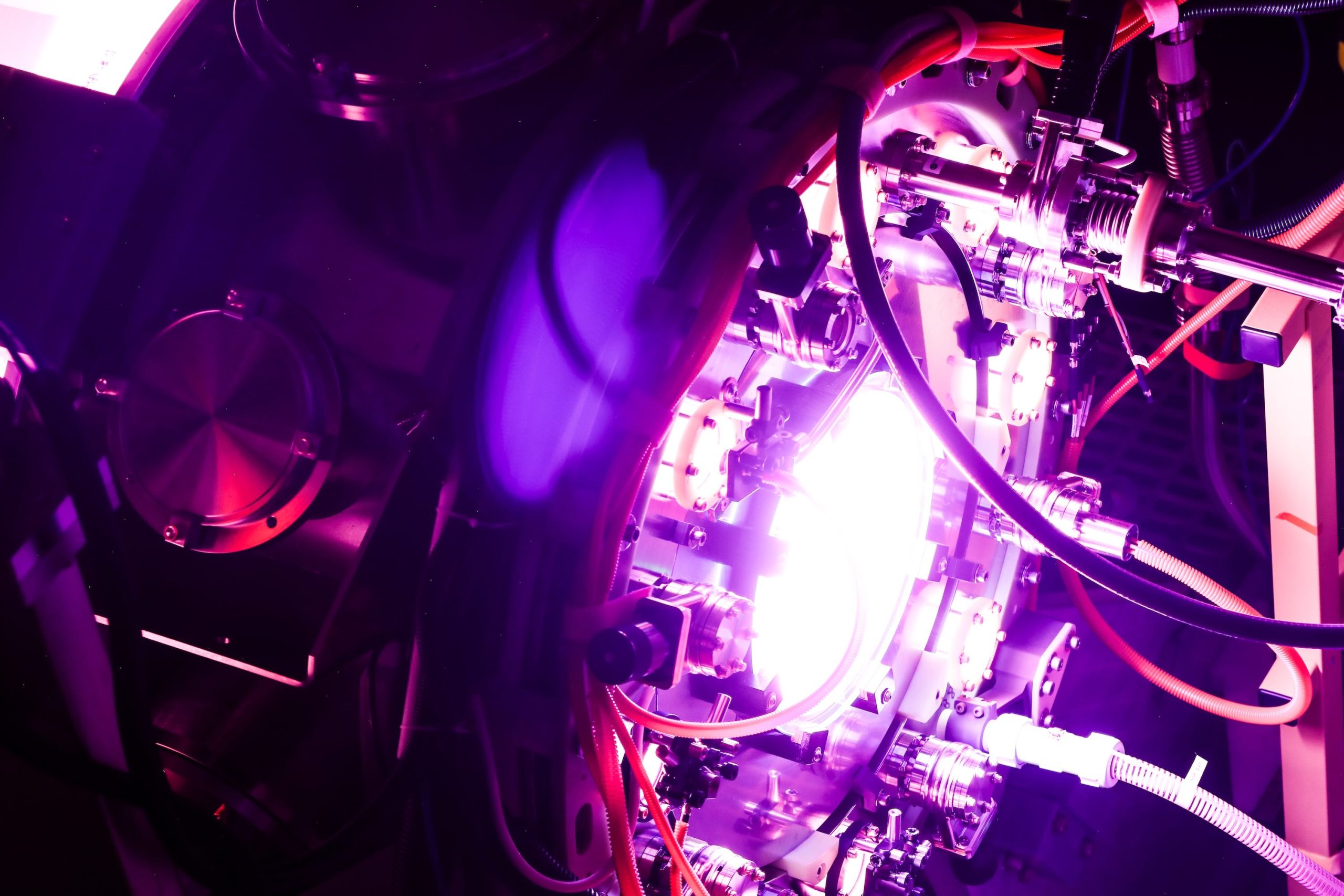
Helion, an innovative fusion energy company based in Everett, Washington, recently announced a pivotal advancement in its pursuit of commercial fusion power, marking a significant stride in the global quest for clean, limitless energy. Plasmas within the company’s Polaris prototype reactor have successfully reached an extraordinary 150 million degrees Celsius. This remarkable temperature represents three-quarters of the firm’s projected requirement for operating a future commercial fusion power plant, bringing the long-sought goal of sustainable energy generation closer to reality.
“We’re obviously really excited to be able to get to this place,” stated David Kirtley, Helion’s co-founder and CEO, reflecting on the achievement. Beyond the temperature benchmark, Polaris is also operating using a fuel mixture of deuterium and tritium, two isotopes of hydrogen. Kirtley emphasized that this makes Helion the first private fusion company to achieve such operation, observing a dramatic and expected increase in fusion power output manifested as heat. This development positions Helion at the forefront of a highly competitive field, racing against numerous other ventures to harness the immense potential of fusion energy.
The Enduring Quest for Fusion Energy
The pursuit of fusion energy represents one of humanity’s most ambitious scientific and engineering challenges. Unlike nuclear fission, which splits heavy atoms to release energy, nuclear fusion mimics the process powering the sun and stars, combining light atomic nuclei to form heavier ones, releasing vast amounts of energy in the process. The appeal of fusion is profound: it promises a virtually inexhaustible supply of clean energy derived from readily available fuels like deuterium (found in seawater) and potentially tritium. Crucially, fusion power generation would produce no long-lived radioactive waste, emit no greenhouse gases, and present no risk of runaway chain reactions, addressing key environmental and safety concerns associated with current energy sources.
The journey to achieve controlled nuclear fusion has spanned over half a century, beginning in earnest in the mid-20th century. Early experiments explored various confinement methods, primarily magnetic confinement (using powerful magnetic fields to trap hot plasma) and inertial confinement (using lasers or particle beams to compress fuel pellets). Large-scale international collaborations, such as the International Thermonuclear Experimental Reactor (ITER) project in France, have driven much of the public sector research, pushing the boundaries of scientific understanding and engineering. However, for decades, fusion remained an elusive dream, perpetually "30 years away" from commercial viability. The recent surge in private investment and technological breakthroughs, exemplified by Helion’s progress, suggests that this timeline might finally be shrinking. The societal impact of successful fusion could be transformative, offering a stable, dense, and dispatchable power source that could fundamentally reshape global energy landscapes, providing energy security and mitigating climate change on an unprecedented scale.
Helion’s Distinctive Technological Pathway
Helion differentiates itself within the fusion landscape through its unique reactor design, known as a field-reversed configuration (FRC). While many fusion initiatives, including ITER and companies like Commonwealth Fusion Systems, utilize the tokamak design—a doughnut-shaped device that uses magnetic fields to contain plasma—Helion’s approach is fundamentally different. The FRC concept employs a magnetic field structure where the plasma itself generates a significant portion of the confining magnetic field, allowing for a more compact and potentially higher-power-density device.
The Polaris reactor, an FRC machine, features an hourglass-shaped vacuum chamber. In the wider ends of this chamber, deuterium and tritium fuel are injected and rapidly heated, transforming into plasma. Powerful magnetic fields then accelerate these plasma rings towards each other. Upon their initial merger at the center of the hourglass, the plasma reaches temperatures of approximately 10 to 20 million degrees Celsius. Subsequently, even stronger magnetic fields compress this merged plasma ball further, rapidly elevating its temperature to the recently achieved 150 million degrees Celsius—all occurring in less than a millisecond. This dynamic, pulsed operation is a hallmark of Helion’s technology.
A key innovation in Helion’s design lies in its method of energy extraction. Unlike most fusion concepts that aim to capture energy as heat, which then drives a conventional steam turbine to generate electricity, Helion’s FRC reactor is designed for direct electricity generation. Each fusion pulse within the reactor generates its own intense magnetic field. This field, as it expands, pushes back against the reactor’s existing magnets, inducing an electrical current that can be directly harvested. This direct conversion process is theoretically more efficient than traditional thermal cycles, potentially reducing the overall complexity and cost of a commercial power plant. Over the past year, Helion has focused on refining the reactor’s electrical circuits, significantly boosting the efficiency of this direct energy recovery process.
Fuel Strategy: From D-T to Deuterium-Helium-3
While Helion currently employs deuterium-tritium (D-T) fuel, a common choice among fusion researchers due to its relatively lower ignition temperature, the company’s long-term vision involves transitioning to a deuterium-helium-3 (D-He3) fuel cycle. D-T fusion reactions produce a high flux of energetic neutrons, which can activate reactor materials and necessitate robust shielding. In contrast, D-He3 fusion primarily produces charged particles rather than neutrons. This characteristic makes D-He3 particularly well-suited for Helion’s direct electricity conversion method, as these charged particles interact more effectively with magnetic fields, enhancing the efficiency of induced current generation and minimizing neutron-induced radioactivity.
The primary challenge with D-He3 fuel is the extreme scarcity of Helium-3 on Earth. While it is abundant on the Moon, terrestrial sources are negligible. To overcome this, Helion plans to implement a self-sustaining fuel cycle. Initially, they will fuse deuterium nuclei with other deuterium nuclei (D-D reactions) to produce the first batches of Helium-3. In steady-state operation, while the main power generation will come from D-He3 fusion, a portion of the reactions will continue to be D-D. The Helium-3 produced from these secondary D-D reactions will then be purified and recycled back into the main fuel stream, establishing a closed-loop system.
This ambitious fuel strategy adds a layer of complexity to Helion’s development, but it also promises significant advantages in terms of cleaner operations and potentially higher efficiency. According to Kirtley, the development of this sophisticated fuel cycle has progressed surprisingly well. “It’s been a pleasant surprise in that a lot of that technology has been easier to do than maybe we expected,” he noted, adding that Helion has achieved "very high efficiencies in terms of both throughput and purity" in producing Helium-3. This unique approach could also position Helion as a future supplier of Helium-3 to other fusion companies, as Kirtley hinted at the possibility of selling the isotope to other firms that might eventually adopt direct electricity recovery methods.
The Escalating Race to Commercialize Fusion
Helion’s achievement unfolds amidst an accelerating global race to commercialize fusion power, driven by escalating climate change concerns, the imperative for energy security, and unprecedented private sector investment. While governments have historically funded large, long-term fusion projects like ITER, the past decade has seen a dramatic influx of private capital into numerous startups, each vying to be the first to deliver grid-scale fusion energy. This shift reflects a growing belief that innovative, agile private companies can accelerate development cycles and overcome the immense engineering hurdles faster than traditional public research programs.
The financial stakes are enormous, with billions of dollars pouring into the sector. Just this week, Inertia Enterprises announced a substantial $450 million Series A funding round, attracting major investors like Bessemer and Alphabet’s GV. Earlier in the year, Type One Energy disclosed it was in the process of raising $250 million. Last summer, Commonwealth Fusion Systems, a prominent competitor, secured an impressive $863 million from a consortium including Google and Nvidia. Helion itself has benefited from this investment frenzy, raising $425 million last year from notable backers such as Sam Altman, Mithril, Lightspeed, and SoftBank.
This competitive landscape also features varying timelines. Most fusion startups are targeting the early 2030s for putting electricity onto the grid. However, Helion operates under a particularly ambitious schedule, having secured a contract with Microsoft to provide electricity starting in 2028. This power will not come from the Polaris prototype but from Orion, a larger, 50-megawatt commercial reactor that Helion is currently constructing, underscoring the company’s commitment to rapid commercialization. Helion’s ultimate goal for its plasma is to reach 200 million degrees Celsius, a significantly higher target than many competitors, directly linked to its FRC design and D-He3 fuel choice. “We believe that at 200 million degrees, that’s where you get into that optimal sweet spot of where you want to operate a power plant,” Kirtley explained, highlighting the specific design requirements that dictate their temperature targets.
Milestones, Challenges, and the Path Ahead
Helion’s recent achievement of 150 million degrees Celsius is a critical engineering milestone, validating aspects of its FRC design and its ability to achieve extreme plasma conditions. Operating with deuterium-tritium fuel, and observing the expected increase in power output, further solidifies their progress. However, the path to commercial fusion involves more than just achieving high temperatures. A crucial concept in fusion research is "scientific breakeven," defined as the point where a fusion reaction generates more energy than it consumes to initiate and sustain it. When asked about this, Kirtley demurred, stating, “We focus on the electricity piece, making electricity, rather than the pure scientific milestones.” This response underscores Helion’s pragmatic, engineering-focused approach, prioritizing net electrical output over a purely scientific energy gain metric, which can sometimes be debated in its definition.
The challenges remaining for Helion and the broader fusion industry are substantial. Beyond achieving the target temperature of 200 million degrees Celsius, Helion must demonstrate sustained operation, high energy gain, and the ability to scale its technology from the Polaris prototype to the commercial-scale Orion reactor. Ensuring the reliability, cost-effectiveness, and maintainability of these complex systems in a commercial setting will be paramount. Furthermore, the regulatory frameworks for fusion energy are still nascent, and navigating these will be another significant hurdle.
If successful, fusion power could revolutionize energy production, providing a dense, continuous, and environmentally benign energy source. It would offer a powerful complement to intermittent renewable sources like solar and wind, providing baseload power without the carbon emissions of fossil fuels or the long-term waste disposal issues of nuclear fission. The economic impact could be immense, fostering new industries, creating high-tech jobs, and potentially reducing global energy costs in the long run. Helion’s progress with Polaris, therefore, is not merely a technical achievement; it is a beacon of hope in the ongoing global effort to secure a sustainable energy future for generations to come. The journey from scientific breakthrough to widespread commercial deployment remains arduous, but each milestone, like Helion’s latest, brings the world closer to realizing the dream of abundant, clean energy.