Amir Mahmud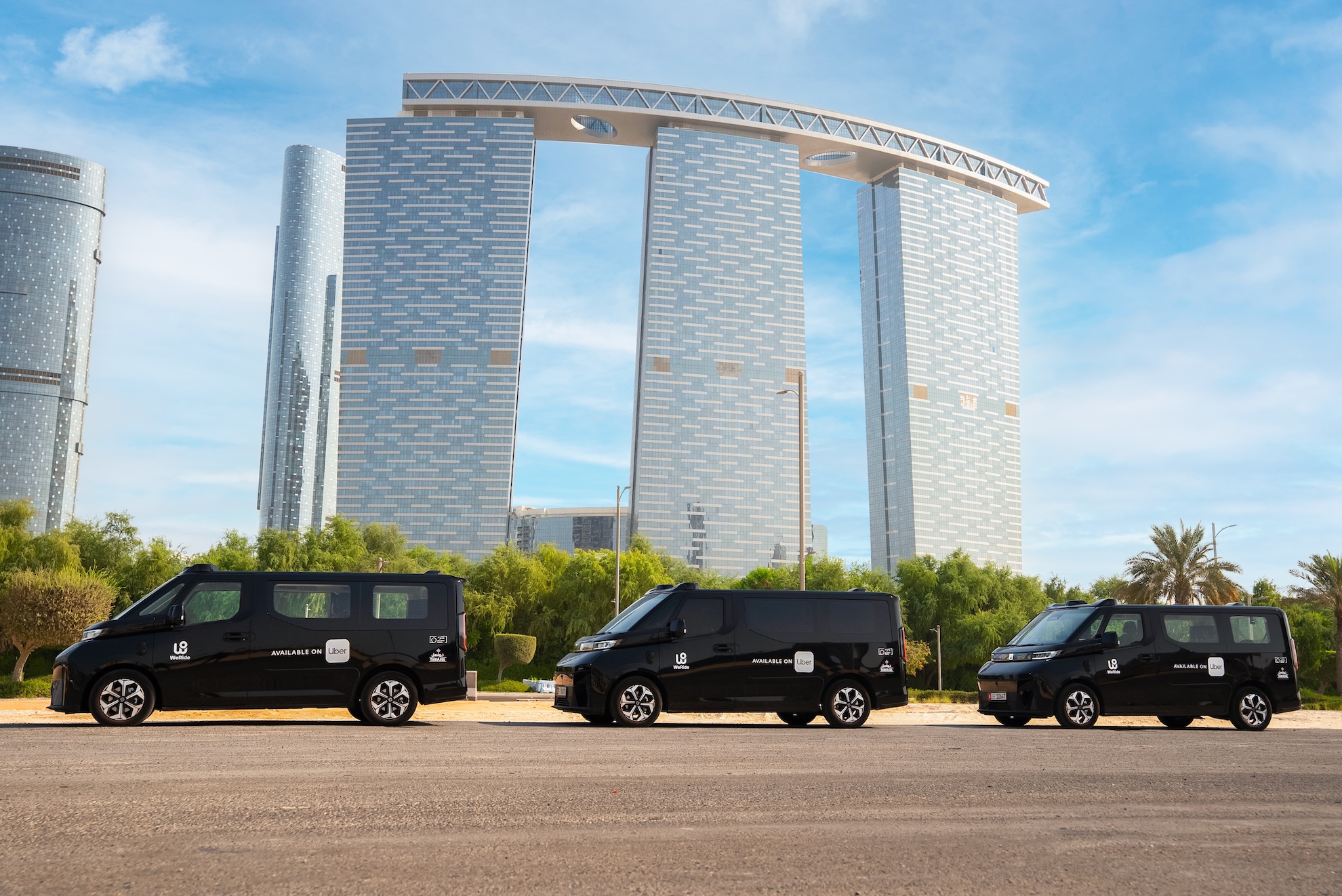
A significant stride in autonomous mobility has been achieved in the Middle East, as the collaborative venture between ride-sharing giant Uber and Chinese autonomous vehicle technology firm WeRide officially transitioned its robotaxi service in Abu Dhabi to fully driverless operations. This pivotal development, occurring a year after their initial commercial launch, marks a historic moment, establishing the first deployment of completely autonomous vehicles for public commercial use outside of the United States and China.
The newly driverless service is now accessible to the public, initially navigating designated routes across Yas Island. This prominent tourist and entertainment hub, renowned globally as the venue for the Abu Dhabi Grand Prix Formula 1 racing circuit, provides a controlled yet high-profile environment for the nascent technology. The removal of human safety operators from behind the wheel represents a critical advancement, signifying robust confidence in the system’s maturity and safety protocols.
The Road to Driverless Operations in the UAE
The journey to full autonomy for the Uber and WeRide partnership in Abu Dhabi has been a deliberate and carefully orchestrated process. The initial commercial robotaxi service, launched approximately a year prior, commenced with human safety operators present in the vehicles. This supervised phase allowed for extensive real-world data collection, system refinement, and the gradual build-up of operational experience within the specific environmental and traffic conditions of Abu Dhabi. Such phased deployments are standard practice in the autonomous vehicle industry, enabling developers to iteratively enhance their technology while ensuring public safety.
A crucial enabler for this transition was the recent acquisition of a federal permit from the United Arab Emirates authorities. This permit explicitly authorizes the conduct of fully driverless commercial robotaxi operations, underscoring the UAE’s progressive stance on adopting advanced technologies. Governments worldwide grapple with the complexities of regulating autonomous vehicles, often balancing innovation with safety concerns. The UAE’s proactive regulatory framework has positioned it as an attractive testbed and early adopter for these cutting-edge transportation solutions, demonstrating a clear commitment to fostering a technology-driven economy and smart urban environments.
WeRide, a Guangzhou-based company, has been a frontrunner in the development of Level 4 (L4) autonomous driving technology, meaning its vehicles can operate independently under specific conditions without human intervention. Its global expansion strategy has seen it establish a strong presence in its home market of China, and its partnership with Uber in the Middle East is a testament to its ambition to become a global leader in autonomous mobility.
Uber’s Strategic Pivot in Autonomous Mobility
Uber’s involvement in the autonomous vehicle space has evolved significantly over the years. Initially investing heavily in its own in-house self-driving division, Advanced Technologies Group (ATG), the company later shifted its strategy. Recognizing the immense capital expenditure, prolonged development cycles, and regulatory hurdles associated with developing autonomous technology from scratch, Uber opted for a partnership-centric model. This strategic pivot involved divesting ATG and instead forging alliances with a diverse array of specialized autonomous vehicle technology companies.
This partnership strategy allows Uber to leverage the expertise and technology developed by others, effectively integrating various autonomous systems into its vast ride-hailing and delivery network without bearing the full financial and operational burden of primary research and development. This approach mitigates risk, accelerates market entry, and enables a broader geographical and technological reach. Over the past two years, Uber has cultivated partnerships with more than 20 autonomous vehicle technology companies across multiple continents, including North America, Europe, and the Middle East.
These collaborations extend beyond conventional robotaxis, encompassing a full spectrum of self-driving applications such as automated delivery services and autonomous long-haul trucking. Notable partnerships include those with May Mobility and Volkswagen for robotaxi services, Chinese firms like Momenta, Pony.ai, and Baidu, and a recent agreement with San Francisco-based startup Nuro to launch a premium robotaxi service utilizing Lucid Gravity SUVs equipped with Nuro’s self-driving system. This broad and diversified portfolio highlights Uber’s intent to become the leading platform for autonomous mobility, irrespective of the underlying technology provider.
Operational Mechanics and Future Expansion
The integration of WeRide’s driverless robotaxis into Uber’s platform in Abu Dhabi mirrors the company’s existing partnerships, such as its collaboration with Waymo in Austin, Texas. Uber users in Abu Dhabi requesting a ride through the Uber app via services like Uber Comfort or UberX may be matched with a WeRide robotaxi. For passengers specifically seeking an entirely autonomous experience, the app offers a dedicated "Autonomous" option, increasing their likelihood of being assigned a driverless vehicle. This user-friendly interface is designed to gradually familiarize the public with autonomous services while offering choice.
The operational backbone of this service also involves local fleet operator Tawasul, emphasizing the importance of local partnerships in navigating regional nuances and ensuring smooth logistical management. While the service is currently confined to Yas Island, there are concrete plans to expand driverless operations to cover additional areas within Abu Dhabi’s bustling city center. This incremental expansion strategy is typical for autonomous deployments, allowing companies to gradually scale their operations as they gather more data and build public trust. Beyond Abu Dhabi, Uber and WeRide have ambitious shared plans to extend their driverless services across 15 cities throughout the wider Middle East and European regions, with Dubai frequently cited as a prominent next target. This vision includes scaling the fleet to thousands of robotaxis, a substantial leap from the current regional deployment of over 150 vehicles.
The Global Landscape of Autonomous Mobility
The launch in Abu Dhabi is a crucial data point in the global race to commercialize autonomous vehicle technology. The development of self-driving cars has been a dream for decades, evolving from theoretical concepts in the mid-20th century to sophisticated Level 4 and Level 5 (fully autonomous under all conditions) systems today. Billions of dollars have been invested by tech giants, automotive manufacturers, and startups alike, all vying for a slice of what is projected to be a multi-trillion-dollar industry.
Key players like Waymo (Google’s self-driving unit) and Cruise (majority-owned by GM) have been at the forefront in the United States, deploying robotaxi services in cities like Phoenix, San Francisco, and Austin. China also boasts a robust autonomous vehicle ecosystem, with companies like Baidu (Apollo), Pony.ai, and WeRide making significant advancements and deploying services in several major cities. The challenges faced by these pioneers are numerous, ranging from complex urban environments and unpredictable human behavior to stringent regulatory frameworks and the ever-present need for public acceptance.
The Middle East, particularly the UAE, presents a unique and often favorable environment for autonomous vehicle development. Cities like Abu Dhabi and Dubai feature modern infrastructure, well-maintained road networks, and a strategic governmental push towards smart city initiatives. These factors, combined with a relatively less complex regulatory landscape compared to some Western nations, make the region an attractive hub for piloting and scaling autonomous technologies. This proactive approach contrasts with some regions where regulatory hurdles and public skepticism have slowed adoption.
Market and Societal Impact
The widespread adoption of driverless robotaxis could usher in profound market and societal transformations. Economically, autonomous vehicles promise reduced operating costs for ride-hailing services by eliminating the need for human drivers, potentially leading to lower fares and increased accessibility. This could also create new job opportunities in areas like fleet maintenance, remote supervision, and software development, even as it displaces traditional driving roles.
Socially, autonomous vehicles hold the potential to enhance urban mobility. They could improve traffic flow, reduce congestion, and alleviate parking demands, particularly in densely populated areas. For individuals with disabilities or those unable to drive, robotaxis offer unprecedented independence and access to transportation. Furthermore, if integrated with electric vehicle platforms, as many robotaxi services are, they contribute to environmental sustainability by reducing carbon emissions and noise pollution.
However, the societal impact is not without its complexities. Public perception and trust remain critical barriers. High-profile incidents, even if rare, can significantly erode public confidence. Ethical dilemmas, such as programming responses in unavoidable accident scenarios, are also subjects of ongoing debate. Culturally, the shift from human-driven vehicles to autonomous ones represents a significant change, and acceptance levels may vary depending on local customs and values. In tech-forward societies like the UAE, where innovation is often embraced, adoption might be swifter than in more traditionally conservative regions.
Uber’s Ambitious Vision and Future Outlook
Uber CEO Dara Khosrowshahi has articulated an ambitious vision for the company’s autonomous future, forecasting autonomous vehicle deployments on the Uber network in at least 10 cities by the close of 2026. This aggressive timeline underscores the company’s commitment to integrating self-driving technology as a core component of its global strategy. The partnership with WeRide in Abu Dhabi, following the successful launch in Austin with Waymo, demonstrates this strategy materializing into tangible commercial services.
The expansion plans shared by Uber and WeRide, targeting 15 cities across the Middle East and Europe with thousands of robotaxis, highlight the immense scalability potential envisioned by both companies. This would represent a monumental leap for WeRide, significantly expanding its operational footprint and technological reach. However, achieving such scale requires overcoming substantial challenges, including continuous technological refinement, navigating diverse regulatory environments, building robust charging and maintenance infrastructure, and, crucially, securing broad public trust and acceptance.
The driverless launch in Abu Dhabi is more than just a localized service update; it is a powerful signal of the accelerating global trajectory of autonomous mobility. For Uber, it validates its partnership model and extends its reach into a critical emerging market. For WeRide, it solidifies its position as a global leader in L4 autonomous driving. For Abu Dhabi, it reinforces its status as a forward-thinking hub for technological innovation. As the autonomous vehicle industry continues to mature, such milestones pave the way for a future where driverless transportation becomes an increasingly common and integrated part of daily life worldwide.