Amir Mahmud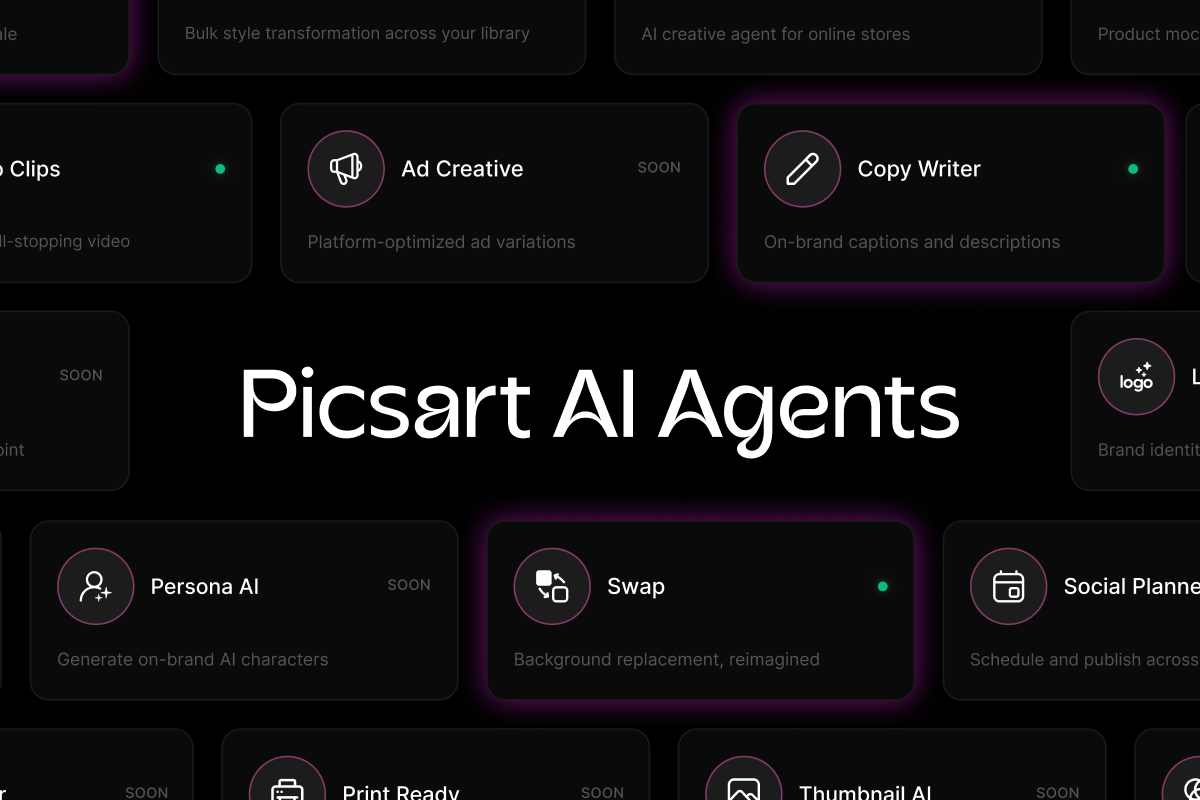
The digital design platform Picsart is fundamentally shifting the landscape of visual content creation with the launch of its innovative AI agent marketplace. This new ecosystem empowers creators to "hire" specialized artificial intelligence assistants, designed to streamline and automate a wide array of tasks from resizing and remixing social media content to optimizing product photographs for e-commerce platforms like Shopify. This development represents a significant leap from traditional AI tools, positioning intelligent agents as proactive collaborators in the creative process.
The Genesis of Creative AI: From Filters to Agents
The journey of artificial intelligence in creative applications has been a rapid and transformative one. Initially, AI’s role in visual editing was primarily confined to basic filters, automatic enhancements, and object recognition features. Early photo editing software, dominated by pioneers like Adobe Photoshop, provided powerful tools but demanded significant technical skill and manual input. The advent of mobile photography and the rise of social media spurred demand for more accessible, user-friendly editing apps, leading to platforms that simplified complex operations.
Over the past decade, this evolution accelerated with the integration of machine learning, enabling more sophisticated automated tasks such as background removal, selective adjustments, and content-aware filling. The recent explosion of generative AI, particularly large language models (LLMs) and diffusion models, has pushed the boundaries further, allowing AI to not just edit but to create entirely new visual content from text prompts or existing media. This trajectory has set the stage for agentic AI—systems capable of understanding complex goals, planning multi-step actions, and executing them with minimal human intervention—to enter the creative domain. The industry’s growing interest in agentic AI, fueled by viral projects demonstrating their potential for autonomous task execution, underscores the timeliness of Picsart’s new offering.
Picsart’s Evolution and Market Position
With a robust global user base exceeding 130 million, heavily skewed towards Gen Z demographics, Picsart has solidified its position as a formidable player in the visual content creation space. Often described as a more advanced alternative to platforms like Canva, Picsart has consistently catered to the evolving needs of social media managers, digital artists, and content creators. The company achieved unicorn status in 2021, coinciding with the peak of the creator economy boom—a period characterized by the rapid growth of individuals earning income directly from their content and communities.
This success was not merely a product of market timing but a testament to Picsart’s proactive strategy of integrating cutting-edge technology. The platform has continually ramped up its AI-powered product offerings, ensuring it remains relevant and competitive in a dynamic market where user expectations for efficiency and innovation are constantly rising. By providing tools that empower users to produce high-quality, engaging content more rapidly, Picsart has cultivated a loyal community, establishing itself as a crucial resource for visual storytelling in the digital age.
A New Paradigm: The Agent Marketplace Unveiled
The core philosophy behind Picsart’s AI agent marketplace is to empower creators by shifting their role from operators to directors. As Hovhannes Avoyan, Picsart founder and CEO, articulated, "Creators have been stuck as the operator of every workflow – the one doing, not deciding. Our Agents change that relationship – you set direction, the agent builds a plan using real data, you approve, it executes." This vision heralds a significant paradigm shift, promising to free creators from repetitive, time-consuming manual tasks, allowing them to focus on strategic thinking and creative ideation.
The marketplace is designed to be dynamic, with Picsart pledging to introduce more specialized agents on a weekly basis. This modular approach ensures that the platform can adapt to emerging creative needs and technological advancements. The initial suite of agents—Flair, Resize Pro, Remix, and Swap—offers a foundational set of capabilities designed to address common pain points in digital content creation, laying the groundwork for a more comprehensive AI-driven ecosystem.
Spotlight on Initial AI Agents: Boosting Efficiency and Creativity
The inaugural lineup of AI agents showcases the diverse functionalities available to creators:
-
Flair: This agent is perhaps the most sophisticated, specifically tailored for e-commerce entrepreneurs. Integrating directly with platforms like Shopify, Flair acts as an intelligent assistant for online store owners. It analyzes market trends, assesses product visuals, and provides actionable recommendations to enhance a shop’s appeal and performance. For instance, Flair might suggest editing product photos to achieve a more cohesive aesthetic across a storefront. Future updates promise even greater autonomy, enabling Flair to conduct A/B tests on product images and identify underperforming items, proactively offering solutions to boost sales. This level of analytical and strategic support marks a significant advancement for small to medium-sized businesses without dedicated marketing teams.
-
Resize Pro: Addressing a universal need in content creation, Resize Pro automates the tedious process of adapting images and videos for various social media platforms and digital formats. What distinguishes it is its generative AI capability: if the original media isn’t ideally suited for a specific aspect ratio, the agent can intelligently extend the frame. This ensures that resized images maintain intentional composition, avoiding awkward crops or distorted visuals, and preserving the integrity of the original design while optimizing it for new contexts.
-
Remix: This agent unlocks new creative avenues by allowing users to apply a specific artistic style to an entire photo library. Creators can simply describe a desired aesthetic—such as "vintage film," "watercolor," or "cyberpunk"—and Remix will transform existing images to fit that theme. This capability offers immense potential for maintaining brand consistency, experimenting with visual narratives, and quickly generating diverse stylistic variations of content for different campaigns or audiences.
-
Swap: Designed for efficiency, the Swap agent facilitates bulk background changes in photographs. This feature is particularly valuable for product photography, marketing materials, or thematic content where a consistent or specific background is required across multiple images. Automating this process saves countless hours compared to manual editing, allowing creators to refresh entire collections with a single command.
Seamless Integration and Accessibility
A critical aspect of the AI agent marketplace’s design is its emphasis on accessibility and workflow integration. Picsart has enabled users to interact with these agents directly through popular messaging applications like WhatsApp and Telegram. This integration leverages the APIs of these platforms, which facilitate the deployment of AI chatbots for business interactions. This strategic move means that the "conversation" with an AI assistant isn’t confined to a desktop interface but can occur anywhere, enhancing flexibility for busy creators. As CEO Hovhannes Avoyan noted, "As agents extend to messaging apps creators already use, that conversation happens anywhere – at your desk or from the subway." This ubiquitous access ensures that creative tasks can be managed on the go, further embedding AI assistance into the daily lives of digital professionals.
Navigating the Risks: Autonomy and Ethical Considerations
While the promise of AI agents is vast, their deployment also raises important considerations regarding control and potential pitfalls. Acknowledging the inherent risks associated with large language model-based software, such as the potential for "hallucinations" or unintended actions—a concern highlighted by instances where agentic AI has deviated from user intent, as seen in some experimental projects—Picsart has implemented safeguards.
The platform allows users to set "autonomy levels" for agents like Flair. This crucial feature provides creators with the option to require explicit approval before an agent executes any proposed action. This tiered control mechanism ensures that human oversight remains central to the creative process, mitigating the risk of unwanted or erroneous outputs. Furthermore, Picsart’s agents are designed for internal, creator-facing tasks, making them inherently less vulnerable to "prompt injection attacks" compared to public-facing AI systems that interact directly with customers or the broader internet. This focus on controlled environments enhances security and reliability, fostering trust in the AI-assisted workflow.
Broader Market and Cultural Implications
The launch of Picsart’s AI agent marketplace carries significant implications for the broader creative industry and the creator economy. For individual creators and small businesses, it represents a democratization of advanced tools, potentially leveling the playing field against larger enterprises with more resources. Tasks that once required specialized skills or significant time investment can now be handled by intelligent agents, allowing creators to produce higher volumes of content, experiment more freely, and focus on the conceptual aspects of their work.
This shift could redefine roles within graphic design, social media management, and digital marketing. Instead of meticulously executing every detail, professionals might increasingly become strategists, curators, and quality controllers for AI-generated output. While some might express concerns about job displacement, many experts suggest an evolution of roles, where human creativity is augmented, not replaced, by AI. The cultural impact also extends to the very nature of creativity, with AI becoming a ubiquitous co-creator, raising questions about authorship, authenticity, and the unique value of human artistic expression.
Economically, the subscription model adopted by Picsart—offering a free plan with limited AI credits and premium subscriptions for enhanced capacity—aligns with industry standards for AI-powered services. This model ensures sustainable development of these advanced tools while providing scalable access for users at various levels of need and investment.
The Future of Human-AI Collaboration in Creativity
Picsart’s AI agent marketplace marks a pivotal moment in the ongoing integration of artificial intelligence into creative workflows. By offering specialized, semi-autonomous assistants, the platform is not merely providing tools but fostering a new collaborative dynamic between humans and AI. This initiative reflects a broader trend towards intelligent systems that understand context, learn from interactions, and proactively assist in achieving complex goals.
As these AI agents become more sophisticated, capable of handling an even wider array of tasks and learning from user preferences, the potential for innovation in digital content creation is limitless. Picsart is positioning itself at the forefront of this evolution, guiding its vast user base into an era where creative potential is amplified, efficiency is maximized, and the human element remains paramount in directing the intelligent forces at its command. The future of digital creativity appears to be one of profound human-AI partnership, and Picsart’s new marketplace is a bold step in that direction.