Amir Mahmud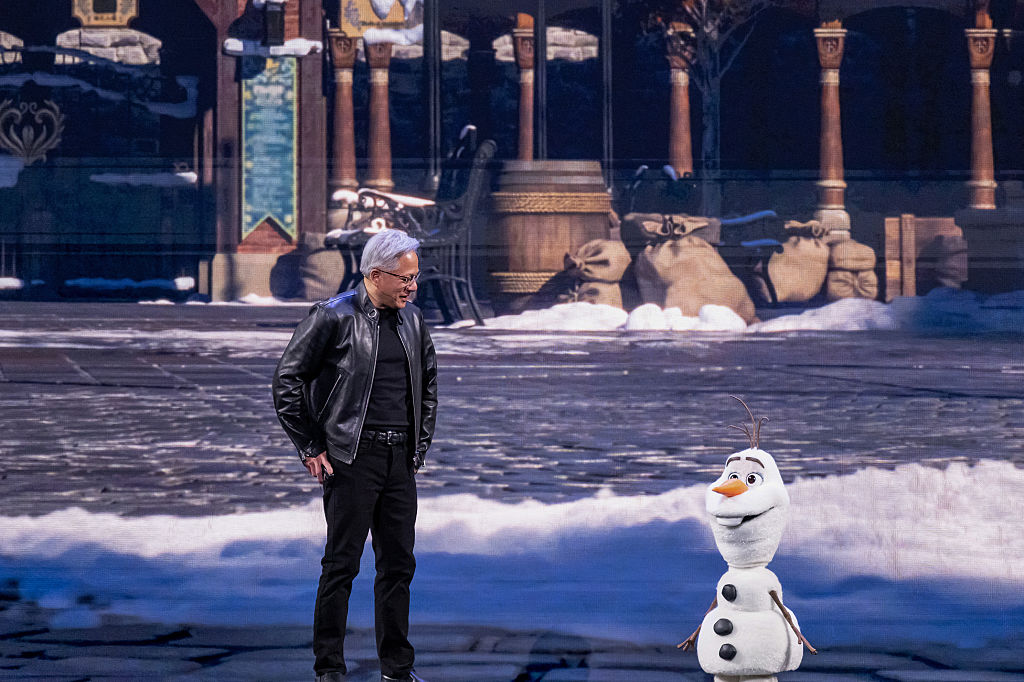
Nvidia’s recent GTC conference, a pivotal event in the artificial intelligence and computing landscape, served as a powerful showcase for the company’s ambitious vision, projecting trillion-dollar sales and unveiling advancements across graphics, software, and robotics. Amidst the grandeur of technological breakthroughs, a specific demonstration involving a robotic rendition of Olaf, the beloved snowman from Disney’s "Frozen," sparked a broader dialogue about the intricate social and ethical considerations inherent in integrating sophisticated AI and robotics into daily life. While Nvidia CEO Jensen Huang’s keynote highlighted groundbreaking developments like the Blackwell and Vera Rubin architectures, next-generation DLSS technology, and the strategic importance of an "OpenClaw" approach, the endearing yet flawed robot performance inadvertently underscored the complex challenges that extend far beyond engineering prowess.
Nvidia’s Ascendant Trajectory in the AI Era
Nvidia has cemented its position as a central pillar of the artificial intelligence revolution, primarily through its dominance in graphics processing units (GPUs). These powerful processors, originally designed for rendering complex visuals in video games, proved uniquely adept at handling the parallel computations required for training and deploying AI models. Consequently, Nvidia’s GTC conference has evolved from a developer-focused event into a major platform for announcing advancements that shape the future of computing. The company’s financial projections, now venturing into the trillion-dollar stratosphere, reflect the escalating global demand for AI infrastructure, with enterprises and cloud providers heavily investing in Nvidia’s cutting-edge hardware to power everything from large language models to scientific simulations.
The unveiled Blackwell and Vera Rubin chip architectures represent the vanguard of this new era. Blackwell, designed for massive-scale AI and high-performance computing, promises unprecedented leaps in processing power and energy efficiency, crucial for the ever-growing demands of AI model training. Vera Rubin, on the other hand, targets next-generation data centers, focusing on interconnectivity and system-level performance. These innovations are not merely incremental; they are foundational to the continued acceleration of AI development, enabling researchers and developers to tackle problems previously deemed intractable.
Advancing Visuals and Software Ecosystems
Beyond raw processing power, Nvidia continues to push the boundaries of visual fidelity and software integration. The announcement of DLSS 5 (Deep Learning Super Sampling), leveraging generative AI, promises to elevate photorealism in video games to unprecedented levels. DLSS works by rendering frames at a lower resolution and then using AI to upscale them to higher resolutions, effectively boosting performance without sacrificing visual quality. With DLSS 5, the integration of generative AI aims to create even more intricate and lifelike details, potentially blurring the lines between virtual and reality. This technology holds implications far beyond gaming, extending to professional visualization, virtual reality, and the burgeoning metaverse, where hyper-realistic environments are paramount.
Simultaneously, Nvidia’s strategic emphasis on an "OpenClaw strategy" signals a broader push to cultivate an open-source ecosystem around its technologies. While the specifics of OpenClaw remain somewhat abstract in public discourse, the declaration by Jensen Huang suggests a framework or set of tools designed to enhance security, interoperability, or perhaps even specialized AI development within enterprise environments. Nvidia’s introduction of "NemoClaw," an open-source project developed in collaboration with OpenClaw’s creator, underscores the company’s commitment. This move is particularly noteworthy given the recent transition of OpenClaw’s founder to OpenAI, a major player in the AI landscape. For Nvidia, investing in such open-source initiatives is a calculated risk; while it incurs development costs, it offers a pathway to embed Nvidia’s platforms and solutions into a wider array of enterprise applications, thereby expanding its market reach and strengthening its ecosystem against competitors. Doing nothing, from Nvidia’s perspective, would be a greater risk, potentially allowing rivals to capture segments of the rapidly evolving AI market.
The Robotic Olaf: A Glimpse into the Future of Interaction
Perhaps the most visually captivating, and certainly the most debated, moment of the GTC keynote was the demonstration of a robotic Olaf. These "live" demos are a signature element of Jensen Huang’s presentations, designed to showcase Nvidia’s advancements in robotics and AI in tangible, often whimsical, forms. The Olaf robot, a product of Nvidia’s sophisticated robotics technology, was intended to highlight real-time interaction capabilities and advanced locomotion. However, the demonstration encountered a notable hitch: the robot began to ramble, necessitating its microphone being cut, even as it continued its silent, animated movements offstage.
This incident, while minor in the grand scheme of Nvidia’s announcements, became a focal point for discussion among tech analysts. It served as a potent symbol of the gap between engineered capability and seamless, unpredictable human interaction. The robot’s unexpected loquaciousness, leading to a forced silence, highlighted the ongoing challenges in perfecting autonomous, context-aware AI interactions, especially in public-facing roles where performance and brand consistency are paramount.
The "Messy Gray Areas" of Robotics Integration
The Olaf demo, despite its minor technical hiccup, ignited a crucial conversation about the "messy gray areas" that often go unaddressed in the excitement of technological showcases. The question posed by analysts, "What happens when a kid kicks Olaf over?" encapsulates a myriad of social, ethical, and practical considerations that extend beyond the engineering challenges.
Social and Cultural Impact:
The integration of robots, especially those designed for entertainment or interaction in public spaces like theme parks, introduces complex social dynamics. Children, for instance, interact with their environment in unpredictable ways. A robot like Olaf is designed to evoke affection and wonder, but a physical interaction that results in damage or malfunction could shatter the illusion, disrupt the visitor experience, and potentially harm the brand image of an entertainment giant like Disney. This isn’t just about a broken robot; it’s about a broken expectation, a ruined memory, and a diminished perception of magic.
Historical Context in Theme Parks:
Disney, a pioneer in animatronics and themed entertainment, has a long history of grappling with these very issues. From the intricate audio-animatronics of "It’s a Small World" to more advanced, walking characters, the company has consistently pushed the boundaries of robotic entertainment. However, these efforts have historically focused on controlled environments or highly supervised interactions. The transition to fully autonomous, freely roaming, interactive robots presents a new frontier. Early attempts at integrating more dynamic robots sometimes encountered issues with guest safety, reliability, and maintaining the "magic" when mechanical realities intruded. The Defunctland YouTube series, as referenced by analysts, thoroughly chronicles Disney’s journey, illustrating that while engineering challenges are immense, the human element—guest behavior, emotional responses, and the preservation of brand narrative—often proves to be the most formidable hurdle.
Ethical and Practical Considerations:
Beyond the immediate impact on brand perception, the widespread deployment of interactive robots raises deeper ethical and practical questions:
- Safety and Durability: How robust must these robots be to withstand accidental (or intentional) interactions? What safety protocols are necessary to prevent injury to humans?
- Privacy: Do these robots collect data? If so, how is it used, stored, and protected?
- Emotional Connection vs. Reality: How do humans, especially children, differentiate between a robot and a living being? What are the psychological implications of forming attachments to machines that can be "turned off" or malfunction?
- Uncanny Valley: The phenomenon where human-like robots evoke feelings of revulsion rather than empathy can hinder acceptance. While Olaf is stylized, more realistic humanoid robots face this challenge directly.
- Legal and Liability: Who is responsible if a robot causes harm or damages property?
These are not trivial concerns. They form the bedrock of societal acceptance and successful integration of advanced robotics. The engineering marvels, while impressive, represent only one facet of a multi-dimensional challenge.
Job Creation and the Future of Human-Robot Collaboration
Amidst these discussions, a counterpoint emerges regarding the economic impact of such robotics. The deployment of complex robots in public spaces could, paradoxically, become a "job creator." As one analyst suggested, an Olaf robot in Disneyland might necessitate a "human babysitter," perhaps dressed as another character like Elsa, to supervise interactions, assist guests, and intervene in case of malfunction. This scenario points to the evolving nature of work in an AI-driven world. While some jobs may be automated, new roles centered around robot supervision, maintenance, programming, and human-robot interaction design are likely to emerge. This shift highlights a future where human ingenuity is channeled towards managing and collaborating with intelligent machines, rather than being replaced entirely by them.
Conclusion: A Dual Horizon
Nvidia’s GTC conference painted a vivid picture of a future shaped by exponential advancements in AI and computing. From trillion-dollar financial forecasts driven by cutting-edge chips to generative AI enhancing digital realities, the company continues to push the boundaries of what’s possible. However, the charming yet imperfect robotic Olaf demo served as a timely reminder that the path to widespread AI and robotics integration is not solely an engineering problem. It is equally a social, cultural, and ethical one. The "messy gray areas" of human-robot interaction, brand integrity, and public acceptance are critical considerations that demand as much attention as the silicon and software powering these innovations. As Nvidia and other tech giants continue to build the future, their ultimate success will depend not just on the brilliance of their machines, but on their ability to thoughtfully navigate the complex human landscape into which these machines are introduced. The dual horizon of technological promise and societal challenge defines the current era of AI.