Amir Mahmud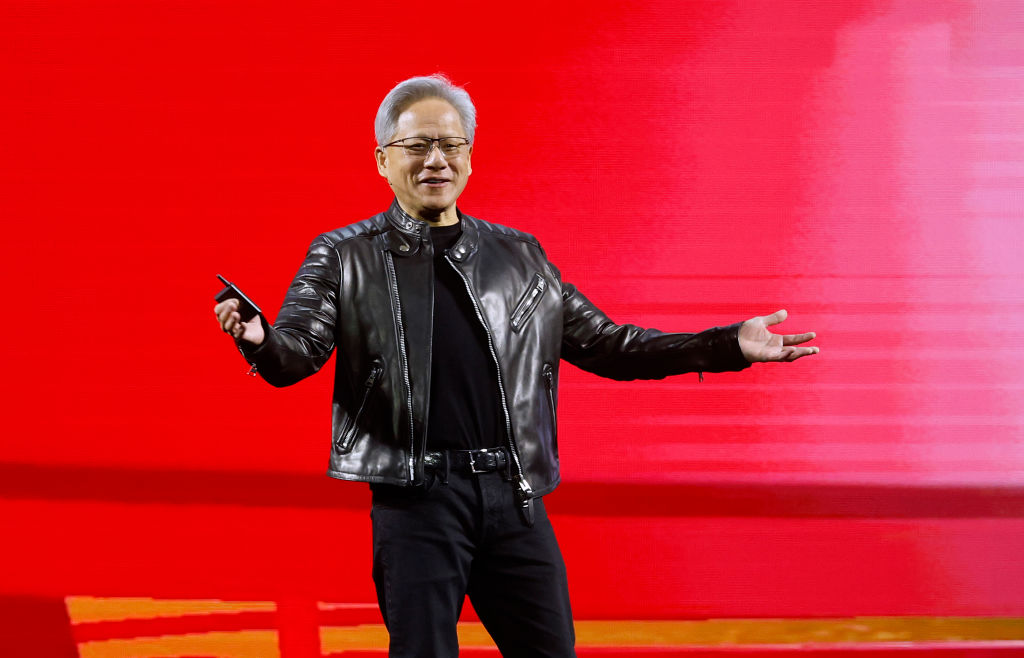
The chief executive of Nvidia, Jensen Huang, has forcefully refuted recent media reports suggesting a significant investment and infrastructure partnership with artificial intelligence pioneer OpenAI has encountered difficulties. Speaking publicly, Huang characterized claims of friction or a scaling back of the anticipated $100 billion commitment as "nonsense," reaffirming Nvidia’s intent to participate in OpenAI’s latest funding round due to its perceived value and strategic importance.
Initial Response and Core Controversy
The controversy ignited following a late Friday report by The Wall Street Journal, which alleged that the ambitious, non-binding agreement between the two tech giants was being re-evaluated. According to the Journal’s sources, Nvidia was exploring a reduced investment in OpenAI, and Huang himself had privately voiced criticisms regarding OpenAI’s business strategy while expressing concerns about the competitive landscape, particularly the rise of rivals like Anthropic and Google. This report sent ripples through the technology sector, given the immense scale of the initially proposed collaboration and the central roles both companies play in the burgeoning AI revolution.
However, during a visit to Taipei, Taiwan, Huang directly addressed the swirling rumors. He unequivocally stated that Nvidia would "definitely participate" in OpenAI’s ongoing funding efforts, labeling it an "excellent investment." He further expressed profound confidence in OpenAI’s mission and accomplishments, declaring it "one of the most consequential companies of our time" and pledging a substantial financial commitment without specifying an exact figure, deferring that announcement to OpenAI CEO Sam Altman. An OpenAI spokesperson, in comments to The Wall Street Journal, acknowledged that both companies are "actively working through the details of our partnership," while emphasizing Nvidia’s foundational role in their breakthroughs and ongoing operations.
The Ambitious Original Vision
The initial, groundbreaking collaboration between Nvidia and OpenAI, unveiled in September, outlined a monumental plan: Nvidia would invest up to $100 billion in OpenAI and concurrently undertake the construction of 10 gigawatts of advanced computing infrastructure specifically designed for the AI firm. This proposed deal represented an unprecedented level of investment in AI infrastructure, reflecting the astronomical computational demands of developing and deploying increasingly sophisticated large language models (LLMs) and other AI technologies. Such an undertaking would signify not just a financial stake but a deep, intertwined operational dependency, with Nvidia providing the very backbone of OpenAI’s future technological expansion.
The concept of building 10 gigawatts of computing power is staggering. To put this into perspective, 1 gigawatt can power hundreds of thousands of homes. Ten gigawatts dedicated to AI operations would require an enormous investment in data centers, cooling systems, and, crucially, Nvidia’s specialized Graphics Processing Units (GPUs), which are the workhorses of modern AI. This scale underscored the partners’ shared vision for accelerating AI development to an unparalleled degree, potentially cementing OpenAI’s lead in the generative AI race and solidifying Nvidia’s position as the indispensable supplier of AI hardware.
Nvidia’s Ascendance in the AI Era
Nvidia’s journey from a niche gaming graphics card manufacturer to a global AI powerhouse is a pivotal narrative in contemporary technology. Founded in 1993, the company initially revolutionized the gaming industry with its powerful GPUs, enabling realistic 3D graphics. However, it was the fortuitous discovery in the early 2010s that these same GPUs, designed for parallel processing, were exceptionally well-suited for the complex mathematical computations required by machine learning and deep learning algorithms that propelled Nvidia into its current dominant position.
The company’s CUDA platform, a parallel computing architecture, became the de facto standard for AI researchers and developers, creating a powerful ecosystem around Nvidia’s hardware. This strategic foresight allowed Nvidia to capitalize on the AI boom, transforming it into the world’s most valuable chipmaker and a critical enabler of the entire artificial intelligence industry. Its H100 and A100 GPUs are indispensable tools for training large AI models, leading to unprecedented demand and significant market influence. The "picks and shovels" analogy often applies to Nvidia; while others are mining for AI gold, Nvidia provides the essential tools, making it a beneficiary regardless of which specific AI application or company ultimately triumphs. The company’s market capitalization has soared, reflecting investor confidence in its sustained leadership in AI infrastructure.
OpenAI’s Rapid Growth and Strategic Partnerships
OpenAI, established in 2015 with a mission to ensure artificial general intelligence (AGI) benefits all of humanity, experienced a meteoric rise, particularly after the public release of ChatGPT in late 2022. This conversational AI model captivated the world, demonstrating the transformative potential of generative AI and sparking a global AI arms race. From its initial non-profit roots, OpenAI transitioned into a "capped-profit" entity to attract the massive capital required for AGI development, while maintaining its original mission through a complex governance structure.
The company’s journey has been marked by significant milestones, including the development of GPT-3, DALL-E, and subsequent iterations of its foundational models. Its relationship with Microsoft has been particularly crucial, with the tech giant investing billions and integrating OpenAI’s technologies across its product suite, providing OpenAI with crucial cloud computing resources via Azure. This partnership, however, also highlighted the need for OpenAI to diversify its infrastructure and potentially forge deeper alliances, making the reported Nvidia deal all the more significant. The recent leadership turmoil involving Sam Altman’s brief ouster and subsequent return further underscored the complexities of governing such a rapidly evolving and influential organization, potentially influencing investor sentiment and the structuring of future deals.
Navigating the AI Investment Landscape
The reported $100 billion figure for the Nvidia-OpenAI collaboration, whether as a direct investment or a commitment to infrastructure, underscores the staggering capital requirements of advanced AI development. Training the next generation of AI models demands vast computational resources, consuming enormous amounts of energy and requiring sophisticated, high-performance hardware. This makes the ability to secure funding and build out infrastructure a key determinant of success in the AI race.
The Wall Street Journal’s report suggested that, rather than the initial comprehensive plan, recent discussions might have shifted towards a more conventional equity investment of "tens of billions of dollars" from Nvidia. This potential pivot, if accurate, could reflect several factors: the inherent complexities of structuring and executing a deal of the original magnitude, evolving strategic priorities for both companies, or even the challenging valuations in a rapidly fluctuating market. Mega-deals of this nature often involve intricate negotiations, regulatory considerations, and careful alignment of long-term strategic objectives, making them susceptible to adjustments.
Moreover, the report mentioned Huang’s alleged private criticisms of OpenAI’s business strategy and concerns about competitors. Such sentiments, if true, would highlight the nuanced relationship between a critical supplier like Nvidia and its key customers. While Nvidia benefits from the proliferation of AI, it also must strategically navigate a landscape where its customers, including OpenAI, are not only fierce competitors among themselves but are also reportedly exploring or developing their own custom AI chips to reduce dependency on external suppliers. This creates a delicate balance between partnership and potential competition.
Market Implications and Future Trajectories
The clarification from Jensen Huang is crucial for market stability, especially given Nvidia’s current standing. Any perceived weakening of a major strategic partnership with a leader like OpenAI could trigger investor uncertainty, potentially impacting Nvidia’s stock performance and the broader tech market. Nvidia’s valuation is heavily tied to its growth narrative in AI, making strong, visible alliances essential.
For OpenAI, securing substantial funding and infrastructure is paramount to maintaining its competitive edge. Reports indicate that OpenAI is actively seeking to raise a new $100 billion funding round at an astounding valuation of $830 billion. Such a raise would solidify its position as one of the most valuable private companies globally. The involvement of major players like Nvidia, Amazon, Microsoft, and SoftBank in these funding discussions, as reported by The New York Times, signifies the immense confidence and strategic interest in OpenAI’s future, despite any reported transactional complexities.
The scale of capital flowing into AI signifies a profound shift in global economic priorities. It reflects not just technological advancement but a societal re-orientation towards AI as a foundational layer for future innovation, productivity, and even geopolitical influence. The outcome of these investment negotiations will shape not only the trajectories of Nvidia and OpenAI but also the broader landscape of AI development, potentially influencing who has access to cutting-edge computing power and, consequently, who leads in the race to build the next generation of intelligent systems.
The Broader AI Ecosystem and Competition
The AI sector is characterized by intense competition and a dynamic ecosystem of alliances and rivalries. While OpenAI and Microsoft form one powerful bloc, Google’s DeepMind and Anthropic, backed by Amazon and others, represent formidable contenders. Each player is vying for talent, market share, and, critically, the computational infrastructure necessary to train increasingly sophisticated models. Nvidia’s role as the primary enabler of this AI arms race places it in a uniquely influential position, yet also one requiring careful strategic maneuvering.
The reported concerns about competitors like Anthropic and Google from within Nvidia, if accurate, underscore the competitive pressures within the industry. While Nvidia profits from all players requiring its GPUs, direct investment or deep strategic ties with one major player like OpenAI could be perceived as favoring one competitor over others. This delicate balance must be managed to maintain Nvidia’s pervasive role across the entire AI ecosystem.
In conclusion, Jensen Huang’s emphatic denial serves to reassure stakeholders about the enduring strategic partnership between Nvidia and OpenAI. While the precise structure and final figures of their collaboration may evolve, the underlying commitment to accelerating AI development through massive computational power remains a defining characteristic of this pivotal relationship. The ongoing negotiations and the scale of the proposed investments highlight the unprecedented economic and technological stakes in the global race for AI supremacy.