Amir Mahmud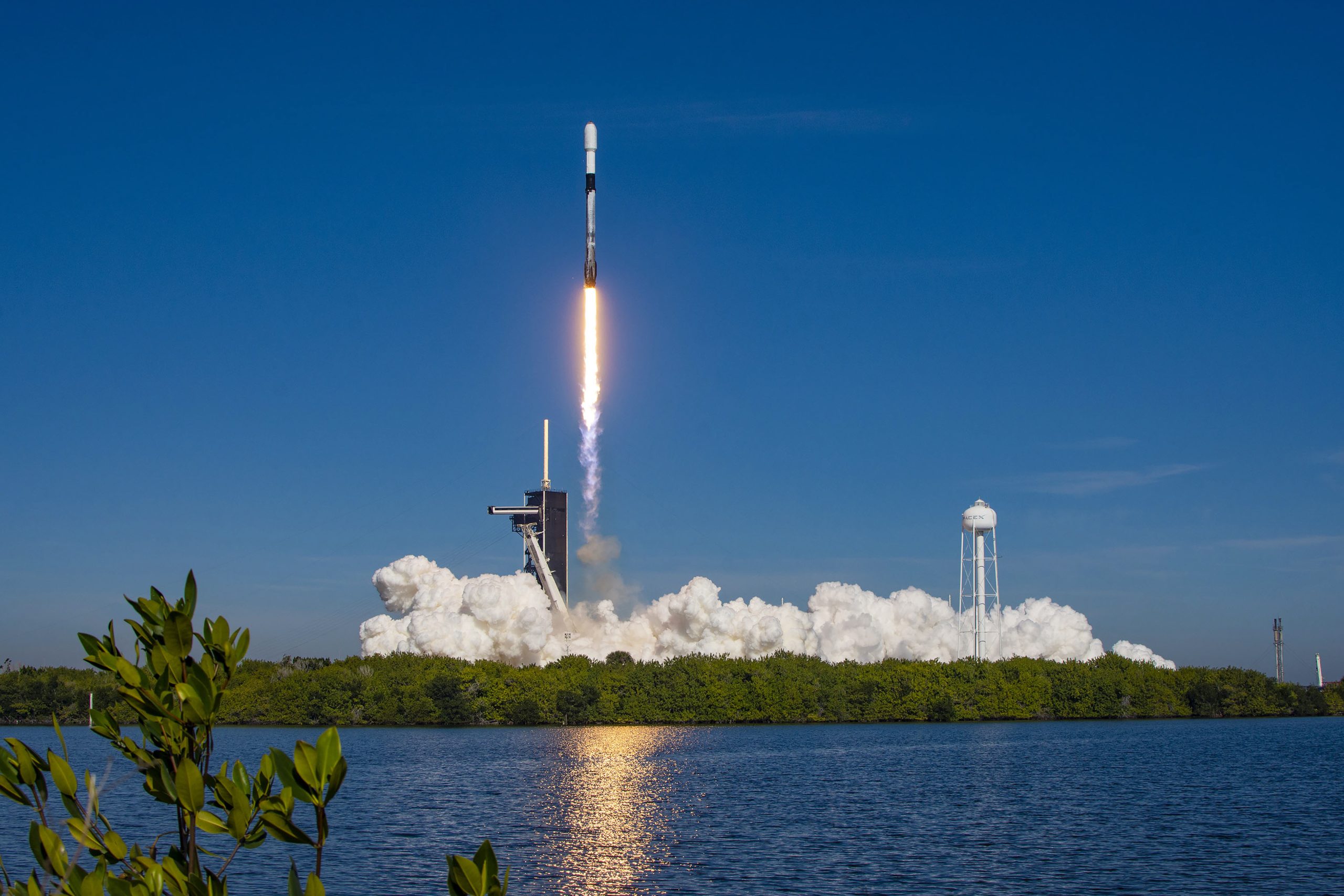
The Federal Communications Commission (FCC) recently authorized SpaceX to deploy an additional 7,500 of its second-generation Starlink satellites, marking a pivotal moment in the company’s ambitious quest to deliver global high-speed internet. This decision, announced on a Friday, represents a significant stride in expanding the Starlink network’s reach and capabilities, particularly for those in underserved and remote regions worldwide. The approval specifically targets a portion of SpaceX’s much larger proposal for a next-generation constellation, signaling both regulatory confidence and a cautious approach to orbital deployment.
The regulatory body’s decision extends beyond merely increasing the number of satellites in orbit. It also grants SpaceX the authority for these advanced Starlink satellites to operate across five distinct frequency bands. Crucially, this authorization paves the way for direct-to-cell connectivity outside the United States, a groundbreaking feature that promises to revolutionize mobile communication. Additionally, it permits supplemental direct-to-cell coverage within the U.S., enhancing cellular service in areas traditionally plagued by connectivity gaps.
The FCC’s Deliberation and Deployment Timelines
SpaceX had initially sought approval for a much larger deployment, specifically requesting authorization for nearly 30,000 Gen2 Starlink satellites. However, the FCC chose to greenlight only 7,500 at this juncture, deferring a decision on the remaining proposed Gen2 satellites. This measured approach likely reflects the commission’s commitment to ensuring responsible orbital practices, mitigating potential risks associated with large constellations, and allowing for careful observation of the initial deployment’s impact. Such deferrals are not uncommon in the rapidly evolving space industry, where regulatory bodies must balance innovation with environmental and operational considerations.
The approval comes with stringent deployment timelines. SpaceX is mandated to launch 50% of the newly authorized Starlink satellites by December 1, 2028. The remaining 50% must be in orbit by December 2031. These deadlines underscore the FCC’s intent to ensure timely progress while also providing a framework for accountability, preventing the indefinite reservation of orbital slots without active deployment. This phased approach allows for technological refinements and addresses any unforeseen challenges that may arise during the expansion.
Starlink’s Genesis: A Vision for Global Connectivity
To understand the significance of this latest approval, it’s essential to revisit the origins and evolution of the Starlink project. Conceived by SpaceX CEO Elon Musk, Starlink is an ambitious endeavor to create a vast constellation of satellites in low Earth orbit (LEO) to provide high-speed, low-latency internet access across the globe. The underlying philosophy is to connect the unconnected, bringing reliable internet to rural areas, remote communities, and regions where traditional terrestrial infrastructure is either prohibitively expensive or physically impossible to deploy.
SpaceX began launching its first operational Starlink satellites in 2019, initiating what would become a rapid-fire deployment strategy. Unlike traditional geostationary satellites, which orbit at much higher altitudes (approximately 35,786 kilometers) and suffer from significant signal latency, Starlink satellites operate at altitudes typically between 300 and 600 kilometers. This proximity to Earth dramatically reduces latency, making the service more responsive and suitable for real-time applications like online gaming, video conferencing, and cloud computing. The initial generations of Starlink satellites, often referred to as v1.0 and v1.5, laid the groundwork, demonstrating the feasibility and growing demand for LEO satellite internet. The transition to "Gen2" (or V2 Mini and eventually larger V2 satellites) signifies an upgrade in satellite design, capacity, and capabilities, including more powerful phased array antennas and advanced inter-satellite laser links for faster data transmission.
The Competitive LEO Landscape
Starlink’s journey is unfolding within a burgeoning and competitive LEO satellite internet market. While SpaceX currently holds a dominant position, several other formidable players are vying for a share of this potentially lucrative sector. OneWeb, backed by the UK government and Bharti Global, has also been deploying its own LEO constellation, primarily targeting business and government clients. Amazon’s Project Kuiper, a colossal undertaking with an announced investment of over $10 billion, is rapidly progressing, with initial prototype satellites already launched. Canadian company Telesat is also developing its Lightspeed constellation.
This intense competition is a testament to the immense global demand for reliable broadband. Traditional internet service providers (ISPs) often face economic and logistical hurdles in extending their fiber or cable networks to sparsely populated areas. LEO satellite constellations offer a viable alternative, bridging the digital divide and unlocking economic and educational opportunities for millions. The market impact of these constellations is profound, driving innovation in satellite technology, ground user terminals, and service delivery models. As more players enter the fray, consumers can expect increased competition, potentially leading to lower prices and enhanced services.
Technological Frontier: Direct-to-Cell Connectivity
Perhaps one of the most transformative aspects of the FCC’s recent approval is the authorization for direct-to-cell connectivity. This feature eliminates the need for a specialized Starlink dish, allowing ordinary smartphones to connect directly to satellites. While initial offerings are expected to focus on basic text messaging services, the long-term vision includes voice calls and eventually broadband data.
This capability holds immense promise for emergency services, disaster relief, and individuals in areas with no terrestrial cellular coverage. Imagine hikers lost in a remote wilderness, or communities cut off by natural disasters, still able to send vital messages. SpaceX has already forged partnerships, notably with T-Mobile in the U.S., to integrate this technology into existing cellular networks. The technical challenge of connecting a small smartphone antenna to a satellite hundreds of kilometers away is substantial, requiring highly advanced phased array antennas on the satellites and sophisticated signal processing. This advancement represents a significant leap towards truly ubiquitous global connectivity, fundamentally altering how people access and utilize mobile communication.
Regulatory Oversight and Orbital Sustainability
The expansion of mega-constellations like Starlink brings with it crucial regulatory considerations and environmental concerns, particularly regarding orbital debris and light pollution. The FCC, alongside international bodies like the International Telecommunication Union (ITU), plays a critical role in allocating spectrum and managing orbital slots to prevent interference and ensure safe operations.
One of the primary concerns is the escalating risk of orbital collisions, often referred to as the Kessler Syndrome, where a cascade of collisions could render certain orbital altitudes unusable. SpaceX has consistently emphasized its commitment to designing satellites that can autonomously deorbit at the end of their lifespan, burning up harmlessly in the atmosphere. They also incorporate collision avoidance systems and maintain a high degree of maneuverability. However, the sheer number of satellites planned by Starlink and its competitors necessitates ongoing vigilance and robust international cooperation on space traffic management.
Another point of contention has been light pollution. Astronomers have raised concerns that the reflective surfaces of LEO satellites, particularly during twilight hours, can interfere with ground-based astronomical observations, potentially obscuring faint celestial objects and impacting scientific research. SpaceX has responded by implementing design modifications, such as "VisorSat" sunshades and darkening coatings, to reduce the reflectivity of its satellites, attempting to strike a balance between technological progress and scientific preservation. The FCC’s phased approval for Gen2 satellites suggests a cautious approach, allowing for continued monitoring and mitigation efforts.
Social, Cultural, and Geopolitical Ramifications
The proliferation of global satellite internet has profound social and cultural implications. It accelerates the global equalization of information access, providing educational resources, healthcare information, and economic opportunities to populations previously marginalized by lack of connectivity. This can foster greater social mobility and reduce disparities between urban and rural areas.
From a geopolitical standpoint, the ability to provide resilient internet access, independent of terrestrial infrastructure, has become increasingly relevant. The use of Starlink in conflict zones, for instance, has demonstrated its strategic importance as a communication lifeline when ground-based networks are disrupted or controlled. This raises new questions about information sovereignty, access control, and the role of private entities in global communication infrastructure. As these constellations grow, so too will the debate surrounding their governance and ethical deployment.
The Road Ahead: Challenges and Future Prospects
Despite the considerable progress and the latest FCC approval, SpaceX’s Starlink project faces ongoing challenges. The sheer scale of manufacturing, launching, and maintaining tens of thousands of satellites is an unprecedented logistical feat. The financial sustainability of such a vast network, requiring continuous upgrades and replacements, remains a critical factor. SpaceX’s Starship launch system, currently under development, is central to its long-term Starlink strategy, promising to significantly reduce launch costs and increase payload capacity, enabling the deployment of larger, more capable Gen2 satellites.
The regulatory environment for space-based services is also continuously evolving. As technology advances and the number of orbital assets increases, national and international regulations will need to adapt to ensure a safe, sustainable, and equitable use of space. The FCC’s decision to approve only a portion of SpaceX’s requested Gen2 constellation underscores this dynamic regulatory landscape, emphasizing the need for ongoing dialogue and careful stewardship of orbital resources.
The approval for 7,500 additional Gen2 Starlink satellites represents another monumental step forward for SpaceX and the broader goal of global connectivity. It solidifies Starlink’s position as a leading force in the LEO internet revolution, bringing the promise of high-speed internet and groundbreaking direct-to-cell services closer to reality for millions around the world. As these advanced satellites ascend to orbit, they will not only expand the digital frontier but also continue to shape our understanding of what is possible in the vast expanse of space.