Amir Mahmud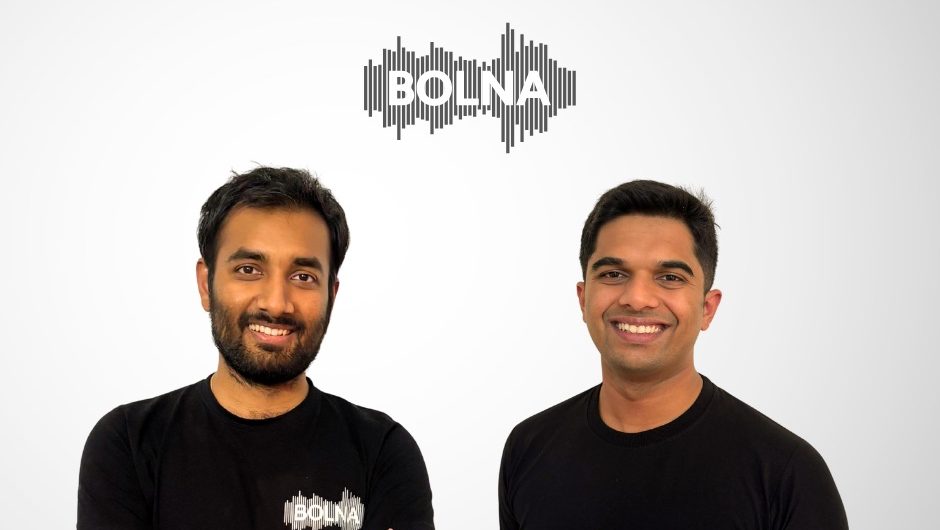
Bolna, an emerging leader in voice orchestration platforms, has successfully closed a $6.3 million seed funding round, signaling a significant investment in the future of conversational artificial intelligence within the Indian market. This substantial capital injection, spearheaded by prominent venture capital firm General Catalyst, underscores growing investor confidence in specialized AI solutions designed to navigate the intricate linguistic and technological landscape of India. The funding round also saw participation from notable investors including Y Combinator, Blume Ventures, Orange Collective, Pioneer Fund, Transpose Capital, and Eight Capital, alongside a diverse group of individual investors such as Aarthi Ramamurthy, Arpan Sheth, Sriwatsan Krishnan, Ravi Iyer, and Taro Fukuyama. This financial boost is poised to accelerate Bolna’s mission to empower Indian businesses with advanced, contextually aware voice AI agents, revolutionizing how companies interact with their vast and diverse customer base.
The Funding Milestone and Early Hurdles
The journey to this significant funding round was not without its challenges, highlighting the inherent skepticism that often accompanies groundbreaking ventures. Co-founded by Maitreya Wagh and Prateek Sachan, Bolna initially faced considerable doubt from investors regarding the willingness of Indian enterprises to adopt and pay for sophisticated voice AI solutions. This apprehension was most notably exemplified by Y Combinator, the renowned startup accelerator, which reportedly rejected Bolna’s application five times before finally accepting it into its Fall 2025 batch. The core concern revolved around the founders’ ability to translate evident market demand for voice AI into tangible, sustainable revenue.
Wagh recounted the early feedback received during the Y Combinator application process, stating that despite demonstrating a product capable of creating realistic voice agents, the prevailing sentiment was that "Indian enterprises are not going to pay, and you are not going to make money out of this." This initial skepticism served as a crucial proving ground for Bolna. Undeterred, the startup reapplied with the same core concept but armed with compelling evidence of market validation. By showcasing a consistent monthly revenue exceeding $25,000, generated through modest $100 pilot programs (which have since scaled to $500), Bolna effectively silenced the doubts and demonstrated a clear path to monetization. This pivot from concept to demonstrated revenue not only secured their place in Y Combinator but also laid the groundwork for the substantial seed round announced this week.
India’s Unique Digital Landscape and the Rise of Voice AI
India presents a uniquely fertile ground for voice AI innovation, characterized by a confluence of factors that make voice a preferred and often essential mode of interaction. The nation’s rapid digital transformation, propelled by initiatives like "Digital India" and widespread affordable mobile internet, has brought millions online, many for the first time. However, this digital inclusion comes with its own set of challenges, primarily the vast linguistic diversity—over 22 official languages and hundreds of dialects—and varying levels of digital literacy.
Historically, customer service in India has relied heavily on human agents, often leading to long wait times, inconsistent service quality, and difficulties in scaling support across multiple languages. Traditional Interactive Voice Response (IVR) systems, while prevalent, are frequently criticized for their rigidity and frustrating user experiences. The advent of generative AI and advanced natural language processing (NLP) has dramatically reshaped the capabilities of voice technology, moving beyond simple keyword recognition to nuanced, context-aware conversations. This shift has global implications, but in India, it offers a powerful tool to bridge communication gaps and democratize access to digital services. Voice AI agents, capable of understanding and responding in multiple Indian languages and adapting to regional accents and communication styles, can offer unparalleled accessibility and efficiency. For businesses, this translates to reduced operational costs, enhanced customer satisfaction, and the ability to serve a broader demographic.
Bolna’s Differentiated Approach: The Orchestration Layer
At its core, Bolna is developing an orchestration layer for voice AI, a strategic architectural choice that sets it apart in the rapidly evolving conversational AI landscape. Unlike solutions that rely on a single underlying AI model, Bolna’s platform acts as a sophisticated conductor, seamlessly integrating and managing various AI voice technologies. This approach mirrors that of other innovative startups globally, such as Vapi, LiveKit, and VoiceRun, but with a distinct focus on the specific demands of the Indian market.
The strategic advantage of an orchestration layer is its inherent flexibility and future-proofing. As the field of AI progresses at an unprecedented pace, new and improved voice models are constantly emerging. An enterprise tied to a single model risks obsolescence or suboptimal performance when a superior alternative becomes available. Bolna’s platform mitigates this risk by allowing businesses to easily switch between different models or even employ a combination of models tailored for specific tasks or linguistic contexts. As Maitreya Wagh explained, "Our platform allows customers to switch models easily or even use different models for different locales to get the best out of them. An orchestration layer is necessary for enterprises to ensure they are getting the best models because one model can be better today and another one can be better tomorrow." This model-agnostic approach empowers clients to always leverage the most effective and cutting-edge voice AI capabilities without being locked into a particular vendor or technology stack.
Tailoring Technology for Indian Nuances
What truly distinguishes Bolna is its meticulous attention to the "idiosyncrasies of interactions in India." Recognizing that a one-size-fits-all approach to voice AI is insufficient for such a complex market, Bolna has engineered specific features and functionalities that cater directly to local communication patterns and technological realities. These include advanced noise cancellation capabilities, crucial in environments where background noise can significantly impede voice recognition. Integration with Truecaller, a widely used caller ID platform in India, adds a layer of verification and trust, enhancing the security and reliability of voice interactions.
Furthermore, Bolna’s platform is designed to handle mixed languages—a common phenomenon in Indian conversations where English and regional languages are frequently interspersed (e.g., Hinglish). The system can intuitively process these linguistic blends, ensuring natural and effective communication. Other localized features include the ability to speak numbers in English regardless of the primary conversational language, reflecting a common practice in Indian business and personal communication, and allowing for keypad input for longer or more complex data entries, providing an alternative interaction method when voice input might be cumbersome. These culturally and technologically astute adaptations are vital for seamless adoption and high user satisfaction among Indian consumers and businesses.
Market Traction and Growth Trajectory
Bolna’s innovative approach has translated into impressive market traction and a robust growth trajectory. The company reports that a significant portion—approximately 75%—of its revenue is derived from self-serve customers, highlighting the platform’s user-friendliness and accessibility for businesses of varying sizes. This self-serve model caters effectively to small and mid-sized enterprises (SMEs) and startups that might lack dedicated AI teams or extensive technical resources. Bolna’s client roster already includes notable names like car reselling platform Spinny, on-demand house-help startup Snabbit, beverage companies, and various dating applications, showcasing the broad applicability of its voice orchestration platform across diverse industries.
Beyond its self-serve success, Bolna is aggressively pursuing larger enterprise deals, a critical strategy for scaling revenue and establishing market dominance. For these more complex implementations, Bolna deploys a team of "forward-deployed engineers" who work closely with clients, either on-site or virtually, to tailor solutions to specific organizational needs. This high-touch approach for strategic clients is proving effective, with Bolna having already secured two large enterprises as paying customers and an additional four currently in the pilot stage. To support this enterprise expansion, the company is rapidly growing its specialized engineering team, adding two to three new members monthly to its current nine forward-deployed engineers.
The cumulative effect of these strategies is evident in Bolna’s operational metrics. The platform is currently handling over 200,000 calls per day, a testament to its scalability and the burgeoning demand for voice AI services. This operational volume is translating directly into financial growth, with the company reportedly on the verge of crossing $700,000 in Annual Recurring Revenue (ARR). While English and Hindi continue to account for the majority (60-70%) of call volumes, Bolna notes a steady and significant increase in the usage of other regional Indian languages, validating its localized feature set and the broader market opportunity for multilingual AI.
Strategic Vision and Future Outlook
The investment from General Catalyst and other key players represents more than just financial backing; it’s a powerful validation of Bolna’s technological vision and its potential to shape the future of conversational AI in India and potentially beyond. Akarsh Shrivastava, part of the investment team at General Catalyst, emphasized the firm’s admiration for Bolna’s flexible orchestration layer, noting its ability to adapt to diverse customer requirements. Shrivastava highlighted that Bolna offers the "freedom to choose any model and has a stack behind it to mold it according to your requirement," making it an attractive option for businesses seeking ownership, flexibility in model selection, and the capacity to maintain their products internally.
Looking ahead, Bolna’s strategic position as an orchestration layer provider is particularly prescient in an era where AI models are rapidly commoditizing. By abstracting the underlying model complexity, Bolna empowers businesses to focus on creating superior user experiences rather than managing intricate AI infrastructure. This approach not only ensures agility but also positions Bolna to capitalize on future advancements in AI without needing to rebuild its core platform. The company’s dual focus on scalable self-serve solutions and customized enterprise implementations provides a robust business model, allowing it to cater to a wide spectrum of the market. As India continues its digital ascent, the demand for sophisticated, culturally nuanced voice AI solutions is expected to surge, making Bolna’s specialized platform a critical enabler for businesses striving to connect with their customers more efficiently and authentically. The $6.3 million seed round is not merely an investment in a company; it’s an investment in the next generation of conversational technology tailored for one of the world’s most dynamic and diverse digital economies.