Amir Mahmud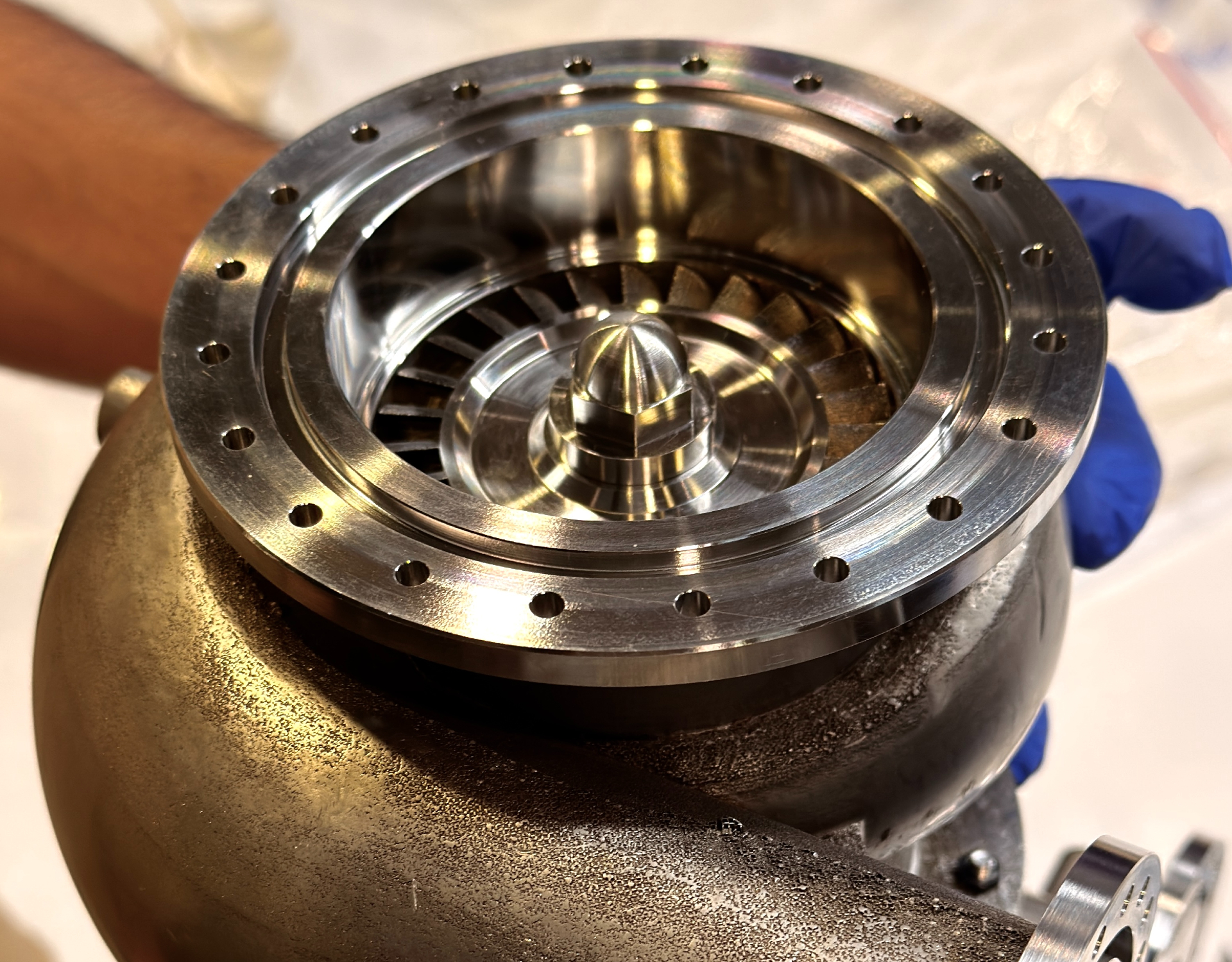
Ethereal Exploration Guild, an emerging Indian space technology firm known as EtherealX, has achieved a significant milestone, seeing its valuation skyrocket by 5.5 times to reach $80.5 million following a successful Series A funding round. This substantial financial injection is poised to accelerate the company’s ambitious agenda: developing a fully reusable launch vehicle, a technological frontier that could dramatically alter the economics of space access. The Bangalore-based startup is currently preparing for critical engine hot-fire tests, a pivotal step on its path toward a maiden technology demonstration flight slated for 2027.
The Surge in Valuation and Investor Confidence
The recently concluded Series A funding round, which was oversubscribed, successfully garnered $20.5 million. This capital infusion was spearheaded by prominent investors TDK Ventures and BIG Capital, as previously reported by TechCrunch. The round also saw robust participation from a diverse group of investors, including Accel, Prosus, YourNest, BlueHill, Campus Fund, and Riceberg Ventures, underscoring widespread confidence in EtherealX’s vision and technical capabilities. This latest raise builds upon a prior $5 million seed round secured in August 2024, which had valued the nascent company at $14.6 million. The rapid appreciation in valuation within a relatively short period signals strong market belief in EtherealX’s potential to disrupt the global space launch industry. Such investor enthusiasm is particularly noteworthy in the capital-intensive and high-risk domain of advanced rocketry, indicating a strategic bet on India’s burgeoning private space sector.
India’s Ascent in the Global Space Arena
EtherealX’s rapid growth is emblematic of a broader transformation underway in India’s space ecosystem. For decades, the Indian space program has been primarily driven by the Indian Space Research Organisation (ISRO), a government entity renowned for its cost-effective missions, including lunar and Martian probes, and the development of reliable launch vehicles like the Polar Satellite Launch Vehicle (PSLV) and Geosynchronous Satellite Launch Vehicle (GSLV). However, recent policy shifts have actively encouraged private sector participation, aiming to expand India’s space economy from an estimated $8 billion to a formidable $45 billion within the next decade. This strategic push seeks to move beyond traditional roles of small launcher manufacturing and component contracts, fostering an environment where private enterprises can innovate and compete on a global scale.
The liberalization of India’s space sector, initiated in 2020 with the establishment of the Indian National Space Promotion and Authorisation Centre (IN-SPACe), has provided a crucial regulatory framework for private entities. This governmental support is designed to harness India’s vast pool of engineering talent and entrepreneurial spirit, positioning the nation as a significant player in the commercial space market. Companies like EtherealX are at the forefront of this new wave, attracting both domestic and international attention as they develop cutting-edge technologies.
The Reusability Revolution: EtherealX’s Vision
The global satellite industry is experiencing unprecedented demand for increased launch capacity and greater scheduling flexibility. This surge is largely driven by the proliferation of mega-constellations for broadband internet, Earth observation, and the Internet of Things (IoT). In this competitive landscape, SpaceX’s Falcon 9 rocket has set a new benchmark for pricing and launch cadence, largely due to its pioneering reusability of the first-stage booster. EtherealX aims to push this paradigm further by developing a fully reusable launch vehicle designed to return not only the booster but also the upper stage to Earth. This ambitious approach, if successfully implemented, promises to deliver even greater reductions in per-launch costs and significantly enhance flight frequency. Such deep reusability could allow EtherealX to offer highly competitive pricing without needing to rely on an internal satellite constellation to maintain a full flight manifest, differentiating its business model from some competitors.
The engineering challenge of recovering and reusing an upper stage is considerably more complex than a booster, requiring advanced guidance, navigation, and control systems, as well as robust thermal protection and re-entry mechanisms. Mastering this technology would represent a significant leap forward in rocketry, potentially unlocking new economic models for space access and further democratizing space.
Engineering the Future: Engine Development and Technical Specifications
At the heart of EtherealX’s innovative vehicle are two proprietary engines being developed entirely in-house. The first is the "Pegasus" upper-stage engine, engineered to produce 80 kilonewtons (kN) of thrust. This engine incorporates what the startup describes as a "full-flow segregated cooling cycle," a sophisticated design aimed at maximizing efficiency and performance. A key component of the Pegasus engine is its additively manufactured turbopump, a testament to EtherealX’s adoption of advanced manufacturing techniques to optimize design and reduce production time. Additive manufacturing, or 3D printing, allows for complex geometries that are difficult or impossible to achieve with traditional methods, leading to lighter, stronger, and more integrated components.
The Pegasus engine boasts an impressive vacuum-specific impulse (ISP) of 323 seconds. Specific impulse is a critical metric for rocket engineers, serving as a widely used proxy for fuel efficiency. A higher specific impulse indicates that an engine generates more thrust per unit of propellant consumed, directly impacting the payload capacity for a given amount of fuel.
The second engine, the "Stallion" booster engine, is designed for the first stage and delivers a formidable 1.2 meganewtons (MN) of thrust. This engine employs a gas-generator cycle, a common and proven propulsion cycle in rocketry. The Stallion engine provides 306 seconds of sea-level specific impulse, indicating its efficiency during atmospheric flight. The hot-fire tests for both engines are slated for June-July, a critical phase that will validate their design and operational performance under realistic conditions. Thrust, measured in kilonewtons and meganewtons, quantifies the lifting force an engine can generate, directly correlating to a rocket’s ability to overcome gravity and carry payloads into orbit.
EtherealX’s primary medium-lift vehicle, dubbed "Razor Crest Mk-1," is envisioned to utilize a cluster of these advanced engines. Co-founder and CEO Manu J. Nair confirmed that the design calls for nine Stallion engines on the booster stage and 15 Pegasus engines on the upper stage. This multi-engine configuration provides redundancy and allows for thrust vectoring, enhancing the vehicle’s control and stability during ascent.
Roadmap to Orbit: Testing and Commercialization Timeline
The company is working towards a technology demonstration flight within a November-December 2027 launch window. This inaugural flight will be crucial for validating the vehicle’s design, operational procedures, and, most importantly, the reusability aspects of both its stages. Following the successful completion of this demonstration, EtherealX anticipates commencing commercial missions towards the end of 2028. This aggressive timeline underscores the urgency and ambition driving the startup, as it seeks to capture a share of the rapidly expanding global launch market.
The payload capabilities of the Razor Crest Mk-1 are designed to be versatile. In an expendable configuration, the vehicle aims to carry up to 24.8 tonnes into orbit. When partially reusable (likely recovering only the booster, similar to Falcon 9), its capacity would be 22.8 tonnes. Crucially, even in its fully reusable configuration, which includes the return of the upper stage, the vehicle is designed to lift approximately 8 tonnes. This flexibility allows EtherealX to cater to a broad range of customer needs, from heavy-lift requirements to more frequent, cost-effective launches for smaller payloads. Manu J. Nair indicated that the company is targeting competitive pricing, ranging from $350 to $2,000 per kilogram over time, depending on the configuration selected and the launch cadence. These figures are highly competitive, especially if the fully reusable model proves successful, potentially undercutting existing market prices for certain payload classes.
Strategic Partnerships and Infrastructure Development
To support its ambitious development and testing schedule, EtherealX operates a dedicated rocket engine test site, known as Base 001, located in the southern Indian state of Tamil Nadu. This facility is currently focused on the qualification of the upper-stage engines. Looking ahead, the company has also secured a substantial 150-acre manufacturing and testing campus in Andhra Pradesh’s proposed space city. This larger facility is expected to become operational by mid-2026, serving as a critical hub for integrated engine and stage testing, as well as vehicle assembly. The development of such significant infrastructure highlights EtherealX’s long-term commitment to scaling its operations and becoming a major player in the space industry.
Even before its first demonstration flight, EtherealX has already begun to secure early commercial demand. The company has signed launch memoranda of understanding (MOUs) totaling approximately $130 million with several international customers. Notable among these partners are Japan’s SpaceBD, a leading provider of space mission services, and Taiwan’s space agency, TASA. These international agreements signify the global interest in EtherealX’s capabilities and validate its market strategy. The MOUs provide a strong foundation for future commercial operations and demonstrate confidence in the company’s ability to deliver on its technological promises.
The Broader Impact of Private Space in India
The success of EtherealX and other private space ventures has profound implications for India. Economically, it promises job creation in high-tech sectors, fostering a skilled workforce and driving innovation across various engineering disciplines. It also enhances India’s global standing as a technological leader, moving beyond its reputation for cost-effective manufacturing to one of cutting-edge innovation. Culturally, these ventures inspire a new generation of scientists and engineers, demonstrating the tangible benefits of pursuing advanced scientific and technological goals.
The funding secured by EtherealX will be strategically deployed to complete the flight qualification of the Stallion booster engine and to conduct clustered-firing tests of the Pegasus upper-stage engines. This rigorous testing phase is essential for ensuring the reliability and safety of the engines before they are integrated into the launch vehicle. To support this accelerated development and testing schedule, the startup currently employs 67 individuals and anticipates expanding its team to approximately 90 employees over the next two months. This growth will bolster its manufacturing capacity and enable a higher cadence of testing, bringing the company closer to its goal of a successful demonstration flight.
In a rapidly evolving global space economy, EtherealX’s bold pursuit of full reusability positions it as a significant challenger. By leveraging India’s engineering prowess and a supportive policy environment, the company is not just building rockets; it is actively shaping the future of affordable and frequent access to space, potentially ushering in a new era of space exploration and utilization.