Amir Mahmud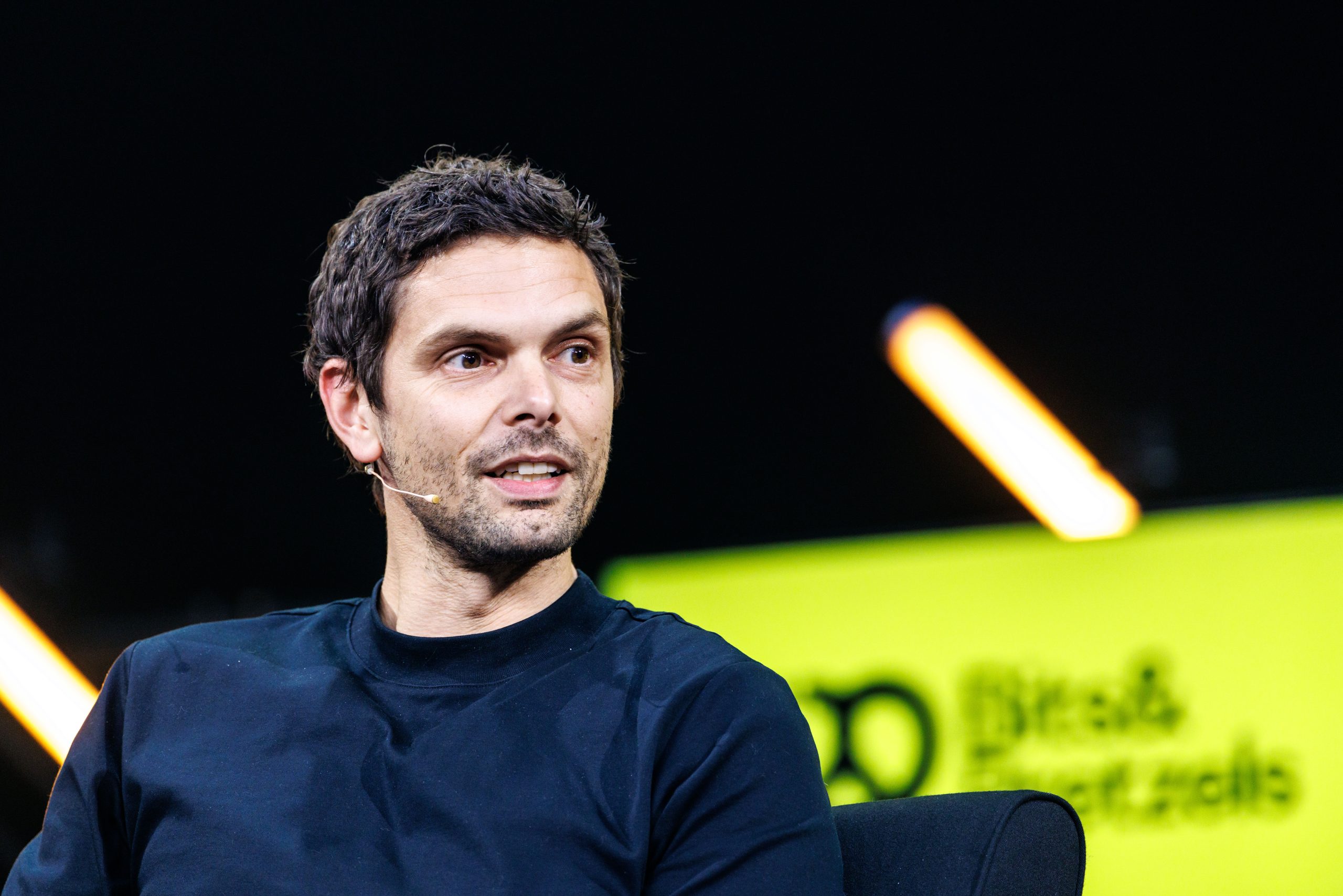
A significant shift is underway in the technological landscape, spearheaded by Finnish entrepreneur Peter Sarlin, who, eighteen months after the lucrative sale of his artificial intelligence startup Silo AI to chipmaker AMD for $665 million, has embarked on a new, ambitious journey. Having transitioned from his role as CEO of the AMD Silo AI unit, Sarlin now chairs two nascent ventures: NestAI, a physical AI laboratory, and QuTwo, an innovative AI startup poised to guide businesses through the impending era of quantum computing. This strategic pivot signals a proactive stance on the future of computation, aiming to equip enterprises with the tools necessary to leverage quantum advancements long before they become mainstream.
The Quantum-AI Nexus: Addressing Current Computational Limits
QuTwo, operating under the financial umbrella of Sarlin’s family office, PostScriptum, positions itself as an "AI lab for the quantum era." Its foundational premise is a response to the escalating computational demands of modern artificial intelligence. While AI has made remarkable strides, particularly in areas like deep learning and machine learning, its exponential growth is increasingly constrained by the inherent limitations of classical computing architectures. The sheer scale of data processing, model training, and algorithmic complexity required by cutting-edge AI applications consumes vast amounts of energy and necessitates ever-larger server farms, pushing classical hardware towards an efficiency plateau. This "efficiency wall" threatens to slow the pace of AI innovation and hinder its broader adoption in scenarios requiring ultra-fast, highly complex computations.
Quantum computing emerges as a potential paradigm shift, promising to tackle problems currently intractable for even the most powerful supercomputers. By harnessing principles of quantum mechanics—superposition, entanglement, and quantum tunneling—quantum computers could theoretically perform calculations orders of magnitude faster for specific problem sets. This capability is particularly alluring for AI, where tasks like optimizing complex algorithms, pattern recognition in vast datasets, and simulating intricate systems could see unprecedented acceleration. However, the technology remains in its infancy, characterized by highly sensitive hardware, significant error rates, and a need for specialized expertise, making widespread commercial adoption a distant prospect.
QuTwo’s Strategic Imperative: Hybrid Computing as a Bridge
Recognizing this dichotomy between the urgent needs of AI and the nascent state of quantum hardware, QuTwo has adopted a pragmatic, forward-looking strategy. Instead of passively awaiting the full maturation of quantum computing, the company is actively engaging with enterprise clients to implement solutions designed for a hybrid computational environment. Its core offering is QuTwo OS, an orchestration layer engineered to facilitate a seamless transition between classical and quantum computing paradigms. This operating system is designed to intelligently route AI workloads, leveraging classical processors for tasks where they remain efficient and directing others to quantum or quantum-inspired hardware when beneficial.
This approach acknowledges the reality that the initial phase of quantum integration will almost certainly involve mixed hardware environments. Enterprises, whose primary focus remains on solving specific business challenges, require an abstraction layer that manages the underlying computational complexities. QuTwo OS aims to provide this, enabling businesses to experiment with quantum capabilities without needing deep expertise in quantum mechanics or hardware engineering. It represents a crucial middleware, allowing companies to gradually integrate quantum processing power into their existing IT infrastructure and workflow.
A Glimpse into the Quantum Computing Evolution
The journey to this hybrid future has been decades in the making. The theoretical underpinnings of quantum computing were laid by physicists like Richard Feynman in the early 1980s, who proposed the idea of using quantum systems to simulate other quantum systems—a task inherently difficult for classical computers. Decades of research and development followed, moving from theoretical concepts to rudimentary prototypes. Significant milestones include Peter Shor’s algorithm for factoring large numbers in polynomial time (1994) and Lov Grover’s algorithm for searching unsorted databases (1996), which demonstrated the potential for quantum computers to outperform classical ones in specific tasks.
More recently, the field has seen a surge in investment and innovation. Companies like IBM, Google, Microsoft, and various startups have invested heavily in developing quantum processors and ecosystems. Google’s "quantum supremacy" claim in 2019, using its Sycamore processor to perform a calculation in minutes that would take classical supercomputers thousands of years, although debated in its practical implications, marked a symbolic turning point, demonstrating the tangible potential of quantum hardware. Yet, these machines are still largely experimental, prone to errors, and operate at extremely cold temperatures, far from the robust, scalable systems required for widespread enterprise use.
Early Adopters and Strategic Alliances
QuTwo’s strategy is already bearing fruit through significant design partnerships with forward-thinking enterprises. One such collaboration is with Zalando, a prominent European fashion retailer. Together, they are developing "lifestyle agents"—advanced AI tools designed to move beyond simple product searches. These agents aim to proactively suggest products, experiences, and entire lifestyle ensembles to customers, leveraging a deeper understanding of individual preferences and market trends. Such complex recommendation systems, requiring the analysis of vast, dynamic datasets and the inference of subtle human behaviors, could greatly benefit from quantum-enhanced optimization algorithms.
Another key partnership is with OP Pohjola, a major Finnish financial services provider, for a joint quantum AI research initiative. The financial sector is a prime candidate for quantum applications, particularly in areas like complex risk modeling, portfolio optimization, fraud detection, and high-frequency trading, where even marginal improvements in computational speed and accuracy can yield substantial competitive advantages. These early collaborations are not merely about proof-of-concept; they represent multi-million dollar investments from enterprises keen to establish an early foothold in a technology poised to redefine their industries. For QuTwo, these "design partnerships" are invaluable, providing real-world feedback and requirements that shape the development of QuTwo OS, ensuring it meets actual enterprise needs.
The Visionary Team Behind QuTwo
The strength of QuTwo lies not only in its innovative strategy but also in the formidable expertise of its leadership and scientific team. Peter Sarlin, with his proven track record of building and scaling successful AI ventures, anchors the enterprise side. He is joined by Kaj-Mikael Björk, a former co-founder at Silo AI, ensuring a deep understanding of enterprise AI deployment and commercialization.
On the quantum front, the team boasts significant intellectual capital. Kuan Yen Tan, a co-founder of IQM, a leading Finnish quantum computing company in which PostScriptum has invested, brings direct experience in quantum hardware development. Antti Vasara, also an IQM board member and chairman at SemiQon (another Finnish semiconductor startup focused on quantum chips), further strengthens QuTwo’s quantum engineering capabilities. The board is also enriched by the presence of Pekka Lundmark, the former CEO of Finnish telecom giant Nokia, whose experience in guiding global technology companies through periods of intense transformation is invaluable. Collectively, QuTwo’s team comprises over 30 quantum and AI scientists, a critical mass of talent positioned to navigate the complex interdisciplinary challenges of this new field. Sarlin succinctly articulates the company’s dual identity: "We’re building for the quantum world, but QuTwo is an AI company," emphasizing its mission to migrate demanding AI workloads from classical to quantum architectures.
Market Impact and Future Outlook
The long-term implications of quantum-enhanced AI are profound, extending across virtually every industry. In healthcare, it could accelerate drug discovery by simulating molecular interactions with unprecedented accuracy, or personalize treatment plans based on vast genomic data. In logistics, it could optimize complex supply chains, reducing costs and environmental impact. Manufacturing could see breakthroughs in materials science, designing novel compounds with desired properties. The environmental benefit is also significant; by making computation more efficient, quantum-AI could drastically reduce the energy footprint of data centers, addressing a growing concern about the carbon emissions of digital technologies.
However, the path to widespread adoption is not without its challenges. The development of quantum hardware is still nascent, and achieving fault-tolerant quantum computers remains a significant hurdle. Furthermore, there is a substantial skill gap; experts capable of developing quantum algorithms and interfacing with quantum hardware are scarce. Platforms like QuTwo OS are crucial in democratizing access to these powerful technologies, allowing enterprises to focus on their domain-specific problems while QuTwo handles the underlying computational orchestration.
QuTwo’s proactive and commercially minded approach, evident in its early design partnerships, positions it as a key enabler for enterprises looking to future-proof their operations. By providing an accessible bridge to quantum capabilities, the company is not merely anticipating the future of computing; it is actively shaping it, ensuring that businesses can embark on their quantum journey today, rather than waiting for an uncertain tomorrow. This strategic vision, blending cutting-edge AI with preparatory quantum infrastructure, offers a compelling blueprint for navigating the next frontier of computational power.