Amir Mahmud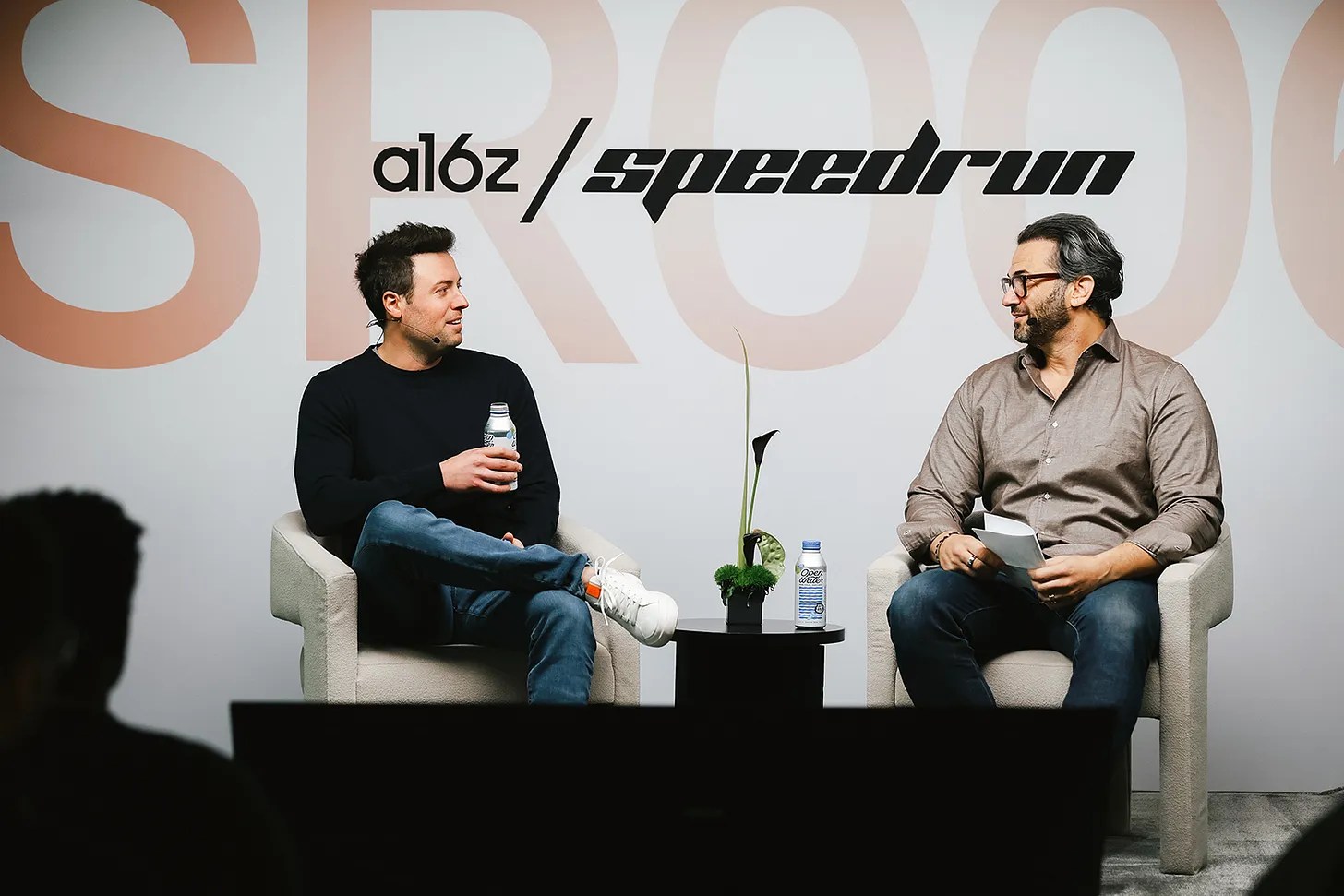
The intensely competitive landscape of early-stage venture capital has seen the emergence of a new power player: Andreessen Horowitz’s Speedrun accelerator. Since its launch in 2023, this program has quickly distinguished itself not only by the prestige of its parent firm, a16z, but also by an astonishingly low acceptance rate, rivaling the most exclusive institutions in the world. With over 19,000 startups vying for a coveted spot in recent cohorts, fewer than 0.4% ultimately gain entry, underscoring the immense demand for high-caliber mentorship and capital in today’s dynamic tech ecosystem.
The Evolution of a Premier Accelerator
Andreessen Horowitz, commonly known as a16z, stands as one of the most influential venture capital firms in Silicon Valley, co-founded by internet pioneer Marc Andreessen and entrepreneur Ben Horowitz in 2009. The firm has a storied history of backing disruptive technologies and iconic companies across various sectors, from social media to enterprise software. Their investment philosophy often emphasizes "software eating the world" and a deep understanding of technological shifts. In recent years, a16z has also become known for its robust platform team, offering portfolio companies extensive operational support beyond mere capital.
The concept of a startup accelerator itself gained significant traction with the rise of programs like Y Combinator, founded in 2005. These programs offer a structured curriculum, mentorship, and seed funding in exchange for equity, aiming to rapidly advance early-stage companies. Accelerators have become crucial conduits for innovation, providing founders with the tools and connections necessary to transform nascent ideas into viable businesses.
Speedrun initially carved out a niche by focusing exclusively on gaming startups, recognizing the burgeoning potential and unique challenges within that entertainment vertical. However, the program rapidly evolved, broadening its scope to encompass entertainment and media before transitioning into a "horizontal program." Joshua Lu, Speedrun’s general manager and a partner at a16z, confirmed this strategic pivot, noting that founders from any industry vertical can now apply. This shift reflects a broader trend in the venture capital world, where firms increasingly seek to apply their operational expertise and network across diverse sectors, rather than limiting themselves to narrow specializations. While the program previously operated cohorts in Los Angeles, its current focus has consolidated to San Francisco, the epicenter of the tech world.
The Investment Proposition and Its Value
Speedrun runs two cohorts annually, each accommodating approximately 50 to 70 startups. The financial backing provided is substantial, with a16z investing up to $1 million into each selected company. This investment structure typically involves an initial $500,000 in exchange for 10% of the startup’s equity, facilitated through a SAFE (Simple Agreement for Future Equity) note. An additional $500,000 is then invested if the company successfully raises its next funding round within 18 months, aligning with the terms agreed upon by other investors in that subsequent round.
When contrasted with other prominent accelerators, Speedrun’s investment terms appear notably "equity expensive." For example, Y Combinator, a long-standing benchmark in the accelerator space, typically secures a fixed 7% equity stake for an initial $125,000, supplemented by an additional $375,000 invested via an uncapped MFN (Most Favored Nation) SAFE. This difference prompts an examination of the value proposition that Speedrun brings to the table.
According to Lu, the higher equity stake is justified by the unparalleled access and extensive support system provided by a16z. Founders gain entry to the firm’s formidable advisory and business networks, which offer hands-on assistance across critical operational domains. This includes strategic guidance on go-to-market execution, sophisticated brand development, media strategy, and crucial talent sourcing. Beyond human capital, participating startups also receive substantial perks, including an impressive $5 million in credits from leading vendors such as Amazon Web Services (AWS), OpenAI, Nvidia, and Deel. These credits represent significant cost savings for early-stage companies, allowing them to allocate precious capital to core development rather than infrastructure or essential tools. This comprehensive support package, extending far beyond initial capital, positions Speedrun as a high-value, albeit high-cost, proposition for ambitious founders.
The Rigorous Selection Process: What Stands Out
Given the extraordinary interest and minuscule acceptance rate, understanding the criteria that distinguish successful applicants is paramount. Joshua Lu shared insights into what the Speedrun team prioritizes during the evaluation process. Applications for the next cohort typically open in April, though the program maintains an open door for off-season applications throughout the year.
The Indispensable Founding Team
At the early stages, where Speedrun primarily focuses, the founding team itself is often the most critical asset. Lu emphasizes a deep examination of the team’s composition, particularly whether their skills are complementary. This doesn’t necessarily mean a rigid division of labor, such as one technical founder, one commercial, and one marketing expert. Rather, the evaluators look for a collective capability that exhibits no "glaring holes" in expertise or interest. Crucially, founders are expected to be self-aware regarding their strengths and weaknesses, and for this understanding to be integrated into their hiring plans as the company scales.
A shared history among co-founders is also a significant advantage. Teams that have previously collaborated or possess a long-standing relationship often demonstrate a higher degree of pattern recognition, improved conflict resolution skills, and a more robust ability to navigate the inevitable challenges of a startup journey. While artificial intelligence has dramatically lowered the barriers to software development, a strong technical foundation within the founding team remains highly valuable, enabling rapid prototyping, iteration, and a deeper understanding of product capabilities.
Beyond Theory: Demonstrating Traction
In an era where AI tools can accelerate product development, Speedrun also seeks tangible evidence of market validation or early traction. The program is designed to amplify existing potential, as Lu metaphorically states, "Speedrun as a program is really great at helping teams pour gasoline on a very small spark or fire." This means applicants should demonstrate that they have already taken the initiative to build and test their hypotheses, showing a nascent "spark" that the accelerator can help ignite into a full-blown flame. Pure theoretical ideas, no matter how compelling, are less appealing than those with even minimal real-world validation.
A common pitfall founders encounter during the application process is over-emphasizing market theory – elaborating extensively on a defined problem and why their solution is the definitive answer. While understanding the market is important, Lu advises against dwelling on it. Even highly successful tech companies often face unforeseen obstacles or undergo significant pivots in their early stages. The initial vision rarely mirrors the ultimate path to success. Instead, the focus should be on articulating why this specific founding team is uniquely qualified and the absolute best possible team to tackle the identified problem, coupled with any existing validation for the idea itself.
The AI Paradox in Applications
In a nod to modern technological advancements, Speedrun actively encourages founders to leverage AI tools to refine their applications. With the sophistication of current AI, there is little excuse for grammatical errors, misspellings, or poorly structured arguments. AI can be an invaluable aid in clarifying thoughts, enhancing conciseness, and improving overall coherence.
However, this encouragement comes with a crucial caveat. If AI largely dictates the narrative of a startup’s application, it could backfire in subsequent stages. Only about 10% of applicants advance to the live video-call interview phase, where their ability to articulate their vision cogently and authentically, without AI assistance, is rigorously tested by a panel of two to three investors. Following this, further screening calls lead to the final selection for the cohort. The message is clear: AI can polish, but the core narrative and the founder’s ability to convey it must be authentically their own.
Maximizing the Accelerator Experience
Once accepted into Speedrun, the journey truly begins. Lu highlights that the most successful teams are those who are "greedy about getting exposure to the amazing people and programs" Speedrun has to offer. The firm boasts a substantial staff of approximately 600 individuals, with a mere 10% dedicated to the investment team. The vast majority are operators, specialists who actively support the firm’s portfolio companies across a multitude of functions, including marketing, finance, legal, and human resources. Founders are therefore encouraged to strategically identify who they need to connect with and why, maximizing the immense value embedded within a16z’s operational ecosystem. The mantra shared with participants is simple: "What you get out of Speedrun is what you put into it."
Mohamed Mohamed, founder of the proptech startup Smart Bricks, who recently secured a $5 million pre-seed round led by a16z Speedrun, offers valuable insights from his own experience. Mohamed was drawn to Speedrun specifically because of its explicit design for co-founders working on frontier AI applications, seeking a program that would allow him to "stress-test an ambitious technical vision."
His application strategy was unconventional yet effective: he approached it as an internal strategy memo rather than a traditional pitch deck. Instead of relying on buzzwords, he prioritized clarity, detailing "the real problem, why it’s structurally hard, and why our team is unusually well-positioned to solve it." Crucially, he was forthright about what was working, what wasn’t, and where his team genuinely needed assistance. This honesty and clear articulation of the problem’s significance proved highly compelling.
Mohamed described the entire evaluation process as "rigorous but refreshingly thoughtful," designed to delve into how founders think, not just what they have accomplished. The conversations extended to deep dives into product architecture, data strategy, and long-term ambitions, feeling more like a "partner-level discussion than a typical accelerator interview." His overarching advice for aspiring founders is to be "intellectually honest and precise." He cautions against "over-optimizing" for hype, emphasizing that clarity about a company’s actual stage is far more persuasive than inflated narratives. Speedrun, he concludes, seeks founders who can "reason clearly about complex problems and build with conviction," urging applicants to articulate the inherent challenges of their venture and why they are worth tackling. In this context, "depth beats polish every time."
The Speedrun accelerator represents a significant force in the startup world, offering unparalleled resources and a demanding yet rewarding pathway for early-stage companies. Its rigorous selection process, substantial investment, and comprehensive operational support underscore a commitment to fostering the next generation of transformative technologies, solidifying a16z’s role not just as a capital provider, but as a true partner in innovation.