Amir Mahmud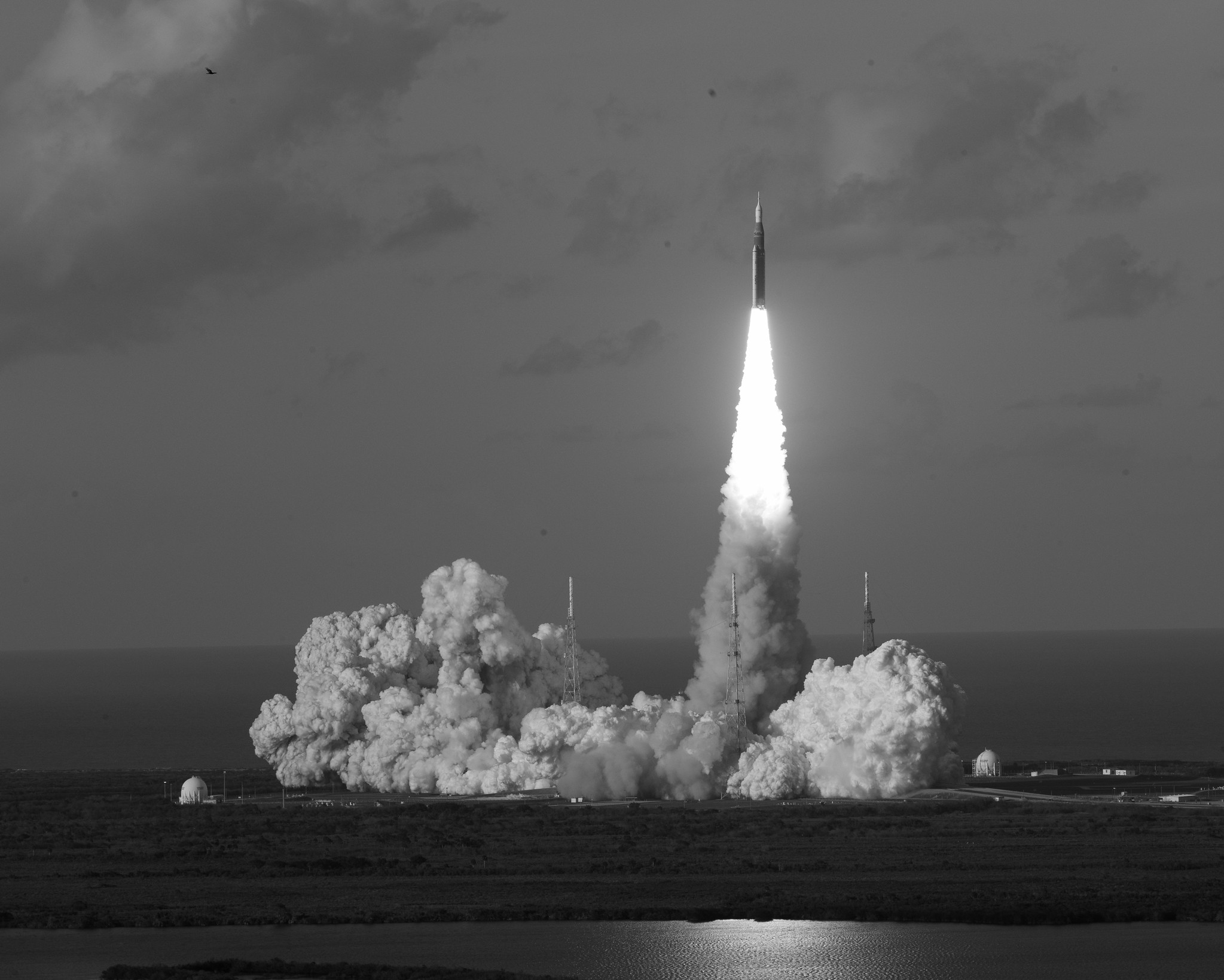
The upcoming Artemis II mission, poised to carry a crew around the Moon for the first time in over half a century, represents far more than just a historic journey; it signifies a profound inflection point in human space exploration. While this mission will see astronauts venturing into deep space aboard systems developed primarily by traditional aerospace giants, it is widely anticipated to be the last such endeavor before commercial space companies, born from the innovative spirit and venture capital of Silicon Valley, assume a dominant role in NASA’s ambitious lunar return. This transition heralds a new era where government agencies increasingly act as customers rather than sole developers, fostering a dynamic and competitive ecosystem aimed at establishing a sustainable human presence on the Moon and beyond.
A Legacy of Government-Led Exploration
To fully appreciate the significance of this shift, it is essential to contextualize it within the annals of space exploration. The original race to the Moon, epitomized by the Apollo program in the 1960s, was a quintessential government-led initiative, driven by Cold War geopolitical imperatives and fueled by massive public investment. This era showcased the unparalleled capabilities of a unified national effort, culminating in humanity’s first steps on another celestial body. Following Apollo, however, the focus shifted towards sustained presence in Low Earth Orbit (LEO) with programs like the Space Shuttle and the International Space Station (ISS), while deep space human exploration largely receded from the forefront for decades.
The desire to return to the Moon resurfaced in the early 2000s under the George W. Bush administration with the Constellation program. This initiative aimed to develop new rockets and spacecraft, including the Ares launch vehicles and the Orion crew capsule, to return humans to the lunar surface. However, Constellation encountered significant challenges, primarily stemming from budget overruns, schedule delays, and evolving political priorities. By 2010, facing escalating costs and a critical re-evaluation, the Obama administration opted to cancel the Constellation program in its original form. This decision, while controversial at the time, paved the way for a fundamental reorientation of NASA’s strategy. Instead of solely relying on traditional, government-contracted development, the agency began actively supporting the nascent commercial space industry, recognizing its potential for innovation and cost efficiency, particularly for LEO operations. This pivotal moment provided crucial early contracts and validation for companies like SpaceX, injecting vital capital and fostering a new wave of entrepreneurial ventures in the space sector.
The Artemis Program: Bridging Old and New
When NASA officially announced the Artemis program in 2017, with the ambitious goal of returning humans to the Moon, including the first woman and person of color, the agency found itself at a crossroads. It inherited elements from the Constellation program’s legacy, specifically the Orion spacecraft and the nascent Space Launch System (SLS) heavy-lift rocket. The SLS, developed by prime contractors like Boeing and Lockheed Martin, was designed to be the most powerful operational rocket in the world, capable of launching the Orion capsule and other large payloads to deep space. Its development, however, mirrored the challenges of its predecessors: it was costly, complex, and faced repeated delays and budget overruns. The inaugural uncrewed flight of the SLS, Artemis I, in late 2022, demonstrated its formidable power, but its infrequent launch cadence and high operational costs highlighted the need for more sustainable solutions for long-term lunar exploration.
Despite the criticisms leveled against the SLS and Orion’s development model, NASA initially felt compelled to retain these systems for the early phases of Artemis. This decision was influenced by a confluence of factors, including the significant investment already made, the desire to leverage existing infrastructure and expertise, and the political imperative to maintain jobs within the traditional aerospace sector. Consequently, Artemis II, like Artemis I, relies entirely on this legacy hardware for its primary deep-space transportation.
The Ascendancy of Commercial Space
Parallel to the development of SLS and Orion, the commercial space sector was undergoing a dramatic transformation. Companies like SpaceX, founded by Elon Musk, revolutionized access to space with reusable rockets such as the Falcon 9, drastically reducing launch costs and increasing launch frequency. This innovation, coupled with a philosophy of rapid iteration and vertical integration, attracted unprecedented levels of venture capital investment, creating a vibrant ecosystem of private space companies focused on everything from satellite constellations to lunar logistics. Jeff Bezos’s Blue Origin, another significant player, also emerged with long-term ambitions for space infrastructure and lunar missions.
This burgeoning commercial capability offered NASA a compelling alternative to its traditional acquisition models. Recognizing the limitations and costs associated with its legacy approach, the agency began to strategically integrate commercial partners into its lunar strategy. The first significant step in this direction was the Commercial Lunar Payload Services (CLPS) program, which contracts private companies to deliver robotic science and technology payloads to the lunar surface. This initiative not only fosters a commercial lunar economy but also provides crucial reconnaissance and testing capabilities for future human missions, demonstrating NASA’s willingness to embrace private innovation for critical mission elements.
The true turning point for human lunar landing capabilities came with the Human Landing System (HLS) program. NASA determined that while SLS and Orion would transport astronauts to lunar orbit, the vehicle to take them from orbit to the lunar surface and back would come from the new generation of venture-backed firms. In 2021, SpaceX won the highly coveted initial HLS contract with its Starship vehicle. This was a controversial decision, largely due to Starship’s ambitious and unproven architecture, which requires numerous in-orbit refueling missions to gather enough propellant for a lunar journey. The sheer scale and complexity of Starship represented a significant departure from conventional lunar lander designs, leading to concerns about potential delays and technical hurdles.
To mitigate risks and foster competition, NASA later awarded a second HLS contract to Blue Origin in 2023. Blue Origin’s proposed Blue Moon lander, while also a large and complex system, offered a different design philosophy, providing NASA with an alternative pathway to the lunar surface and ensuring a competitive market for future services. This "bake-off" approach is designed to test the capabilities of both providers, with NASA planning rendezvous tests in lunar orbit by 2027, ahead of potential crewed landings as early as 2028. The success of SpaceX’s ongoing Starship test flights and Blue Origin’s progress with its lander development are now under intense scrutiny, as they are critical milestones for the entire Artemis program.
A New Vision Under New Leadership
The shift towards commercialization gained further momentum with the appointment of Jared Isaacman as NASA Administrator in late 2025. Isaacman, a billionaire payments entrepreneur and a seasoned private astronaut who funded and flew on two SpaceX missions, brought a distinct "Silicon Valley" perspective to the agency’s leadership. His background as both an entrepreneur and a customer of commercial space services positioned him uniquely to champion a more agile and cost-effective approach to space exploration.
Soon after taking office, Isaacman initiated a significant overhaul of the Artemis program. In March, he made the strategic decision to scrap plans for the Lunar Gateway, a proposed lunar-orbiting space station that many outside observers considered an expensive and politically motivated endeavor. Simultaneously, he canceled costly upgrades for the SLS, signaling a clear pivot away from investing further in the legacy system’s evolution. These decisions underscore a commitment to streamlining the path to the Moon, prioritizing direct lunar access, and placing a stronger emphasis on leveraging the innovation and efficiency of the new generation of private space companies. Isaacman’s leadership appears to be firmly "all in" on the commercial model, viewing it as the most viable and sustainable route for NASA’s future endeavors.
Market, Social, and Geopolitical Ramifications
The increasing reliance on commercial partners in space exploration has far-reaching implications. On the market front, it has spurred an unprecedented influx of venture capital into the space industry, creating a booming ecosystem of startups and established players. This investment is driving rapid technological advancements, from propulsion systems and materials science to artificial intelligence and robotics, with potential spillover benefits across various terrestrial industries. Socially, the commercialization of space has sparked renewed public interest, fostering a sense of excitement and possibility. The idea of private citizens, not just government-selected astronauts, venturing into space, or the prospect of space tourism, has begun to democratize access and inspire a new generation towards STEM fields. Culturally, it shifts the narrative from government-centric "space race" to a more collaborative, commercially driven "space economy," potentially redefining humanity’s relationship with the cosmos.
However, this commercial shift is not without geopolitical considerations. The global space arena is becoming increasingly competitive, with nations like China making significant strides. China has outlined a disciplined and ambitious path to land its own citizens on the Moon by 2030, establishing a clear benchmark for other spacefaring nations. In this context, any delays or missteps in the Artemis program, particularly those involving commercial partners, will be viewed not merely as technical setbacks but as strategic challenges to U.S. leadership in space.
For Silicon Valley and its associated commercial space firms, this represents a crucial opportunity to demonstrate their prowess on a global stage. While American tech companies have faced stiff competition from Chinese firms in areas like electric vehicles and robotics, the new space race offers a chance to reaffirm U.S. technological preeminence. SpaceX, in particular, has become a global exemplar for entrepreneurial space endeavors. As the U.S. heads back to the Moon with significant commercial backing, the success of these ventures will be a powerful testament to the agility, innovation, and ultimately, the strategic advantage that private enterprise can bring to national ambitions in the ultimate technology frontier. The outcomes of Artemis II and the subsequent commercial lunar missions will not only write the next chapter in human spaceflight but also profoundly influence the geopolitical balance of power in the 21st century.