Amir Mahmud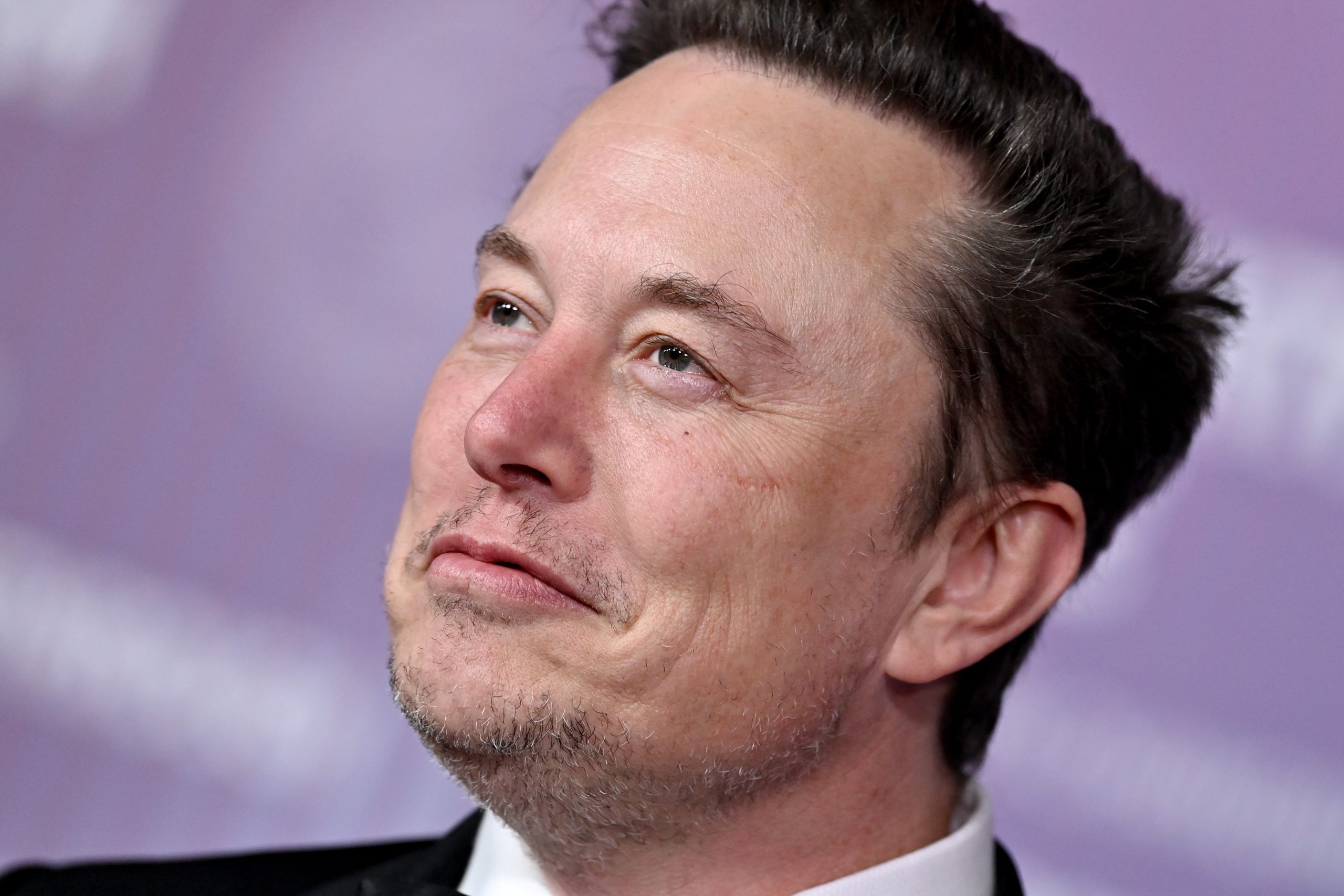
Elon Musk, the prolific entrepreneur and one of the co-founders of OpenAI, is seeking an unprecedented sum of between $79 billion and $134 billion in damages from the artificial intelligence powerhouse and its key partner, Microsoft. This colossal demand stems from a lawsuit alleging that OpenAI fundamentally defrauded him by abandoning its foundational nonprofit mission in pursuit of commercial gain. The staggering figures, reported by Bloomberg, were calculated by expert witness C. Paul Wazzan, a financial economist renowned for his work in complex commercial litigation, and underscore a dispute that transcends mere monetary compensation, delving into the very ethos of AI development.
The Genesis of a Vision: OpenAI’s Founding Ideals
The narrative of OpenAI began in 2015, a period marked by both burgeoning excitement and profound apprehension regarding the future of artificial intelligence. As advancements in machine learning, particularly deep learning, started to show tantalizing potential, a cohort of prominent technologists and entrepreneurs, including Elon Musk, Sam Altman, Ilya Sutskever, and Greg Brockman, convened with a shared vision. Their objective was to establish an organization that would develop advanced AI, not for profit or corporate advantage, but for the benefit of all humanity. This foundational principle was enshrined in OpenAI’s original charter, which explicitly stated its mission: "to advance digital intelligence in the way that is most likely to benefit humanity as a whole, unconstrained by a need to generate financial return."
Musk, known for his vocal concerns about the potential existential risks of unchecked AI, was a pivotal figure in this endeavor. He contributed a substantial $38 million in seed funding, along with considerable technical expertise and strategic guidance, becoming a co-founder and an early board member. His involvement lent significant credibility and resources to the nascent organization, which aimed to create "open" AI, fostering collaboration and transparency to prevent any single entity from monopolizing or misusing powerful artificial general intelligence (AGI). The initial structure was a nonprofit entity, designed to insulate its research from market pressures and ensure its outputs served the public good.
The Pivotal Shift: From Nonprofit to Profit-Capped Enterprise
The landscape of AI development proved to be far more capital-intensive and competitive than initially envisioned. By 2018, it became clear that the immense computational power, top-tier talent, and vast data resources required to compete with tech giants like Google and Meta, which were pouring billions into their own AI initiatives, could not be sustained solely through philanthropic donations. This realization led to a significant strategic pivot within OpenAI. In 2019, the organization announced a controversial restructuring, forming a "capped-profit" subsidiary. This new entity was designed to attract significant investment capital while ostensibly retaining a commitment to its overarching mission, with profits capped at a certain multiple for investors and any excess flowing back to the nonprofit parent.
Elon Musk, who had already stepped down from OpenAI’s board in 2018, citing potential conflicts of interest with Tesla’s own burgeoning AI efforts, publicly expressed his dissatisfaction with this new direction. His departure marked a growing ideological schism within the organization he helped create. The shift signaled a clear move towards commercialization, culminating in a monumental partnership with Microsoft. The software giant initially invested $1 billion in 2019, followed by multi-billion dollar commitments, including a reported $10 billion investment in 2023, acquiring a significant 27% stake in the capped-profit entity. This infusion of capital propelled OpenAI’s research, leading to breakthroughs like the generative AI model ChatGPT, which launched in late 2022 and rapidly became a global phenomenon, catapulting OpenAI’s valuation to an estimated $500 billion.
The Legal Cornerstone: Allegations of Breach and Deception
Musk’s lawsuit centers on the contention that OpenAI’s transformation into a profit-driven enterprise constitutes a fundamental breach of its founding agreement and a fraudulent deviation from its initial nonprofit charter. His legal team argues that the original arrangement, implicitly or explicitly, guaranteed that the advanced AI developed would remain "open" and for the benefit of humanity, not for the commercial advantage of a select few. The expert witness, C. Paul Wazzan, supports this claim by calculating the damages based on Musk’s initial $38 million seed donation, combined with his substantial early technical and business contributions. Wazzan’s analysis suggests that Musk is entitled to a portion of OpenAI’s current valuation, reflecting an astonishing potential 3,500-fold return on his initial investment if the claims are successful.
The damages sought are broken down into two main components: $65.5 billion to $109.4 billion from OpenAI itself, and an additional $13.3 billion to $25.1 billion from Microsoft, given its substantial ownership stake and strategic partnership. The legal argument posits that had OpenAI remained true to its original non-profit mission, Musk, as a key founder and benefactor, would have benefited from its success in ways that extended beyond direct financial returns, or at least would have been compensated for the commercialization of his foundational contributions. Proving "fraud" in such a context, particularly when the organization’s structure and mission evolved over several years, presents a significant legal challenge, requiring careful examination of founding documents, board minutes, and communications.
Beyond the Billions: Decoding Musk’s Motivations
The sheer scale of the damages requested, ranging up to $134 billion, immediately raises questions about the true motivations behind Musk’s lawsuit. With a personal fortune currently estimated around $700 billion, making him the world’s wealthiest individual — his wealth eclipsing that of Google co-founder Larry Page by an astounding $500 billion, according to Forbes — and a recent approval of a $1 trillion pay package from Tesla shareholders, a financial windfall of even this magnitude would represent a relatively modest addition to his already immense wealth. This context suggests that the legal battle is driven by factors beyond mere financial grievance.
Analysts and observers point to several potential underlying motivations for Musk’s aggressive legal posture. Firstly, it could be a battle for control and influence over a powerful AI entity he helped create. Having been instrumental in its genesis, Musk may feel a proprietary claim over its direction and a desire to steer it back towards what he perceives as its original, ethical path. Secondly, there’s a strong ideological component. Musk has consistently warned about the dangers of unregulated or profit-driven AI, advocating for "safe" and "open" development. This lawsuit aligns with his long-standing public stance, positioning him as a champion of ethical AI against corporate interests.
Furthermore, the lawsuit can be viewed through a lens of competitive dynamics. Musk is currently building his own AI company, xAI, with a stated mission to "understand the true nature of the universe." A legal challenge against a major competitor like OpenAI, particularly one alleging a betrayal of foundational principles, could serve as a strategic move to disrupt or discredit a rival in a rapidly evolving and highly competitive industry.
OpenAI, for its part, has not shied away from characterizing the lawsuit as an "ongoing pattern of harassment" rather than a legitimate financial dispute. The company reportedly sent a letter to investors and business partners, warning them to anticipate "deliberately outlandish, attention-grabbing claims" from Musk as the trial approaches. This counter-narrative frames Musk’s actions as a distraction, potentially aimed at undermining OpenAI’s reputation and commercial momentum.
Broader Implications for the AI Ecosystem
Regardless of its outcome, this landmark lawsuit holds significant implications for the broader artificial intelligence industry. It shines a harsh spotlight on the tension between altruistic founding visions and the commercial realities of developing cutting-edge, capital-intensive technology. The case will undoubtedly contribute to the ongoing global debate about AI ethics, governance, and the appropriate balance between open research and proprietary development.
The transition of AI startups from non-profit or research-focused entities to commercial powerhouses is a common, albeit often controversial, trajectory. The legal precedent set by this case could influence how future AI initiatives are structured, how intellectual property is handled in early-stage ventures, and the enforceability of mission statements when substantial financial interests come into play. It could lead to increased scrutiny on corporate governance within AI companies, particularly those dealing with potentially transformative technologies that carry societal risks.
Moreover, the dispute highlights the escalating competition and high stakes in the race for AI dominance. The involvement of tech giants like Microsoft, pouring billions into partnerships, underscores the strategic importance of AI as a fundamental technology for the coming decades. The outcome of this trial, slated to begin in April in Oakland, California, will be closely watched by investors, policymakers, and the entire technology community. It represents not just a personal legal battle between a visionary entrepreneur and an AI titan he helped create, but a crucial moment in defining the future trajectory of artificial intelligence itself.