Amir Mahmud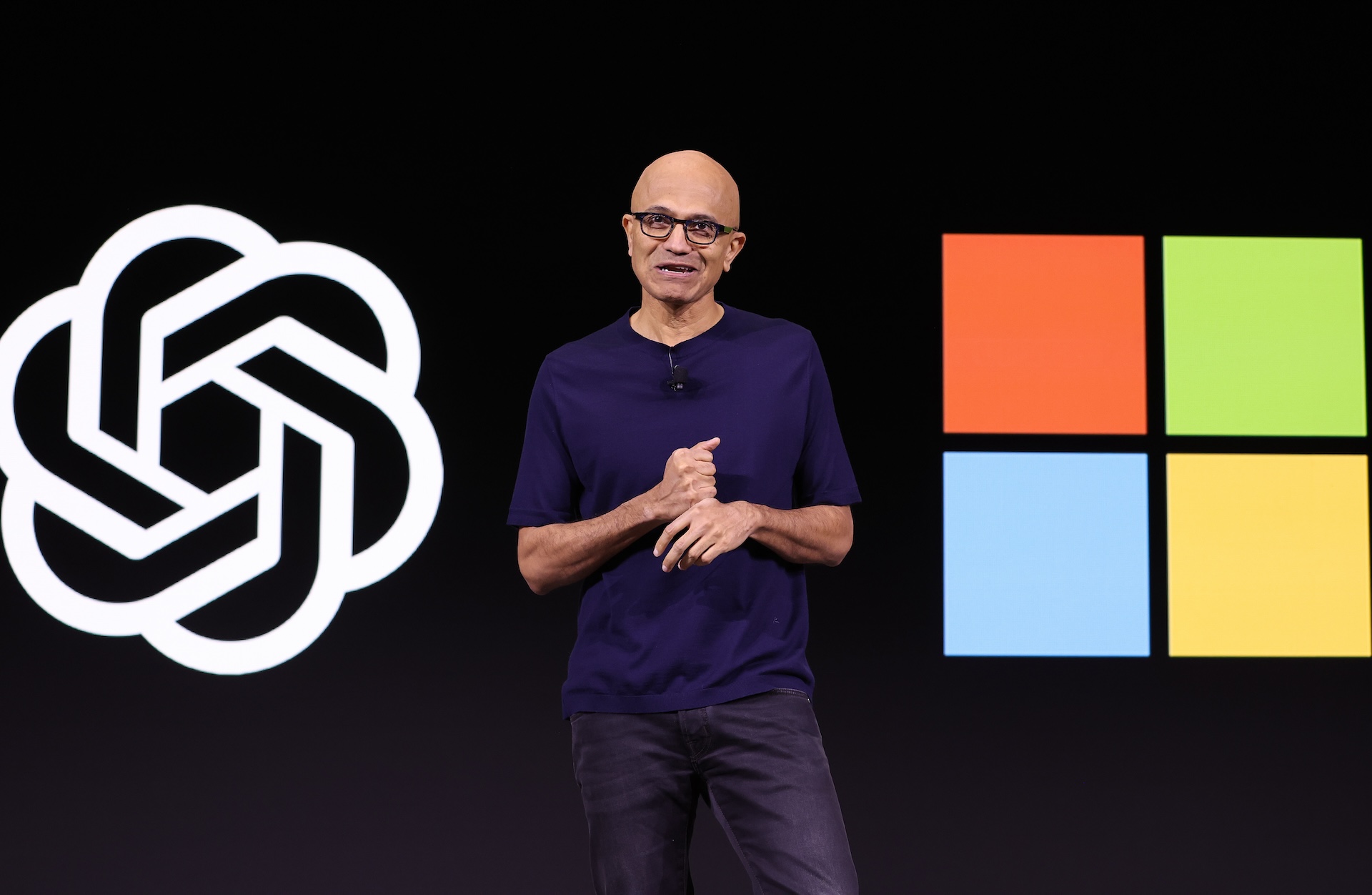
Microsoft has unveiled a remarkable financial upturn attributed directly to its significant investment in the rapidly evolving artificial intelligence sector. The technology giant reported a substantial $7.6 billion increase in net income during its most recent fiscal quarter, a direct dividend from its strategic partnership with OpenAI, the trailblazing AI research and deployment company. This financial disclosure underscores the profound impact of AI on corporate balance sheets and highlights Microsoft’s calculated gamble to position itself at the forefront of the generative AI revolution.
The Genesis of an AI Powerhouse Partnership
The alliance between Microsoft and OpenAI, though occasionally characterized by industry observers as complex, represents one of the most pivotal collaborations in modern technological history. Their journey began in 2019 when Microsoft made an initial $1 billion investment in OpenAI, recognizing the nascent potential of its research into large language models. This foundational investment was not merely financial; it cemented a strategic partnership that granted OpenAI access to Microsoft’s formidable Azure cloud computing infrastructure, a critical resource for training and deploying AI models that demand immense computational power.
Subsequent years saw this commitment deepen dramatically. In 2021, Microsoft further solidified its support, and by January 2023, the partnership escalated with a reported multi-year, multi-billion-dollar investment, rumored to be around $10 billion. This capital injection was crucial for OpenAI, providing the necessary runway to develop groundbreaking models like GPT-3, DALL-E, and ultimately, the highly disruptive GPT-4. In return, Microsoft gained preferential access to OpenAI’s cutting-edge innovations, allowing it to integrate advanced AI capabilities across its vast product ecosystem, from productivity suites like Microsoft 365 to its search engine, Bing, and its cloud services. This symbiotic relationship transformed OpenAI from a well-funded research lab into a commercial entity with unprecedented reach, simultaneously transforming Microsoft into a dominant AI platform provider.
Unpacking the $7.6 Billion Gain
The reported $7.6 billion surge in net income is a direct reflection of OpenAI’s accelerated revenue growth. While neither company has publicly confirmed the specifics, industry reports suggest a revenue share agreement where Microsoft reportedly receives a 20% cut of OpenAI’s earnings. As OpenAI scales its commercial offerings, providing API access to its models for developers and enterprises, and rolling out consumer-facing products like ChatGPT Plus, its top-line revenue has exploded. This growth directly translates into significant gains for its primary investor.
OpenAI’s meteoric rise in valuation further illustrates this trajectory. The company is currently engaged in discussions to raise additional capital, with a projected valuation ranging between $750 billion and $830 billion. Such figures would place OpenAI among the most valuable private technology companies globally, a testament to the perceived transformative power of its AI models. Microsoft’s early and sustained investment has granted it a substantial stake in this burgeoning value, underscoring the foresight behind its initial strategic moves. The financial return is not just a quarterly blip; it signifies the materialization of a long-term strategic vision.
Azure: The Engine Room of AI Innovation
Central to the financial gains and the operational success of the Microsoft-OpenAI partnership is Microsoft’s Azure cloud platform. The sheer computational demands of training and running sophisticated AI models like those developed by OpenAI are staggering. These operations require vast arrays of specialized hardware, primarily graphics processing units (GPUs) and central processing units (CPUs), connected by high-speed networks, all managed within a scalable cloud environment. Azure provides this critical infrastructure, effectively serving as the foundational engine for OpenAI’s advancements.
The depth of this commitment was further highlighted by recent renegotiations in September when OpenAI restructured its corporate identity into a public benefit corporation. As part of this updated agreement, OpenAI committed to purchasing an additional $250 billion in Azure services. This monumental commitment is reflected in Microsoft’s financial disclosures as a significant increase in its "commercial remaining performance obligations," which represent contractual agreements for future services that have not yet been delivered or paid for. These obligations swelled from $392 billion in the previous quarter to an impressive $625 billion, with Microsoft explicitly stating that 45% of this increase is attributable to OpenAI. This demonstrates not only the scale of OpenAI’s operational needs but also its unwavering reliance on Azure as its preferred and primary cloud provider.
The Cost of Leading the AI Race
While the revenue gains are substantial, Microsoft’s commitment to AI also involves immense capital expenditure. In the same quarter, the company spent a staggering $37.5 billion on capital expenditures. A significant two-thirds of this amount was allocated to what Microsoft termed "short-lived assets," predominantly the specialized GPUs and CPUs required to power its Azure cloud services for AI workloads. This massive investment underscores the "picks and shovels" aspect of the AI gold rush – the company that can provide the underlying infrastructure for AI development and deployment holds a crucial strategic advantage.
This level of spending is not merely about maintaining existing services; it’s about aggressively building out the next generation of cloud infrastructure specifically optimized for AI. The demand for AI compute capacity is growing exponentially, and tech giants are locked in an intense race to build the largest and most efficient data centers capable of handling these advanced workloads. Microsoft’s significant CapEx demonstrates its intent to remain a dominant force in this foundational layer of the AI ecosystem, ensuring it can continue to support not only OpenAI but also a burgeoning ecosystem of other AI developers and enterprises.
Diversifying the AI Portfolio: The Anthropic Strategy
Microsoft’s strategic vision extends beyond a singular focus on OpenAI. Recognizing the rapid pace of AI innovation and the competitive landscape, the company has also diversified its investments. Notably, Anthropic, another leading AI lab known for its Claude family of models, received a significant endorsement from Microsoft. In November, Microsoft announced a $5 billion investment in Anthropic, further bolstering its AI portfolio. This partnership also includes a substantial commitment from Anthropic to purchase $30 billion of Azure compute capacity, with intentions for future expansion.
This move is a calculated strategic hedge. While OpenAI remains a cornerstone, investing in Anthropic allows Microsoft to access alternative cutting-edge models and research, mitigating risks associated with over-reliance on a single partner. It also positions Microsoft as a preferred cloud provider for multiple top-tier AI developers, solidifying Azure’s role as the go-to platform for AI innovation. In a highly competitive market featuring formidable players like Google, Amazon, and Meta, each aggressively pursuing their own AI strategies, such diversification is a prudent move to ensure broad access to the best available AI technologies and to maintain a leadership position.
Broader Market and Societal Implications
The financial success of Microsoft’s AI strategy is not merely an internal corporate triumph; it sends ripples across the broader technology market and has significant societal implications. The integration of OpenAI’s technologies, notably through features like Copilot in Microsoft 365, Azure OpenAI Service for enterprises, and AI-powered enhancements in Bing, is rapidly reshaping how businesses operate and how individuals interact with digital tools. These integrations are boosting productivity, automating complex tasks, and fundamentally altering the landscape of enterprise software and cloud services.
The "AI race" among tech giants is driving unprecedented levels of innovation, pushing the boundaries of what AI can achieve. However, this rapid advancement also brings forth critical discussions around ethical AI development, data privacy, potential job displacement, and the need for robust regulatory frameworks. Microsoft, as a key player, faces the challenge of balancing aggressive innovation with responsible deployment, a tightrope walk that will define the future of AI. The company’s financial results underscore the immense commercial pressures and opportunities that fuel this transformative era.
A Strong Quarter Driven by Cloud and AI
Beyond the specific AI investments, Microsoft reported a robust overall quarterly performance, exceeding Wall Street expectations. The company generated $81.3 billion in revenue, a healthy 17% increase over the same period last year. A significant milestone was achieved by Microsoft Cloud, which reached $50 billion in revenue for the first time, further cementing its status as a critical growth engine. Nearly all of Microsoft’s business units reported double-digit percentage increases compared to the year-ago quarter, with only Windows devices showing a modest 1% gain and Xbox content and services experiencing a 5% decline. This broad-based growth, particularly within its cloud services, is increasingly intertwined with its AI strategy, as AI capabilities become a core differentiator and driver of adoption across its enterprise offerings.
The results paint a clear picture: Microsoft’s strategic pivot towards AI, initiated years ago with its foundational investment in OpenAI and continuously reinforced with massive infrastructure spending and diversified partnerships, is now yielding substantial financial returns. As the global economy continues to grapple with technological shifts, Microsoft’s calculated gamble on AI appears to be paying off handsomely, positioning the company as a dominant force in the AI-driven future. The trajectory suggests that the era of AI-powered growth is just beginning, with Microsoft firmly at the helm.