Amir Mahmud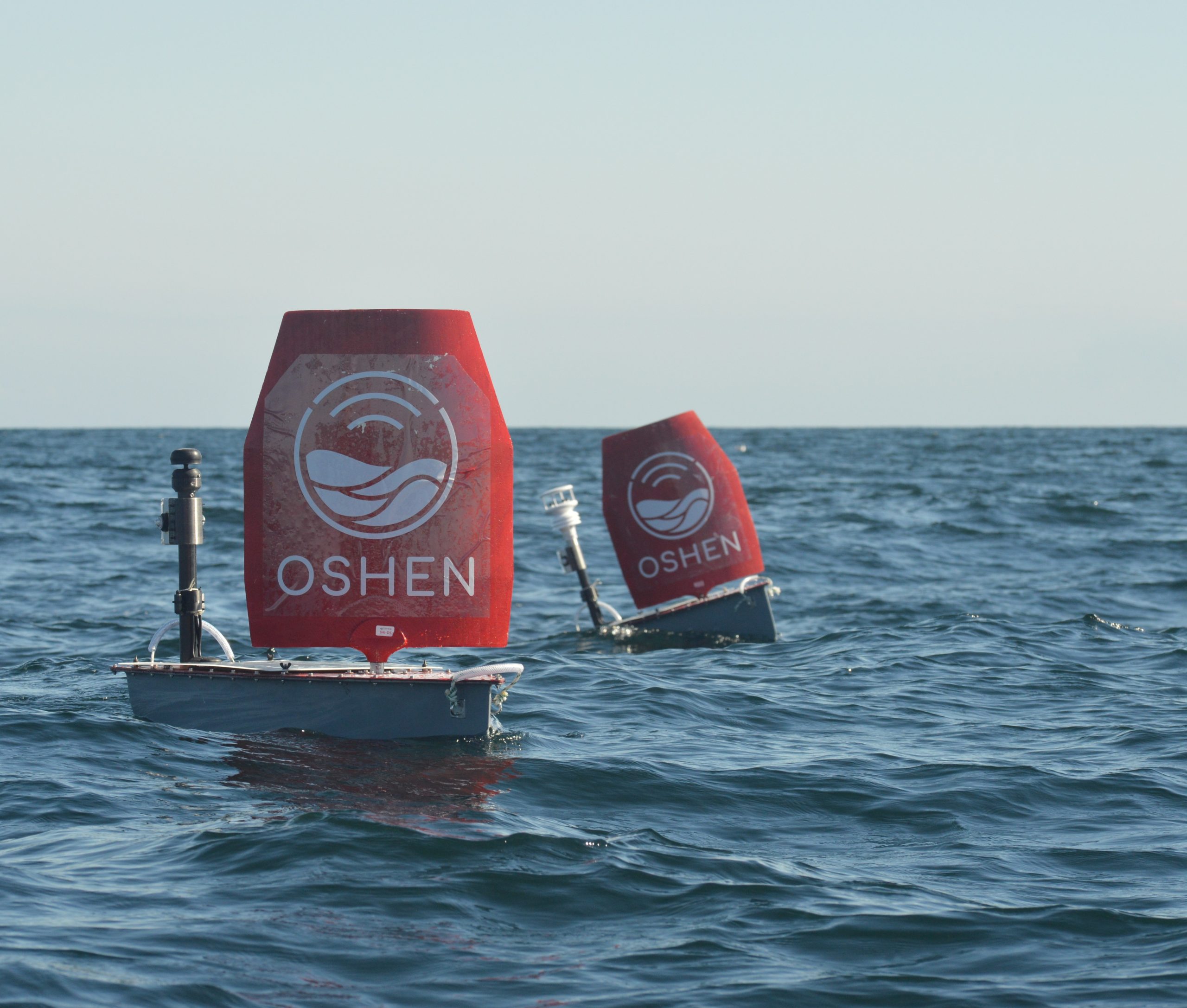
In a monumental stride for marine technology and climate science, Oshen, a pioneering company specializing in autonomous ocean robotics, has achieved an unprecedented feat: deploying micro-robots that successfully collected critical data from within the eyewall of a Category 5 hurricane. This groundbreaking accomplishment, spearheaded by founder Anahita Laverack, signals a transformative era for oceanographic research, extreme weather forecasting, and maritime defense, promising to unlock secrets hidden within the ocean’s most formidable storms.
The Genesis of Oshen: From Aerospace Ambition to Ocean Insight
Anahita Laverack’s journey into the depths of ocean robotics began not with a fascination for marine life, but with an aspiration to conquer the skies. Initially set on a career in aerospace engineering, her trajectory took an unexpected turn after participating in an autonomous robotics challenge. This pivotal experience ignited a new passion and, more importantly, a profound realization that would ultimately lead to the creation of Oshen.
The year 2021 marked a significant turning point when Laverack, herself an experienced sailor, decided to enter a robot into the Microtransat Challenge. This arduous competition tasks participants with designing and deploying autonomous sail-powered micro-robots capable of traversing the vast expanse of the Atlantic Ocean. It’s a testament to the immense difficulty of the challenge that, like every other entrant before and since, Laverack’s attempt did not succeed. This "failure," however, proved to be a catalyst for innovation.
Her analysis of the challenge’s widespread difficulties revealed two critical insights. Firstly, the inherent fragility and complex engineering required for micro-robots to withstand the relentless forces of the open ocean posed significant hurdles. Secondly, and perhaps more crucially, she identified a pervasive lack of comprehensive, real-time oceanographic data. "I realized half the reason that all of these attempts were failing is, number one, obviously it’s hard to make micro-robots survive on the ocean," Laverack later explained, "But number two, they don’t have enough data on the ocean to know what the weather is or even know what the ocean conditions are like." This "data desert" meant that autonomous vessels were navigating blind, unable to anticipate or react effectively to the dynamic, often violent, conditions of the high seas.
Driven by this revelation, Laverack embarked on a quest for this missing ocean data, attending various industry conferences like Oceanology International. What she discovered was not a readily available trove of information, but rather a collective admission of the problem: no one had yet devised a truly effective, scalable, and affordable method for consistent ocean data collection. Instead, she encountered numerous individuals and organizations willing to pay her to attempt to collect this elusive data herself. This unexpected demand validated her hypothesis and solidified her resolve: if there was a market for this data, she could build the means to capture it.
These formative conversations laid the groundwork for Oshen, which Laverack co-founded in April 2022 alongside Ciaran Dowds, an accomplished electrical engineer whose expertise perfectly complemented her vision. Together, they set out to address one of the most persistent and challenging gaps in environmental monitoring.
Crafting the C-Stars: Innovation Against the Odds
From its inception, Oshen adopted a lean, agile, and fiercely independent approach. Eschewing immediate venture capital, Laverack and Dowds pooled their personal savings. Their initial "headquarters" became a 25-foot sailboat moored at the cheapest marina in the United Kingdom, serving not only as their home but also as their primary testing platform. This bootstrapping philosophy underscored a commitment to rapid iteration and direct, hands-on development—a crucial factor in their eventual success.
The company’s flagship product, the C-Star, is an autonomous micro-robot designed to endure the harsh marine environment for extended periods, capable of operating continuously for up to 100 days. These C-Stars are deployed in swarms, gathering a wealth of oceanographic data that was previously inaccessible or prohibitively expensive to collect.
The development process was rigorous, spanning two years of continuous iteration. Bots were refined on shore and immediately deployed for real-world testing, a cycle that accelerated their learning curve. While summer testing presented manageable conditions, the true test of durability came with winter storms. "The problem is you really need your boats to work in all seasons," Laverack recounted. "When your robot breaks, [and] it’s a winter storm that’s raging, a 25-foot sailboat shouldn’t really be going out in those conditions. So, that led to some adventure, which I wouldn’t say any more about, but there were certainly some interesting events there." These harrowing experiences, though challenging, were invaluable in forging the resilience of the C-Stars.
The technical hurdles were substantial. Developing a micro-robot that is simultaneously mass-deployable, cost-effective, and technologically sophisticated enough to operate autonomously for long durations presented a unique engineering conundrum. It was not merely a matter of miniaturizing existing, larger marine robots. Such a task demands innovative solutions for power management, robust communication systems, sensor integration in a compact form factor, and structural integrity capable of withstanding extreme pressures and forces. Many companies had successfully achieved two of these three objectives, but Oshen’s ability to master all three—affordability, mass deployment, and advanced capability—began to attract significant attention from defense and government organizations.
The Critical Role of Ocean Data
The data collected by Oshen’s C-Stars holds immense importance across multiple sectors. For climate science and weather prediction, real-time, granular ocean data is foundational. Oceans absorb vast amounts of heat and carbon dioxide, profoundly influencing global climate patterns. Understanding ocean temperatures, currents, salinity, and wave dynamics is crucial for refining climate models, predicting sea-level rise, and, most immediately, enhancing the accuracy of hurricane forecasts. Current hurricane prediction models often rely on sparse data points from satellites, buoys, and reconnaissance aircraft. Robots collecting data from within a storm can provide unprecedented insights into its intensification, energy exchange with the ocean, and precise trajectory.
Beyond environmental applications, oceanographic data plays a vital role in defense and security. Naval operations, anti-submarine warfare, and maritime domain awareness all depend on accurate knowledge of ocean conditions. Submarines, for instance, utilize water temperature and salinity gradients to hide or detect other vessels. Autonomous underwater vehicles (AUVs) and surface vessels (ASVs) like the C-Stars can provide invaluable intelligence for strategic planning and tactical execution.
Furthermore, commercial sectors such as shipping, fisheries, and offshore energy also stand to benefit. Improved weather forecasting can optimize shipping routes, saving fuel and enhancing safety. Detailed ocean data can inform sustainable fishing practices and aid in the efficient and safe operation of offshore wind farms and oil and gas platforms.
A Defining Moment: Braving Hurricane Humberto
Oshen’s burgeoning reputation eventually caught the attention of the National Oceanic and Atmospheric Administration (NOAA) two years prior to their landmark deployment. However, at that initial juncture, Laverack candidly admitted that Oshen’s technology was not yet consistently reliable enough for NOAA’s stringent requirements. This rejection spurred further development and refinement.
The pivotal moment arrived two months before the anticipated 2025 hurricane season. After Oshen had successfully demonstrated the resilience of its robots by deploying them into fierce winter storms off the U.K. coast, NOAA re-established contact. This time, Oshen was ready. The company rapidly manufactured and dispatched 15 C-Stars to the U.S. for deployment.
As Hurricane Humberto began to intensify, forecasters predicted its path toward the U.S. Virgin Islands. Five of Oshen’s C-Stars were strategically deployed overboard in the vicinity, tasked with collecting data in the storm’s approach. The initial expectation was for the bots to gather information in the pre-storm environment, providing a valuable lead-up to the hurricane’s arrival.
What transpired, however, exceeded all expectations. As Humberto rapidly escalated into a monstrous Category 5 hurricane, three of the deployed C-Stars not only survived the direct onslaught but continued to transmit critical data throughout the entire event. Despite minor damage—"minus a few missing parts," as Laverack noted—these diminutive robots became the first ocean robots in history to collect data from within the heart of a Category 5 hurricane. This achievement is nothing short of revolutionary. It transitions oceanographic monitoring from largely remote sensing and sparse point-data collection to direct, in-situ observation of the most extreme weather phenomena on Earth. The data gathered from within Humberto could provide unprecedented insights into rapid intensification processes, wave heights within the eyewall, and the complex energy exchange between the ocean and the atmosphere, potentially leading to significant improvements in hurricane modeling and early warning systems.
Oshen’s Trajectory: Growth and Future Horizons
In the wake of this triumph, Oshen has solidified its position as a leader in autonomous marine technology. The company has since relocated to Plymouth, England, a strategically chosen hub renowned for its thriving marine tech ecosystem and access to crucial maritime resources and expertise.
This success has translated into a rapid expansion of its customer base. Oshen is now securing multiple contracts, including with the U.K. government, for both weather monitoring and defense operations. This diversification highlights the versatile applications of their C-Star technology, capable of serving critical needs across environmental science, national security, and commercial sectors.
The market impact of Oshen’s achievements is profound. The ability to deploy affordable, resilient, and autonomous micro-robot fleets opens up vast new possibilities for understanding our oceans. It democratizes access to ocean data, which has historically been the exclusive domain of large research institutions or navies with expensive ships and equipment.
Looking ahead, Oshen plans to raise venture capital to meet the escalating demand for its innovative solutions. This infusion of capital will be instrumental in scaling production, expanding research and development into new sensor technologies, and potentially establishing a global operational footprint. While challenges such as mass production logistics, data integration into existing systems, and navigating a competitive landscape remain, Oshen’s demonstrated capability to innovate and execute in the most extreme environments positions it at the forefront of the emerging ocean economy.
The successful deployment of Oshen’s C-Stars in Hurricane Humberto is more than just a technological marvel; it represents a significant leap forward in humanity’s quest to understand and mitigate the impacts of our changing planet. By venturing where no robot has gone before, Oshen is not just collecting data; it is forging a new future for ocean exploration and protection.