Amir Mahmud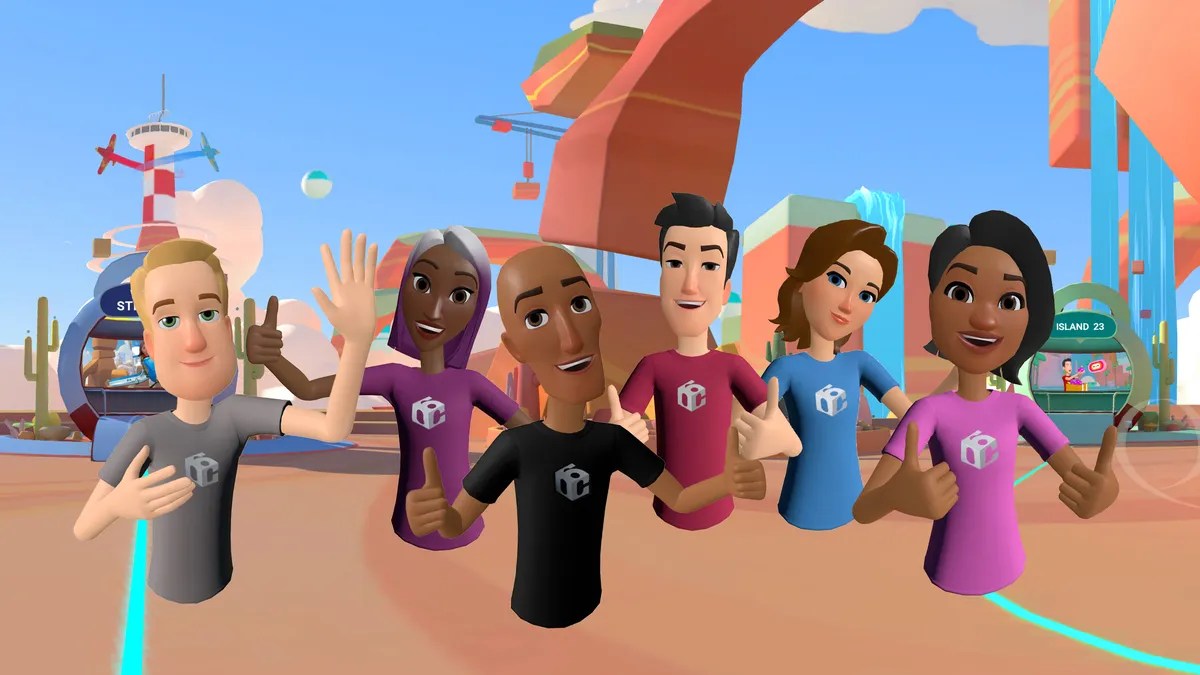
In a significant strategic realignment, Meta Platforms Inc. is substantially scaling back its ambitious investments in virtual reality and the metaverse, signaling a profound pivot towards artificial intelligence. This shift became starkly evident last week with reports from The Wall Street Journal detailing widespread layoffs across its Reality Labs division, impacting approximately 1,500 employees—roughly 10% of the unit’s workforce—and the closure of several prominent VR game studios. This marks a dramatic reversal for a technology giant that, merely four years prior, had staked its entire corporate identity and future vision on the immersive, interconnected digital worlds of the metaverse.
For many industry observers and a significant portion of the public, the impending retreat from Meta’s metaverse vision comes as little surprise. The journey into virtual reality, heralded by the company’s rebranding, has been fraught with challenges, significant financial outlays, and a struggle to capture widespread consumer enthusiasm. The company’s grand pronouncements about a future lived in virtual spaces now appear to be giving way to a more pragmatic pursuit of technologies with immediate, tangible market traction, primarily artificial intelligence.
Retreat from Virtual Worlds
The recent operational adjustments at Meta’s Reality Labs underscore a clear de-prioritization of virtual reality content development. Among the notable casualties are internal studios responsible for acclaimed VR titles, including Armature Studio, known for "Resident Evil 4 VR"; Twisted Pixel, developer of "Marvel’s Deadpool VR"; and Sanzaru, which created "Asgard’s Wrath." These closures represent a significant blow to the ecosystem of high-quality, exclusive content intended to drive adoption of Meta’s Quest VR headsets.
Furthermore, the popular VR fitness application Supernatural, acquired by Meta in 2023 for an estimated $400 million following regulatory scrutiny, will cease producing new content, transitioning instead into a "maintenance mode." This means existing users can continue to access the platform, but the flow of fresh, engaging experiences that typically fuel subscription services will dry up. Camouflaj, the studio behind the highly anticipated "Batman: Arkham Shadow" VR game, has also been affected by these sweeping layoffs, according to reports from GeekWire.
Adding to the consolidation, The Verge noted last week that Meta’s enterprise VR initiative, Workrooms, designed to facilitate virtual collaboration in professional settings, is also being shut down. These moves follow an earlier Bloomberg report from December, which indicated Meta’s plans to reduce the virtual reality department’s budget by up to 30%. Concurrently, the company announced a pause in its program to share its Meta Horizon operating system, which powers its Quest-branded VR headsets, with third-party hardware manufacturers. This decision curtails Meta’s ambition to establish its software as the foundational platform for a broader VR ecosystem, suggesting a narrower focus on its proprietary hardware.
Billions Invested, Returns Elusive
The financial underpinnings of Meta’s metaverse gamble have been a source of considerable concern for investors. The Reality Labs division, the engine behind Meta’s VR and AR endeavors, has consistently posted substantial losses since its inception. In total, the company has funneled an staggering sum of approximately $73 billion into Reality Labs, a figure that dwarfs the investment profiles of many established corporations and startups combined. To contextualize this immense expenditure, one would need to spend $1 million every day for over two centuries to reach a similar sum.
These colossal investments have yet to yield any discernible profit, leading to mounting apprehension among shareholders and analysts. Quarterly earnings reports have frequently highlighted the division’s escalating operating losses, contributing to investor skepticism regarding the viability and timeline for return on investment for Meta’s metaverse strategy. The sustained lack of profitability, coupled with the capital-intensive nature of hardware and content development, made the division an unsustainable drain on company resources, particularly as market sentiment shifted towards other emerging technologies.
From Facebook to Meta: A Strategic Identity Shift
The decision to rebrand Facebook as Meta in October 2021 was a pivotal moment, signaling a bold, all-in commitment to a future defined by virtual and augmented reality. This move was driven by a multi-faceted strategic imperative. On one hand, it represented a proactive bet on the evolving social habits of younger generations, particularly Gen Z, who increasingly gravitate towards interactive online gaming platforms like Fortnite and Roblox for social interaction rather than traditional social media feeds. Meta envisioned the metaverse as the ultimate evolution of social connection, a place where users could "be present" with others in a way that transcended physical distance.
Crucially, the rebrand also served as a strategic maneuver to distance the company from the accumulating negative perceptions and controversies surrounding its flagship Facebook platform. Over several years, the Facebook brand had been severely tarnished by a series of high-profile scandals, including the Cambridge Analytica data privacy breach, revelations from whistleblower Frances Haugen concerning the platform’s documented negative impacts on children and teens, intense Congressional scrutiny over digital surveillance practices, its role in the proliferation of misinformation, and allegations of monopolistic behavior. By shifting its corporate identity to Meta, the company aimed to project an image of forward-looking innovation, aspiring to leave behind the reputational baggage of its past and redefine its purpose around a seemingly futuristic vision.
User Experience and the "Build in the Open" Challenge
Meta’s vision for the metaverse centered around its proprietary application, Horizon Worlds, where users would connect in virtual environments using Meta’s VR headsets. However, the initial iterations of this virtual world often fell short of the grand promises. The concept of "building in the open," a common tech industry practice of releasing early-stage products to gather user feedback for rapid iteration, proved problematic for the metaverse. While effective for software development with clear market demand, it faltered when applied to a nascent technology that lacked widespread consumer interest and a compelling initial user experience.
Early versions of the metaverse were widely criticized for their rudimentary graphics and often uninspired user interfaces. A particular point of ridicule centered on the "goofy, soulless avatars" that notoriously lacked legs, prompting widespread online mockery, including a viral meme featuring Meta CEO Mark Zuckerberg’s own avatar. These visual shortcomings, combined with a general sense of emptiness in the virtual spaces, led to a perception that Meta was overpromising a futuristic vision while its core product significantly under-delivered. The user experience was often clunky, isolating, and failed to offer a compelling reason for sustained engagement, highlighting a disconnect between the company’s ambitious rhetoric and the reality of its offerings.
Lukewarm Adoption and Developer Friction
Despite Meta’s aggressive push and significant market share in the VR headset segment with its Oculus line, consumer demand for virtual reality hardware and experiences has remained lukewarm. While Meta quickly established itself as a dominant player, capturing approximately 77% of global VR headset shipments in 2024, the overall market for VR headsets experienced a 12% year-over-year decline in sales that year, marking the third consecutive year of contraction, according to Counterpoint Research. This indicates that even with a market leader, the technology has struggled to break into the mainstream consciousness.
A crucial aspect of Meta’s strategy was to create a new digital economy, bypassing the platform fees imposed by Apple and Google on their respective app stores. Mark Zuckerberg explicitly articulated this ambition in a 2021 keynote, lamenting the "lack of choice and high fees" that he believed stifled innovation and held back the internet economy. He envisioned the metaverse as a platform that could eventually host "hundreds of billions" of dollars in digital commerce, supported by optimistic, albeit questionable, forecasts from analysts like McKinsey & Co. and Citi, who predicted a multi-trillion-dollar metaverse economy by 2030.
However, Meta’s approach to developer incentives proved counterproductive. Instead of offering more attractive revenue shares to entice creators, Meta announced plans to levy a substantial 47.5% fee on sales of digital assets within Horizon Worlds, comprising a 30% hardware platform fee and an additional 17.5% for the Horizon Worlds application itself. This exorbitant cut, significantly higher than the industry-standard 30% charged by Apple and Google, generated considerable backlash from creators. It undermined Meta’s stated goal of fostering an open, developer-friendly ecosystem and likely deterred many potential builders from investing their time and resources into the platform, further hindering content diversity and user engagement.
The Unaddressed Safety Conundrum
Beyond technical and economic hurdles, Meta’s metaverse initiatives also faced significant criticism regarding user safety and content moderation—an echo of the challenges that plagued its social media platforms. The company’s approach to safety in Horizon Worlds was largely reactive, rather than proactive, mirroring its historical struggles with scaling content moderation alongside user growth on Facebook.
Reports of sexual harassment and even virtual assault, including instances of "virtual rape" and "gang rape," within Horizon Worlds raised serious alarms. In response to these incidents, Meta belatedly introduced a "Personal Boundary" feature, which created a default buffer zone between avatars to prevent unwanted proximity. However, the company later adjusted this feature, allowing users to disable it when interacting with "non-friends" and providing an option to switch it off entirely, raising questions about the company’s commitment to robust safety defaults.
When questioned about its support measures for Horizon Worlds, Meta outlined features such as blocking, reporting, and a "safe zone" button. Yet, the company remained vague about the concrete actions it would take against individual bad actors. Users reported difficulties in documenting abuse, often opting to remove their headsets rather than navigate cumbersome reporting processes that required video and audio evidence. The metaverse’s code of conduct, when eventually published, also lacked specific details on consequences for violations, merely stating that Meta would "take action on users." This reactive, ambiguous stance on safety, combined with concerns about a potentially homogenous development team lacking diverse perspectives, further eroded trust and made the metaverse a less inviting space for a broad user base.
The AI Imperative and AR’s Promising Horizon
In stark contrast to the metaverse’s struggles, Meta has found unexpected success and renewed focus in other technological domains, particularly augmented reality and artificial intelligence. The company’s collaboration with Ray-Ban on smart glasses has yielded a product that has seen increasing consumer interest. These AR glasses, offering features like hands-free recording, music streaming, and integration with Meta AI, have reportedly begun to outsell traditional Ray-Ban models in some retail stores. The strong demand has even prompted Meta to consider doubling the production output of these glasses, according to Bloomberg.
Further advancing its AR ambitions, Meta introduced Ray-Ban Display glasses last year, which incorporate a display for apps, alerts, and directions directly onto the lens. Although international rollout plans for this specific product were temporarily paused due to "unprecedented demand"—a situation perhaps better described as overly conservative inventory forecasting—the positive reception indicates a clearer path for AR devices that augment, rather than entirely replace, real-world experiences.
The broader tech industry has also experienced a seismic shift towards artificial intelligence, particularly generative AI, which has emerged as the next major computing platform. Companies like OpenAI and Amazon, along with numerous startups, are rapidly developing AI-powered hardware devices and sophisticated large language models. This collective industry pivot has made Meta’s singular focus on an immersive VR metaverse appear increasingly outdated. The ability of AI to enhance existing products, create new forms of interaction, and drive efficiency has captured the imagination of consumers and investors alike.
Looking Ahead: A Refocused Path
The current landscape makes it challenging for Meta to justify continued, massive investment in a speculative VR metaverse that has failed to gain significant traction. Instead, the company is strategically reallocating resources towards areas demonstrating immediate potential and aligning with the prevailing industry trends. This includes doubling down on its successful Ray-Ban smart glasses line, expanding its Meta AI applications which have reportedly reached over 1 billion monthly active users, and developing its large language models.
Meta’s pivot away from the metaverse and towards AI represents a crucial re-evaluation of its long-term strategy. It highlights the inherent risks of making colossal, singular bets on unproven technologies and the importance of adapting to evolving market demands and technological paradigms. While the dream of a fully immersive virtual world may still hold future promise, Meta’s recent actions underscore a pragmatic recognition that the immediate future of technology, and the company’s growth, lies in the rapidly accelerating field of artificial intelligence and more subtly integrated augmented reality experiences. The costly experiment of the metaverse, for now, appears to be yielding to a refocused, AI-driven path forward.