Amir Mahmud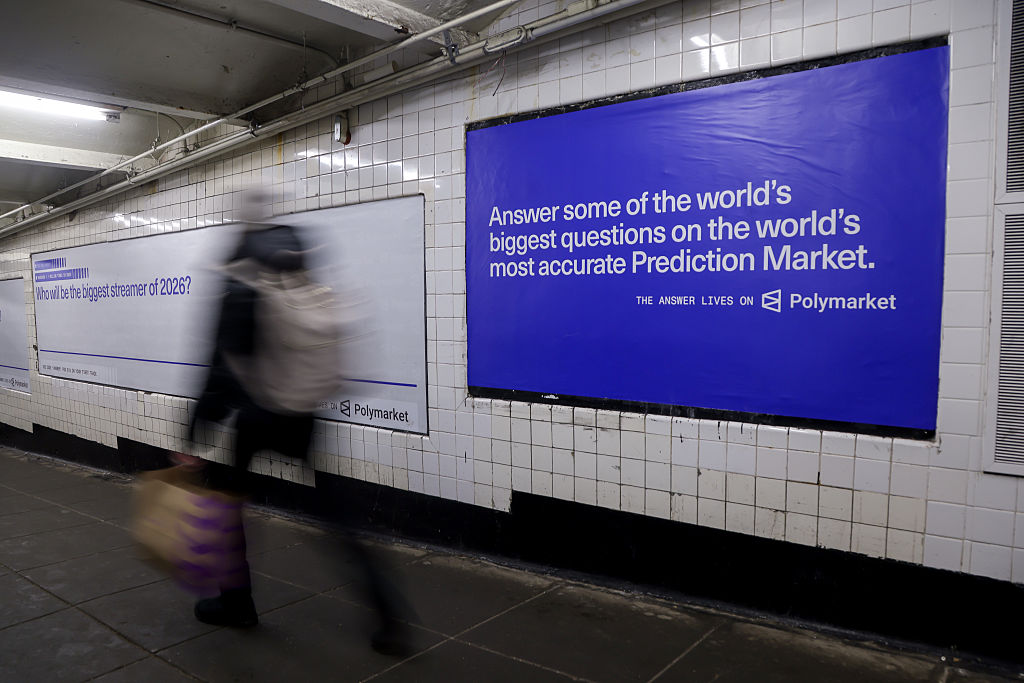
A significant volume of transactions, totaling over half a billion dollars, recently occurred on prediction markets concerning a potential military strike against Iran. Specifically, the platform Polymarket witnessed $529 million exchanged on contracts linked to the timing of an attack by U.S. or Israeli forces. This substantial trading activity, culminating around the end of February 2026, has intensified scrutiny of the ethical boundaries and regulatory oversight of decentralized prediction platforms, particularly following allegations of potentially illicit trading patterns.
The Dynamics of Geopolitical Prediction Markets
Prediction markets are online platforms where individuals can wager on the outcomes of future events. These markets operate by allowing users to buy and sell shares corresponding to specific predictions. For instance, a share predicting "yes" for an event might trade at 70 cents, implying a 70% probability of that event occurring, while a "no" share would trade at 30 cents. If the event happens, "yes" shares pay out $1, and "no" shares become worthless, and vice-versa. Proponents argue that these markets can aggregate diverse information, potentially offering more accurate forecasts than traditional polling or expert analysis. Critics, however, often liken them to unregulated gambling, raising concerns about market manipulation, ethical implications, and the potential for financial incentives to influence real-world events.
The market in question on Polymarket centered on whether the U.S. would conduct a bombing campaign against Iran by February 28, 2026. The sheer scale of the $529 million traded on this particular outcome underscores the heightened interest and perceived stakes involved in geopolitical forecasting. This level of activity on such a sensitive topic immediately drew attention, not only from market participants but also from observers concerned about the broader implications of monetizing potential international conflict.
Allegations of Informed Trading and Market Integrity
An analysis conducted by the analytics firm Bubblemaps SA brought to light suspicious trading behavior surrounding the Iran market. Their findings indicated that six newly established accounts collectively amassed profits exceeding $1 million by accurately predicting the occurrence of a U.S. strike on Iran by the specified deadline. This pattern—new accounts, significant capital, and perfectly timed, profitable trades—has fueled speculation about potential insider trading. Nicolas Vaiman, CEO of Bubblemaps, commented on the inherent risks within such platforms, noting that the circulation of sensitive information, especially concerning conflict, combined with the anonymity often afforded by decentralized platforms, could create strong incentives for individuals with privileged knowledge to act swiftly and profitably.
The concept of insider trading, typically associated with traditional financial markets, refers to the illegal practice of using non-public, material information to make trades for personal gain. While the regulatory framework for decentralized prediction markets is still evolving and often ambiguous, the principle of fairness and equal access to information remains a cornerstone of market integrity. If certain participants had foreknowledge of military actions, their trading activities would not only undermine the integrity of the prediction market but also raise profound ethical questions about the sources and uses of such sensitive intelligence.
Geopolitical Tensions: A Fertile Ground for Speculation
The context for such a market is rooted in the long-standing and complex geopolitical tensions involving Iran, the United States, and Israel. For decades, Iran’s nuclear program, its regional influence through proxy groups, and its often-antagonistic relationship with Western powers have been sources of international concern and potential conflict. The U.S. and its allies have, at various points, imposed sanctions, engaged in diplomatic efforts, and maintained a military presence in the region to counter perceived threats from Iran. Israel, viewing Iran’s nuclear ambitions and support for groups like Hezbollah and Hamas as existential threats, has also consistently advocated for a strong stance against Tehran, including the possibility of military action.
This backdrop of continuous geopolitical friction creates an environment ripe for speculation. Events such as military exercises, diplomatic breakdowns, or shifts in rhetoric can quickly escalate anxieties and influence market probabilities on platforms like Polymarket. The very existence of a market betting on a military strike reflects a societal awareness, or perhaps a collective apprehension, regarding the real-world potential for such an event. The financial stakes then add another layer to this already complex tapestry of international relations, where the perceived likelihood of war can be bought and sold.
The Ethical Minefield: Betting on Life and Death
Beyond the immediate concerns of market manipulation, these types of prediction markets ignite a broader ethical debate: where do we draw the line when monetizing future events? The question becomes particularly acute when markets touch upon human suffering, political stability, or, most controversially, the life or death of individuals.
In a related incident earlier in January, another analytics firm, Polysights, observed a distinct surge in bets concerning the longevity of Iran’s Supreme Leader Ali Khamenei, specifically on whether he would remain in his role by the close of March. Such markets immediately provoke comparisons to "assassination markets," a concept that many find morally reprehensible. The concern is that offering financial incentives for outcomes involving death or political upheaval could potentially encourage or facilitate such events, even if indirectly.
Tarek Mansour, CEO of Kalshi, another prominent prediction market platform, addressed these ethical dilemmas directly. He emphasized that Kalshi consciously avoids listing markets explicitly tied to death. Furthermore, he stated that for markets where potential outcomes might incidentally involve death, Kalshi designs its rules to prevent participants from profiting directly from such a tragic event. As a gesture of commitment to these principles, Mansour announced that Kalshi would reimburse all fees associated with any such ethically ambiguous bets on its platform. This proactive stance highlights the industry’s struggle to balance innovation with responsibility.
Regulatory Challenges in a Decentralized World
The regulatory landscape for prediction markets, especially those leveraging decentralized blockchain technology, remains largely undefined and challenging. Traditional financial markets are governed by stringent rules enforced by bodies like the Securities and Exchange Commission (SEC) and the Commodity Futures Trading Commission (CFTC) in the U.S. These regulations aim to prevent fraud, protect investors, and ensure market integrity. However, many decentralized platforms operate across borders, often without a central authority, making it difficult for national regulators to assert jurisdiction or enforce rules.
In the U.S., the CFTC has previously taken action against prediction market platforms, classifying some contracts as illegal off-exchange commodity options. While some platforms like Kalshi have actively sought and obtained regulatory approval for certain types of event contracts, others, particularly those operating on decentralized protocols, often exist in a legal grey area. The anonymity afforded by cryptocurrency transactions and the global nature of these platforms compound the difficulty of identifying participants, investigating suspicious activity, and applying legal penalties. This regulatory vacuum allows for a degree of freedom that, while appealing to some, also carries inherent risks for market integrity and public trust.
Social and Cultural Ramifications
The emergence of high-stakes prediction markets on geopolitical events also prompts reflection on their broader social and cultural impact. Are these platforms normalizing the commodification of global crises? By allowing individuals to financially benefit from predictions of war or political instability, there’s a risk of desensitizing the public to the human cost of such events. The "gamification" of serious issues, where the anticipation of profit overshadows humanitarian concerns, represents a significant ethical quandary.
Moreover, these markets contribute to a culture of constant speculation, where every major news event, from elections to natural disasters to military conflicts, becomes a potential betting opportunity. While proponents argue this can foster greater engagement and informed public discourse, critics contend it trivializes complex issues and encourages a detached, transactional view of world affairs. The public perception of these platforms is often polarized, reflecting a societal tension between the desire for open information markets and the imperative to uphold ethical standards in public discourse.
The Ongoing Debate
The $529 million traded on Polymarket regarding a potential U.S. strike on Iran serves as a potent illustration of the promises and perils of prediction markets. While they offer a novel mechanism for aggregating information and forecasting future events, their operation in sensitive geopolitical spheres raises profound questions about market integrity, ethical boundaries, and regulatory oversight. The accusations of insider trading, the discussions around "assassination markets," and the struggle to define clear regulatory frameworks all point to an ongoing, critical debate. As these platforms continue to evolve and gain traction, society faces the challenge of reconciling technological innovation with fundamental ethical considerations and the need for a stable, just international order. The future of prediction markets, particularly those touching on the most serious global events, will undoubtedly be shaped by how these complex issues are addressed.