Amir Mahmud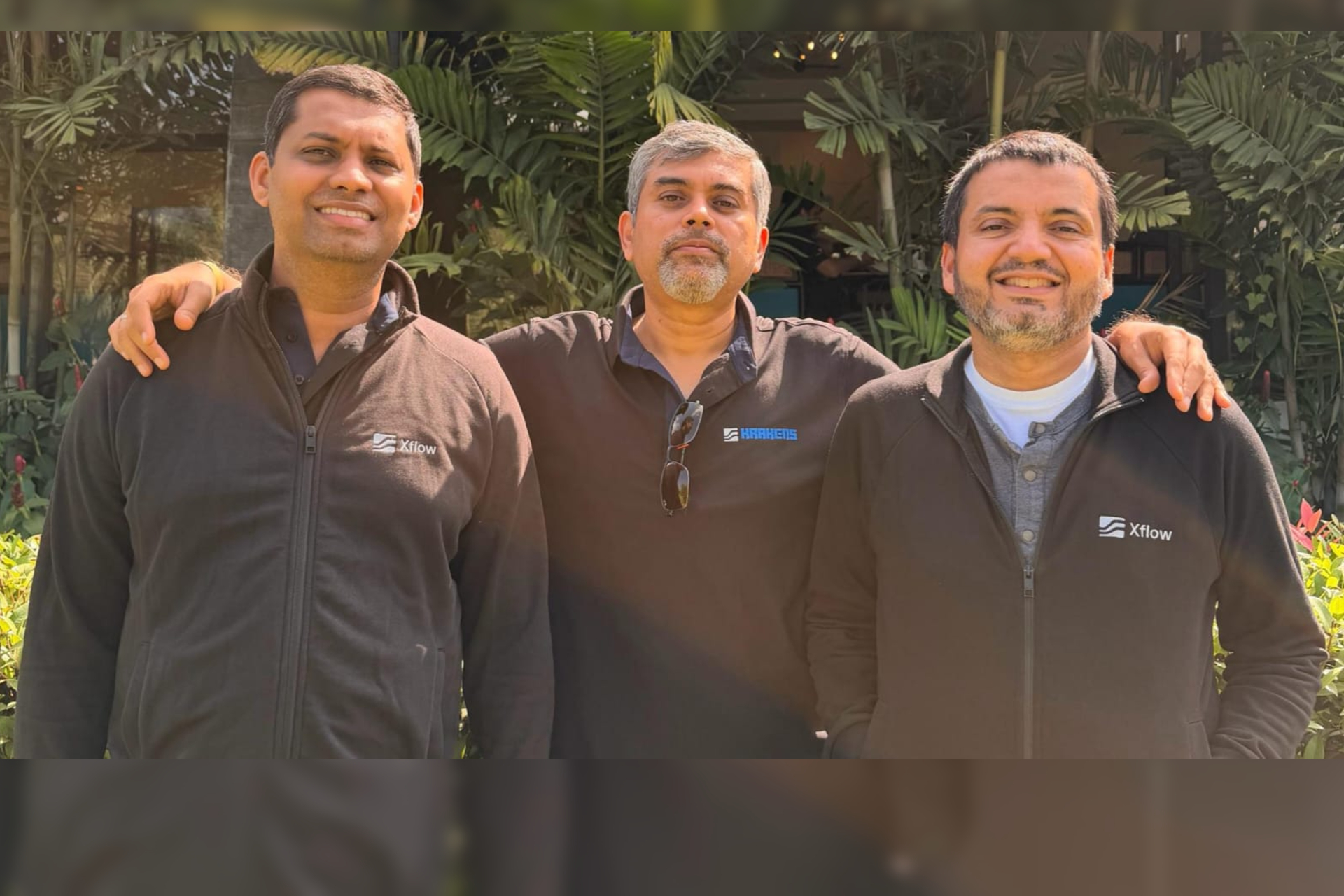
An Indian financial technology startup, Xflow, has successfully closed a significant funding round, attracting investments from prominent global players Stripe and PayPal Ventures. The Bengaluru-based company secured $16.6 million in a Series A round, bringing its total funding to over $32 million and valuing the firm at $85 million post-investment. This substantial backing underscores a growing global confidence in Xflow’s mission to revolutionize the often cumbersome and opaque world of cross-border business-to-business (B2B) payments, particularly for the burgeoning Indian export market.
The Funding Catalyst: A Vote of Confidence
The Series A funding round was spearheaded by General Catalyst, a venture capital firm known for its early-stage investments in transformative technology companies. Joining this round were existing investors Square Peg, Lightspeed, and Moore Capital, further demonstrating continued belief in Xflow’s trajectory. The participation of Stripe and PayPal Ventures, both titans in the digital payments ecosystem, is particularly noteworthy. Their strategic investment signals not only a recognition of Xflow’s innovative approach but also highlights the critical need for more efficient and transparent solutions in international B2B transactions. For a relatively young startup founded in 2021, securing such high-profile backing lends significant credibility, a factor crucial when dealing with complex financial regulations and building trust with diverse business clients and banking partners.
Bridging India’s Digital Divide in Global Commerce
India has long been celebrated for its pioneering advancements in domestic digital payments, most notably through the Unified Payments Interface (UPI). This real-time payment system has transformed everyday transactions, fostering financial inclusion and propelling India to the forefront of the digital economy. However, despite this domestic success, the landscape for cross-border B2B transfers for Indian exporters has remained starkly different. Historically, these international transactions have been heavily reliant on traditional banking channels, characterized by slow processing times, prohibitive fees, and a glaring lack of transparency. Businesses often struggle with limited visibility into the exact fees deducted, the precise settlement timelines, and the final amount in Indian rupees that will be credited to their accounts.
This friction is particularly acute for large-scale exporters moving millions of dollars to fund local operations, salaries, and supply chain logistics. The inefficiencies can significantly impact cash flow, hinder operational planning, and ultimately erode profitability, making Indian businesses less competitive on the global stage. Xflow emerged precisely to address this critical gap, positioning itself as a vital infrastructure provider that promises greater speed, transparency, and control in international money movement, thereby aligning cross-border payments with the digital efficiency seen in domestic transactions. The sheer volume of international trade flowing through India—a nation with ambitious export targets and a rapidly expanding global footprint—magnifies the urgency and market potential for such solutions.
The Genesis of a Solution
Xflow was co-founded by Anand Balaji, Ashwin Bhatnagar, and Abhijit Chandrasekaran, all of whom share a common background at Stripe, a company renowned for its developer-friendly payment infrastructure. Balaji, who previously played a pivotal role in establishing Stripe’s India operations, recognized the significant disparity between India’s advanced domestic payment ecosystem and its antiquated international B2B processes. "Cross-border B2B payments were stuck in a different age compared to UPI," Balaji noted in an interview, underscoring the inspiration behind Xflow.
Their collective experience at Stripe provided them with deep insights into building scalable payment infrastructure and understanding the needs of modern businesses. This expertise became the bedrock for Xflow’s offering: a robust platform designed to simplify the complex process for businesses ranging from exporters and Software-as-a-Service (SaaS) firms to digital platforms and individual freelancers. Xflow enables these entities to efficiently collect international payments, expertly manage foreign exchange (FX) risks, and seamlessly settle funds within India, thereby streamlining critical financial operations.
Scaling Impact and Innovation
Since its inception in 2021, Xflow has demonstrated remarkable growth and market penetration. Last year alone, the company facilitated Indian businesses in collecting payments from over 100 countries across more than 25 currencies. This diverse reach is a testament to the global nature of India’s economy and the universal need for streamlined international payments. The platform processed close to $1 billion in annualized cross-border payment volume, marking an impressive tenfold growth compared to the previous year.
Xflow’s customer base has expanded significantly, now serving approximately 15,000 businesses. This clientele spans a wide spectrum, including fast-growing SaaS companies, global capability centers (GCCs) – offshore units operated by multinational corporations in India – IT services exporters, independent freelancers, and other fintech platforms. The transaction sizes handled by Xflow vary widely, reflecting the diversity of its customer segments. For instance, global capability centers typically average transactions between $1 million and $2 million, while goods exporters handle transactions around $30,000 to $40,000, and freelancers generally process payments of approximately $3,000. This flexibility in accommodating different transaction volumes highlights Xflow’s versatile infrastructure.
Beyond its core payment processing, Xflow has introduced an innovative AI-based foreign exchange tool. This feature is designed to empower finance teams by optimizing the timing of currency conversions, moving beyond the traditional reliance on prevailing bank quotes. The tool allows businesses to set target conversion rates, akin to limit orders in stock trading, where a transaction is executed only when a specified price is met. This data-driven approach, according to Xflow, has generated incremental gains for some customers by enabling more strategic FX decisions. The model currently offers a three-day forecast with an asserted 92% confidence level, providing businesses with a predictive edge in volatile currency markets.
The Strategic Vision: Powering the Payments Ecosystem
Xflow strategically positions itself not as a direct payment application competing with consumer-facing platforms, but rather as a foundational payments infrastructure provider. Its core offering revolves around a suite of Application Programming Interfaces (APIs) that enable platforms and exporters to seamlessly embed cross-border money movement capabilities directly into their own products and services. This "white-label" or "infrastructure-as-a-service" approach resonates with the broader trend in fintech, where specialized providers build robust backend systems that power a multitude of client-facing applications.
As co-founder Anand Balaji articulately put it, "We didn’t want to build the next Wise – we want to power the next thousand Wises." This statement encapsulates Xflow’s ambition to be the underlying engine for a new generation of global payment solutions, fostering innovation across the ecosystem rather than directly competing within specific niches. This strategy allows Xflow to scale rapidly by partnering with a diverse range of businesses, from nascent startups to established enterprises, thereby broadening its impact without the complexities of managing direct end-user relationships or building extensive consumer brands. Such an API-first approach not only ensures scalability but also positions Xflow as a critical enabler for various digital business models that require efficient international transaction capabilities.
Navigating a Complex Landscape
While Xflow’s innovative solutions address a clear market need, the company operates within a highly competitive and complex environment. Its primary competition still comes from traditional banks, which continue to dominate large cross-border B2B transfers due to established relationships, regulatory approvals, and perceived reliability. However, banks are often slower to innovate and burdened by legacy systems, creating an opening for agile fintechs.
At the lower end of the market, Xflow faces competition from established fintech players such as Wise (formerly TransferWise), Payoneer, and Skydo, which have built strong brands and user bases by offering more transparent and cost-effective solutions for individuals and smaller businesses. Xflow differentiates itself by focusing on higher-value transactions and emphasizing its API-led infrastructure, catering to businesses that require deep integration and customizable solutions rather than just a standalone payment app. The company’s strategic focus on infrastructure and its ability to handle significant transaction volumes set it apart from many competitors.
Furthermore, the cross-border payments sector is heavily regulated, requiring companies to navigate a labyrinth of international and domestic financial laws. Maintaining compliance across multiple jurisdictions is a continuous challenge, demanding significant investment in legal and regulatory expertise. The trust bestowed by investors like Stripe and PayPal Ventures, as Balaji highlighted, significantly strengthens Xflow’s credibility with banking and regulatory partners, smoothing the path for necessary licenses and collaborations, even as it continues to work with multiple payment providers commercially.
Looking Ahead: Expansion and Ecosystem Integration
With the fresh capital infusion, Xflow plans to accelerate its product development, building additional functionalities atop its core payment infrastructure. A key strategic move is the expansion of its regulatory footprint. The company is actively pursuing licenses in new markets, including Singapore, while already holding a payments license in Canada. This global expansion strategy is critical for serving its increasingly international client base and facilitating broader trade corridors. While expanding its reach, Xflow remains firmly focused on India as its primary market, recognizing the immense potential within its home country.
In the coming months, Xflow is preparing to roll out import capabilities, which will further round out its offering by allowing Indian businesses to manage payments for goods and services received from abroad, thus providing a comprehensive solution for both inbound and outbound international transactions. Significantly, Xflow has also received final authorization from the Reserve Bank of India (RBI) for a Payment Aggregator—Cross Border (PA-CB) license, covering both export and import activities. This regulatory milestone is crucial, legitimizing its operations and facilitating deeper integration within India’s financial system.
To further its reach and integrate its capabilities, Xflow has forged strategic platform partnerships with other fintech companies, including Easebuzz and Drip Capital. These collaborations allow Xflow to embed its cross-border functionalities into their respective offerings, creating a synergistic ecosystem where specialized services complement each other. Currently, with a team of approximately 65 employees, Xflow is poised to continue scaling its cross-border infrastructure business, attracting talent to support its ambitious growth plans.
The Broader Implications for Global Trade
The rise of companies like Xflow is indicative of a broader transformation underway in global trade and finance. As economies become increasingly interconnected, the efficiency of international money movement becomes a critical determinant of a nation’s competitiveness. By dismantling the barriers of slow, opaque, and expensive cross-border B2B payments, Xflow is not merely building a financial product; it is contributing to the infrastructure that empowers businesses of all sizes to participate more effectively in the global economy.
For India, a nation aspiring to significantly boost its export volumes and become a manufacturing and services hub for the world, streamlined international payments are indispensable. Faster access to funds, reduced operational costs, and greater financial predictability enable Indian enterprises to compete on a level playing field with global counterparts. Furthermore, the investment by global giants like Stripe and PayPal Ventures signals a clear recognition of India’s strategic importance in the global fintech landscape, solidifying its position as a hotbed for innovation that can solve complex global challenges. The success of Xflow could serve as a blueprint for how emerging markets can leverage technological prowess to leapfrog traditional financial bottlenecks and foster a more integrated and efficient global commerce ecosystem.