Amir Mahmud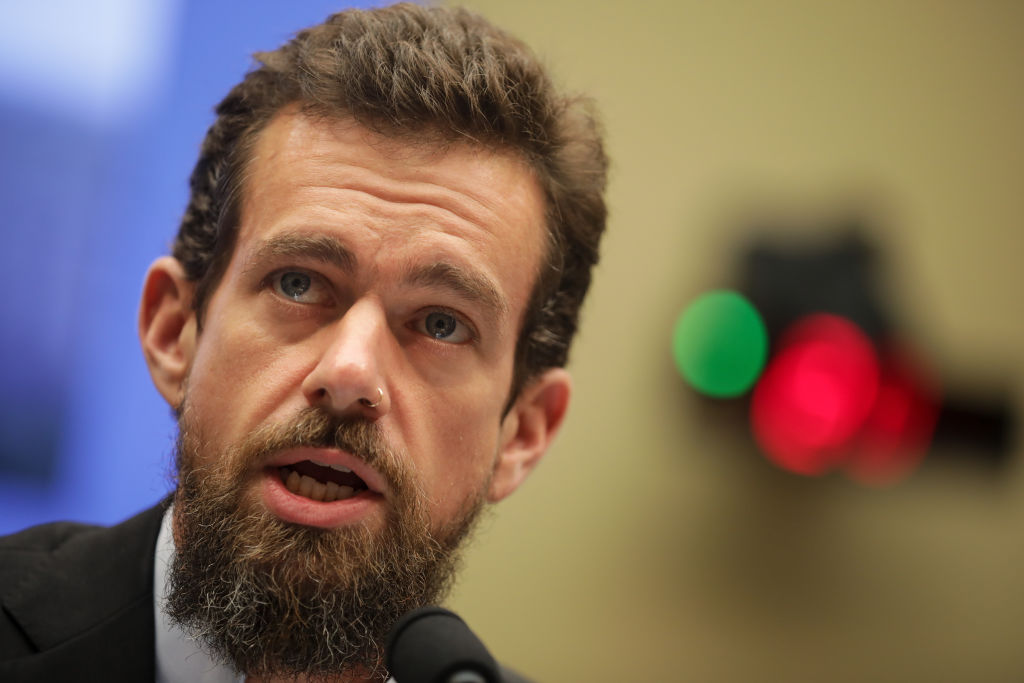
Block, the financial technology conglomerate led by co-founder Jack Dorsey, recently announced a monumental reduction in its global workforce, eliminating over 4,000 positions. This strategic realignment, which pares the company from over 10,000 employees to just under 6,000, represents a near halving of its staff across its various ventures including Square, Cash App, and Tidal. The announcement, delivered by Dorsey, was met with an immediate and enthusiastic response from investors, who propelled Block’s stock up by more than 24% in after-hours trading, reflecting Wall Street’s approval of the drastic efficiency measures.
A Precedent in Tech Downsizing
This significant corporate restructuring at Block draws parallels to a controversial, yet highly influential, event in recent tech history: Elon Musk’s takeover and subsequent overhaul of Twitter, now known as X. In November 2022, Musk dramatically slashed approximately 50% of Twitter’s staff in a single move after taking the company private. This decision sent shockwaves through Silicon Valley, effectively rewriting the unwritten rules regarding the extent to which a chief executive could unilaterally downsize a major tech enterprise. Jack Dorsey, a co-founder of Twitter and former CEO, observed this tumultuous period from a unique vantage point. Rather than cashing out, he rolled his considerable 2.4% ownership stake in Twitter into Musk’s acquisition, positioning him as one of the largest external investors in the newly privatized company. This close observation undoubtedly offered Dorsey an unparalleled perspective on the operational and market ramifications of such aggressive workforce reductions.
The relationship between Dorsey and Musk has been a subject of considerable fascination within the tech community, characterized by a complex interplay of public admiration, occasional criticism, and shared ideological ground. Dorsey initially championed Musk’s bid to acquire Twitter, viewing it as a potential path to realizing Twitter’s full, decentralized potential. However, his stance evolved, leading him to later express that Musk "should have walked away" from the deal. Despite these public shifts, both entrepreneurs remain fervent advocates for Bitcoin, a shared conviction reflected in the fact that both Block and Tesla hold significant amounts of the cryptocurrency on their balance sheets. Dorsey’s subsequent involvement in launching Bluesky, a decentralized alternative to Twitter, only to later resign from its board and laud X as "freedom technology," further underscores the intricate and sometimes contradictory nature of their dynamic. These historical interactions provide critical context for understanding Dorsey’s current bold move at Block, suggesting a strategic approach potentially informed by the outcomes, both positive and negative, of Musk’s prior actions. The notion that a substantial portion of a company’s workforce could be deemed redundant without immediately collapsing operations challenged conventional wisdom, setting a new benchmark for corporate agility—or ruthlessness, depending on one’s perspective.
The Rationale: Proactive Restructuring and AI
Dorsey himself framed Block’s extensive layoffs not as a reaction to financial distress but as a proactive, even "empathetic," strategic choice. In a public statement on X, he articulated his belief that "repeated rounds of cuts are destructive to morale, to focus, and to the trust that customers and shareholders place in our ability to lead." He further asserted his conviction that "within a year, most companies will arrive at the same place," implying that Block’s drastic action is merely an early adoption of an inevitable industry trend. Dorsey emphasized his preference for "getting there honestly and on our own terms than being forced into it reactively," portraying the decision as a thoughtful, preemptive measure rather than a desperate response to external pressures. This framing seeks to position Block as a visionary leader anticipating future economic and technological shifts, rather than merely responding to current market pressures.
Central to this narrative is the rapidly evolving landscape of artificial intelligence. Block’s Chief Financial Officer, Amrita Ahuja, explicitly linked the workforce reduction to the company’s embrace of AI, stating that the cuts are designed to position Block to "move faster with smaller, highly talented teams using AI to automate more work." This statement underscores a significant shift in corporate strategy across the tech sector, where AI is increasingly viewed not just as a tool for efficiency but as a catalyst for fundamental organizational restructuring. The premise is that advanced AI systems can now handle repetitive administrative tasks, complex data analysis, customer service interactions, and even elements of software development or content creation. This enables a smaller, more specialized human workforce to concentrate on higher-level strategic initiatives, innovation, creative problem-solving, and tasks requiring nuanced human judgment, theoretically maximizing productivity per employee. This vision suggests a future where technological advancements directly translate into leaner operational models, potentially redefining the optimal employee count for a given level of output across various industries.
Navigating the Transition: Support for Departing Employees
Recognizing the profound impact of such widespread job losses, Block outlined a comprehensive severance package for its departing U.S. employees. The provisions include "salary for 20 weeks + 1 week per year of tenure," equity vested through the end of May, six months of health care coverage, the retention of corporate devices, and a $5,000 transition fund to assist with immediate needs. Employees outside the U.S. are slated to receive "similar support," adjusted to comply with the specific labor laws and policies of their respective countries. While these measures aim to soften the immediate financial blow for those affected, the emotional and professional challenges of job displacement remain significant. The narrative of "proactive" and "empathetic" cuts, while perhaps intended to reassure, contrasts sharply with the personal upheaval experienced by thousands of individuals grappling with sudden unemployment and the daunting task of re-entering a competitive job market. The psychological toll on those affected, including stress, uncertainty, and a potential loss of professional identity, is a profound, albeit often unquantified, aspect of these corporate decisions.
The Broader Tech Landscape: AI and Workforce Realignments
Block’s move is not an isolated incident but rather a prominent example within a broader trend reshaping the tech industry. Companies like Salesforce and Amazon have also undertaken substantial staffing reductions, explicitly citing the efficiency gains and transformative potential of artificial intelligence as key drivers. Salesforce CEO Marc Benioff, for instance, has publicly stated the company’s need for "less heads with AI," reflecting a belief that AI tools can significantly augment the productivity of a smaller workforce by automating tasks previously performed by humans. Similarly, Amazon has implemented layoffs with an emphasis on "anti-bureaucracy" and the streamlining enabled by AI, suggesting a conscious effort to remove layers of management and increase individual output through technological assistance.
However, the direct correlation between AI adoption and immediate, widespread job displacement remains a subject of considerable debate among industry analysts and economists. A recent report by Forrester Research cast a critical eye on the official narrative, suggesting that while AI certainly plays a role in enhancing productivity, many current layoffs might be more fundamentally driven by financial considerations rather than solely by the immediate, measurable impact of AI-driven automation. This analytical commentary suggests that AI might serve as a convenient, forward-looking justification for cost-cutting measures that companies might undertake anyway in a more challenging economic climate. The broader tech sector has moved past its "growth at all costs" phase, characterized by rapid expansion and aggressive hiring, into an era where investors demand profitability and efficiency. This shift, partly driven by rising interest rates and a more cautious venture capital environment, makes significant workforce reductions an attractive, albeit difficult, path to achieving these metrics. This represents a cultural inflection point, where lean operations, technological leverage, and robust bottom lines are increasingly prioritized over expansive headcount and market share acquisition at any cost.
Investor Confidence and Market Dynamics
The market’s enthusiastic reception to Block’s layoff announcement – epitomized by the significant stock price surge – highlights a pervasive dynamic in contemporary financial markets. Investors frequently view large-scale workforce reductions as a strong signal of a company’s commitment to improving its profit margins, streamlining operations, and enhancing overall efficiency. From a purely financial perspective, reducing headcount directly lowers operational expenses, which can immediately boost profitability and improve key financial ratios. This often translates into increased shareholder value, as investors perceive the company as being more disciplined and focused on generating returns. While such moves carry substantial human cost, from a purely financial perspective, they often indicate a reduction in overheads and a sharpened focus on core, profitable activities. This dynamic creates a complex ethical dilemma, where actions that negatively impact thousands of individuals are simultaneously rewarded by capital markets, reinforcing a corporate strategy centered on shareholder value above all else. The long-term impact on innovation, employee morale, and societal well-being often takes a backseat to short-term financial gains, reflecting a market preference for lean structures in an uncertain economic environment.
Societal Implications and the Future of Work
Beyond the immediate financial and operational considerations, Block’s sweeping layoffs carry significant societal and cultural implications. For the thousands of employees departing, the experience is one of sudden disruption and uncertainty, often leading to financial strain, emotional distress, and a search for new opportunities in a potentially contracting job market. For those who remain, a phenomenon often termed "survivor’s guilt" can set in, coupled with increased workload expectations, a pervasive sense of job insecurity, and a potential decline in morale. This environment can foster a culture of fear rather than innovation, potentially undermining the very "speed" and "focus" that such cuts are intended to achieve, as employees may become risk-averse or disengaged.
More broadly, these developments contribute to a growing public discourse about the future of work in an age of accelerating technological advancement. If a prominent tech leader like Jack Dorsey, echoing the sentiments of others, suggests that widespread corporate downsizing is an inevitability driven by AI, it raises fundamental questions about job creation, economic stability, and the social contract between employers and employees. Is the tech industry, long seen as a bastion of high-paying jobs and limitless opportunity, entering a new phase where human capital is increasingly seen as a cost to be optimized rather than an asset to be grown and developed? The cultural impact extends to the perception of tech itself – moving from an industry promising expansive growth and opportunity to one that is now actively re-evaluating its human footprint in favor of algorithmic efficiency and a leaner, potentially more volatile, employment landscape. This shift could necessitate new policy considerations for worker retraining, social safety nets, and the equitable distribution of economic gains from AI.
Block’s Strategic Position and Future Outlook
Block’s portfolio encompasses several key segments of the financial technology market. Square provides comprehensive payment processing and business management solutions for small and medium-sized businesses, enabling them to accept payments, manage inventory, and access capital. Cash App is a popular consumer financial platform offering peer-to-peer payments, banking services, and even Bitcoin trading. Tidal, the music streaming service, represents a foray into the entertainment industry, with a focus on high-fidelity audio and artist empowerment. The integration of AI across these diverse business units is expected to streamline operations, enhance product offerings, and potentially unlock new revenue streams. For instance, AI could refine fraud detection and underwriting in Cash App, optimize inventory management and predictive analytics for Square merchants, or personalize music recommendations and artist-fan interactions on Tidal.
Dorsey’s long-term vision for Block has consistently emphasized decentralization, financial inclusion, and the transformative potential of Bitcoin as a global currency. A leaner, more agile organization, he might argue, is better positioned to innovate rapidly in these areas, unburdened by the complexities and slower decision-making processes often associated with a larger, potentially more bureaucratic structure. However, the challenge for Block will be to maintain its innovative edge and customer satisfaction while navigating a significantly reduced workforce. The competitive landscape in fintech is fierce, with established banks, other tech giants, and nimble startups all vying for market share. Block’s ability to leverage AI effectively to enhance its products and services, without alienating its remaining talent or compromising its operational quality, will be crucial to its sustained success in this new, leaner era. The company must prove that a smaller team can indeed achieve greater velocity and innovation, living up to Dorsey’s bold claims.
Block’s decision to drastically reduce its workforce under Jack Dorsey’s leadership stands as a pivotal moment, not just for the company, but for the broader tech ecosystem. It represents a potent combination of strategic repositioning, an aggressive embrace of artificial intelligence, and a bold prediction about the future trajectory of corporate employment. While the immediate market reaction signals approval for efficiency and cost control, the deeper implications for employees, industry culture, and the societal impact of technological advancement are profound and multifaceted. As companies increasingly grapple with the promise and challenges of AI, Block’s move serves as a stark illustration of the potential future of work – one where technological leverage dictates organizational scale, and the drive for efficiency reshapes the very definition of a "successful" enterprise. The coming years will reveal whether Dorsey’s proactive approach truly sets a new, sustainable standard for the tech industry, or if it merely underscores the escalating tensions between technological progress and human employment, challenging long-held assumptions about growth and corporate responsibility.