Amir Mahmud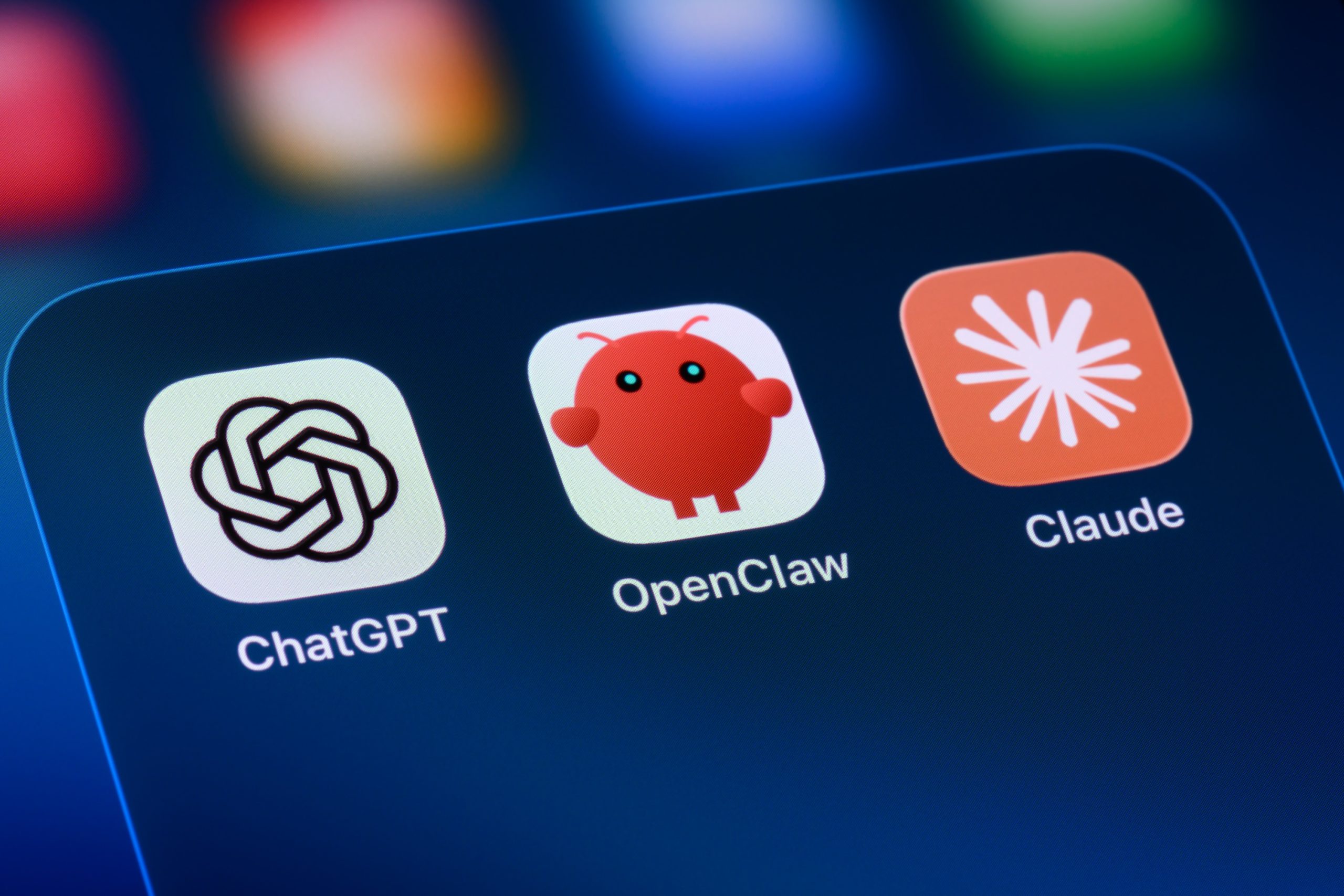
A recent, fleeting access suspension imposed by artificial intelligence giant Anthropic on a prominent developer has cast a spotlight on the intensifying dynamics within the rapidly evolving AI landscape. Peter Steinberger, the acclaimed creator behind OpenClaw—a popular third-party agent framework for large language models—found his access to Anthropic’s flagship Claude AI temporarily revoked, a move he described as making it "harder in the future to ensure OpenClaw still works with Anthropic models." This incident, publicly shared by Steinberger on X (formerly Twitter) early on a Friday morning, quickly garnered significant attention, leading to a swift reinstatement of his account just hours later.
The temporary ban, attributed by Anthropic to "suspicious activity," unfolded against a backdrop of escalating competition and shifting monetization strategies among leading AI developers. Steinberger’s public announcement, accompanied by a screenshot of the suspension notice, resonated deeply within the developer community and sparked widespread speculation. The situation was further complicated by Steinberger’s recent employment with OpenAI, a direct rival to Anthropic, fueling conspiracy theories about the motives behind the suspension. The rapid reversal, prompted in part by the viral nature of Steinberger’s post, saw an Anthropic engineer publicly reaching out to the developer, disavowing any policy against OpenClaw usage and offering assistance. While the exact catalyst for the account’s restoration remains unconfirmed, the entire episode has illuminated critical tensions concerning open-source integration, platform control, and competitive strategy in the burgeoning AI sector.
The Unfolding Timeline: Policy Shifts and Suspensions
To fully grasp the significance of this event, it is crucial to consider the preceding developments that set the stage for the temporary ban. Just weeks prior, Anthropic announced a significant policy change regarding its Claude AI subscriptions. The company declared that existing subscriptions would no longer cover the usage of "third-party harnesses, including OpenClaw." This meant that users leveraging OpenClaw or similar external tools to interact with Claude would now be required to pay for that usage separately, based on consumption, directly through Claude’s API. This shift effectively introduced what many in the developer community dubbed a "claw tax," marking a departure from previous integrated access.
Anthropic justified this pricing restructuring by citing the distinct "usage patterns" of these external harnesses. According to the company, tools like OpenClaw can be considerably more compute-intensive than standard prompts or simple scripts. This is primarily because they often execute continuous reasoning loops, automate task repetitions or retries, and integrate with a multitude of other third-party services. Such complex operations demand significantly more computational resources, making their inclusion under a standard subscription model economically unsustainable, from Anthropic’s perspective.
However, Peter Steinberger voiced strong skepticism regarding this official explanation. Following Anthropic’s pricing change, he posted on X, observing, "Funny how timings match up, first they copy some popular features into their closed harness, then they lock out open source." While Steinberger did not explicitly name the features or Anthropic’s proprietary offering, his remarks were widely interpreted as referring to enhancements in Claude’s own agent, Cowork. Specifically, the rollout of Claude Dispatch, a feature that empowers users to remotely control agents and assign tasks, occurred merely a couple of weeks before Anthropic revised its OpenClaw pricing policy. This sequence of events suggested to Steinberger and many others a calculated move by Anthropic to first develop and promote its internal solutions, then subsequently restrict or monetize external, open-source alternatives.
Understanding OpenClaw and the "Claw Tax"
OpenClaw represents a critical component in the broader ecosystem of AI development. It is an open-source agent framework designed to facilitate more sophisticated interactions with large language models (LLMs) like Anthropic’s Claude or OpenAI’s ChatGPT. Unlike simple prompts, which provide one-off instructions, agent frameworks enable LLMs to perform complex, multi-step tasks autonomously. They can engage in continuous reasoning, interact with external tools and APIs, manage memory, and even self-correct errors, essentially transforming an LLM from a conversational tool into an intelligent assistant capable of executing intricate workflows.
The emergence of such "harnesses" or agents has been a game-changer for developers and power users seeking to push the boundaries of AI applications. OpenClaw, in particular, gained significant traction for its flexibility and robust capabilities, allowing users to unlock new potentials from underlying LLMs. Its open-source nature further cemented its appeal, fostering a community of developers who could contribute to its evolution and adapt it to diverse use cases.
The introduction of a "claw tax" by Anthropic, requiring separate API-based payment for OpenClaw usage, fundamentally alters the economic model for these sophisticated integrations. While Anthropic’s rationale cites increased computational load, the move is also seen by many as a strategic maneuver to guide users toward its proprietary agent solutions, such as Cowork. This shift highlights a recurring tension in the technology industry: the balance between fostering an open ecosystem that encourages third-party innovation and protecting a company’s own intellectual property and revenue streams. For developers like Steinberger, who champion open-source solutions, such policy changes can feel like a direct challenge to the principles of interoperability and accessibility.
The Broader Context: AI Agents and Platform Strategy
The controversy surrounding OpenClaw and Anthropic is not merely an isolated incident but rather a microcosm of the larger strategic battles unfolding in the AI industry. The future of AI interaction is increasingly seen through the lens of "agents"—autonomous software entities that can understand goals, break them down into sub-tasks, and execute them using a variety of tools and models. Companies like Anthropic and OpenAI are investing heavily in developing their own proprietary agent frameworks, recognizing that these agents will likely become the primary interface through which users and businesses interact with powerful LLMs.
Anthropic’s Cowork, with features like Claude Dispatch, represents its answer to this emerging agent paradigm. By offering robust, integrated agent capabilities, Anthropic aims to provide a seamless, high-performance experience within its own ecosystem. From a business perspective, promoting proprietary agents offers several advantages: greater control over the user experience, enhanced data security, and direct opportunities for monetization. It also allows the company to optimize its models specifically for its own agent framework, potentially offering superior performance compared to third-party integrations.
However, this strategy carries inherent risks, particularly regarding developer relations and ecosystem growth. Historically, platforms that embrace and empower third-party developers often achieve broader adoption and foster a more vibrant ecosystem. By making it more challenging or expensive for third-party agents like OpenClaw to operate, Anthropic risks alienating a segment of its developer community and potentially driving users towards competitors that offer more open or cost-effective integration options. The debate between open versus closed ecosystems is a perennial one in tech, and the AI industry is now grappling with its own version of this fundamental strategic choice.
Competitive Dynamics and Developer Trust
The competitive tension between Anthropic and OpenAI adds another layer of complexity to this narrative. Peter Steinberger’s employment with OpenAI—Anthropic’s chief rival in the LLM space—inevitably colors perceptions of the incident. While Steinberger maintains that his use of Claude is solely for testing OpenClaw’s compatibility for the benefit of its users, the optics of an OpenAI employee being temporarily banned by Anthropic are undeniably charged.
The public exchange on X also revealed a deeper historical friction between Steinberger and Anthropic. In response to a commenter who implied he made the "wrong choice" by joining OpenAI instead of Anthropic, Steinberger starkly replied: "One welcomed me, one sent legal threats." This unverified but pointed accusation, if true, suggests a history of adversarial interactions that predate the current incident and underscores the cutthroat nature of the AI race. Such legal pressures, whether perceived or actual, can significantly impact developer morale and trust in a platform.
The swift reinstatement of Steinberger’s account after his post went viral highlights the power of public opinion and social media in shaping corporate responses, especially in developer-centric communities. The public apology and offer of assistance from an Anthropic engineer were crucial in de-escalating the situation, yet the underlying concerns about platform stability, policy shifts, and competitive practices remain. For developers, the specter of "platform risk"—the possibility that a platform provider might suddenly change terms, restrict access, or compete directly with their offerings—is a constant concern. Incidents like this serve as potent reminders of that risk.
Furthermore, Steinberger’s commitment to ensuring OpenClaw works across any model provider, even while employed by OpenAI, speaks to a broader principle of interoperability that many developers value. His explanation that OpenClaw remains popular with Claude users, even over ChatGPT, due to its historical integration and perceived utility, indicates the sticky nature of user preferences and the challenge of migrating established workflows. His cryptic response of "Working on that" when questioned about this preference hints at OpenAI’s strategic efforts to win over these users, likely by improving its own agent capabilities or fostering better third-party integrations.
Looking Ahead: Interoperability and the Future of AI
The temporary suspension of Peter Steinberger’s access to Claude is more than just a minor technical glitch; it is a significant indicator of the strategic directions and underlying tensions within the AI industry. As AI models become more powerful and indispensable, the battle for platform dominance, control over interaction layers (agents), and monetization strategies will only intensify.
For the broader AI ecosystem, this incident underscores the critical importance of clear, stable, and developer-friendly policies. Companies that successfully balance the need for monetization and control with the desire to foster a vibrant, innovative developer community are likely to thrive in the long run. Conversely, platforms perceived as arbitrary or hostile to third-party innovation risk stifling creativity and driving talent away.
The saga also reignites the debate between open-source principles and proprietary control. While open-source tools like OpenClaw accelerate innovation and democratize access to advanced AI capabilities, proprietary platforms aim to create walled gardens that maximize revenue and maintain competitive advantages. The future trajectory of AI will likely be shaped by how these competing philosophies reconcile, or clash, in the coming years. Developers, users, and industry observers will continue to watch closely how major players like Anthropic and OpenAI navigate these complex waters, as their decisions will ultimately define the landscape of artificial intelligence for years to come.