Amir Mahmud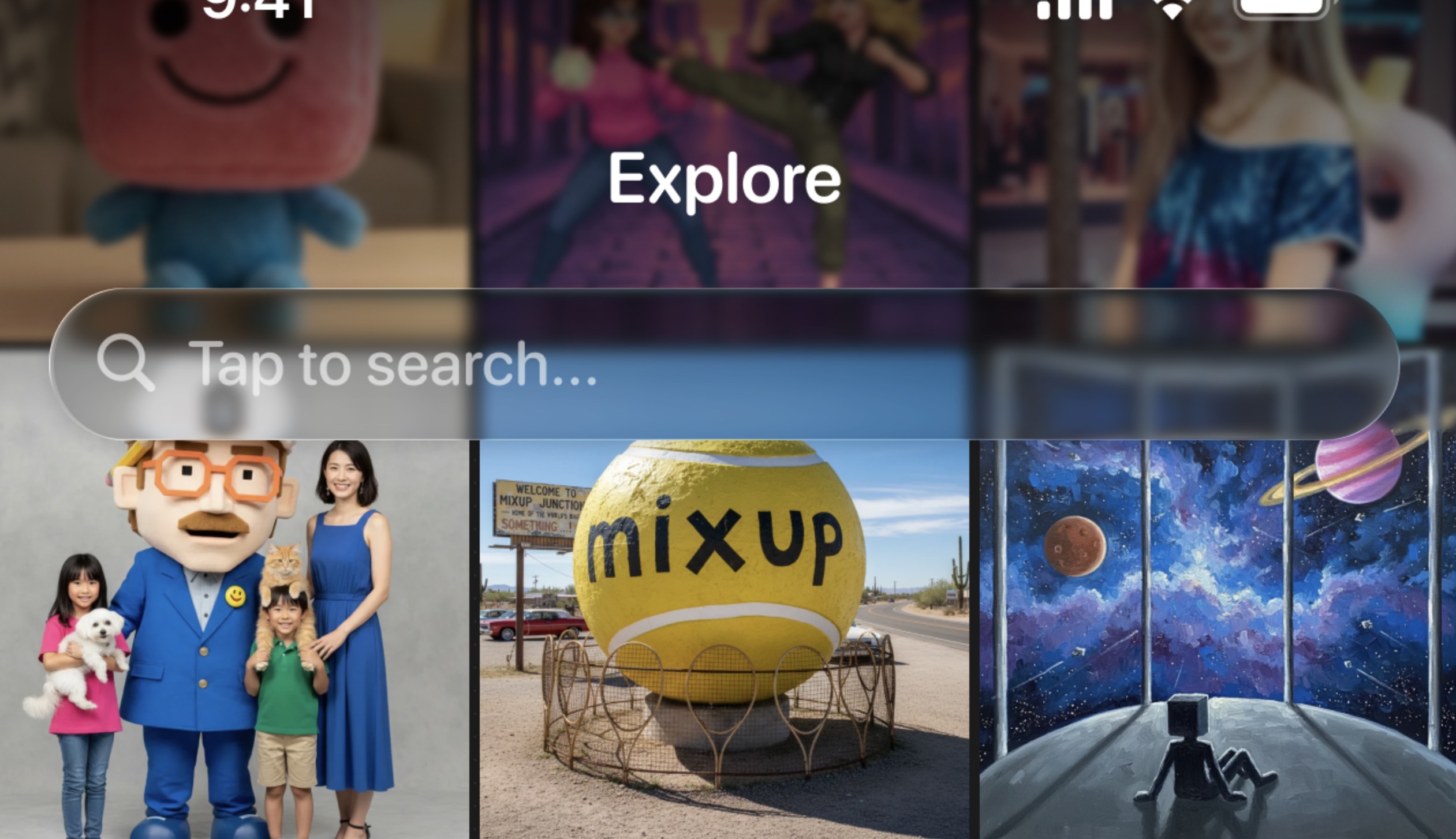
A groundbreaking application, Mixup, is poised to transform the landscape of artificial intelligence-powered image creation, offering users an intuitive and playful platform to generate imaginative visuals from their existing photos, text prompts, and even simple doodles. Developed by Things, Inc., a team spearheaded by former Google executives previously recognized for their 3D design application Rooms, Mixup distinguishes itself through a unique "recipe" framework designed to democratize access to sophisticated generative AI. This iOS-exclusive app aims to address common barriers to AI art creation by simplifying the prompt engineering process and fostering a collaborative user environment.
Democratizing Generative AI: The "Recipe" Approach
At its core, Mixup introduces a novel concept: "recipes" – a Mad Libs-style, fill-in-the-blank system that guides users through the process of crafting AI prompts. This innovative approach stands in stark contrast to the often daunting blank text fields of traditional generative AI tools, which frequently require users to possess a deep understanding of prompt syntax and artistic terminology to achieve desired results. Instead, Mixup’s recipes provide a structured yet flexible template, inviting users to simply input their personal elements – a photograph, a descriptive phrase, or a quick sketch – into predefined creative contexts.
Consider the potential: an amateur artist could transform a casual sketch into a grand Renaissance masterpiece, or a pet owner might reimagine their beloved companion donning a whimsical Halloween costume. The possibilities extend to personal exploration, such as experimenting with new hairstyles on a selfie, or indulging in purely humorous creations, like depicting a friend in the style of "Italian brainrot" – a playful nod to a particular internet aesthetic. This method bypasses the steep learning curve typically associated with advanced AI image generators, making the technology accessible to a broader audience.
Jason Toff, the founder and CEO of Things, Inc., whose extensive career includes managing product at Twitter and working on experimental applications within tech giants like Google and Meta, highlighted the inspiration behind this design. Toff observed the prevailing challenge in the generative AI space: "Generative AI is so powerful, and yet most of the time you go to these tools and it’s like, here’s your text box — come up with something creative. And what do you write?" This insight fueled the development of recipes, shifting the onus from the user to invent complex prompts from scratch to simply filling in pre-structured creative blanks.
Behind the Technology: Google Nano Banana and Beyond
The technical backbone of Mixup is Google’s Nano Banana, an advanced AI model renowned for its capability to maintain the integrity and recognizable features of an input image during the generation process. This attribute is crucial for an application like Mixup, which heavily relies on transforming existing visuals rather than creating entirely new ones from pure text. Toff underscored this capability, stating that Nano Banana offered an unprecedented ability to "take your image and maintain it in a convincing way that wasn’t creepy," a critical factor for user acceptance and satisfaction in personalized image generation.
The evolution of AI image generation has been rapid and transformative. From the early days of Generative Adversarial Networks (GANs) that produced often abstract or uncanny imagery, to the more sophisticated diffusion models that burst onto the scene in the early 2020s with tools like DALL-E, Midjourney, and Stable Diffusion, the field has continuously pushed boundaries. These earlier models, while powerful, often demanded precise and lengthy text prompts to yield high-quality, coherent images. Google, a significant player in AI research and development, has contributed foundational technologies like the Transformer architecture, which underpins many modern large language and image models. Nano Banana represents a refinement in this lineage, specifically optimized for image-to-image transformations while preserving source characteristics.
Mixup’s integration of Nano Banana signifies a strategic move to leverage a model that excels in consistency and contextual understanding, mitigating the "slot machine" problem often encountered with generative AI. This phenomenon, as described by Toff, refers to the unpredictable nature of AI outputs, where repeated prompts might produce wildly different results, leaving users feeling a lack of control. By showcasing the recipe alongside the resulting image, Mixup offers a visual reference point, giving users a clearer expectation of what their own inputs might yield, thereby enhancing the sense of agency and predictability.
Fostering Creativity and Community
Beyond simplifying the technical aspects, Mixup is designed to cultivate a vibrant, interactive community. A key feature is the shareability of these "recipes." Once a user crafts a new prompt and generates an image, they have the option to publish it to a public feed. This feed serves as a gallery of creative inspiration, where other users can browse and, with a single tap, select "Try recipe." This action allows them to apply the same creative template to their own photos, text, or even a doodle created using the app’s simple in-app drawing feature. This collaborative sharing mechanism not only fosters a sense of community but also provides an endless source of creative prompts, overcoming the common hurdle of prompt fatigue.
The app further amplifies its social dimension through "mixables." This feature allows users to upload their own photos, which can then be used by their followers within the app to generate AI images incorporating their likeness. While the company envisions this primarily as a fun feature for groups of friends, it also opens the door for a new class of digital creators. Influencers or public figures might choose to enable mixables, allowing their audience to interact with their image in novel, often humorous, ways, potentially spawning new trends and meme formats. However, this feature also necessitates careful consideration of personal image rights and privacy, placing the responsibility on users to understand the implications of sharing their likeness within the platform.
Culturally, Mixup taps into the burgeoning trend of digital self-expression and the playful experimentation afforded by AI. It moves beyond purely utilitarian photo editing to embrace a more imaginative, whimsical approach to digital art. This gamified interaction with AI could democratize artistic creation, allowing individuals without traditional art skills to produce visually compelling or amusing content. This shift reflects a broader societal trend where technology empowers individuals to become creators, blurring the lines between consumption and production in digital media.
Navigating the Digital Landscape: Privacy and Moderation
The rapid advancements in generative AI also bring forth critical concerns regarding content moderation and user privacy. Mixup acknowledges these challenges by integrating robust safety mechanisms. The app employs OpenAI technology for certain moderation tasks, complementing Google’s inherent controls within the Nano Banana image model. These built-in safeguards are designed to restrict the generation of harmful content, such as sexually explicit imagery or depictions of violence. The ongoing development in AI ethics and safety is a dynamic field, and platforms like Mixup must continuously adapt their moderation strategies to address emerging threats and evolving societal norms.
The "mixables" feature, while innovative for social interaction, naturally raises questions about consent and the potential for misuse. The platform provides clear guidance: users who do not wish for their likeness to be used in AI generations can simply refrain from uploading their photos or choosing not to follow others. This user-centric control is vital in an era where digital identity and image manipulation are increasingly prevalent topics. Ensuring transparency and providing clear user options for privacy settings will be crucial for Mixup to build trust within its community.
Market Positioning and Future Outlook
Mixup enters a competitive market teeming with AI-powered photo editors and generative art tools. However, its unique "recipe" and "mixables" features position it distinctly, focusing on ease of use, social interaction, and guided creativity rather than raw, unbridled generation. The app is initially optimized for iOS 26 but supports iOS 18 and newer versions, catering to a significant segment of smartphone users. While currently iOS-only, the potential for expansion to a web version or an Android application remains, contingent on its initial success and user adoption.
The monetization strategy is based on a credit system. New users receive 100 free credits, equivalent to approximately $4, with each image generation costing nearly four cents. Once these credits are depleted, users can subscribe to various monthly tiers offering 100, 250, or 500 credits. This freemium model is common in the app economy, allowing users to experience the product before committing to a subscription, potentially converting casual users into regular subscribers.
Mixup is slated for a global launch on the App Store on November 21, though initial access will be invite-only. This controlled rollout can help manage server load and gather early user feedback. The company has provided a special access code, TCHCRH, for early adopters from specific publications, signaling a targeted approach to generate initial buzz and attract early enthusiasts.
The Road Ahead for Accessible AI
Mixup represents a significant step in making sophisticated AI image generation more approachable and enjoyable for the average consumer. By reframing prompt engineering as a playful, Mad Libs-style game and fostering a community-driven sharing ecosystem, Things, Inc. is attempting to lower the barrier to entry for creative AI exploration. The app’s reliance on Google’s Nano Banana for image consistency and its commitment to moderation underscore a thoughtful approach to balancing innovation with user experience and safety. As generative AI continues its rapid evolution, platforms like Mixup will play a crucial role in shaping how individuals interact with, understand, and ultimately harness the power of artificial intelligence in their daily lives.