Amir Mahmud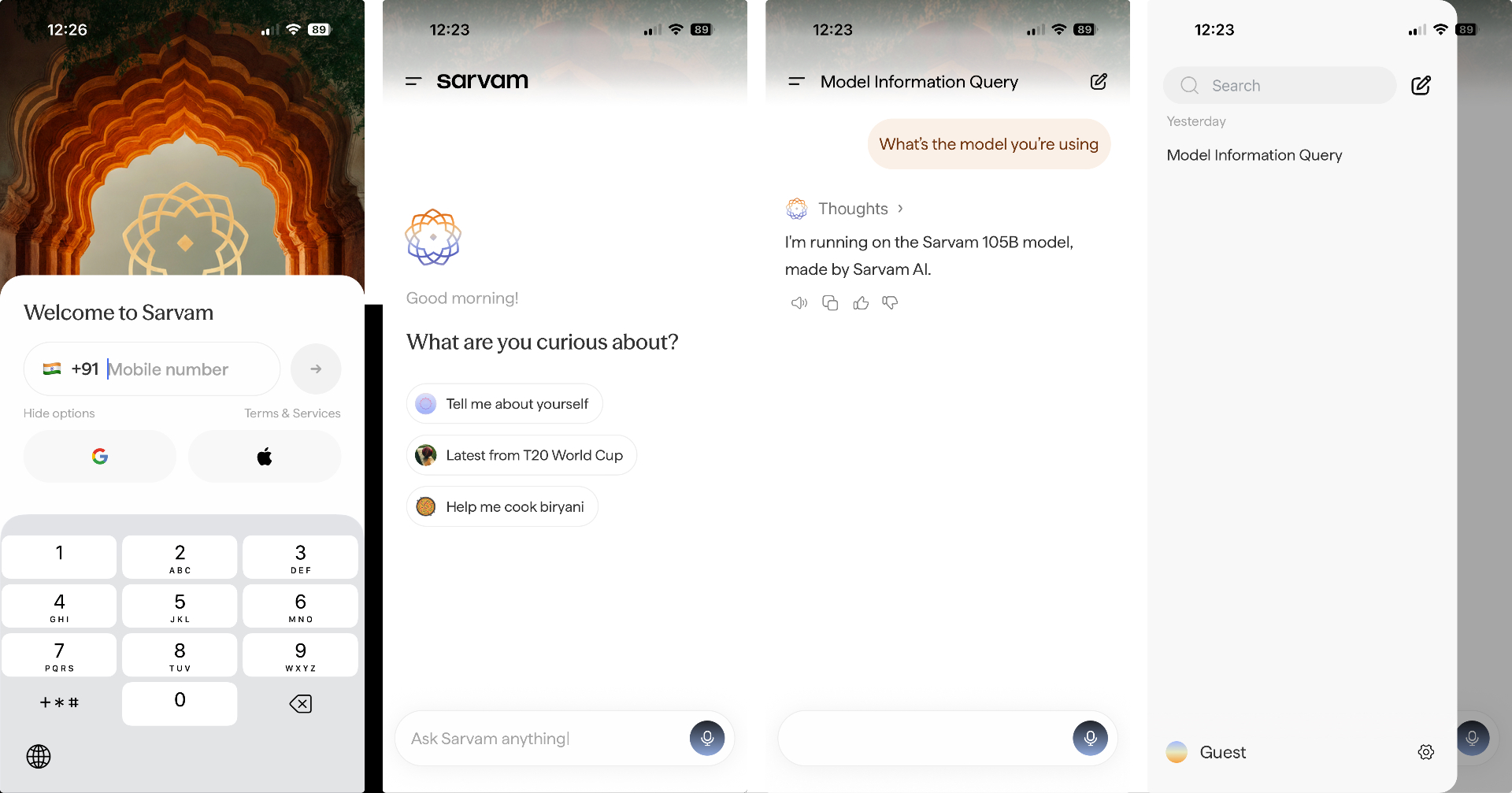
An ambitious new entrant, Sarvam, an artificial intelligence startup based in India, has officially launched its Indus chat application for both web and mobile users. This move signifies a pivotal moment in the rapidly expanding generative AI market, where established global technology giants like OpenAI, Anthropic, and Google currently hold dominant positions. The introduction of Indus is not merely another app launch; it represents a strategic bid to cultivate AI solutions deeply rooted in India’s unique linguistic and cultural context, challenging the prevailing Western-centric paradigms of AI development.
The Genesis of Generative AI and India’s Strategic Importance
The landscape of artificial intelligence has undergone a profound transformation in recent years, largely propelled by the advent of generative AI. This sophisticated branch of AI focuses on creating new content—be it text, images, audio, or code—rather than merely analyzing existing data. The breakthrough of large language models (LLMs) like OpenAI’s GPT series, Google’s Bard (now Gemini), and Anthropic’s Claude has democratized access to powerful AI capabilities, sparking a global technological race. These models, trained on vast datasets, can understand, generate, and process human language with unprecedented fluency, opening up a myriad of applications across industries.
India has emerged as a critical arena in this global AI competition. Its colossal population, coupled with aggressive digital transformation initiatives and a burgeoning tech-savvy demographic, presents an unparalleled market for AI adoption. Recent data underscores this phenomenon, with OpenAI’s CEO Sam Altman indicating that ChatGPT commands over 100 million weekly active users in India. Similarly, Anthropic has noted that India accounts for 5.8% of total Claude usage, placing it second only to the United States. This robust engagement highlights India’s readiness to embrace advanced AI tools, but also illuminates a crucial gap: the need for AI systems that truly understand and cater to the nation’s immense linguistic diversity.
Sarvam’s Vision: Localized AI for a Multilingual Nation
Sarvam, founded in 2023, has articulated a clear mission: to construct AI models specifically designed for India’s diverse local languages and user bases. The launch of the Indus chat app serves as the primary interface for its newly unveiled Sarvam 105B model, a formidable 105-billion-parameter large language model, alongside a complementary 30B model. These models were officially introduced earlier this week at the India AI Impact Summit in New Delhi, an event that underscored the nation’s commitment to fostering its domestic AI ecosystem.
The strategic emphasis on local languages is paramount in a country like India, which officially recognizes 22 languages and is home to hundreds of others. Global LLMs, while powerful in English, often struggle with the nuances, idioms, and cultural contexts of non-English Indian languages, leading to suboptimal performance or even inaccuracies. Sarvam’s approach aims to bridge this linguistic divide, promising an AI experience that is more relevant, accurate, and accessible to a broader segment of the Indian population. This focus aligns with broader national aspirations for digital inclusion and the empowerment of non-English speaking communities.
Expanding Horizons: Enterprise Integration and Hardware Ambitions
Beyond its consumer-facing chat application, Sarvam used the India AI Impact Summit as a platform to outline its broader strategic initiatives, including ambitious enterprise plans and hardware integration goals. The startup announced significant partnerships that illustrate its vision for embedding AI capabilities across various sectors.
One notable collaboration is with HMD, aiming to integrate Sarvam’s AI into Nokia feature phones. This partnership holds immense potential for digital inclusion, as feature phones still represent a significant portion of the mobile phone market in India, particularly in rural and semi-urban areas. Bringing AI capabilities to these devices could unlock new avenues for information access, communication, and productivity for millions who may not have access to smartphones or reliable internet connectivity. This move underscores a commitment to making AI ubiquitous, transcending the typical smartphone and web interfaces.
Another key partnership involves Bosch, targeting AI-enabled automotive applications. This collaboration points towards the growing trend of integrating AI into intelligent vehicles, from enhanced driver assistance systems to personalized in-car experiences. For Sarvam, it represents an opportunity to demonstrate the versatility and robustness of its models beyond conversational AI, extending its influence into critical industrial sectors. These partnerships are crucial for Sarvam, allowing it to scale its impact and demonstrate the practical utility of its localized AI models across diverse use cases.
User Experience and Initial Limitations
The Indus app is currently available in a beta phase across iOS, Android, and web platforms. Users can engage with the app by typing or speaking their queries and receive responses in both text and audio formats, enhancing accessibility. Sign-in options are flexible, allowing users to log in using their phone number, Google account, or Apple ID. For the time being, the service is geographically restricted to India, reflecting Sarvam’s focused market strategy.
As is common with early-stage technological rollouts, Indus currently presents certain limitations. Users do not have the option to delete individual chat histories without the drastic measure of deleting their entire account. Furthermore, a "reasoning feature," which contributes to the AI’s processing and response generation, cannot be toggled off, potentially leading to slower response times in some instances. Sarvam has also proactively communicated that initial access may be restricted due to limited compute capacity, with a gradual rollout planned to expand availability over time. Pratyush Kumar, co-founder of Sarvam, acknowledged these early constraints on X (formerly Twitter), stating, "We’re gradually rolling out Indus on a limited compute capacity, so you may hit a waitlist at first. We will expand access over time," while actively soliciting user feedback. These initial limitations are typical for a beta launch and are expected to be addressed as the company refines its offerings and scales its infrastructure.
The Broader Economic and Social Impact
Sarvam’s entry into the AI chatbot arena, with its strong emphasis on local languages and enterprise solutions, carries significant implications for India’s economic and social landscape. Economically, the development of indigenous AI capabilities fosters innovation, creates high-skill jobs, and potentially reduces reliance on foreign technologies, contributing to digital sovereignty. The ability to process and generate content in local languages opens up vast untapped markets, from localized e-commerce experiences to culturally relevant educational tools.
Socially and culturally, a localized AI model can act as a powerful tool for digital inclusion. By offering an intuitive interface in native languages, Indus can empower individuals who are less comfortable with English to access information, government services, and digital opportunities previously out of reach. This could significantly bridge the digital divide, promoting literacy and participation in the digital economy. Moreover, the development of AI models trained on diverse Indian linguistic and cultural datasets can help preserve and promote these languages, ensuring their relevance in the digital age. This stands in contrast to global models that, by their very nature, tend to prioritize globally dominant languages, potentially leading to a gradual erosion of linguistic diversity in the digital realm.
Investment and the Quest for AI Sovereignty
Sarvam’s ambitious trajectory has attracted substantial investment, having raised $41 million to date since its inception in 2023. This funding has come from prominent investors, including Lightspeed Venture Partners, Peak XV Partners, and Khosla Ventures, signaling strong confidence in Sarvam’s vision for building large language models tailored specifically for India. Such investments are crucial, as developing and deploying advanced AI models demands significant capital for talent acquisition, computational resources, and research and development.
Sarvam is part of a burgeoning group of Indian startups committed to developing domestic alternatives to global AI platforms. This trend is driven by a broader national imperative to gain greater control over India’s AI infrastructure. The concept of "AI sovereignty" is gaining traction globally, as nations recognize the strategic importance of owning and controlling the underlying technologies that will shape future economies and societies. For India, this means ensuring that its AI development reflects its unique societal values, regulatory frameworks, and developmental priorities, rather than being solely dictated by foreign entities. This pursuit of sovereign AI capabilities extends beyond economic benefits, encompassing national security, data privacy, and the ability to tailor technological advancements to specific domestic challenges and opportunities.
Conclusion: A Bold Step Towards a Localized Digital Future
Sarvam’s launch of the Indus AI chat app represents a bold and strategic move in the global artificial intelligence landscape. By focusing on localized, language-specific models and forging partnerships to extend AI’s reach to diverse user segments and hardware platforms, Sarvam is not just competing; it is carving out a unique and essential niche. While facing the inherent challenges of scaling against well-resourced global giants, Sarvam’s approach offers a compelling vision for digital inclusion and linguistic empowerment. Its success could serve as a powerful testament to the viability of indigenous AI innovation, potentially reshaping how AI is developed, deployed, and experienced in one of the world’s most dynamic and diverse digital economies. As India continues its rapid digital evolution, initiatives like Sarvam’s Indus app are poised to play a crucial role in defining the nation’s technological future, ensuring that the benefits of artificial intelligence are accessible and relevant to all its citizens.