Amir Mahmud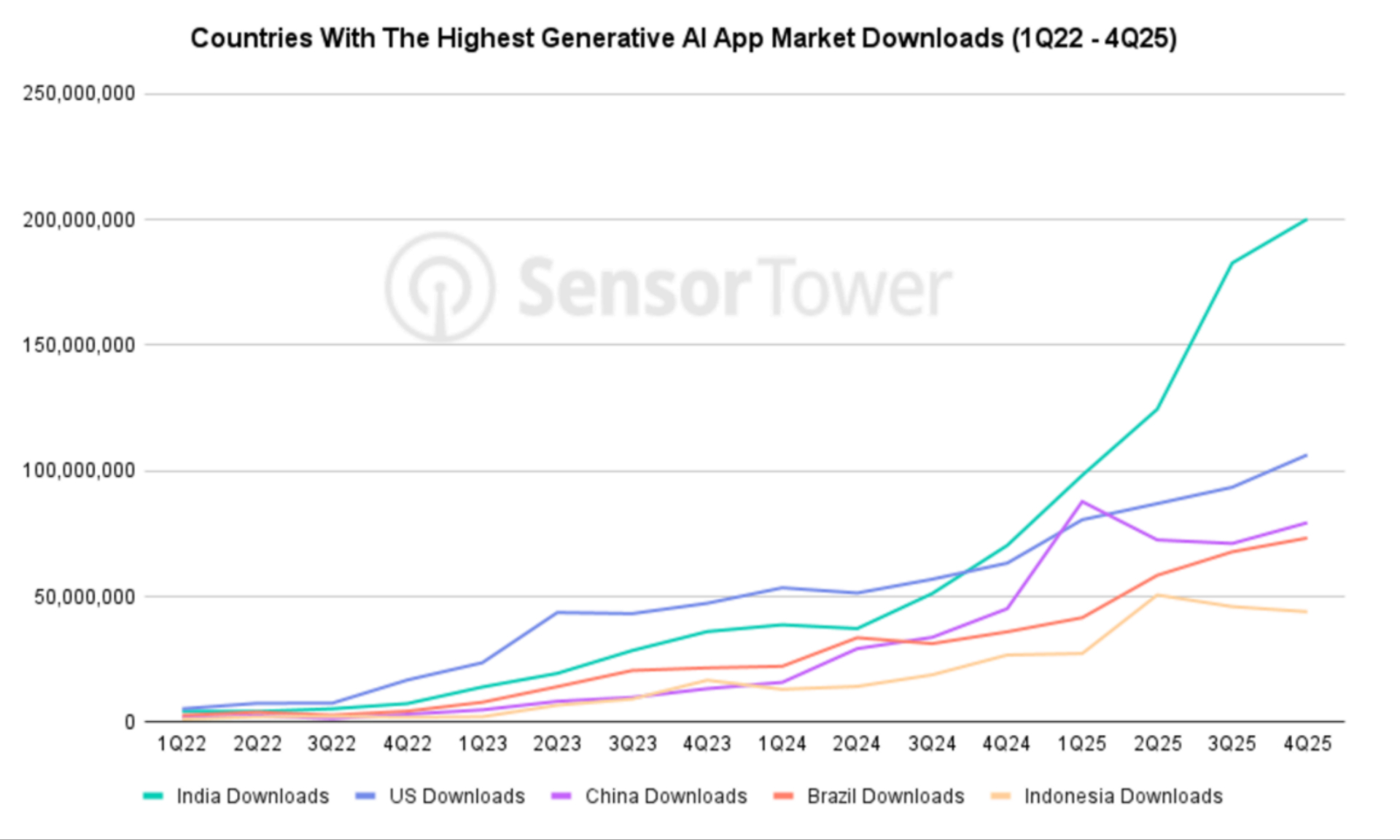
India’s burgeoning artificial intelligence landscape is reaching a critical juncture as leading technology companies transition from widespread free access to a subscription-based model. This strategic pivot aims to convert the nation’s immense user base into a sustainable revenue stream, marking a significant evolution in the global AI market and setting a precedent for other emerging economies. For the past year, tech titans have leveraged aggressive promotional tactics to foster rapid adoption, particularly within price-sensitive regions. Now, with India firmly established as a dominant force in generative AI downloads, the industry’s focus shifts to validating commercial viability.
The Indian AI Phenomenon: A Global Hotspot
India has rapidly emerged as a pivotal battleground in the global AI race, claiming the title of the world’s largest market for generative AI application downloads in 2025. Data from market intelligence firm Sensor Tower reveals an astonishing 207% year-over-year surge in installs, propelling India significantly ahead of even the United States in this metric. This dramatic expansion underscores the nation’s unique position, driven by a vast, digitally connected population and an increasing appetite for innovative technological solutions. The sheer scale of India’s digital ecosystem, boasting over a billion internet users and approximately 700 million smartphone owners, presents an unparalleled opportunity for AI service providers. This demographic dividend has attracted the attention of major global players, who view India not just as a market for consumption but also as a potential hub for AI innovation and development. The Indian government has actively supported this vision through ambitious initiatives like the "India AI" program, which aims to position the country as a global leader in AI development and implementation, fostering a vibrant ecosystem for research, startups, and ethical deployment. This commitment was prominently displayed at a major AI summit held in New Delhi, an event that drew luminaries such as OpenAI’s Sam Altman, Anthropic’s Dario Amodei, and Alphabet CEO Sundar Pichai. Their collective presence signaled the profound strategic importance assigned to India in the unfolding narrative of artificial intelligence, highlighting its role as a key player in shaping the future of this transformative technology.
The Genesis of Generative AI’s Ascent in India
The explosion of generative artificial intelligence onto the global stage in late 2022, spearheaded by the public release of ChatGPT, ushered in a new era of human-computer interaction. This breakthrough technology, capable of producing text, images, and other media in response to prompts, quickly captivated audiences worldwide. In India, its adoption was not merely rapid but accelerated by a deliberate strategy from tech firms to cultivate a massive user base. Companies like OpenAI, Google, and Perplexity rolled out extensive free premium offers, strategically designed to lower the barrier to entry and accelerate user growth in a market known for its value consciousness. These promotions, often bundled with existing telecom services or offered as standalone free tiers, were instrumental in popularizing generative AI tools across diverse segments of the Indian population. For example, OpenAI’s ChatGPT Go, a sub-$5 offering, aimed to make advanced AI accessible, while Perplexity’s collaboration with Indian telco Airtel sought to integrate AI seamlessly into existing digital habits.
Beyond these aggressive marketing pushes, the overall surge in GenAI app adoption through 2025 was further bolstered by a wave of new product launches, including innovative platforms such as DeepSeek, Grok, and Meta AI. Concurrently, major existing chatbots like ChatGPT, Gemini, Claude, and Perplexity underwent significant upgrades, introducing enhanced functionalities, improved accuracy, and more intuitive user experiences. The viral spread of AI-generated content also played a crucial role, as users experimented with creating unique images, videos, and text. Content creation and editing tools, powered by AI, accounted for seven of the twenty most downloaded generative AI applications in India during 2025, highlighting the practical and creative applications users found for these emerging technologies. Downloads peaked dramatically in September and October of 2025, registering year-over-year growth rates of approximately 320% and 260% respectively, a testament to the efficacy of these widespread adoption strategies in a highly competitive global race for AI dominance.
The Transition Point: From Users to Revenue
With a substantial user base now established, the initial phase of aggressive acquisition through free access is drawing to a close, marking a pivotal transition for these AI companies. The cessation of these promotional offers sets the stage for a critical test: how many of these newly acquired users will convert into paying subscribers? This shift underscores a broader industry move from prioritizing sheer user numbers to focusing on sustainable monetization. Perplexity, for instance, concluded its bundled Pro offer with the Indian telecommunications giant Airtel in January. Similarly, OpenAI’s free ChatGPT Go access, a more accessible, lower-cost tier introduced in November 2025, is no longer available in India. These actions signal a clear intent to move beyond the introductory phase and validate the commercial models for generative AI.
Despite the impressive download growth, India has historically generated a disproportionately small share of AI application revenue. The nation accounts for roughly 20% of global generative AI app downloads, yet it contributes only about 1% of in-app purchases, according to Sensor Tower data shared with TechCrunch. This stark disparity highlights the significant monetization challenge in one of the industry’s most rapidly expanding markets. The immediate impact of these promotional pushes on revenue was clearly evident in late 2025. In November and December, AI app in-app purchase revenue in India experienced sequential declines of 22% and 18% month-over-month, respectively. ChatGPT, a dominant player, saw an even sharper revenue contraction, dropping 33% and 32% over the same period, directly following the introduction of its free ChatGPT Go access. This data illustrates the near-term trade-off companies made, strategically sacrificing immediate revenue to cultivate a massive user base, with the calculated expectation of future conversions once user habits were formed and perceived value was established.
Navigating the Monetization Maze
The path to sustained revenue in India’s unique market environment is fraught with complexity. India’s vast consumer base is renowned for its acute price sensitivity, a characteristic shaped by a large young demographic and varying disposable incomes. This makes the traditional, higher-priced subscription models prevalent in Western markets difficult to implement directly without significant adaptation. While user numbers are staggering—India accounted for approximately 19% of the global user base of leading AI assistant apps in 2025, significantly outpacing the U.S. at 10%—engagement metrics suggest a different picture. Sensor Tower data from 2025 indicates that users of leading AI chatbot applications in the U.S. spent about 21% more time per week on these platforms and logged 17% more sessions on average compared to their Indian counterparts. This difference in engagement levels suggests that while Indian users are quick to adopt new technologies, their depth of interaction and willingness to pay might require different approaches that emphasize tangible utility and value for money.
According to Sneha Pandey, an insights analyst at Sensor Tower, AI in-app revenues are anticipated to see meaningful but gradual improvement as users become more deeply integrated into these platforms. This emphasizes that sustained engagement, not just initial downloads, is paramount for long-term monetization. The industry will likely need to explore a range of innovative strategies, including highly localized pricing tiers, freemium models with compelling premium features, and creative telecom bundles that integrate AI services into existing data plans. Furthermore, micro-transaction models for specific premium features or usage bursts could prove effective for overcoming the inherent pricing pressure in India and fostering long-term retention among a value-conscious user base. The success of these approaches will hinge on understanding the unique economic and behavioral characteristics of the Indian consumer.
Competitive Dynamics and Market Leadership
Within this dynamic landscape, a fierce competition for market share and user loyalty is underway. ChatGPT, despite the temporary revenue dip following its promotional offers, remains the undisputed market leader in India. Entering 2026, Sensor Tower reported that ChatGPT commanded an impressive 180 million monthly active users (MAU) in January, a figure reinforced by OpenAI CEO Sam Altman’s earlier announcement of over 100 million weekly active users in India. Google’s Gemini has rapidly emerged as a strong contender, securing 118 million MAU in January, demonstrating the power of its deep integration within the Android ecosystem and Google’s broader service offerings, including search and productivity tools. Smaller but significant players like Perplexity, with 19 million MAU, and Meta AI, with 12 million MAU, are also carving out their niches, often through specialized functionalities, targeted user experiences, or leveraging existing social media footprints.
The battle for user attention extends beyond mere numbers, encompassing factors like robust language support, local relevance, and the ability to seamlessly integrate into daily workflows. Companies are increasingly investing in developing AI models that understand and generate content in multiple Indian languages, a critical factor for wider adoption across the linguistically diverse nation. This competitive environment ensures that innovation remains at the forefront, pushing companies to continuously refine their offerings and find compelling value propositions that resonate with the Indian consumer, who expects both cutting-edge technology and tailored experiences.
The Broader Digital Landscape and Societal Implications
India’s rapid embrace of generative AI is inextricably linked to its broader digital transformation journey, often catalyzed by government initiatives like "Digital India" and the widespread availability of affordable mobile data through telecommunication giants like Reliance Jio. This robust digital infrastructure has laid fertile ground for AI adoption, enabling millions to access advanced technologies previously out of reach. The social impact of AI in India is multifaceted. On one hand, AI tools offer immense potential for enhancing productivity, improving access to information, and fostering creativity among students, professionals, and entrepreneurs. Content creation tools powered by AI are democratizing digital expression, allowing individuals with varying technical skills to produce sophisticated media. AI can also play a transformative role in sectors like healthcare, education, and agriculture, offering personalized learning, diagnostic assistance, and optimized crop management solutions.
On the other hand, the rapid influx of AI also raises important questions about digital literacy, potential job displacement in certain sectors due to automation, and the ethical implications of AI-generated content, including the spread of misinformation and deepfakes. Culturally, the adaptation of AI tools to Indian contexts is vital. This involves not just precise language localization but also understanding cultural nuances, local customs, and user behaviors. The "jugaad" or frugal innovation mindset, deeply embedded in Indian society, might also influence how users leverage AI—seeking cost-effective, adaptable solutions that address specific local challenges rather than adopting off-the-shelf global products without modification. The challenge for AI developers is to create platforms that are not just powerful but also inclusive, responsible, and relevant to the diverse needs of India’s vast and heterogeneous population.
Challenges and the Path Forward
The strategic shift from user acquisition to monetization presents a formidable challenge for AI companies operating in India. The disparity between download volume and revenue generation underscores the difficulty in converting free users into paying subscribers in a market where value-for-money is paramount. Sustained engagement, rather than fleeting curiosity, will be the true indicator of long-term success. Companies must demonstrate clear, tangible benefits that justify a recurring cost, especially when free or lower-cost alternatives are readily available. This necessitates a deep understanding of what specific problems AI can solve for Indian consumers and businesses, and how that value can be communicated effectively.
The path forward will likely involve a multi-pronged approach. Beyond diversified pricing models and innovative bundles, fostering an ecosystem of third-party developers who can build specialized, localized applications on top of these foundational AI models could unlock new revenue streams. Focusing on enterprise solutions, where businesses are more accustomed to paying for productivity and efficiency tools, also represents a significant opportunity. Moreover, continuous innovation in features, improvements in accuracy and contextual understanding, and robust customer support will be essential to building loyalty and justifying subscription costs. The Indian market’s immense potential, driven by its youthful demographic and digital fluency, makes it too significant for global AI players to overlook. The current transition period is a critical proving ground, determining whether the initial investment in widespread free access will ultimately yield a lucrative return, or if the monetization challenge will necessitate a fundamental re-evaluation of business models for the region and, by extension, for other emerging markets worldwide.
Conclusion
As India continues its journey as a global AI powerhouse, the coming months will be crucial in defining the long-term economic trajectory of artificial intelligence services within the nation. The strategic gamble of trading near-term revenue for an expansive user base is now entering its decisive phase. The success or failure of converting millions of engaged, yet free, users into a paying subscriber base will not only shape the fortunes of individual tech giants but also provide invaluable lessons for AI monetization strategies in other emerging markets around the world. India stands as a critical test case, demonstrating whether the promise of widespread AI adoption can truly translate into a sustainable and profitable business model on a global scale.