Amir Mahmud
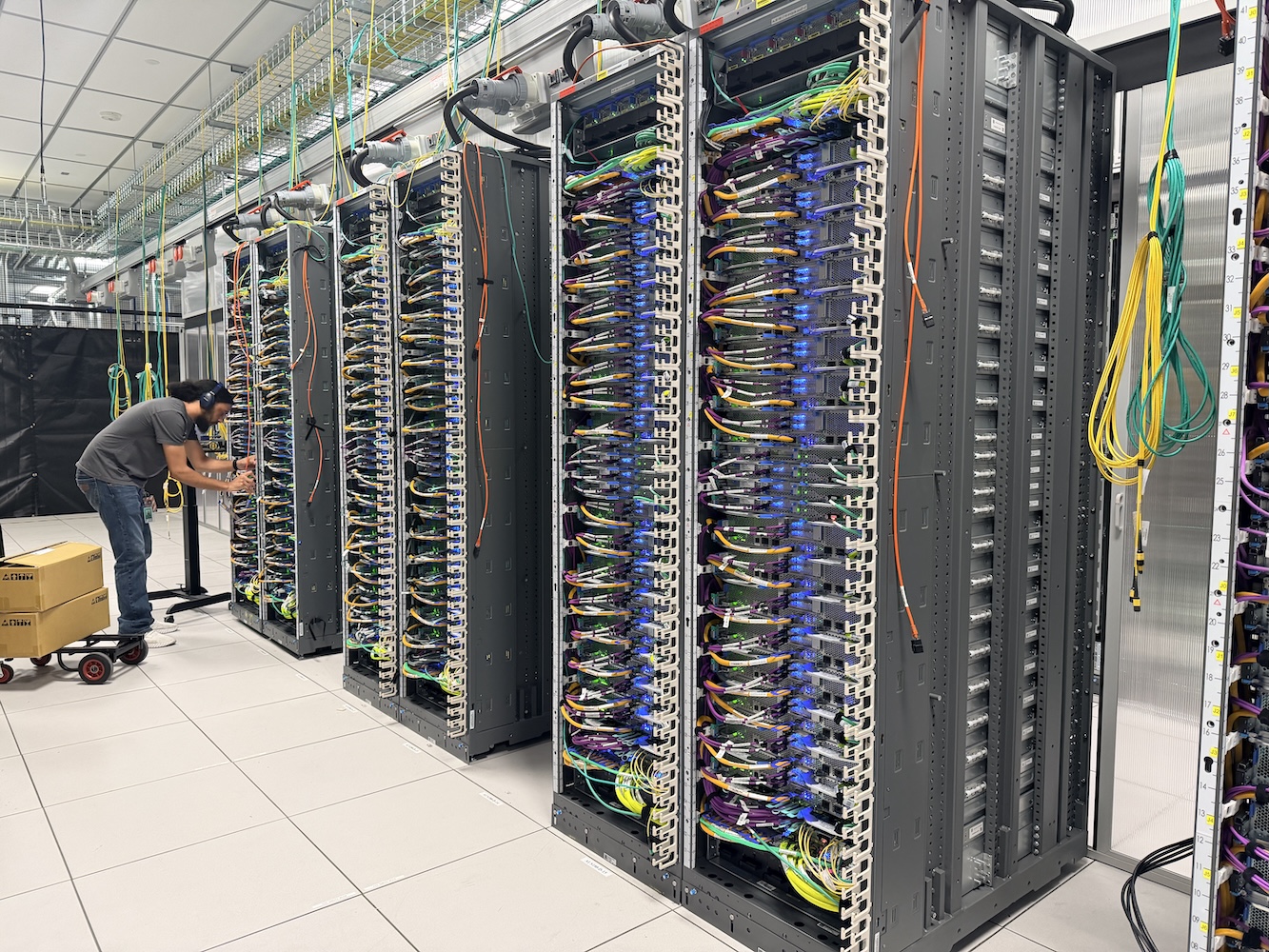
A pivotal collaboration between Abu Dhabi-based technology powerhouse G42 and U.S. chip innovation leader Cerebras Systems is poised to dramatically reshape India’s artificial intelligence landscape. The two entities have announced plans to deploy an 8-exaflop supercomputing system within India, a move heralded as a significant leap forward for the nation’s computational capabilities and its ambitious pursuit of AI sovereignty. This groundbreaking initiative, unveiled during the recent India AI Impact Summit in New Delhi, aims to democratize access to cutting-edge AI infrastructure for a diverse array of stakeholders across the country.
The Dawn of Sovereign AI Infrastructure
The deployment of an 8-exaflop system represents a monumental injection of processing power into India’s digital ecosystem. An exaflop, a unit of computing speed, signifies one quintillion (10^18) floating-point operations per second. To put this in perspective, 8 exaflops is equivalent to the processing power of millions of high-end consumer computers working in unison, making it capable of tackling the most demanding AI workloads, from training colossal large language models (LLMs) to executing complex scientific simulations. This scale of compute is not merely an incremental upgrade; it is a foundational shift designed to accelerate the nation’s journey toward becoming a global AI hub.
A central tenet of this project is the concept of "sovereign AI infrastructure." This term refers to a nation’s ability to develop, deploy, and control its artificial intelligence capabilities entirely within its borders, adhering to local data residency, security, and compliance regulations. For India, a country with a vast digital user base and a burgeoning tech sector, achieving AI sovereignty is critical for national competitiveness, data protection, and fostering indigenous innovation without external dependencies. The G42-Cerebras partnership directly addresses this imperative, ensuring that sensitive data and critical AI models remain within India’s jurisdiction.
Key Collaborators and Their Contributions
The partnership brings together distinct strengths from both sides. G42, a prominent AI and cloud computing company headquartered in the United Arab Emirates, has been at the forefront of the UAE’s strategic drive to become a leader in AI innovation. Its investment in advanced computing infrastructure and AI research positions it as a significant player in the global AI arena. Cerebras Systems, on the other hand, is renowned for its Wafer-Scale Engine (WSE) chips, which are purpose-built for AI and offer unprecedented compute density and performance for deep learning workloads. Unlike traditional GPU-based systems, Cerebras’s architecture integrates an entire wafer as a single chip, drastically reducing communication bottlenecks and accelerating training times for large neural networks.
Manu Jain, CEO of G42 India, articulated the strategic importance of this collaboration, stating, "Sovereign AI infrastructure is becoming essential for national competitiveness. This project brings that capability to India at a national scale, enabling local researchers, innovators, and enterprises to become AI-native while maintaining full data sovereignty and security." This sentiment underscores the dual goals of empowering local talent and safeguarding national interests.
The project extends beyond just G42 and Cerebras. Abu Dhabi’s Mohamed bin Zayed University of Artificial Intelligence (MBZUAI), a graduate-level research institution focused purely on AI, and India’s Centre for Development of Advanced Computing (C-DAC), a premier R&D organization of the Ministry of Electronics and Information Technology, are also integral participants. This academic and governmental involvement ensures a robust framework for research, development, and strategic direction. MBZUAI and G42 have previously collaborated on projects like Nanda 87B, a Hindi-English large language model built on Meta’s Llama 3.1 70B model, demonstrating their commitment to developing AI tailored for specific linguistic and cultural contexts. Nanda 87B’s purported ability to understand casual speech in both languages highlights the potential for localized AI applications that this new supercomputing system will further enable.
Andy Hock, Chief Strategy Officer at Cerebras, emphasized the technical advantages, noting, "Deploying this system in India marks a significant step forward in the country’s computational capacity and sovereign AI initiatives. It will accelerate training and inference for large-scale models, enabling researchers and developers to build AI tailored to India’s needs." This focus on accelerating both the training of new models and the inference (application) of existing ones is crucial for rapid AI deployment across various sectors.
India’s Accelerating AI Ambitions: A Historical Context
India’s journey towards digital empowerment and technological self-reliance has been a long-standing national priority. Initiatives like "Digital India," launched in 2015, laid the groundwork for widespread digital literacy and infrastructure development. The "Make in India" program, concurrently, sought to boost domestic manufacturing and innovation across various sectors, including electronics and IT. Recognizing the transformative potential of AI, the Indian government released its National Strategy for Artificial Intelligence in 2018, outlining a vision for "AI for All," focusing on inclusive growth and leveraging AI in critical areas like healthcare, agriculture, education, and smart cities.
Historically, India has been a pioneer in supercomputing within developing nations. C-DAC, established in 1988, developed the PARAM series of supercomputers, demonstrating early indigenous capabilities. However, the sheer scale and specialized nature of modern AI compute demands a different class of infrastructure, one that this new 8-exaflop system aims to provide. The timing of this deployment is particularly strategic, coinciding with a global race for AI dominance and a heightened awareness of the geopolitical implications of technological leadership.
The India AI Impact Summit: A Nexus of Investment
The India AI Impact Summit in New Delhi served as a powerful testament to the nation’s burgeoning appeal as an AI investment destination. The G42-Cerebras announcement was just one among a flurry of significant commitments made by both domestic conglomerates and international tech giants, painting a vivid picture of India’s accelerating AI ambitions.
Indian industrial behemoths are leading the charge with massive pledges. Conglomerate Adani Group announced a staggering commitment of $100 billion to build up to 5 gigawatts of data center capacity across the country by 2035. Similarly, Reliance Industries unveiled plans to invest $110 billion over the next seven years for gigawatt-scale data centers, highlighting the immense energy and infrastructure demands of future AI operations. These domestic investments are crucial for creating the foundational hardware layer upon which advanced AI applications will run.
International players are also making their presence felt. OpenAI, a frontrunner in generative AI, has teamed up with Tata Group to secure 100 megawatts of AI compute in India as part of its ambitious "Stargate" project, with an eventual goal to scale this to 1 gigawatt. This collaboration signifies a strategic move by global AI leaders to tap into India’s vast market and talent pool. India’s technology minister, Ashwini Vaishnaw, further reinforced the government’s commitment at the summit, stating that the country plans to attract over $200 billion in AI infrastructure investment by 2028. This ambitious target is supported by a comprehensive strategy encompassing tax incentives, state-backed venture capital, and supportive policy frameworks designed to create an attractive ecosystem for AI development and deployment.
These recent announcements build upon existing substantial investments. Major U.S. technology giants, including Amazon, Google, and Microsoft, have already collectively committed approximately $70 billion to expand AI and cloud infrastructure in India over the past few years. This cumulative investment underscores a clear trend: India is rapidly solidifying its position as a critical node in the global AI value chain.
Market, Social, and Cultural Impact
The deployment of such a powerful supercomputing system holds profound implications for India across various dimensions.
Economic Growth and Innovation: The availability of high-performance compute will act as a catalyst for economic growth. Startups, researchers, and small and medium enterprises (SMEs) will gain unprecedented access to resources previously reserved for large corporations or government labs. This democratization of AI infrastructure can foster a vibrant ecosystem of innovation, leading to the creation of new products, services, and business models tailored for the Indian market and beyond. It can accelerate R&D in critical sectors like healthcare (drug discovery, diagnostics), agriculture (precision farming, yield prediction), finance (fraud detection, algorithmic trading), and manufacturing (predictive maintenance, smart factories).
Empowering Research and Education: Educational institutions and government entities will be primary beneficiaries. Researchers at universities and national laboratories will be able to tackle more complex problems, train larger models, and contribute to cutting-edge global AI research. This will enhance India’s academic standing and help bridge the gap in advanced AI expertise. The availability of such infrastructure can also attract and retain top AI talent within India, stemming brain drain and fostering a new generation of AI professionals. C-DAC’s involvement further ensures that these capabilities are integrated into national research priorities.
Cultural and Linguistic AI Development: India’s linguistic diversity presents a unique opportunity for AI. The Nanda 87B model is a prime example of developing AI that understands and processes local languages and cultural nuances. With enhanced compute, developers can train more sophisticated LLMs for India’s 22 official languages and numerous dialects, making AI more accessible and relevant to a larger segment of the population. This could lead to breakthroughs in areas like voice assistants, educational tools, and content creation tailored for local contexts, preserving and promoting India’s rich cultural heritage in the digital age.
Social Impact and Public Services: AI, powered by this new infrastructure, can be leveraged for significant social good. Applications in public services could include more efficient disaster management, personalized education platforms, improved public health initiatives, and smarter urban planning. For instance, AI could analyze vast datasets to predict natural calamities, optimize logistics for relief efforts, or develop early warning systems, thereby saving lives and mitigating damage.
Challenges and Opportunities Ahead
While the prospects are exciting, India’s AI journey is not without its challenges.
Talent Gap: Despite a large pool of STEM graduates, there remains a critical need for specialized AI researchers, engineers, and data scientists who can effectively utilize and manage such advanced infrastructure. Investment in education and skill development programs will be paramount.
Energy Consumption: Supercomputing facilities and gigawatt-scale data centers consume enormous amounts of energy. Sustainable power solutions, including renewable energy sources, will be crucial to mitigate the environmental impact and ensure long-term viability.
Regulatory and Ethical Frameworks: As AI becomes more pervasive, robust regulatory and ethical frameworks will be necessary to address concerns around data privacy, algorithmic bias, accountability, and the responsible deployment of AI. India’s government has been actively working on these fronts, but continuous evolution will be required.
Data Quality and Availability: While India generates vast amounts of data, ensuring its quality, accessibility, and standardization across different sectors will be vital for training effective AI models.
Despite these hurdles, India possesses unique advantages. Its massive, digitally native population provides an unparalleled source of data. Its vibrant startup ecosystem is eager to innovate, and the government’s proactive policy support creates a conducive environment for technological advancement. The collaboration with international partners like G42 and Cerebras, alongside domestic industrial titans, positions India strategically in the global AI race. It signifies a clear intent to move beyond being merely a consumer of technology to becoming a significant contributor and innovator in the field of artificial intelligence.
Conclusion: A Vision for the Future
The deployment of the 8-exaflop supercomputing system by G42 and Cerebras marks a watershed moment for India. It is a bold statement of intent, signaling India’s unwavering commitment to establishing itself as a global leader in artificial intelligence, with a focus on sovereign capabilities and inclusive growth. By providing unprecedented computational power, this initiative will unlock new frontiers for research, drive economic innovation, and enable the development of AI solutions tailored to India’s unique needs and challenges. As the nation continues to attract substantial investments and foster a collaborative ecosystem, the vision of "AI for All" moves closer to becoming a tangible reality, promising a future where advanced technology empowers every facet of Indian society.