Amir Mahmud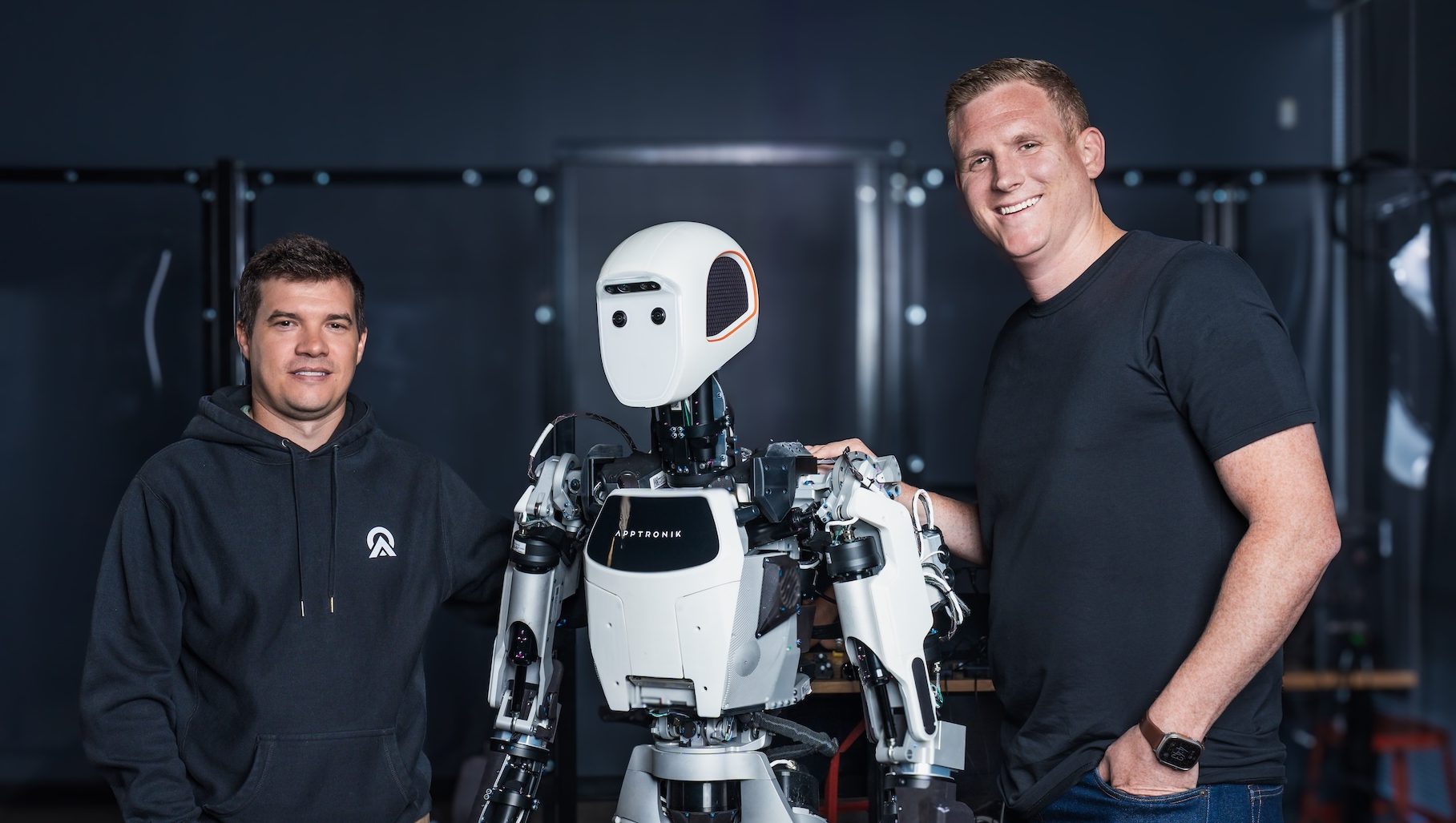
Apptronik, a pioneering developer of advanced humanoid robots and a distinguished spin-out from the University of Texas, has announced a significant expansion of its Series A funding round, bringing the total capital raised to an impressive $935 million. This substantial financial injection has propelled the company’s post-money valuation to approximately $5.3 billion, underscoring intense investor confidence in the nascent but rapidly evolving field of embodied artificial intelligence.
The latest infusion of $520 million comes from a consortium of both existing and new investors, including technology giants Google and Mercedes-Benz, alongside venture capital firm B Capital. This follows an initial Series A raise of $350 million, which was subsequently expanded to $415 million due to overwhelming demand. The continuous flow of capital, with investors paying progressively higher prices for shares, suggests a remarkable trajectory for Apptronik, with its valuation reportedly tripling from an initial Series A estimate of around $1.75 billion, according to industry trackers like PitchBook.
The Dynamics of an Extended Series A
The decision to label this substantial capital raise as an extension of a Series A round, rather than a new Series B, highlights a particular strategic approach. Typically, a Series A round is an early-stage funding event designed to help a startup prove its business model and achieve product-market fit. Subsequent rounds, like Series B, C, and so forth, usually signify different stages of growth and maturity, often accompanied by a more established product and revenue streams. Apptronik’s rationale for extending its Series A stems from the company’s assertion that it was not actively seeking additional funding, but rather responding to unsolicited inbound interest from investors eager to participate.
This phenomenon is not uncommon in highly capital-intensive sectors like advanced robotics, where development cycles are long, and the cost of research, design, and manufacturing is exceptionally high. Maintaining an early-stage funding label, even with a multi-billion-dollar valuation, can sometimes be a strategic move to signal continued focus on core development rather than immediate commercial scaling, or to provide flexibility in future funding narratives. However, it also reflects the extraordinary enthusiasm for the potential of humanoid robotics, attracting substantial investment even before widespread commercial deployment.
The Dawn of Embodied AI
At the heart of Apptronik’s appeal is its focus on "embodied AI" – a transformative concept where artificial intelligence is integrated into physical robotic forms, enabling them to perceive, reason, and interact with the real world through physical action. Unlike traditional industrial robots that perform pre-programmed, repetitive tasks in controlled environments, embodied AI robots are designed to adapt to unstructured, dynamic surroundings and execute complex tasks requiring dexterity, perception, and decision-making.
Apptronik’s flagship humanoid robot, Apollo, is a prime example of this vision. Apollo is engineered to perform a variety of demanding physical tasks, such as unloading trailers, picking inventory in warehouses, and tending to machinery in manufacturing facilities. These are roles that often involve strenuous labor, repetitive motions, or hazardous conditions for human workers. The partnership with Google DeepMind, a leader in AI research, further solidifies Apptronik’s position, providing access to cutting-edge AI capabilities essential for developing sophisticated perception, control, and learning algorithms for its robots. Collaborations with industrial powerhouses like GXO, a global logistics company, and automotive giant Mercedes-Benz, offer crucial real-world testing grounds and validate the practical applications of Apptronik’s technology in critical sectors.
A Rich History in Robotics Innovation
Apptronik is far from a newcomer to the robotics scene, possessing a deep foundational history rooted in academic research and high-stakes competitions. The company’s origins trace back to 2013, predating its formal incorporation, when key members of the Human Centered Robotics Lab at the University of Texas at Austin embarked on a groundbreaking project. They participated in the prestigious NASA-DARPA Robotics Challenge, a competition designed to foster innovation in robots capable of operating in disaster-stricken environments. Their creation, the humanoid robot Valkyrie, became a significant platform in the robotics community, showcasing advanced capabilities in bipedal locomotion and manipulation.
This early involvement with NASA and DARPA (Defense Advanced Research Projects Agency) provided invaluable experience and laid the groundwork for Apptronik’s future endeavors. The partnership with NASA has endured, enabling the company to continuously refine its humanoid designs and control systems. This long-term engagement with leading research institutions and government agencies underscores the rigorous engineering and scientific expertise underpinning Apptronik’s development of Apollo, positioning it as a mature player despite its "early-stage" funding label.
The Broader Humanoid Robotics Landscape
Apptronik’s impressive funding round occurs within a period of unprecedented investment and innovation in the humanoid robotics sector. Several factors contribute to this surge of interest. Globally, many industries face persistent labor shortages, particularly in physically demanding or repetitive roles. Humanoid robots offer a potential solution to augment the human workforce, increasing productivity and efficiency. Furthermore, advancements in AI, sensor technology, and mechanical engineering have converged to make the long-held dream of general-purpose humanoids a tangible reality.
Competitors like Figure AI, which has raised billions in funding and secured a strategic partnership with OpenAI, and Boston Dynamics, known for its agile quadruped robot Spot and humanoid Atlas, are also pushing the boundaries of what’s possible. Tesla’s Optimus bot further highlights the strategic importance and perceived market potential of humanoid robots, particularly for addressing labor needs in manufacturing and logistics. The sheer scale of capital flowing into these companies reflects a collective belief that humanoids represent the next frontier in automation, capable of operating in environments designed for humans, thereby unlocking vast economic potential across numerous industries. The substantial investment in Apptronik signals that investors view it as a leading contender in this high-stakes technological race.
Market and Societal Impact
The potential market for humanoid robots is colossal, spanning logistics, manufacturing, retail, healthcare, and even domestic applications. In logistics and manufacturing, humanoids could revolutionize warehouse operations by automating tasks like package handling, inventory management, and machine operation, thereby alleviating strain on human workers and optimizing supply chains. In healthcare, they might assist with patient care, material transport, or elder care, freeing up human professionals for more critical tasks. The adoption of such robots could lead to significant productivity gains and economic growth, reshaping the global workforce.
However, the widespread deployment of humanoids also brings important societal and cultural considerations. Concerns about job displacement are inevitable, necessitating proactive strategies for workforce retraining and adaptation. The ethical implications of advanced AI and autonomous robots, including issues of safety, accountability, bias in AI systems, and human-robot interaction, are critical areas of ongoing discussion and require careful regulatory frameworks. Public perception and acceptance will also play a crucial role in how quickly and smoothly these technologies integrate into daily life. The vision is not necessarily to replace humans entirely, but to create a symbiotic relationship where robots handle the "dirty, dull, and dangerous" tasks, allowing humans to focus on more creative, strategic, and empathetic roles.
Challenges and the Road Ahead
Despite the immense investment and rapid advancements, the path to widespread humanoid robot deployment is fraught with challenges. Developing robots that can reliably perceive and navigate complex, unstructured environments, manipulate a wide variety of objects with human-like dexterity, and operate safely alongside people remains an enormous engineering feat. The cost of manufacturing these sophisticated machines at scale, ensuring their energy efficiency for extended operation, and building robust, intuitive AI systems are all significant hurdles.
Apptronik’s substantial funding will be instrumental in addressing these challenges. It provides the capital necessary to accelerate research and development, scale up manufacturing capabilities, attract top talent, and build out the infrastructure required for commercial deployment. The partnerships with Google DeepMind, GXO, and Mercedes-Benz offer vital resources, expertise, and real-world testing opportunities, which are critical for refining the technology and demonstrating its practical value. As Apptronik moves forward, its journey will be closely watched as a bellwether for the broader humanoid robotics industry, signaling the advent of a new era where intelligent machines become integral to our daily lives and industries.