Amir Mahmud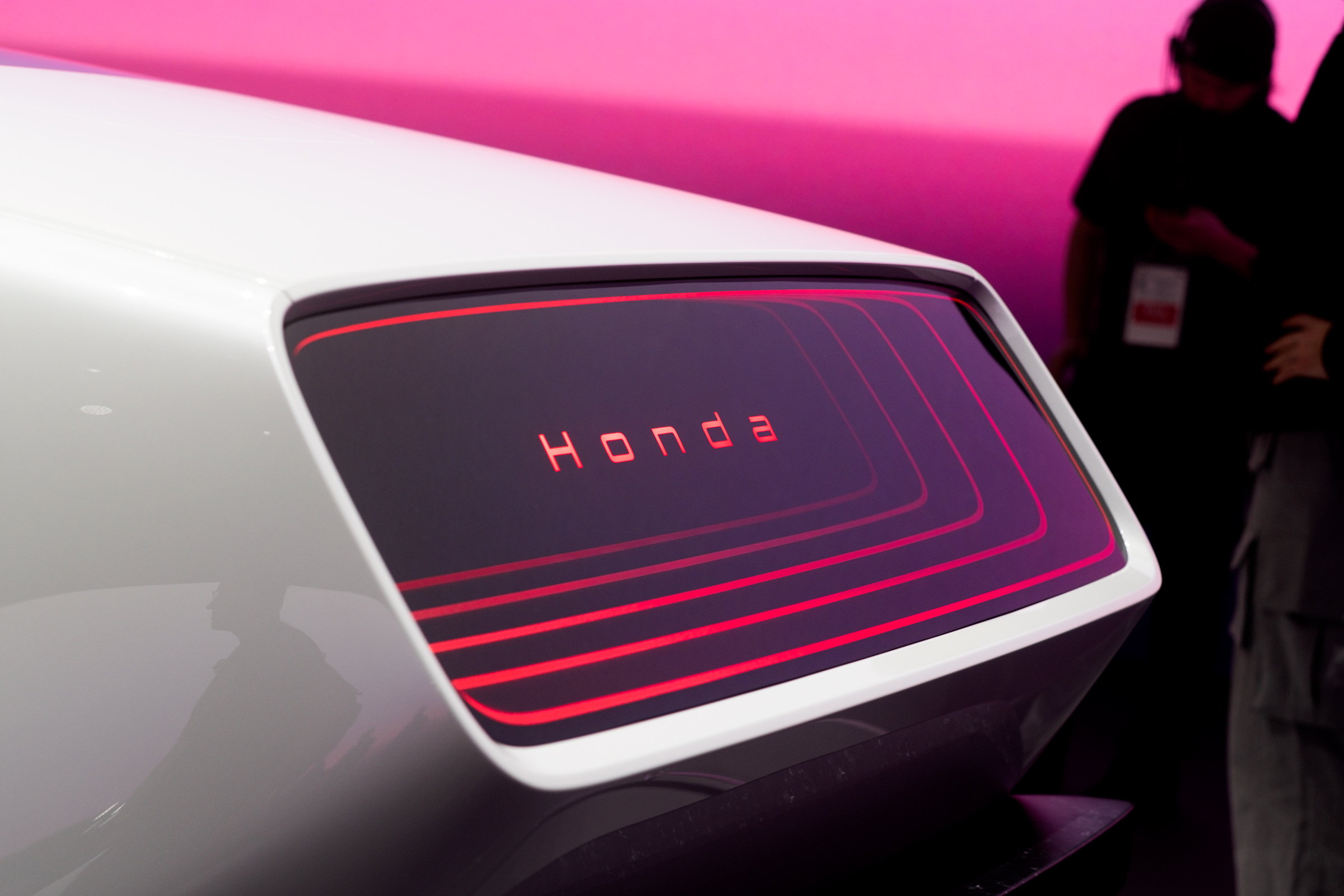
The global automotive industry is in the throes of a transformative shift, accelerating towards an electric future, yet Japanese automaker Honda appears to be hitting the brakes on its dedicated electric vehicle (EV) initiatives. This week, the company announced a significant recalibration of its EV strategy, particularly impacting several key models intended to spearhead its electrification efforts. This strategic pivot, characterized by the shelving of promising ground-up EV projects and the discontinuation of others, has ignited a fierce debate among industry analysts about Honda’s long-term competitiveness and its ability to navigate the seismic changes reshaping personal mobility.
A Strategic Reversal Amidst Global Shifts
Honda’s recent announcements signal a profound re-evaluation of its commitment to the EV market. The company confirmed the halt in development for the electric Acura RDX and the Honda 0 series sedan and SUV – vehicles that were touted as its first truly ground-up EVs, designed from scratch for electric powertrains. These models, unveiled with much fanfare at events like CES, represented Honda’s ambitious vision for next-generation electric mobility. Simultaneously, reports emerged, subsequently confirmed, that production of the Honda Prologue, an EV developed in collaboration with General Motors, would also cease. This confluence of decisions paints a picture of a company pulling back from a full-frontal assault on the EV segment, opting instead for a more cautious, perhaps even hesitant, approach.
The move comes at a critical juncture for the automotive sector. Governments worldwide, spurred by environmental concerns and ambitious climate targets, are implementing increasingly stringent emissions regulations and offering incentives for EV adoption. Major markets like the European Union, California, and China have set aggressive timelines for phasing out internal combustion engine (ICE) vehicles. This regulatory push, combined with growing consumer awareness and technological advancements, has fueled a robust global EV market, creating intense competition from established players like Volkswagen and Hyundai, alongside disruptive newcomers such as Tesla, Rivian, and a rapidly expanding cohort of Chinese manufacturers like BYD and Nio. For a company historically known for its engineering prowess and innovative spirit, Honda’s apparent retreat raises questions about its perception of these market dynamics and its readiness for the future.
The Genesis of Honda’s EV Ambitions (and their Limitations)
Honda’s journey into electrified vehicles is not new, tracing back to the late 1990s with the introduction of the Insight, one of the first mass-produced hybrid electric vehicles. Throughout the 2000s and 2010s, Honda continued to develop hybrid technology, applying it across its popular lineup, but its efforts in purely battery-electric vehicles were comparatively limited. Early attempts, such as the Fit EV and Clarity EV, were often compliance cars or niche offerings with restricted availability and range, failing to capture significant market share or consumer imagination.
In recent years, recognizing the undeniable global shift, Honda did outline more ambitious EV targets, including a goal to launch 30 new EV models globally by 2030 and achieve 100% EV sales by 2040. The "0 Series" concept, showcased at CES, was meant to be the cornerstone of this renewed commitment, symbolizing a fresh start and a departure from conventional automotive design. These vehicles were designed to embody Honda’s core values in an electric era: lightweight, efficient, and driver-focused. The partnership with General Motors for the Prologue and its Acura ZDX sibling, leveraging GM’s Ultium platform, was another facet of this strategy, intended to accelerate Honda’s entry into the North American EV market by sharing development costs and technology. The sudden cessation of these programs suggests a profound reassessment of the viability, profitability, or strategic alignment of these efforts, potentially indicating a belief that the current approaches were not sustainable or competitive enough.
Navigating a Shifting Competitive Landscape
Honda has cited challenging market conditions, specifically U.S. tariffs and fierce competition from Chinese automakers, as key factors influencing its decision. While these external pressures are undoubtedly real and impactful across the industry, some analysts argue that these are convenient targets that overshadow deeper internal strategic missteps. The notion that legacy automakers can simply "wait out" the awkward transition period, expecting to seamlessly swap out internal combustion components for electric ones once battery technology matures, has proven to be a fundamental miscalculation for many.
The reality, as demonstrated by early EV entrants and even other traditional manufacturers, is that designing an EV from the ground up on a dedicated electric platform offers significant advantages. Vehicles built on platforms originally intended for gasoline engines, when converted to EVs, often suffer from compromised packaging, suboptimal weight distribution, reduced efficiency, and higher production costs. Ford CEO Jim Farley, for instance, openly discussed how legacy engineering decisions in the Mustang Mach-E, despite its sales success, led to inefficiencies like a heavier wiring harness compared to Tesla’s architecture, impacting profitability. True innovation in EVs goes beyond merely changing the drivetrain; it involves reimagining the entire vehicle architecture, manufacturing processes, and supply chain. By shelving its ground-up EV projects, Honda risks falling further behind in this critical evolutionary phase, missing out on invaluable learning opportunities in design, manufacturing, and the cultivation of new supplier ecosystems.
The competitive landscape, particularly in China, is indeed brutal. Chinese EV manufacturers benefit from robust domestic supply chains, significant government support, and a hyper-competitive market that drives rapid innovation and aggressive pricing. Honda’s own earnings report highlighted these challenges, stating, "Honda was unable to deliver products that offer value for money better than that of newer EV manufacturers, resulting in a decline in competitiveness." This candid admission underscores the difficulty even for established global players to compete on price and features against agile, digitally native EV companies, especially in a market as mature and demanding as China’s.
Beyond the Drivetrain: The Software-Defined Imperative
The challenges facing Honda extend beyond the physical powertrain to the very architecture of the modern automobile. The industry is rapidly moving towards the era of the software-defined vehicle (SDV), where a vehicle’s core functionalities, user experience, and even performance characteristics are increasingly determined by its software. SDVs enable over-the-air (OTA) updates, allowing manufacturers to deploy new features, enhance safety systems, and improve vehicle performance long after the car leaves the dealership. This paradigm shift transforms the vehicle from a static product into an evolving, connected device.
While SDVs don’t have to be EVs, the two concepts are intimately linked. The large battery capacity of an EV provides ample power for sophisticated computing platforms, and the inherent electrical architecture is more conducive to integrated software systems and frequent OTA updates, often conducted while the vehicle is parked and charging. Companies like Tesla, Rivian, and increasingly, Chinese EV makers like Nio and Xpeng, have set a new benchmark for software integration, offering slick infotainment systems, advanced driver-assistance features, and a continuously improving user experience. Honda, like many legacy automakers, has historically lagged in this domain, focusing more on hardware excellence. By stepping back from dedicated EV development, Honda risks not only missing out on powertrain innovation but also falling further behind in the crucial race to master the software layer that defines the next generation of automotive value and consumer expectation.
The Cost of Delay: Learning, Innovation, and Market Position
The decision to scale back EV initiatives carries significant long-term risks. The automotive industry is a complex ecosystem where learning by doing is paramount. Developing and manufacturing EVs requires new engineering expertise, different production techniques, and the establishment of entirely new supply chains for batteries, electric motors, and power electronics. Each iteration, each customer feedback loop, and each manufacturing challenge provides invaluable data and experience that cannot be replicated through theoretical planning alone. By delaying its deep dive into dedicated EV programs, Honda could find itself with a widening knowledge gap, struggling to catch up with rivals who have been actively accumulating this expertise for years.
Moreover, a perceived lack of commitment to EVs can impact a brand’s image and talent acquisition. In an era where sustainability is a growing concern for consumers and top engineering talent is drawn to cutting-edge technologies, a company seen as hesitant in its electrification efforts might struggle to attract the best minds or maintain its appeal to environmentally conscious buyers. The market for "driver’s cars," a segment where Honda historically excelled with its lightweight, efficient, and well-handling vehicles, is also evolving. As vehicles become more autonomous and software-driven, the traditional definition of driving pleasure may diminish in relevance for a broad consumer base, who increasingly prioritize reliability, safety, connectivity, and overall value.
An Identity Crisis in a New Automotive Era
At its core, Honda has long been defined by its mastery of the internal combustion engine, a reputation built on decades of developing high-performance, reliable, and fuel-efficient powertrains. This expertise, coupled with a focus on engineering excellence and a distinct "driver’s car" philosophy, forged a powerful brand identity. However, as the industry transitions, this identity faces an existential challenge. If the internal combustion engine becomes obsolete, and the "driver’s car" concept is redefined by software and automation, what then becomes Honda’s unique selling proposition?
Consumers are increasingly drawn to EVs for their inherent reliability (fewer moving parts), lower running costs, and often, their sophisticated technological offerings. As battery costs continue to decline, enabling more affordable EVs, and as Chinese manufacturers demonstrate the feasibility of delivering high-value electric vehicles at competitive prices, Honda’s traditional advantages of reliability and reasonable pricing could be eroded. Its struggles in the Chinese market, as articulated by the company itself, serve as a potent warning sign: without a compelling, value-driven EV strategy, the company risks losing relevance not just in emerging EV markets, but eventually across its global operations.
Future Outlook and Broader Implications
Honda’s strategic reversal on EVs represents a calculated risk. The company may be betting that the current EV market is too volatile, too reliant on incentives, or that the technology is not yet mature enough for mass adoption without significant profitability challenges. This could be an attempt to conserve resources, refine its strategy, and potentially leapfrog rivals with a more advanced, cost-effective platform in the future. However, this strategy carries the immense risk of being left behind, ceding valuable market share, technological leadership, and brand perception to more aggressive competitors.
The implications extend beyond Honda. Its decision could be interpreted as a cautionary tale for other legacy automakers grappling with the complexities of the EV transition, or it could be seen as a unique strategic misstep by a company that historically embraced innovation. Regardless, it underscores the profound challenges and high stakes involved in the global race for tomorrow’s mobility, a race where even the most storied automotive giants must continually reinvent themselves or face the prospect of obsolescence. The path forward for Honda will likely involve a delicate balance of leveraging its formidable engineering heritage while urgently adapting to the software-defined, electric future.