Amir Mahmud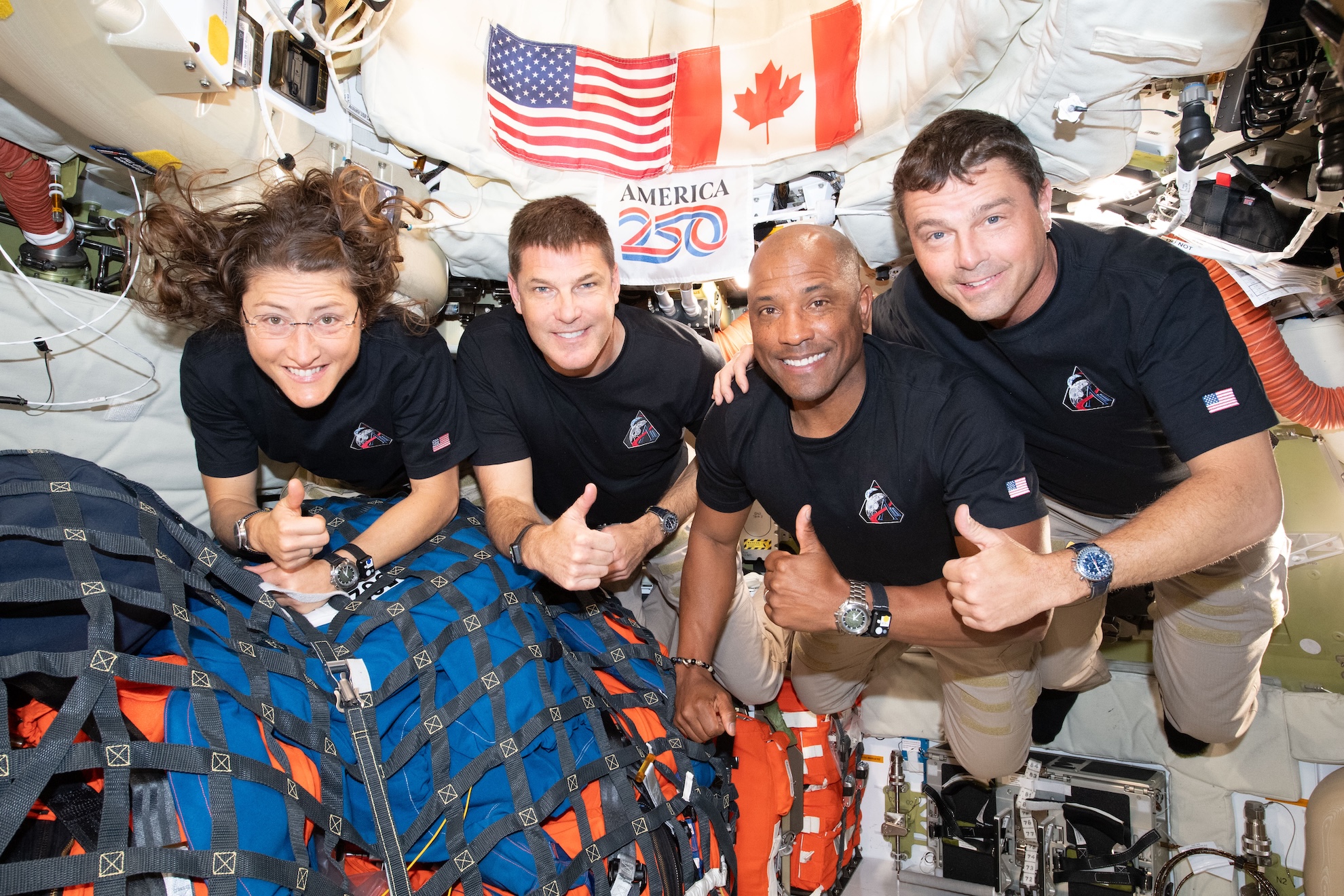
The Orion spacecraft, carrying four pioneering astronauts, successfully concluded its ambitious 10-day journey around the Moon, splashing down precisely in the Pacific Ocean off the coast of San Diego, California, at 5:07 p.m. Pacific Time. This flawless re-entry and recovery marked the triumphant completion of NASA’s Artemis II mission, a critical crewed test flight designed to validate the systems and procedures necessary for humanity’s return to the lunar surface. The quartet of spacefarers – Commander Reid Wiseman, Pilot Victor Glover, and Mission Specialists Christina Koch and Jeremy Hansen – were reported to be in excellent health following their deep-space odyssey.
A New Era of Lunar Exploration: The Artemis Vision
Artemis II represents a monumental step in NASA’s broader Artemis program, an ambitious international endeavor aimed at establishing a sustainable human presence on the Moon and preparing for future human missions to Mars. Unlike the Apollo missions of the 20th century, which focused on singular sprints to the lunar surface, Artemis seeks to build a lasting infrastructure, including a lunar orbiting outpost known as Gateway and a base camp on the Moon itself. This long-term vision requires robust, reliable transportation systems, and the Artemis II mission was instrumental in proving the crewed capabilities of the Orion spacecraft and the Space Launch System (SLS) rocket.
The success of Artemis II follows the uncrewed Artemis I mission, which orbited the Moon in late 2022, demonstrating the SLS rocket and Orion spacecraft’s performance without human risk. That mission validated the spacecraft’s ability to withstand the harsh environment of deep space, including its crucial heat shield during a high-speed re-entry. Artemis II built upon this foundation, adding the irreplaceable element of human interaction and real-time decision-making, which are paramount for future complex lunar operations.
Echoes of Apollo, Glimpses of Mars
For over half a century, the Moon remained largely unvisited by humans since the final Apollo mission in 1972. The Artemis program bridges this significant gap, drawing inspiration from the Apollo era while incorporating advancements in technology, international collaboration, and a more sustainable approach to space exploration. The journey undertaken by the Artemis II crew was the farthest humans have traveled from Earth in over 50 years, reaching an estimated distance of 252,760 miles from our home planet. This achievement surpassed the previous record set by Apollo 13, pushing the boundaries of human endurance and spacecraft capabilities.
The historical context of lunar exploration is rich with technological innovation and geopolitical competition. The "Space Race" of the Cold War era propelled the United States to land humans on the Moon within a decade of President John F. Kennedy’s challenge. While the motivations have evolved, the spirit of exploration and scientific discovery remains a driving force behind Artemis. However, the current landscape of space exploration is distinctly different, characterized by international partnerships – notably with Canada, represented by astronaut Jeremy Hansen on Artemis II – and increasing involvement from commercial space entities, fostering a more collaborative and economically viable future for deep-space endeavors.
The Orion Crew: Pioneers of the New Frontier
The four astronauts aboard Orion embody the spirit of modern space exploration. Commander Reid Wiseman, a seasoned astronaut with previous experience on the International Space Station (ISS), led the mission. Pilot Victor Glover, another veteran of the ISS, made history as the first African American to fly on a lunar mission. Mission Specialist Christina Koch, known for her record-breaking spacewalks and extended stay on the ISS, added invaluable expertise in space systems. Rounding out the crew was Jeremy Hansen from the Canadian Space Agency, marking Canada’s first astronaut to venture to the Moon, symbolizing the expanding global collaboration in space.
During their circumlunar voyage, the crew performed a series of critical tests and observations. They extensively evaluated Orion’s life support systems, navigation, and communication capabilities in the deep-space environment. Beyond the technical evaluations, the astronauts engaged in scientific observation, capturing stunning photographs of the lunar surface, including previously unseen regions during their flyby. A particularly unique experience was witnessing a total solar eclipse from their vantage point in space, offering a perspective unavailable to observers on Earth. The crew also made a personal connection to their journey, identifying new lunar craters and, in a poignant gesture, Commander Wiseman proposed naming one after his late wife, Carroll, who passed away in 2020. These moments underscore the human element at the core of space exploration – blending scientific rigor with profound personal experience.
Testing the Limits: The Mission’s Critical Objectives
The Artemis II mission was designed as a comprehensive test flight, putting both the hardware and the human crew through their paces in the demanding environment of deep space. Key objectives included:
- Orion Systems Validation: Thoroughly testing all spacecraft systems, including power, propulsion, thermal control, and environmental control and life support, with a crew onboard.
- Maneuver Execution: Performing critical orbital maneuvers, including translunar injection, lunar flyby, and trans-Earth injection, demonstrating the spacecraft’s navigational precision.
- Communication and Tracking: Verifying robust communication links with mission control across vast distances and testing navigation systems in lunar orbit.
- Crew Operations: Assessing crew performance, habitability, and workload, providing invaluable data for future long-duration missions.
- Re-entry and Recovery: Successfully executing the high-speed re-entry profile and splashdown, ensuring the safety of the crew upon return to Earth.
The "perfect" landing described by NASA officials signifies the precise execution of these complex procedures. The capsule’s descent, controlled by a series of parachutes, brought it gently into the Pacific, where recovery teams from the U.S. Navy and NASA were standing by. This meticulous planning and execution are vital, as the challenges of deep-space travel are immense, involving extreme radiation, vacuum, and vast distances that magnify any potential error. The successful completion of these objectives provides high confidence in the readiness of Orion and SLS for future missions.
Beyond the Horizon: The Future of Artemis
The triumphant return of Artemis II lays crucial groundwork for the subsequent phases of the program. The next major milestone, Artemis III, aims to land humans on the lunar south pole, a region believed to hold significant water ice resources, which could be vital for sustaining future lunar outposts. This mission will mark the first human landing on the Moon since Apollo 17 and will feature the first woman and first person of color to walk on the lunar surface.
Beyond Artemis III, the program envisions a sustained human presence through regular missions, the establishment of the Gateway lunar orbiting platform, and eventually, a lunar base camp. The data and experience gained from Artemis II are invaluable for designing these future habitats, optimizing life support systems, and developing operational protocols for extended stays on and around the Moon. This progressive approach is designed not only to explore the Moon but also to develop and test the technologies and strategies required for the ultimate goal: sending humans to Mars.
Global Collaboration and Terrestrial Impact
The Artemis program, while led by NASA, is fundamentally an international effort. The participation of the Canadian Space Agency on Artemis II underscores this collaborative spirit, with other nations like the European Space Agency and Japan Aerospace Exploration Agency also contributing to various elements of the program, including the Gateway. This international cooperation fosters a sharing of resources, expertise, and risk, making ambitious deep-space endeavors more achievable and sustainable.
The impact of such missions extends far beyond the realm of space exploration. The technological innovations spurred by programs like Artemis often lead to unforeseen advancements in fields like medicine, materials science, computing, and environmental monitoring, yielding tangible benefits for life on Earth. Furthermore, the spectacle of human spaceflight ignites public imagination, inspiring new generations to pursue careers in science, technology, engineering, and mathematics (STEM), contributing to a skilled workforce and fostering a culture of innovation.
As NASA Administrator Bill Nelson remarked after the landing, attributing credit to the entire NASA workforce, "America is back in the business of sending astronauts to the Moon and bringing them home safely. This was a test mission, the first crewed flight of SLS and Orion, pushing farther into the unforgiving environment of space than ever before, and it carried real risk. They accepted that risk for all we stood to learn and for the exciting missions that follow, as we return to the lunar surface, build a Moon base, and prepare for what comes next." His words encapsulate the profound significance of Artemis II – a successful test, a daring journey, and a crucial leap forward in humanity’s enduring quest to explore the cosmos.