Amir Mahmud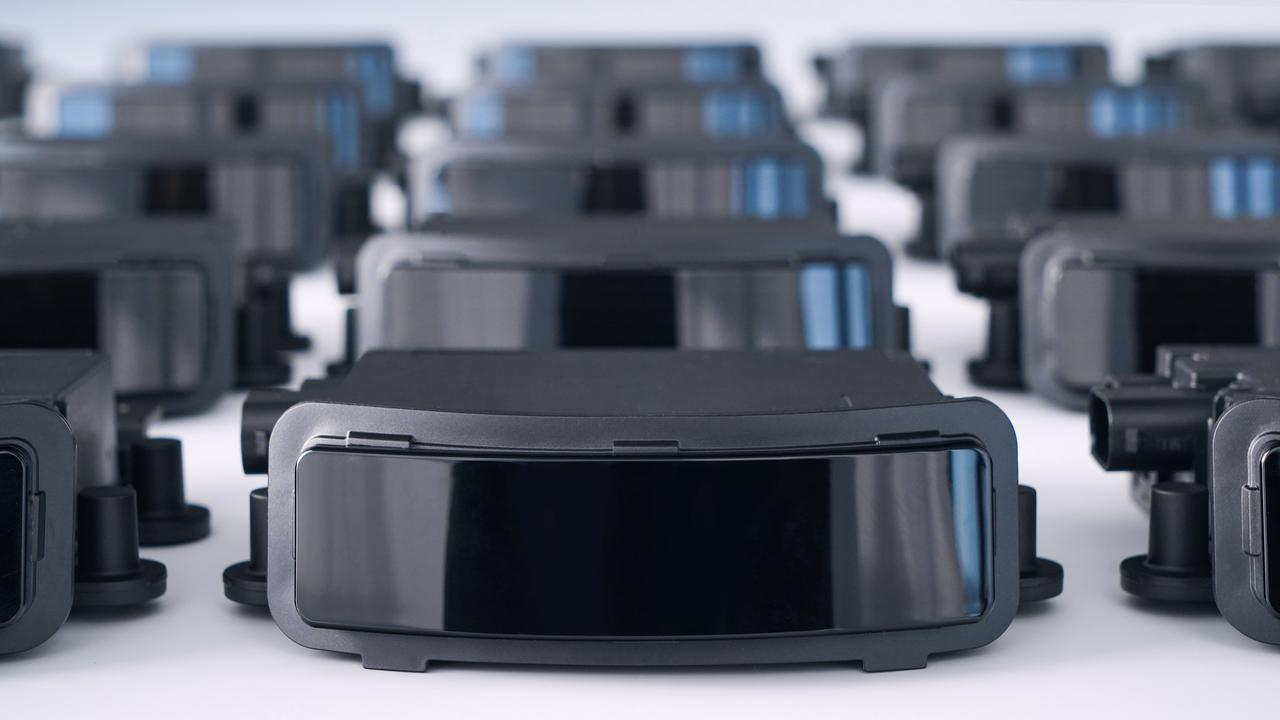
The global landscape for lidar technology is undergoing a profound transformation, marked by aggressive expansion from key players and the exit of others. At the forefront of this dynamic shift, Chinese lidar manufacturer Hesai Technology has declared ambitious plans to double its production capacity, aiming to increase its annual output from 2 million to an unprecedented 4 million units within the current year. This strategic move underscores Hesai’s clear intent to solidify its position as a dominant force in the global market for these advanced laser-based sensors, a significant leap from the more than 1 million units it produced in 2025.
The Evolving Lidar Landscape: Technology and Applications
Lidar, an acronym for "Light Detection and Ranging," is a sophisticated remote sensing method that employs pulsed laser light to measure ranges (variable distances) to the Earth. These light pulses, combined with other data recorded by the system, generate precise, three-dimensional information about the shape of the Earth and its surface features. Essentially, a lidar sensor emits millions of laser beams per second, measures the time it takes for these beams to return after hitting an object, and then creates a highly detailed 3D "point cloud" map of the surrounding environment. This capability is crucial for applications requiring high-fidelity spatial awareness.
Historically, lidar technology found its initial applications in surveying, meteorology, and military contexts, particularly for mapping terrain and guiding precision munitions. Its commercial potential began to blossom with advancements in laser technology and processing power, leading to its adoption in diverse fields such as archaeology, forestry, and urban planning. However, it was the advent of autonomous vehicle research that truly propelled lidar into the mainstream consciousness, positioning it as a cornerstone technology for self-driving cars and advanced robotics.
A Market in Flux: Consolidation and Competition
Hesai’s assertive expansion comes at a pivotal moment for the lidar sector, which has recently witnessed both remarkable innovation and significant upheaval. Just a month prior to Hesai’s announcement, Luminar Technologies, a prominent U.S. lidar manufacturer, filed for Chapter 11 bankruptcy protection. This development sent ripples through the industry, signaling the immense pressures faced by companies struggling to scale and achieve profitability. While Luminar reportedly seeks to divest its lidar business, its operational future appears uncertain, serving as a stark reminder of the intense competition and financial hurdles within the space.
The trajectory of the lidar market has been anything but linear. Early enthusiasm for autonomous vehicles fueled a boom in lidar startups, each vying to develop the most compact, reliable, and cost-effective sensor. However, the path to mass commercialization proved more challenging than many anticipated. High development costs, long product cycles, and the demanding specifications of the automotive industry led to a period of consolidation. A notable example was the 2023 acquisition of Velodyne Lidar by Ouster, another U.S.-based competitor. Such mergers are indicative of an industry maturing, where economies of scale and diversified product portfolios become critical for survival.
Hesai’s Strategic Positioning Amidst Geopolitical Tensions
Hesai’s financial strength and strategic market positioning are key to its current trajectory. The company has successfully raised hundreds of millions of dollars in capital over recent years, culminating in its dual listing on both the Nasdaq and Hong Kong stock exchanges. This access to global capital markets has provided Hesai with significant resources for research, development, and manufacturing expansion.
However, Hesai’s journey has not been without significant headwinds, particularly from geopolitical tensions. The company has been embroiled in a contentious dispute with the U.S. government, which has placed Hesai on a blacklist, alleging close ties to China’s military-industrial complex. Hesai has vehemently contested these accusations, asserting its commitment to civilian applications and global market principles. This ongoing legal and political battle highlights the broader challenges faced by Chinese technology firms operating in an increasingly fragmented global economic and political landscape. Despite these obstacles, Hesai’s ability to attract investment and pursue aggressive growth strategies underscores its resilience and the perceived value of its technology.
Driving Demand: Automotive and Robotics
The impetus behind Hesai’s ambitious production target doubling stems directly from what the company describes as "accelerating demand" across the automotive and robotics industries. This surge in demand reflects a growing recognition of lidar’s indispensable role in enabling more advanced automation and safety features.
In the automotive sector, particularly within China, the adoption of lidar sensors has seen remarkable acceleration. Hesai proudly states that its sensors are now integrated into 25% of all new electric vehicles (EVs) sold in the country. This widespread integration is a testament to the Chinese automotive market’s readiness to embrace cutting-edge technology to differentiate products and enhance vehicle intelligence. Furthermore, Hesai projects that many new vehicles in China are expected to incorporate multiple lidar sensors—between three to six units per car. This trend significantly expands Hesai’s "addressable market," moving beyond single-sensor configurations to more complex, multi-sensor arrays that provide comprehensive 360-degree environmental perception. The company currently boasts 24 automotive customers, including a "top European" automaker, and has secured orders for 4 million units of its newest ATX lidar sensor.
Beyond China, however, the automotive market for lidar has proven to be more challenging and "fickle," as evidenced by Luminar’s struggles. Luminar’s bankruptcy filings explicitly cited the difficulties in securing and maintaining major automotive contracts as a contributing factor to its downfall. Despite striking high-profile deals to integrate its lidar sensors into vehicles from brands like Volvo, Polestar, and Mercedes-Benz, many of these plans ultimately faltered. A particularly telling example was the agreement with Volvo, which initially committed to purchasing 1.1 million lidar sensors from Luminar. However, delays in Volvo’s new vehicle programs and unexpected cost overruns led the Swedish automaker to significantly scale back its order, ultimately acquiring only around 10,000 sensors. This incident underscores the inherent risks and long lead times associated with supplying components to the automotive industry, where development cycles are extensive and financial commitments can shift dramatically.
The robotics sector, while perhaps less volatile than automotive, presents another substantial growth avenue for lidar. San Francisco-based Ouster, which strategically acquired rival Velodyne in 2023 as part of the industry’s consolidation wave, has publicly expressed its conviction that robotics represents a massive $14 billion market opportunity. This expansive projection encompasses a wide array of applications, extending beyond nascent humanoid robotics to include last-mile delivery robots, industrial automation, and even specialized military applications. Lidar’s ability to provide precise, real-time 3D mapping is critical for robots navigating complex and dynamic environments, ensuring safe and efficient operation.
Hesai is actively showcasing its versatility in the robotics domain. At the 2026 Consumer Electronics Show (CES) in Las Vegas, the company demonstrated its JT series lidar sensors integrated into innovative applications such as a robotic lawnmower and a robotic dog. The company has also hinted at the inclusion of its technology in emerging humanoid robots. Furthermore, Hesai has forged strategic partnerships with leading autonomous vehicle technology companies, including Pony.ai, Motional, WeRide, and Baidu, reinforcing its commitment to diverse applications beyond traditional passenger cars.
The Price Wars and Their Impact
A critical factor influencing lidar adoption and industry dynamics is the relentless pressure on pricing. Hesai has proudly claimed a staggering 99.5% reduction in the cost of lidar sensors over just eight years. This dramatic cost decrease is a direct result of advancements in manufacturing processes, greater economies of scale, and intense competition, particularly from Chinese manufacturers. While beneficial for broader adoption, this aggressive cost reduction has had a profound impact on the financial viability of many lidar companies.
Luminar’s bankruptcy filings explicitly listed "pressure to reduce costs due to lower price points of China-based competitors" as the second most significant factor explaining the U.S. company’s inability to build a self-sustaining business. This illustrates a broader trend where companies with robust manufacturing capabilities and access to cost-effective supply chains, often found in Asia, can gain a competitive edge. The "race to the bottom" on pricing forces companies to innovate not only in technology but also in production efficiency and supply chain management, placing immense strain on those unable to adapt quickly.
Future Outlook and Challenges
Looking ahead, the lidar industry is poised for continued evolution. Further consolidation seems inevitable as companies seek stronger financial positions and broader market reach. Technological advancements will likely focus on improving sensor resolution, reliability in adverse weather conditions, and tighter integration with other sensor modalities (cameras, radar). The debate over lidar’s absolute necessity in autonomous driving, particularly against camera-only approaches championed by some industry giants, will persist. However, for many applications requiring robust environmental perception and safety redundancies, lidar’s unique capabilities remain highly valued.
Hesai’s aggressive expansion and the broader industry shake-out highlight a dynamic period where innovation, cost-effectiveness, and strategic market penetration are paramount. As the technologies mature and applications diversify, the lidar market will continue to be a fascinating battleground for technological leadership and global market dominance. The ability of companies to navigate geopolitical complexities, secure substantial partnerships, and maintain a competitive cost structure will ultimately determine their long-term success in this rapidly evolving sector.