Amir Mahmud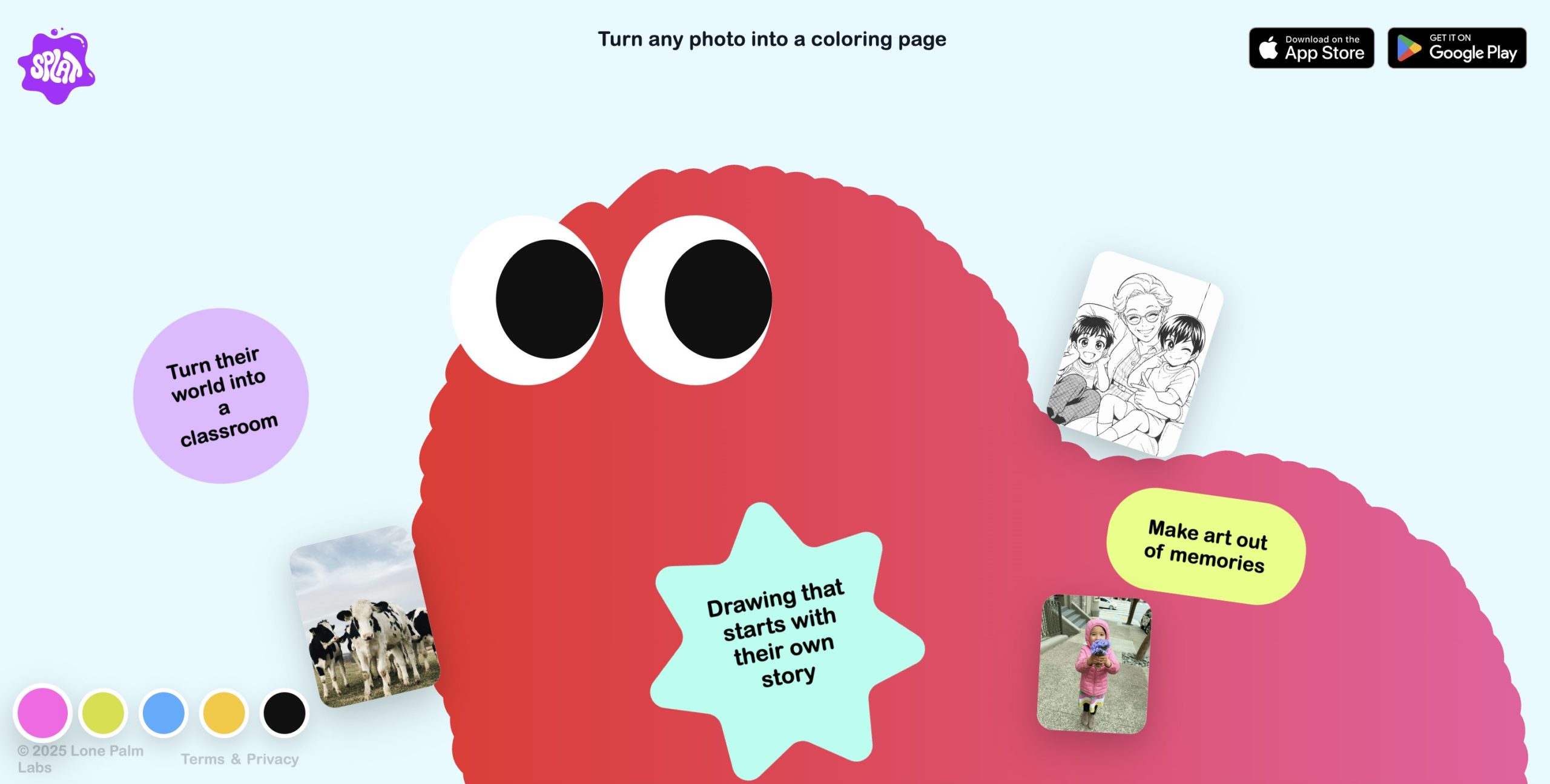
A groundbreaking application of artificial intelligence is redefining children’s creative play, offering a unique blend of personalization and accessibility. The team behind Retro, a popular photo-sharing platform designed for intimate circles of friends and family, has unveiled Splat, an innovative app engineered to convert any personal photograph into a printable or digital coloring page specifically tailored for young artists. This venture represents a deliberate exploration into the more imaginative applications of advanced AI technologies, moving beyond conventional uses to foster creativity within the home.
The Evolution of Children’s Creative Play
For generations, coloring books have been a staple in childhood development, celebrated for their ability to nurture fine motor skills, encourage color recognition, and spark imaginative thinking. The tactile experience of crayons on paper, the focused quiet of a child engrossed in an artistic endeavor, remains a cherished memory for many parents and educators. With the advent of the internet, the landscape of accessible coloring content expanded dramatically. Websites emerged offering vast libraries of free printable pages, seemingly providing an endless supply of creative outlets.
However, this digital abundance often came with its own set of challenges. Many of these online repositories are plagued by intrusive advertisements, distracting pop-ups, and cumbersome navigation interfaces, making the user experience frustrating for parents simply seeking a wholesome activity for their children. Furthermore, a significant portion of higher-quality or specialized coloring pages are locked behind paywalls, demanding subscription fees or individual purchases. For art projects that are often transient in nature—a quick scribble, a few bold strokes, then perhaps discarded—the financial commitment for a steady supply of new pages can be a deterrent for budget-conscious families. This friction point, a blend of digital clutter and cost barriers, highlighted a clear opportunity for a more streamlined, personalized, and engaging solution.
Splat’s Innovative Approach to Personalization
Splat emerges as a direct response to these modern parenting dilemmas, leveraging cutting-edge generative AI to offer an unparalleled level of personalization. Instead of generic images of cartoon characters or animals found across countless websites, Splat empowers users to transform their own family photos – a picture of a pet, a favorite toy, a recent vacation snapshot, or even a portrait of a loved one – into unique, outline-based coloring pages. This personal connection significantly enhances engagement, as children are more likely to be captivated by an image that holds personal meaning to them.
The underlying technology behind Splat is rooted in sophisticated image processing and generative AI models. When a user uploads a photograph or selects one from their device’s camera roll, the AI analyzes the image’s contours, shapes, and primary subjects. It then employs algorithms akin to edge detection and style transfer to render a simplified, line-art version of the original photo. This transformation process is designed to distill the image into its essential components, creating clear, colorable outlines while maintaining the recognizable essence of the original subject.
A Seamless User Experience
Getting started with Splat prioritizes user convenience and immediate engagement, circumventing the often-tedious sign-up procedures common with many new applications. Upon the first launch, users are guided through a quick customization process. This includes selecting a preferred app icon, allowing a touch of personalization for the parent, and specifying categories of interest for their child, such as "animals," "space," "flowers," "fairy tales," "robots," or "cars." These pre-defined categories offer an alternative source of content, providing a curated selection of kid-friendly images for transformation, complementing the user’s personal photo uploads.
A key feature contributing to Splat’s versatility is the choice of output format. Parents can opt for a traditional printable page, allowing children the classic experience of coloring with physical crayons, markers, or paints. Alternatively, for moments when physical supplies are not readily available—such as during travel, while waiting at an appointment, or simply to manage screen time away from passive entertainment—the app offers an on-screen coloring option. This digital format provides immediate engagement, turning a tablet or smartphone into an interactive canvas without requiring paper or art supplies.
Furthermore, Splat offers an array of stylistic transformations, allowing users to select how their photo is rendered. Options like "anime," "3D movie," "manga," "cartoon," or "comic" styles can dramatically alter the aesthetic of the coloring page, introducing children to different artistic conventions and adding another layer of creative exploration. This flexibility not only keeps the experience fresh but also caters to diverse preferences, ensuring the generated content resonates with the child’s individual tastes. Initial tests confirm the app’s efficiency, with generation times being remarkably brief, facilitating a quick transition from an idea to a tangible or digital art project.
The Broader Impact: Market, Social, and Cultural Dimensions
The introduction of Splat fits within a larger cultural shift towards personalized digital experiences and the increasing integration of AI into everyday tools. The market for children’s educational and entertainment apps is fiercely competitive, with a constant demand for novel ways to capture attention and foster learning. Splat distinguishes itself by tapping into the emotional resonance of personal memories, transforming them into interactive art. This approach can enhance family bonding, as children color images of shared experiences, pets, or family members.
From a social perspective, Splat offers parents a powerful tool to manage screen time constructively. Instead of passive consumption of videos or games, children engage in an active, creative process, stimulating different cognitive functions. The ability to quickly generate a custom coloring page can be a valuable resource for busy parents seeking a convenient, engaging, and educational activity, whether at home or on the go. This accessibility democratizes creative content, making bespoke art projects available instantly, bypassing the need for specialized drawing skills or extensive online searching.
However, the proliferation of AI-generated content also prompts neutral analytical commentary regarding its long-term implications. While beneficial for convenience and personalization, questions arise about striking a balance between AI-assisted creativity and traditional, freehand artistic development. Will children’s inherent drawing skills be impacted if they primarily color within AI-generated outlines? Furthermore, the handling of user-uploaded photos—which often contain sensitive personal information—necessitates robust data privacy and security measures. While the original article does not detail Splat’s specific data policies, any application dealing with personal images, particularly those involving children, must adhere to stringent privacy protocols to build and maintain user trust.
Business Model and Accessibility
Splat operates on a freemium model, allowing users to try one generative AI project without cost to experience the app’s core functionality. This trial period serves as an effective demonstration of its capabilities. Subsequent access to the generation features requires a subscription, offered at $4.99 per week for 25 pages or a more economical annual option of $49.99 for 500 pages. This tiered pricing structure caters to different user needs, providing flexibility for occasional users and better value for those who anticipate frequent use.
To safeguard young users from unintended purchases or alterations to settings, Splat incorporates a simple yet effective parental control mechanism: a pop-up requiring the parent’s birth year before allowing access to subscription options or critical settings. This design choice underscores a commitment to responsible app development for a family-oriented audience.
Splat is not an isolated innovation but rather part of a burgeoning trend where generative AI is being harnessed to inspire children’s creativity. Other notable examples include Stickerbox, an app that produces AI-generated stickers for coloring, and Casio’s Moflin, a robotic pet that uses AI to evolve its personality, offering a new dimension to interactive companionship. These developments collectively highlight a growing interest in integrating intelligent technologies into children’s play, moving beyond simple entertainment to foster engagement, learning, and self-expression.
With its availability on both iOS and Android platforms, Splat ensures broad accessibility, allowing a wide range of families to embrace this new frontier in personalized creative play. As AI continues to mature, its role in shaping how children learn, interact, and express themselves is poised for further expansion, with apps like Splat leading the charge in making advanced technology a tool for imagination.