Amir Mahmud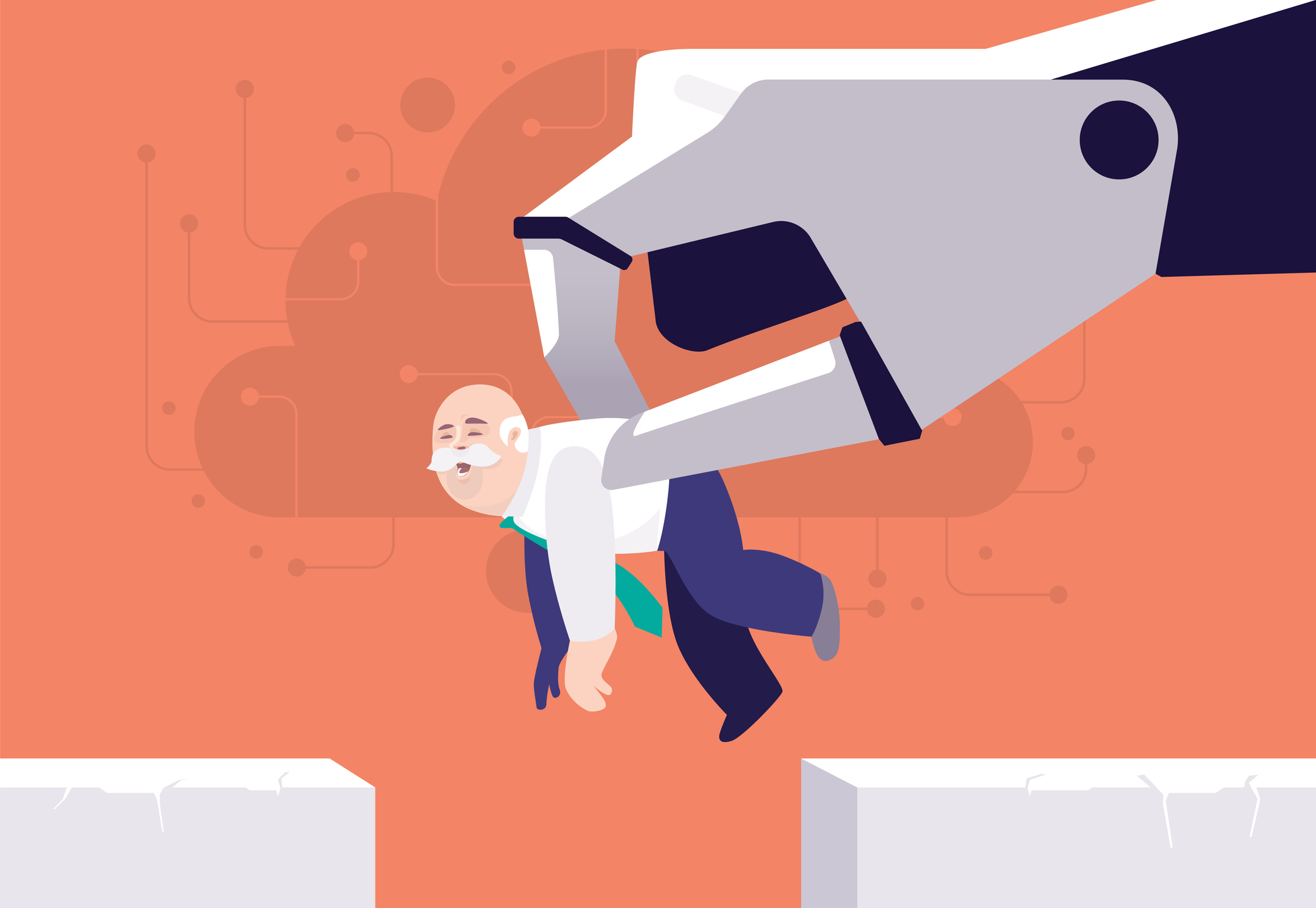
A profound transformation is underway in the technology sector, challenging the established dominance of Software-as-a-Service (SaaS) business models. This paradigm shift became acutely evident when a founder recently informed an investor that his entire customer service operation would be replaced by an artificial intelligence tool, Claude Code, capable of autonomously writing and deploying software. For Lex Zhao, an investor at One Way Ventures, this communication signified a pivotal moment—the point at which venerable companies like Salesforce could no longer be considered the automatic choice for enterprise solutions.
The Rise of SaaS and Its Enduring Appeal
To understand the magnitude of this disruption, it is crucial to first appreciate the context and historical trajectory of SaaS. For decades, software delivery primarily involved on-premises installations, requiring companies to purchase licenses, manage servers, and handle maintenance themselves. This model, while offering direct control, was often costly, resource-intensive, and lacked flexibility. The advent of cloud computing in the early 2000s paved the way for SaaS, a subscription-based model where software is hosted in the cloud and accessed over the internet. Companies like Salesforce pioneered this approach, offering customer relationship management (CRM) solutions without the need for extensive on-site infrastructure.
SaaS quickly gained traction due to its inherent advantages: predictable recurring revenue streams, immense scalability, and attractive gross margins typically ranging from 70% to 90%. It democratized access to sophisticated software, allowing businesses of all sizes to leverage powerful tools without significant upfront capital investment. This model became a darling of venture capitalists and public markets alike, seen as a secure and high-growth investment. The "build versus buy" decision, for many years, decisively favored "buy," as outsourcing software development and maintenance to specialized SaaS providers offered efficiency, expertise, and continuous updates. This environment fostered the growth of tech giants and thousands of startups, all contributing to an ecosystem that seemed unshakeable.
AI Agents: Redefining the "Build vs. Buy" Equation
The landscape is now being reshaped by the rapid advancements in artificial intelligence, particularly generative AI and coding agents. Tools like Claude Code or OpenAI’s Codex are not merely automating tasks; they are fundamentally altering the cost and complexity of software development. As investor Lex Zhao highlighted, "The barriers to entry for creating software are so low now thanks to coding agents, that the build versus buy decision is shifting toward build in so many cases." This newfound capability empowers organizations to craft bespoke solutions tailored precisely to their needs, often bypassing off-the-shelf SaaS offerings.
The implications for the traditional SaaS business model are profound, especially concerning its prevalent "per-seat" pricing structure. SaaS companies historically charged customers based on the number of employees who logged in to use their software. This made sense when human employees were the primary users and beneficiaries of the software’s functionality. However, when a single or a handful of AI agents can perform the work of multiple human customer service representatives, data analysts, or marketing specialists—simply by being prompted to pull data or execute complex tasks—the economic rationale for per-seat pricing begins to erode. If a company can achieve the same or superior outcomes with fewer "seats" occupied by human users, their software expenditure on a per-seat basis will inevitably decrease.
Furthermore, the rapid evolution of AI tools means they can replicate not just the core functions of existing SaaS products, but also the sophisticated add-on features and modules that vendors typically sell to grow revenue from existing customers. This capability provides customers with an unprecedented negotiation leverage. Faced with high renewal prices or unsatisfactory terms, companies can now more easily consider developing their own internal AI-powered alternatives. This dynamic, as Abdul Abdirahman, an investor at F-Prime, pointed out, "creates downward pressure on contracts that SaaS vendors can secure during renewals," even if customers ultimately do not pursue the build route.
A stark illustration of this shift emerged in late 2024, when the Swedish fintech giant Klarna announced its decision to replace Salesforce’s flagship CRM product with its own internally developed AI system. This move by a major enterprise sent ripples through the industry, signaling that the theoretical capabilities of AI were rapidly becoming practical realities for large-scale operations.
Market Tremors and Investor Apprehension
The realization that an increasing number of companies could follow Klarna’s lead has sent shockwaves through public markets. The stock prices of long-standing SaaS giants, including Salesforce and Workday, have experienced significant declines. In early February, investor sell-offs wiped nearly $1 trillion in market value from software and services stocks globally, with an additional billion lost later in the month. This financial turbulence has led experts to coin the term "SaaSpocalypse," and one analyst characterized the prevailing investor sentiment as "FOBO investing"—fear of becoming obsolete.
This market pattern is particularly evident in the immediate reactions to new AI product launches. When Anthropic, a prominent AI research company, released Claude Code for cybersecurity applications, related cybersecurity stocks experienced a notable dip. Similarly, the introduction of legal tools within Claude Cowork AI coincided with a drop in the stock price of the iShares Expanded Tech-Software Sector ETF, an index that includes publicly traded software companies like LegalZoom and RELX. This direct correlation underscores the market’s sensitivity to perceived AI competition.
In retrospect, some investors suggest that SaaS companies may have been overvalued for an extended period, particularly during the era of near-zero interest rates. During that time, capital was inexpensive, fostering aggressive growth strategies and inflated valuations based on future revenue projections. With the current environment of rising interest rates, the cost of borrowing and doing business has increased, making investors more discerning and less tolerant of speculative valuations. Public market investors typically price SaaS companies by estimating their future revenue potential. However, the uncertainty introduced by AI—specifically, whether traditional SaaS products will maintain their user base and revenue streams in one, three, or five years—has fundamentally altered this calculus. Abdul Abdirahman observed, "This may be the first time in history that the terminal value of software is being fundamentally questioned, materially reshaping how SaaS companies are underwritten going forward."
The Emergence of AI-Native Companies and New Business Models
The challenge extends beyond existing SaaS companies merely "slapping AI features" onto their legacy products. A new generation of AI-native startups is emerging at an unprecedented pace, fundamentally redefining what it means to be a software company. These ventures are building their offerings from the ground up with AI at their core, unencumbered by decades of accumulated technical debt or established business models. Software, once a complex and expensive endeavor, is now easier and cheaper to build, as Yoni Rechtman, a partner at Slow Ventures, noted, making it more readily replicable. This is favorable for nimble startups but poses a significant threat to incumbents that have invested years in constructing their proprietary tech stacks.
This disruption is also catalyzing the exploration of novel pricing models. Traditional per-seat subscriptions are giving way to alternative structures more aligned with AI’s consumption patterns. Some AI companies are adopting consumption-based pricing, where customers pay based on the amount of AI they utilize, often measured in "tokens"—units of text or data processed by the AI model. Each model provider defines tokens slightly differently, adding a layer of complexity but aligning costs directly with usage.
An even more radical approach is "outcome-based pricing," where fees are directly tied to the performance and results delivered by the AI. This model, ironically, is being championed by Sierra, an AI startup founded by former Salesforce CEO Bret Taylor. Sierra offers customer service agents priced not by seat or token, but by the tangible outcomes they achieve for businesses. This approach has demonstrated remarkable early success, with Sierra reportedly achieving $100 million in annual recurring revenue in less than two years by November 2025. This rapid ascent underscores the potential of AI-native companies and their innovative business strategies.
A Shifting Investment Landscape and Future Outlook
The tremors of the SaaSpocalypse are not confined to publicly traded companies; they are also impacting the private investment landscape. A recent Crunchbase report indicated a significant slowdown in venture-backed SaaS initial public offerings (IPOs), despite a general thawing in the broader IPO market for other sectors. This reluctance stems from the same concerns that have rattled public investors. Large, private, late-stage SaaS companies, such as Canva and Rippling, are facing immense pressure due to a volatile IPO window, soaring expectations driven by AI advancements, and the unsteady stock performance of their already public counterparts. Some mid-size SaaS companies have even struggled to secure extension rounds in the private market, reflecting widespread investor caution.
The prevailing sentiment among venture capitalists is that many of these companies will likely remain private for considerably longer than anticipated. As Rechtman articulated, "Nobody wants to be subjected to the volatility of public markets when sentiment can send companies into downward tailspins." The investment community is keenly awaiting the financial disclosures of the first AI-native companies to go public, with rumors suggesting that both OpenAI and Anthropic might be contemplating IPOs as early as later this year. Their financial performance and market reception will provide critical insights into the viability and valuation metrics of this new generation of software.
Despite the current anxieties, many experts believe that this period represents a significant evolution rather than an outright demise of SaaS. Aaron Holiday, a managing partner at 645 Ventures, characterized it as "the beginning of an old snake shedding its skin." The most probable outcome is a synergistic integration of existing and nascent technologies, a pattern observed throughout technological history. While many of the novel AI features being explored today may not achieve lasting traction, enterprises will continue to require robust software that adheres to compliance regulations, facilitates audits, streamlines workflow, and offers unwavering durability. As Holiday emphasized, "Durable shareholder value isn’t built on hype. It’s built on fundamentals, retention, margins, real budgets, and defensibility." The current "SaaSpocalypse" is a powerful reminder that in the dynamic world of technology, even established incumbents must continuously innovate and adapt to remain relevant.