Amir Mahmud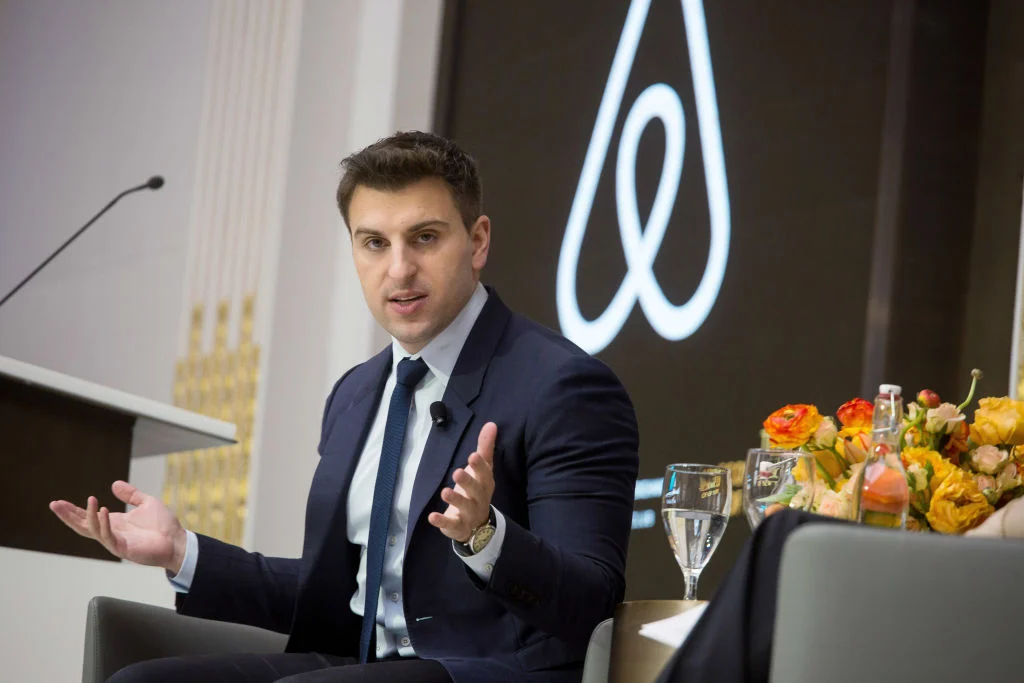
Brian Chesky, co-founder and Chief Executive Officer of the global short-term rental giant Airbnb, is reportedly embarking on a significant new endeavor: the establishment of an independent artificial intelligence research laboratory. This development, initially reported by Bloomberg and subsequently corroborated by sources familiar with the initiative, positions Chesky among a growing cohort of prominent Silicon Valley figures who are seeking to directly influence the trajectory of advanced AI development, moving beyond mere adoption of existing models. The move signals a potential shift in the AI landscape, as industry leaders with vast resources and unique perspectives increasingly opt to cultivate their own specialized research capabilities.
A New Frontier for a Hospitality Pioneer
For over a decade, Brian Chesky has been synonymous with the transformation of the travel and hospitality sector. Under his leadership, Airbnb evolved from a modest startup into a multi-billion-dollar enterprise that redefined how people experience accommodation and local culture. This journey was built on a foundation of user-centric design, community building, and leveraging technology to connect hosts and guests worldwide. Chesky’s reputation as a visionary leader with a meticulous eye for product design and user experience is well-established. His decision to launch an AI lab, therefore, is not merely an opportunistic jump onto a popular tech trend but rather a strategic extension of his long-held belief in the power of design and technology to reshape human interaction.
The current AI boom, largely catalyzed by advancements in large language models (LLMs) and generative AI, has seen a rapid proliferation of sophisticated tools and platforms. While Airbnb has, like many tech companies, integrated AI-powered coding assistants into its development processes, Chesky has previously expressed reservations about fully committing to partnerships with existing LLM providers. His stated concern has been that the current crop of general-purpose AI products might not yet possess the nuanced capabilities required to seamlessly integrate with and significantly enhance Airbnb’s unique, human-centric service model. This perspective underscores a desire for more tailored, perhaps even bespoke, AI solutions that align precisely with his vision for user experience and platform functionality.
The AI Landscape in 2026
The year 2026 finds the artificial intelligence domain in a state of intense competition and rapid evolution. "Frontier labs" like OpenAI, Google DeepMind, and Anthropic have pushed the boundaries of what AI can achieve, developing increasingly powerful and versatile models. These organizations have attracted billions in investment and amassed unparalleled talent, setting the pace for much of the industry. However, their focus has largely been on general-purpose AI, aiming for broad applicability across numerous industries.
This generalist approach, while impressive, often leaves a gap for highly specialized applications that require deep domain expertise and a particular emphasis on specific user interactions. Many enterprise leaders, including Chesky, recognize the immense potential of these foundational models but also perceive limitations when attempting to integrate them into complex, user-facing products where subtle interactions and brand identity are paramount. The cost, computational demands, and inherent biases or limitations of general models can also be deterrents, prompting some to consider building custom solutions or even foundational models tailored to their specific needs. The increasing maturity of open-source AI frameworks and the availability of specialized hardware have also lowered the barrier to entry for establishing independent research initiatives, making ventures like Chesky’s more feasible than in previous cycles.
From Advisor to Competitor: The Altman Connection
Brian Chesky’s engagement with the AI sector extends far beyond a recent interest; it is rooted in a long-standing relationship with some of its most influential figures. His connection with OpenAI CEO Sam Altman dates back to 2006, forged through their respective roles within the Y Combinator startup accelerator, which famously incubated Airbnb. This early professional association evolved into a regular dialogue, with Chesky frequently offering counsel to Altman as OpenAI navigated its hypergrowth phase. His experience scaling a disruptive tech company, managing complex stakeholder relationships, and fostering a strong organizational culture proved invaluable to Altman during a period of intense expansion and scrutiny for OpenAI.
Chesky’s influence was particularly evident during the tumultuous events of late 2023, when OpenAI’s board of directors abruptly dismissed Altman, only to reinstate him days later amidst a widespread outcry from employees, investors, and the broader tech community. During this critical juncture, Chesky played a pivotal role, advising Altman on public relations strategies and mobilizing support for his return among key Silicon Valley executives and investors. He was reportedly even considered a potential candidate for a seat on OpenAI’s reconstituted board, a testament to his trusted position within the AI ecosystem.
Now, however, Chesky’s decision to launch his own AI lab marks a significant pivot from advisor to potential competitor. While his direct involvement in an independent AI research venture might not immediately pit him against OpenAI in a head-to-head battle for general-purpose model dominance, it signals a strategic divergence. It suggests that even with his deep access and influence within the leading AI organizations, Chesky believes that his specific vision for AI’s future, particularly in areas critical to user experience and design, requires a dedicated, independent research arm. This move could be interpreted as a desire for greater control over the direction of AI development relevant to his interests, rather than relying on the priorities and roadmaps of external entities.
Strategic Imperatives: Why Now?
The timing of Chesky’s foray into dedicated AI research raises questions about the specific strategic imperatives driving this decision. While Airbnb has seen immense success, the travel industry is constantly evolving, and competitive pressures from traditional hospitality chains and emerging tech-driven models remain fierce. Integrating advanced AI could offer Airbnb a significant competitive edge by:
- Enhancing User Experience: Developing AI models specifically trained on Airbnb’s vast dataset of user interactions, property details, and travel preferences could lead to hyper-personalized recommendations, intuitive search functionalities, and seamless booking processes that far surpass current capabilities.
- Optimizing Host Tools: AI could empower hosts with better pricing strategies, demand forecasting, automated guest communication, and even virtual assistants to manage their listings more efficiently, ultimately improving host satisfaction and retention.
- Streamlining Operations: Advanced AI could revolutionize customer support, fraud detection, and platform moderation, leading to more efficient operations and a safer, more reliable marketplace for both guests and hosts.
- Unlocking New Product Offerings: A dedicated AI lab could explore entirely new ways to experience travel, perhaps through AI-generated itineraries, immersive virtual tours, or even entirely novel forms of accommodation and local experiences facilitated by intelligent agents.
Chesky’s emphasis on user interaction and design suggests a lab that will prioritize how humans interface with AI, rather than focusing solely on raw computational power or model size. This aligns perfectly with Airbnb’s historical strength in crafting intuitive and aesthetically pleasing digital experiences. The goal might be to create an "invisible AI" — one that seamlessly enhances the user journey without feeling obtrusive or overly technical, much like good design itself.
The Vision for User Interaction and Design
The reported focus of Chesky’s new AI lab on user interaction and design is a critical detail, reflecting his core expertise and the foundational principles of Airbnb. For Chesky, design has always been more than aesthetics; it’s about solving problems, creating intuitive pathways, and fostering emotional connections. In the context of AI, this translates to developing systems that understand and anticipate human needs, respond naturally, and integrate effortlessly into daily life and specific use cases like travel planning.
This approach stands in contrast to some current AI development, which often prioritizes raw performance metrics over user-centricity. A lab dedicated to design-first AI could explore novel interfaces that move beyond traditional text prompts, incorporating multimodal inputs, spatial computing, and emotionally intelligent responses. The goal would be to build AI that doesn’t just process information but genuinely understands context, intent, and nuance, thereby enhancing the human experience rather than merely automating tasks. This philosophy is reminiscent of other innovators in the space, such as Brett Adcock’s Hark, an AI lab also focused on developing a novel user interface for an AI assistant, albeit with an added emphasis on hardware products. Such initiatives highlight a growing recognition that the "last mile" of AI — how users actually interact with these powerful systems — is as crucial as the underlying model’s intelligence.
Challenges and Opportunities Ahead
Launching an AI research lab, particularly in the current competitive environment, presents significant challenges. The war for top AI talent is fierce, with leading researchers and engineers commanding exceptionally high salaries and seeking environments that offer intellectual freedom and cutting-edge resources. Attracting and retaining such talent will be paramount for Chesky’s new venture. Furthermore, the financial investment required for computational infrastructure, research and development, and ongoing operations will be substantial, even for a well-capitalized founder.
Another crucial aspect is the leadership structure. The original report indicates that Chesky will remain at the helm of Airbnb and will not directly lead the new AI lab. This decision suggests a strategic separation, allowing the lab to pursue its research agenda with a degree of autonomy, while Chesky provides overarching strategic guidance. However, Chesky’s well-known reputation as a micromanager could pose an interesting dynamic for the lab’s eventual leader. Balancing his visionary input with the need for independent scientific exploration will be key to fostering a productive research environment.
Despite these challenges, the opportunities are immense. A dedicated, focused AI lab, unburdened by the immediate commercial pressures of a large corporation, could become a hotbed for innovation. By focusing on specific areas like user interaction and design, it could carve out a unique niche, potentially developing groundbreaking technologies that not only benefit Airbnb but also contribute broadly to the advancement of human-computer interaction.
Broader Implications for Tech and Travel
Chesky’s move carries broader implications for both the technology sector and the travel industry. For tech, it signifies a potential trend where highly successful founders from diverse domains recognize the strategic imperative of owning and developing core AI capabilities, rather than relying solely on external vendors. This could lead to a more fragmented but potentially more innovative AI landscape, with specialized labs addressing specific industry needs.
For the travel and hospitality sector, this investment underscores the profound impact AI is expected to have. It signals a future where travel planning, experiences, and accommodations are deeply integrated with intelligent systems, offering unparalleled personalization and efficiency. Airbnb, through this new lab, could aim to set a new standard for how AI enhances human connection and exploration, rather than simply automating transactions. The outcome of this venture will be closely watched, not just by competitors in the travel space, but by the entire tech community eager to see how a hospitality visionary will reshape the future of artificial intelligence.