Amir Mahmud
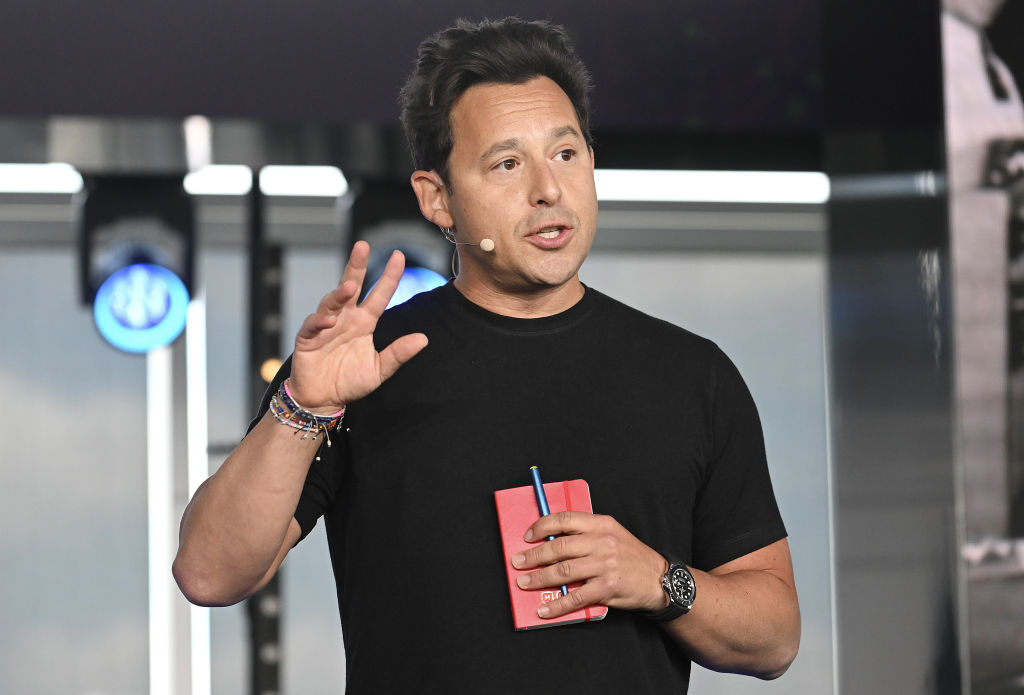
The venture capital landscape is perpetually in pursuit of the next groundbreaking concept, and Antonio Gracias, the visionary founder of Valor Equity Partners, has introduced a compelling new framework for evaluating entrepreneurial success in an increasingly volatile world. Speaking at the recent Upfront Summit in Los Angeles, Gracias unveiled the term "proentropic," a descriptor he coined to identify startups uniquely engineered not merely to survive, but to flourish amidst systemic chaos and relentless disruption. This innovative perspective arrives at a critical juncture, as global forces — from shifting geopolitical alliances and environmental instability to the accelerating pace of technological advancement — converge to reshape the very foundations of commerce and society.
The "Proentropic" Paradigm
Gracias’s "proentropic" concept challenges conventional notions of business stability, positing that a truly resilient enterprise must possess an inherent capacity to anticipate, adapt to, and even capitalize on disorder. Rather than fighting against the inevitable increase in complexity and unpredictability, proentropic organizations are designed with a foundational understanding that change is the only constant. Their strategies, operational structures, and even cultural DNA are built to metabolize uncertainty, transforming potential threats into opportunities for growth and innovation. This philosophy suggests a fundamental shift in how entrepreneurs and investors might approach venture creation, prioritizing agility, foresight, and a deep-seated ability to pivot in the face of unforeseen circumstances.
Roots in Physics: Understanding Entropy
To fully grasp the "proentropic" idea, one must first delve into its origins in fundamental physics. Entropy, in thermodynamics, quantifies the degree of disorder, randomness, or uncertainty within a closed system. The second law of thermodynamics, a cornerstone of physics, dictates that the total entropy of an isolated system can only increase over time, or remain constant in ideal cases; it never decreases. In simpler terms, the universe, left to its own devices, naturally progresses toward a state of greater disorder. This scientific principle has profound implications when applied metaphorically to complex systems like economies, societies, and individual businesses.
In a business context, traditional models often strive for equilibrium, predictability, and control – effectively attempting to reduce or at least maintain a low level of entropy. However, Gracias argues that such efforts are increasingly futile in a world where external forces are constantly injecting new levels of disorder. A proentropic startup, therefore, doesn’t resist this natural tendency toward chaos but instead develops mechanisms to align with it, drawing energy and insight from the very forces that might dismantle less adaptive entities. It acknowledges that systems, much like life itself, are always moving toward greater disorder, and rather than resisting this current, it learns to surf the waves of disruption.
A World in Flux: The Genesis of an Idea
Gracias’s conceptualization of "proentropic" is not a sudden epiphany but the culmination of years of observing escalating global volatility. He revealed that his thinking began as early as 2013, when he foresaw that a potent combination of deglobalization trends and rapid technological change would fundamentally "shift all the power structures" across the globe. This period marked a growing awareness of an interconnected yet increasingly fractured world, where economic interdependencies were being re-evaluated and technological breakthroughs threatened to upend established industries at an unprecedented pace.
The latter half of the 20th century, as Gracias noted, laid the groundwork for this escalating disorder. Exponential population growth placed increasing strain on global resources and systems, while the relentless march of technological innovation — from the widespread adoption of the internet to the burgeoning fields of biotechnology and artificial intelligence — introduced new layers of complexity and interconnectedness. Major historical events, such as the dot-com bubble burst of 2000, the September 11th attacks, the 2008 global financial crisis, and more recently, the COVID-19 pandemic, have served as stark reminders of the inherent fragility of global systems and the rapid onset of profound, systemic shocks. These events have not only highlighted vulnerabilities but also accelerated trends like supply chain diversification, regionalization, and the urgent need for digital transformation. The current geopolitical climate, marked by conflicts, trade tensions, and ideological divides, further underscores the persistent and escalating nature of global disorder, making Gracias’s framework particularly timely.
Characteristics of Chaos-Thriving Enterprises
What, then, defines a proentropic startup in practical terms? Gracias emphasizes that these are not merely companies that react quickly, but those fundamentally designed to thrive on the edge of predictability. Such organizations exhibit several key characteristics:
- Probabilistic Thinking: They operate with an acute awareness that anything can change at any moment. Their strategic planning is less about rigid five-year forecasts and more about developing robust scenarios, understanding probabilities, and building optionality into every aspect of their operations. This involves continuous monitoring of macro trends, technological shifts, and emerging risks.
- Anticipatory Adaptation: Proentropic businesses excel at predicting future states, not with perfect accuracy, but with sufficient insight to position themselves advantageously. They actively seek out "edge cases" – the unlikely but high-impact events – and develop strategies not just to mitigate their risks, but to potentially benefit from their occurrence. This often involves investing in diverse research, developing modular systems, and fostering a culture of continuous learning and experimentation.
- Benefit from Disorder: Crucially, these entities don’t just survive chaos; they are structured to extract value from it. When market conditions become turbulent, when supply chains falter, or when established norms are challenged, proentropic companies find ways to differentiate, innovate, and capture new market share. Their ability to integrate seemingly disparate elements, like software and hardware, or to leverage new data streams, becomes a competitive advantage.
- Examples: Gracias cites his portfolio company, SpaceX, as a prime example. SpaceX operates in an inherently high-risk, technically complex, and heavily regulated industry. Its iterative design philosophy, exemplified by the rapid development and testing of Starship, its vertical integration approach, and its willingness to challenge established aerospace paradigms, showcase a deep-seated proentropic mindset. They are constantly adapting to engineering challenges, regulatory changes, and competitive pressures, all while pushing the boundaries of space exploration. Similarly, Tesla, another Valor portfolio company, has demonstrated an exceptional ability to disrupt the automotive industry through its integration of software and hardware, its direct-to-consumer model, and its relentless pursuit of battery and AI advancements, navigating fierce competition and evolving market demands.
The Venture Capital Imperative: Investing with Conviction
For venture capitalists like Valor Equity Partners, the "proentropic" lens necessitates a refined investment strategy. It moves beyond simply identifying disruptive technologies or scalable business models to assessing a company’s fundamental resilience and adaptive capacity. Gracias articulated this as a need for "moral courage" in investment decisions, especially in an economy characterized by deep uncertainty.
Investing with conviction means backing founders who possess not only technical prowess but also a profound understanding of global macro trends, a probabilistic worldview, and the fortitude to navigate prolonged periods of instability. It implies a shift from seeking out businesses that operate efficiently within known parameters to those that can redefine those parameters or thrive when they inevitably break down. This might involve longer investment horizons, a greater tolerance for early-stage uncertainty, and a focus on companies addressing foundational challenges at the intersection of critical sectors like climate, energy, and advanced hardware, where the interplay of software and physical systems creates unique opportunities for resilient innovation.
AI and the Future: Navigating a New Era
One of the most significant sources of current and future disruption is artificial intelligence. Gracias addressed the prevailing narrative surrounding AI, which often oscillates between utopian promises and dystopian fears of job losses and social unrest. He firmly rejects the solely negative outlook, expressing a commitment to actively shape a more positive outcome. "The prevailing narrative is that artificial intelligence is going to be terrible. Job losses, social unrest," he observed, but asserted, "I think this is not true. I’m going to work really hard in the next five to ten years to make it not true."
Gracias envisions AI as a powerful accelerant for innovation and productivity, particularly through the proliferation of low-code/no-code tools. These platforms democratize software development, enabling individuals without specialized programming skills to create complex applications and launch businesses. This surge in accessibility could unleash unprecedented levels of entrepreneurial activity and economic output. The ability of more individuals to conceptualize and build solutions could lead to an explosion of creativity and problem-solving, addressing challenges previously considered intractable. This perspective aligns perfectly with the proentropic philosophy: embracing the disruptive potential of AI while channeling it towards productive, adaptive, and ultimately beneficial outcomes.
Building a Resilient Tomorrow
The concept of "proentropic" startups offers a timely and critical framework for understanding and navigating the complexities of the 21st-century economy. It’s a call to action for entrepreneurs, investors, and policymakers to move beyond incremental adjustments and embrace a more fundamental approach to resilience. By designing organizations that anticipate disorder, cultivate probabilistic thinking, and actively seek to benefit from unforeseen circumstances, we can collectively build a more robust and adaptable economic ecosystem.
As Gracias concluded, the future is not predetermined. The path forward – whether toward a utopian future of unprecedented innovation and prosperity or a dystopian landscape of escalating instability – is one that humanity will collectively decide through its choices, its investments, and its embrace of new paradigms like the "proentropic" mindset. In an era defined by accelerating change, the ability to thrive in chaos may well be the ultimate differentiator for enduring success.