Amir Mahmud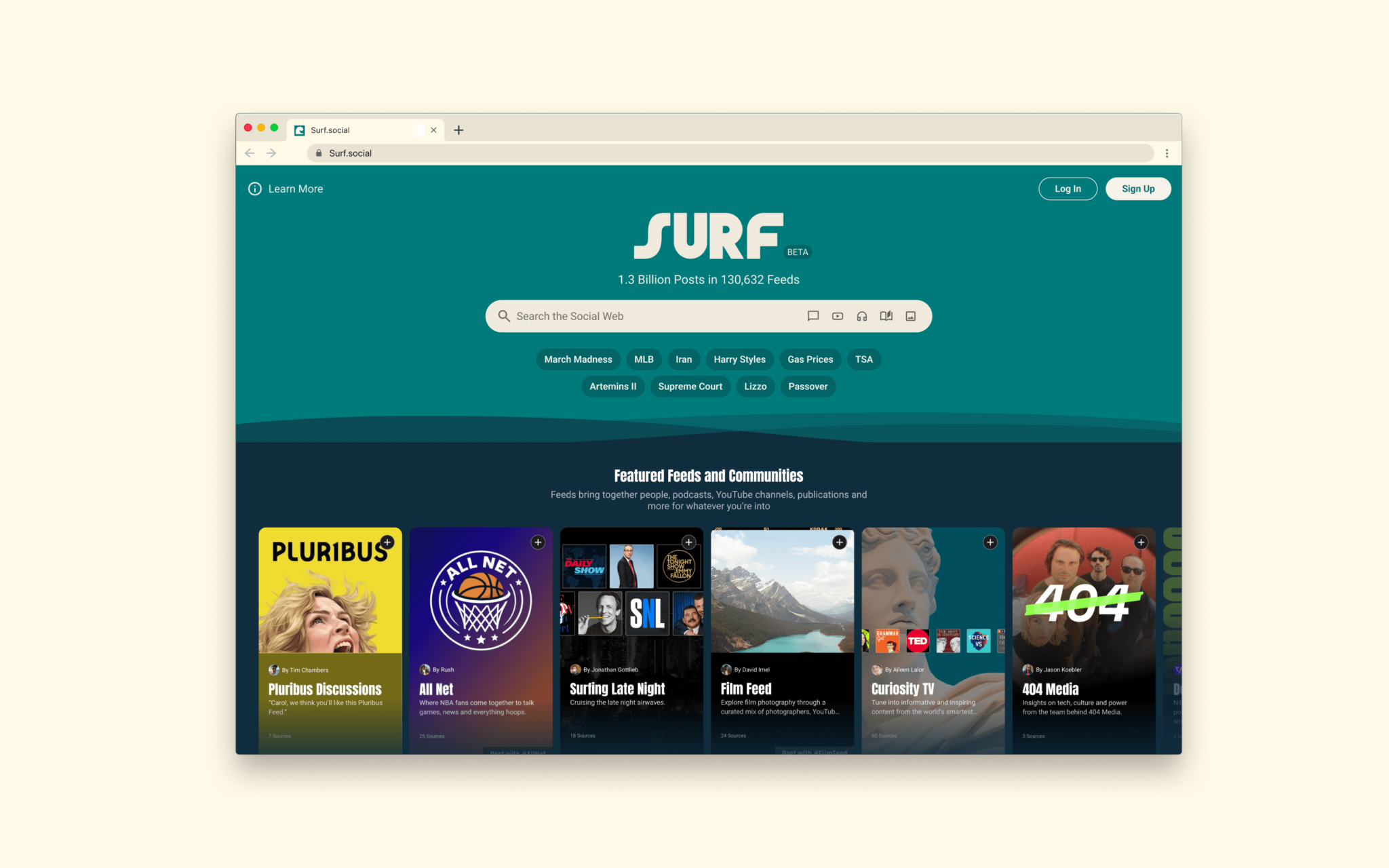
Flipboard has unveiled "social websites," an innovative framework designed to empower content creators and publishers by enabling them to establish their own curated digital spaces on the internet. This initiative marks a significant evolution in how online communities are formed and managed, moving towards greater autonomy for those producing content.
The Vision Behind Social Websites
These newly introduced social websites serve as integrated hubs, meticulously constructed around existing conversations and content circulating across the expansive "open social web." This includes a diverse array of decentralized platforms such such as Mastodon and Bluesky, alongside other public web content like blogs and traditional RSS feeds. The core concept revolves around consolidating disparate digital assets—social posts, videos, podcasts, newsletters, and more—into a singular, creator-controlled destination. This aggregation capability allows for profiles and content from various sources, including Threads, YouTube, and personal blogs, to be seamlessly integrated.
Flipboard articulates its vision for social websites as a transformative paradigm for social media, one where the onus of ownership and control over content organization and conversational flow shifts demonstrably towards communities themselves. The company, which has been an early adopter and advocate for decentralized social media architectures over recent years, is now actively working to simplify the process for publishers and individual creators to engage with and leverage the open social web. Mike McCue, CEO of Flipboard, highlighted this strategic shift, noting that social websites equip podcasters, creators, and publications with the tools to cultivate vibrant communities around their work while maintaining full command over the user experience, including the underlying algorithmic presentation of content. He further elaborated that instead of embarking on the arduous task of building a community from the ground up, creators can utilize these social websites to effortlessly coalesce existing audiences and dialogues already unfolding around their various forms of content across the digital landscape.
This launch represents the inaugural web-based extension of Surf, Flipboard’s dedicated reader application that facilitates the exploration and navigation of the open social web. Significantly, these social websites draw their power and content from Surf feeds, acting as the foundational data streams.
A Historical Trajectory: From Centralization to Decentralization
To fully appreciate the significance of Flipboard’s latest offering, it is crucial to understand the broader historical context of content distribution and social interaction online. Flipboard itself emerged in 2010 with a novel approach to content consumption, presenting articles and social media updates in a visually rich, magazine-like format. It quickly gained traction for its elegant design and personalized curation capabilities, offering users a more aesthetic and organized way to consume news and information than traditional web browsers or social feeds.
The subsequent decade witnessed the meteoric rise of centralized social media platforms like Facebook, Twitter (now X), Instagram, and YouTube. These platforms promised unprecedented connectivity, democratized publishing, and global reach. They became indispensable tools for individuals, businesses, and media organizations alike. However, their immense power came with inherent trade-offs. The centralized nature meant that platforms exerted significant control over content discoverability through proprietary algorithms, content moderation policies, and data ownership. Concerns mounted over privacy, algorithmic bias, censorship, and the potential for "walled gardens" to stifle innovation and limit creator autonomy. Content creators, in particular, often found themselves at the mercy of platform policies, algorithm changes that could drastically reduce their reach, and monetization models that favored the platform.
This environment fostered a growing desire for alternatives, leading to the emergence of the "fediverse" – a portmanteau of "federation" and "universe." The fediverse is a collection of interconnected servers that use open standards, primarily ActivityPub, to allow users on different platforms to interact with each other. Mastodon, a decentralized microblogging platform, became a prominent example, offering users more control over their data and a community-driven moderation approach. Bluesky, another emerging decentralized platform, also seeks to offer a more open and user-controlled social experience. Flipboard’s gradual embrace of these decentralized models over the past few years, integrating fediverse content into its ecosystem, foreshadowed its current move towards "social websites," indicating a strategic alignment with the broader shift towards a more open and federated internet.
Mechanics and Customization: Building Your Digital Home
The process of establishing a social website through Flipboard’s new system is designed to be accessible, empowering creators with the tools to construct their personalized online presence. Users commence their journey by navigating to surf.social, where they can register and then select the "+ Create Feed" option located in the sidebar. This initiates a guided process allowing them to specify various content sources, assign a unique community hashtag for categorization and discoverability, and apply filters to meticulously customize the feed’s content. This granular control ensures that the aggregated information is highly relevant to the creator’s niche and audience.
Once a Surf feed is meticulously configured to the creator’s specifications, the subsequent step involves assigning a custom domain. This crucial feature is accessed via the three-dot menu within the feed header, transforming the curated feed into a fully functional social website. The ability to utilize a custom domain is pivotal, offering a degree of brand identity and ownership that is often lacking on traditional social media platforms where content remains tethered to the platform’s URL. Flipboard emphasizes that these social websites are engineered for independence, designed to exist and thrive beyond the confines of the Surf application itself, facilitating their widespread sharing across the entire World Wide Web. This ensures that the creator’s hub is not just an internal Flipboard feature but a standalone web entity.
Early adopters and influential publishers have already begun to leverage this new capability, demonstrating its practical application. Esteemed publications such as The Verge, Wired, Rolling Stone, 404 Media, and The Oregonian have launched their own social websites. These hubs enable their readership to effortlessly follow journalists, access podcasts, watch videos, and engage with relevant conversations within a single, unified digital destination. Beyond traditional media, individual creators are also embracing the model; for instance, David Rushing established All Net, a social website dedicated to NBA enthusiasts. This platform aggregates basketball-related discussions, league news, video content, and real-time game commentary, creating a comprehensive resource for fans. Flipboard has also hinted at future enhancements, promising additional customization tools, including personalized headers, color schemes, and advanced feed management functionalities, further expanding the creative control available to users.
Market and Social Impact: Reshaping the Creator Economy
The introduction of social websites by Flipboard carries significant implications for both the burgeoning creator economy and the broader digital landscape. For individual creators, this innovation represents a potent tool for reclaiming agency and diversifying their digital footprint. In an era where many creators feel beholden to the algorithmic whims and policy changes of centralized platforms, a social website offers a stable, self-owned hub. This shift from platform-dependent presence to a self-managed domain fosters direct audience connections, potentially opening new avenues for monetization that are not subject to platform fees or restrictive terms. By consolidating their distributed content and communities, creators can cultivate stronger brand identity and foster more resilient fan bases.
For established publishers, the value proposition is equally compelling. As audiences become increasingly fragmented across numerous social networks and content platforms, maintaining a cohesive presence and engaging readers effectively becomes a complex challenge. Social websites provide a unified nexus where publishers can aggregate their diverse content offerings—from investigative articles and opinion pieces to podcasts and video explainers—and present them alongside the related social discourse. This streamlines content consumption for readers and provides a holistic view of the publisher’s output and associated community interactions, transcending the limitations of any single platform.
Moreover, this initiative robustly contributes to the broader movement towards decentralization and the "open web." It challenges the entrenched "walled garden" model prevalent in much of social media, where platforms control access to content, data, and users. By empowering creators to control their algorithms and content distribution, Flipboard’s social websites underscore the importance of data ownership and user autonomy. This can lead to more transparent content delivery, reduced risk of shadow-banning or arbitrary content removal, and ultimately, a healthier digital ecosystem that prioritizes creators and communities over platform monopolies. The focus on niche communities, exemplified by "All Net," also highlights the potential for deeper, more engaged interactions around specific interests, fostering a sense of belonging and shared passion that can be difficult to maintain on sprawling, general-purpose social networks.
Analytical Commentary and Future Outlook
While Flipboard’s social websites present compelling opportunities, their long-term success will likely hinge on overcoming several inherent challenges. User adoption is paramount; convincing creators and publishers to invest time and resources into building and maintaining these new hubs will require a clear demonstration of value over existing, more familiar platforms. The perceived complexity for non-tech-savvy users, despite Flipboard’s efforts at simplification, could also be a barrier. Furthermore, discoverability in a decentralized, federated landscape differs significantly from the centralized, algorithm-driven discoverability of major social media sites. While custom domains offer ownership, generating traffic and building an audience still requires strategic promotion and integration with existing networks.
Nevertheless, the potential upsides are substantial. Flipboard’s move represents a strategic positioning at the forefront of a growing sentiment for a more democratic internet. By offering tools that bridge the gap between fragmented social platforms and cohesive, creator-owned web presences, Flipboard is contributing to the vision of a more diverse, resilient, and creator-friendly internet. This approach contrasts with simply creating another standalone social network; instead, it provides an organizational layer that empowers existing content and communities.
In essence, Flipboard is not merely offering personal websites, but rather "social websites" that are inherently designed to aggregate and facilitate social interaction from across the web. This distinguishes them from traditional blogs or portfolio sites by embedding a dynamic, real-time social layer. The long-term impact could be a significant step towards a more federated web, where content creators and publishers regain substantial control over their digital identities and engagement strategies, fostering a healthier, more equitable online environment for everyone involved. As the digital landscape continues to evolve, initiatives like Flipboard’s social websites will play a crucial role in shaping the future of online content consumption and social interaction, potentially ushering in an era of greater autonomy and community focus.