Amir Mahmud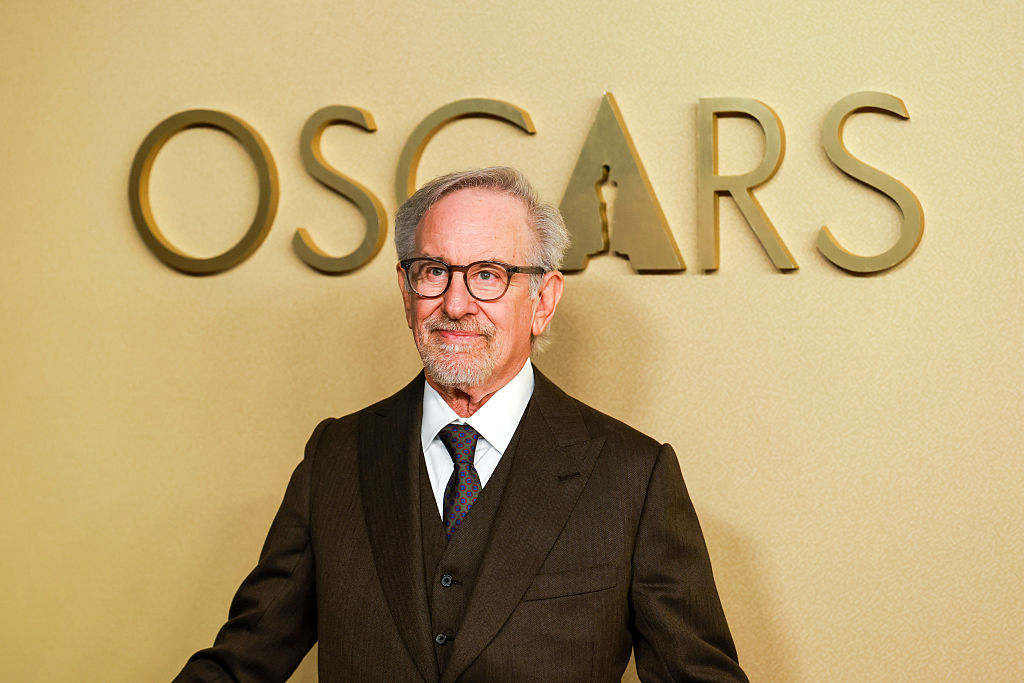
Legendary director Steven Spielberg recently articulated a firm stance against the integration of artificial intelligence into the creative heart of filmmaking, particularly when it threatens to supplant human artistic roles. Speaking at the South by Southwest (SXSW) conference in Austin on Friday, the visionary behind some of cinema’s most iconic works declared that he has yet to employ AI in any of his productions. His assertion was met with an immediate and enthusiastic ovation from the audience, underscoring the fervent debate surrounding AI’s rapidly expanding footprint in the arts and entertainment industries.
A Titan’s Stance at SXSW
Spielberg’s appearance at SXSW, a renowned convergence of film, music, and technology, provided a significant platform for his perspective. The annual festival often serves as a barometer for emerging trends and cultural conversations, making it an apt venue for a figure of Spielberg’s stature to weigh in on such a transformative technological shift. His comments, delivered with characteristic gravitas, highlighted a growing sentiment among many creatives who view AI not merely as a tool for efficiency, but as a potential encroacher on the unique human element of storytelling. The spontaneous cheers from the crowd were indicative of a shared concern about preserving the authenticity and human touch that define artistic endeavors, contrasting sharply with the industry’s accelerating move towards AI adoption.
A Filmmaker’s Complex Relationship with Technology
Despite his current reservation about generative AI in creative roles, Spielberg is far from a Luddite. Throughout his illustrious career, spanning over five decades, he has consistently pushed the boundaries of cinematic technology. From the groundbreaking practical effects of Jaws and E.T. the Extra-Terrestrial to the revolutionary computer-generated imagery (CGI) of Jurassic Park, he has masterfully leveraged advancements to bring his imaginative worlds to life. Films like Minority Report and Ready Player One delve deeply into futuristic societies grappling with advanced technology, often exploring both its utopian potential and its dystopian pitfalls. Perhaps most notably, his 2001 film A.I. Artificial Intelligence, originally conceived by Stanley Kubrick, directly explores the profound philosophical questions surrounding synthetic beings and what it means to be human.
This rich filmography demonstrates a nuanced, often prescient, engagement with technology. Spielberg himself has embraced cutting-edge techniques, including sophisticated visual effects, motion capture, and intricate sound design, to enhance his storytelling. His current position on AI, therefore, isn’t a rejection of technology itself, but rather a specific concern about its application in areas traditionally reserved for human ingenuity and emotional intelligence. He clarified that while he supports AI’s utility in "many disciplines," he draws a distinct line when it comes to replacing a creative individual. The notion of an "empty chair with a laptop" in his writers’ rooms, signifying an AI taking on a scriptwriting role, is a scenario he unequivocally rejects, prioritizing the collaborative, inherently human process of artistic creation.
The Genesis of AI in Creative Fields
The integration of artificial intelligence into creative industries is not an overnight phenomenon, though its recent acceleration has been dramatic. Early forms of AI and computational art date back decades, with rudimentary algorithms generating simple images or musical compositions. However, the advent of deep learning and generative adversarial networks (GANs) in the 2010s marked a significant turning point. These technologies enabled AI to produce highly sophisticated and often indistinguishable content, from photorealistic images to coherent text and even complex video sequences.
In filmmaking, AI’s presence has evolved from subtle behind-the-scenes applications to more prominent creative functions. Initially, AI tools were primarily used for mundane tasks like optimizing production schedules, analyzing audience data, or enhancing post-production processes such as de-noising audio or upscaling video resolution. More recently, however, generative AI has begun to tackle tasks once considered exclusively human domains: generating concept art, drafting script outlines, creating synthetic voices, and even animating digital characters. This rapid expansion has propelled AI from a niche technical tool to a central, often contentious, topic within Hollywood and the broader creative ecosystem.
Hollywood’s Shifting Sands: Efficiency vs. Artistry
The entertainment industry stands at a crossroads, balancing the allure of technological efficiency and cost reduction with the imperative of artistic integrity. Major studios and streaming platforms are keenly exploring AI’s potential to streamline production workflows, reduce expenses, and accelerate content creation. The competitive landscape, particularly in the streaming wars, places immense pressure on companies to produce a high volume of engaging content quickly and economically. AI offers a compelling solution to these pressures, promising faster iteration cycles for scripts, cheaper visual effects, and even the potential to localize content for global audiences with unprecedented speed.
However, this pursuit of efficiency raises fundamental questions about the nature of art. Critics argue that relying too heavily on AI for creative tasks risks homogenizing content, stripping it of the unique perspectives, emotional depth, and unexpected insights that human creators bring. There’s a concern that AI-generated narratives, while technically proficient, might lack the soul or subversive quality often found in human-driven stories. The debate often centers on whether AI should serve as an assistive tool, augmenting human capabilities, or as a replacement, diminishing the role of human artists. Spielberg’s stance clearly aligns with the former, emphasizing the irreplaceable value of human imagination and empathy in storytelling.
The Labor Dimension: A Strike’s Lingering Echoes
The ongoing discussion around AI in Hollywood is inextricably linked to labor concerns, particularly in the wake of the 2023 Writers Guild of America (WGA) and SAG-AFTRA strikes. A core demand from both unions centered on protections against the unregulated use of AI. Writers expressed fears that AI could be used to generate scripts, requiring human writers only for "polishing," thus devaluing their work and reducing their compensation. Actors, meanwhile, raised concerns about their likenesses and voices being used to train AI models or to create "synthetic performers" without consent or fair remuneration.
These strikes brought the ethical and economic implications of AI to the forefront of industry negotiations. While new agreements did include some safeguards regarding AI usage, the underlying tension persists. Spielberg’s remarks resonate deeply with these anxieties, highlighting the potential for job displacement and the erosion of intellectual property rights if AI is allowed to freely replace human creatives. The cheering audience at SXSW likely included many individuals whose livelihoods could be directly impacted by the widespread adoption of AI in creative roles, underscoring the profound social and economic dimensions of this technological shift.
The Indie Paradox and Studio Investments
The landscape of AI adoption within filmmaking is not monolithic; it presents a stark contrast between resource-constrained independent filmmakers and well-capitalized major studios. For indie creators, AI startups are increasingly pitching their tools as democratizing forces. These platforms promise to lower entry barriers by offering affordable solutions for tasks like script analysis, storyboarding, visual effects, and even rudimentary animation, traditionally requiring significant budgets and specialized teams. For a filmmaker with a shoestring budget, AI could theoretically enable them to achieve production values previously out of reach, fostering a new wave of accessible storytelling.
Conversely, major players in the streaming and studio ecosystem are making substantial investments in AI technology. Amazon, for instance, has publicly stated its intentions to test AI tools for film and TV production, signaling a strategic move towards integrating these technologies into their vast content pipeline. Netflix further amplified this trend with its reported $600 million acquisition of Ben Affleck’s AI filmmaking company, Interpositive, earlier this month. This move by a streaming giant underscores the perceived strategic value of AI in enhancing content creation, personalization, and operational efficiency on a massive scale. These significant investments suggest a future where AI plays an increasingly central role in content production, from conceptualization to distribution, making Spielberg’s traditionalist stance a poignant counterpoint to the industry’s prevailing currents.
Navigating the Future of Storytelling
Steven Spielberg’s declaration at SXSW serves as a powerful reminder of the fundamental questions facing the entertainment industry as it grapples with artificial intelligence. While AI offers undeniable potential for innovation, efficiency, and even artistic exploration, its integration into the creative process must be approached with careful consideration. The challenge lies in harnessing AI as an empowering tool that amplifies human creativity, rather than allowing it to diminish the invaluable contributions of writers, directors, actors, and artists.
The debate is complex, encompassing not just technological capabilities but also ethical responsibilities, economic implications, and the very definition of art itself. As the industry moves forward, navigating this intricate terrain will require ongoing dialogue, thoughtful regulation, and a collective commitment to preserving the human element at the core of compelling storytelling. Spielberg’s voice, rooted in decades of groundbreaking cinema, provides a crucial perspective in this evolving conversation, advocating for a future where technology serves imagination, not supplants it.