Amir Mahmud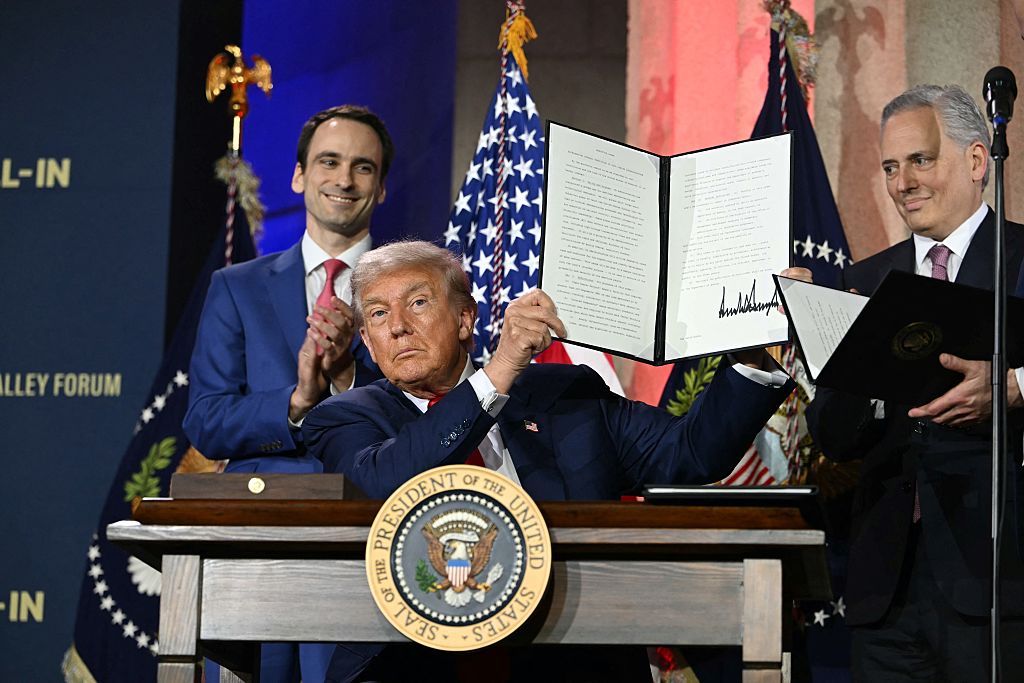
A recent executive order issued by President Donald Trump has ignited a fervent debate across the technology sector and legal landscape, aiming to establish a singular federal framework for artificial intelligence while simultaneously directing federal agencies to challenge existing state-level AI regulations. The administration frames this move as a necessary measure to liberate nascent AI companies from a confusing and burdensome "patchwork" of divergent state requirements, ostensibly fostering innovation. However, legal experts, industry observers, and startups themselves are cautioning that this executive action could paradoxically extend a period of profound regulatory ambiguity, triggering protracted court battles and leaving innovators navigating an even more complex environment until a definitive national standard emerges, or the Supreme Court weighs in.
The Executive Order’s Ambitious Directives
Titled "Ensuring a National Policy Framework for Artificial Intelligence," the executive order lays out a multi-pronged strategy to assert federal authority over AI governance. Central to its directives is a mandate for the Department of Justice to form a dedicated task force within 30 days. This task force is charged with identifying and challenging state laws pertaining to artificial intelligence, primarily on the legal premise that AI operations inherently constitute interstate commerce, thereby falling under federal purview. The invocation of the Commerce Clause of the U.S. Constitution is a well-trodden path for federal preemption, but its application to the rapidly evolving and often intangible realm of AI is expected to face significant legal scrutiny.
Beyond the Department of Justice’s role, the order also tasks the Commerce Department with a critical assignment. Within 90 days, the department must compile a comprehensive list of state AI laws deemed "onerous" – a designation that could carry substantial implications. States found to have such regulations might face diminished eligibility for crucial federal funding, including grants earmarked for broadband infrastructure development. This financial leverage represents a powerful tool for the federal government to encourage, or compel, states to align with the administration’s vision for AI regulation.
Further expanding the federal reach, the executive order instructs the Federal Trade Commission (FTC) and the Federal Communications Commission (FCC) to actively explore the development of federal standards that could effectively preempt existing or future state-level rules. This move signals a broader intent to centralize regulatory authority within established federal bodies known for their roles in consumer protection and communications. Concurrently, the administration has pledged to collaborate with Congress, urging lawmakers to craft and enact a comprehensive, uniform national AI law, acknowledging that a lasting solution ultimately requires legislative action.
The Genesis of the Regulatory "Patchwork"
The executive order arrives amidst a backdrop of escalating calls for AI regulation globally and domestically. As artificial intelligence technologies have rapidly advanced from theoretical concepts to ubiquitous tools—powering everything from sophisticated chatbots and recommendation algorithms to autonomous vehicles and critical infrastructure—governments worldwide have grappled with how to govern their development and deployment. Concerns range from data privacy and algorithmic bias to job displacement, misinformation, and the potential for misuse in critical sectors.
Internationally, the European Union has taken a leading role with its comprehensive AI Act, which classifies AI systems by risk level and imposes strict requirements on high-risk applications. China has also introduced various regulations focusing on deepfakes, recommendation algorithms, and data security. In contrast, the United States has seen a more fragmented approach. While there have been bipartisan discussions in Congress and a previous executive order from the Biden administration focusing on AI safety and security, efforts to pass a comprehensive federal AI standard have repeatedly stalled.
This congressional inertia has created a vacuum, prompting individual states to step in. Recognizing the immediate need to address potential harms and protect their constituents, states have begun enacting their own laws concerning various aspects of AI. These range from requirements for algorithmic transparency in hiring, data privacy safeguards, restrictions on facial recognition technology, and consumer protections related to AI-powered services. This decentralized regulatory activity, while stemming from legitimate concerns, has indeed led to a "patchwork" of differing rules, creating compliance challenges for businesses operating across state lines. The administration’s current executive order is a direct response to this emerging landscape, framed as an attempt to streamline compliance for companies, particularly smaller startups.
Historical Precedent: Federalism and the Commerce Clause
The legal battle anticipated by many experts will hinge on the foundational principles of American federalism and the interpretation of the Commerce Clause. The Commerce Clause grants Congress the power to regulate commerce among the several states, and it has historically been a powerful tool for the federal government to preempt state laws in areas deemed to have a significant interstate impact. From environmental regulations to telecommunications and financial services, federal preemption has often been invoked to ensure national uniformity and prevent economic balkanization.
However, states also possess significant powers under the Tenth Amendment, which reserves to the states all powers not delegated to the federal government. States often assert their "police powers" to protect the health, safety, and welfare of their citizens. Many of the existing state AI laws are rooted in these traditional state powers, particularly those related to consumer protection, civil rights, and public safety. Legal scholars anticipate that states will vigorously defend their sovereign right to regulate within their borders, arguing that their AI laws address unique local concerns or fill gaps where federal regulation is absent or insufficient. The ensuing legal challenges could involve complex questions about the scope of federal authority, the nature of AI as interstate commerce, and the specific harms or benefits addressed by state versus federal rules. These cases are likely to wind their way through federal courts, potentially culminating in review by the U.S. Supreme Court, a process that could take years.
The Paradox of Uncertainty: Impact on the AI Ecosystem
While the administration’s stated goal is to reduce uncertainty for startups, many in the AI community fear the immediate outcome will be the opposite. Sean Fitzpatrick, CEO of LexisNexis North America, U.K., and Ireland, articulated this concern, suggesting that states are unlikely to yield their consumer protection authority without a fight, foreseeing a protracted legal struggle that could reach the Supreme Court.
For startups, this prolonged period of legal limbo presents significant operational and strategic challenges. Hart Brown, a principal author of Oklahoma Governor Kevin Stitt’s Task Force on AI and Emerging Technology recommendations, highlighted the disparity: "Because startups are prioritizing innovation, they typically do not have robust regulatory governance programs until they reach a scale that requires a program. These programs can be expensive and time-consuming to meet a very dynamic regulatory environment." This means that smaller companies, often operating on lean budgets and focused on product development, are ill-equipped to navigate a shifting legal landscape complicated by ongoing litigation.
Arul Nigam, co-founder of Circuit Breaker Labs, a startup specializing in red-teaming for conversational and mental health AI chatbots, echoed these concerns. He questioned the practical implications for companies in his field: "There’s uncertainty in terms of, do [AI companion and chatbot companies] have to self-regulate? Are there open-source standards they should adhere to? Should they continue building?" This fundamental uncertainty about compliance obligations can stifle innovation, as companies become hesitant to invest in new products or expand into new markets without clear legal guardrails.
Andrew Gamino-Cheong, CTO and co-founder of AI governance company Trustible, argued that the executive order could inadvertently undermine its pro-AI goals. He pointed out that "Big Tech and the big AI startups have the funds to hire lawyers to help them figure out what to do, or they can simply hedge their bets. The uncertainty does hurt startups the most, especially those that can’t get billions of funding almost at will." This creates an uneven playing field, where well-resourced incumbents can absorb legal risks, while smaller, agile competitors face disproportionate burdens.
Moreover, legal ambiguity affects market adoption. Gamino-Cheong noted that it makes selling to risk-sensitive customers—such as legal teams, financial firms, and healthcare organizations—significantly harder, extending sales cycles, increasing system integration work, and driving up insurance costs. Crucially, he added, "Even the perception that AI is unregulated will reduce trust in AI," which is already a significant hurdle to widespread adoption.
Political Undercurrents and the Call for Congressional Action
The executive order also has notable political dimensions. Michael Kleinman, head of U.S. Policy at the Future of Life Institute, a group focused on mitigating extreme risks from transformative technologies, criticized the order as "a gift for Silicon Valley oligarchs who are using their influence in Washington to shield themselves and their companies from accountability." This sentiment highlights a common concern that federal preemption, while simplifying compliance, could potentially weaken consumer protections and allow powerful tech companies to operate with fewer constraints. David Sacks, a prominent venture capitalist and key advisor on AI and crypto policy for the administration, has been identified as a leading proponent of this federal preemption strategy.
Many, including Gary Kibel, a partner at Davis + Gilbert, acknowledge the desirability of a single national standard but question the chosen mechanism. Kibel stated, "an executive order is not necessarily the right vehicle to override laws that states have duly enacted." He warned that the current uncertainty risks creating a "Wild West" scenario, favoring Big Tech’s ability to absorb risk and wait out the legal battles, potentially at the expense of public trust and smaller innovators.
Ultimately, the consensus among various stakeholders, including industry groups like The App Association, is that Congress must act swiftly. Morgan Reed, president of The App Association, succinctly captured this sentiment: "We can’t have a patchwork of state AI laws, and a lengthy court fight over the constitutionality of an Executive Order isn’t any better." He urged Congress to enact a "comprehensive, targeted, and risk-based national AI framework" without delay.
The Road Ahead: Innovation and Governance at a Crossroads
The Trump administration’s executive order marks a pivotal moment in the ongoing saga of AI governance in the United States. It forcefully asserts a federal vision for regulating this transformative technology, aiming to replace a burgeoning collection of state-specific rules with a unified national approach. However, the chosen method—challenging state laws through federal directives and potential litigation—introduces a period of intense legal and regulatory uncertainty.
The outcome will significantly shape the future of AI innovation in the U.S. Will the federal government successfully establish a single, clear regulatory framework that truly fosters growth and protects consumers? Or will the ensuing legal battles create a prolonged quagmire, further delaying clarity and disproportionately burdening the very startups the order purports to help? The answers will depend not only on the courts but also on the willingness of Congress to step into the fray and forge a lasting legislative solution that balances innovation, safety, and public trust. Until then, the American AI landscape remains poised between the promise of a unified rulebook and the immediate reality of an extended legal limbo.