Amir Mahmud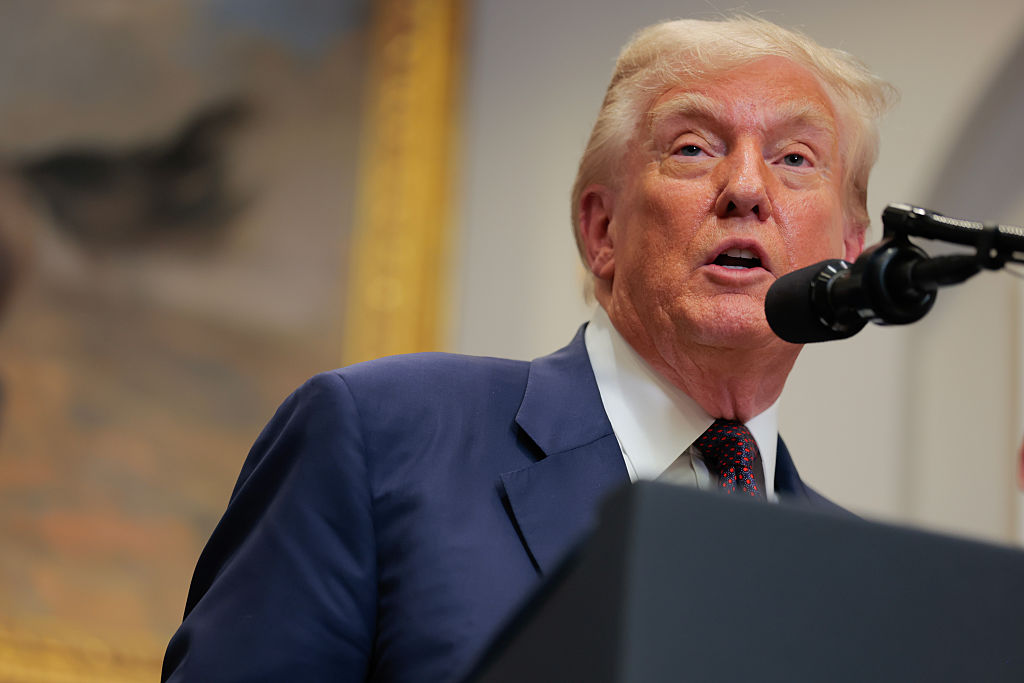
The Trump administration has reportedly paused its efforts to directly challenge emerging state-level regulations concerning artificial intelligence, marking a significant shift in its approach to AI governance. This development, reported by Reuters on November 21, 2025, indicates a temporary halt to a proposed executive order that would have established a specialized task force aimed at litigating against state AI laws and potentially leveraging federal broadband funding as a coercive measure. The initial push for a singular federal standard, articulated by President Trump earlier this week on social media, reflected a strong desire to prevent a fragmented regulatory landscape across the United States.
The Accelerating Push for AI Governance
The burgeoning field of artificial intelligence has rapidly evolved from a niche technological pursuit into a pervasive force reshaping industries, economies, and societies worldwide. The past decade, and particularly the recent years, have seen a dramatic acceleration in AI capabilities, especially with the widespread adoption of generative AI models and large language models. These advanced systems promise unprecedented innovation and efficiency but also introduce a complex array of ethical, social, and economic challenges. Concerns range from algorithmic bias in critical applications like hiring and lending, to the potential for widespread misinformation, privacy infringements, job displacement, and even existential risks posed by increasingly autonomous systems.
As these technologies become more integrated into daily life, a global consensus has begun to form around the urgent need for robust governance frameworks. Jurisdictions around the world, from the European Union with its comprehensive AI Act to China’s targeted regulations, are grappling with how to foster innovation while mitigating potential harms. In the United States, however, a unified federal approach has remained elusive, leading states to step into the regulatory void. This decentralized response has sparked a contentious debate about the optimal level of government intervention in such a pivotal and rapidly advancing sector.
A Shifting Federal Strategy
Initially, the Trump administration signaled a clear preference for a centralized federal approach to AI regulation, explicitly seeking to prevent states from enacting their own distinct laws. This stance was prominently articulated by President Trump in a social media post, where he advocated for "one Federal Standard instead of a patchwork of 50 State Regulatory Regimes." This perspective underscored concerns that a diverse set of state laws could create an unwieldy and inconsistent compliance burden for businesses operating nationwide, potentially stifling innovation and America’s competitive edge in the global AI race.
The administration’s initial legislative gambit to enforce this vision was a proposal included in a broader spending package, colloquially referred to as the "Big Beautiful Bill." This controversial provision sought to impose a sweeping 10-year moratorium on state-level AI regulation. The rationale behind such a long-term ban was ostensibly to allow the nascent industry to mature without what proponents viewed as premature and potentially misguided state interference. However, this measure faced immediate and significant bipartisan pushback in the Senate. Lawmakers from both sides of the aisle voiced strong opposition, leading to its decisive removal from the budget bill in a near-unanimous 99-1 vote. This legislative defeat highlighted the deep divisions within Congress regarding the appropriate balance between federal oversight and state autonomy in technology policy.
Undeterred, the administration reportedly explored alternative avenues to achieve its goal of federal preeminence in AI regulation. This led to the drafting of an executive order designed to establish an "AI Litigation Task Force." The proposed task force would have been charged with actively challenging state AI laws through lawsuits, effectively leveraging the judicial system to invalidate regulations deemed inconsistent with the administration’s preferred federal standard. Furthermore, the draft order reportedly included a contentious provision threatening states with the loss of federal broadband funding if they pursued AI regulations that the administration opposed. This coercive tactic aimed to apply significant financial pressure on states to align with the federal perspective. The reported pause in signing this executive order suggests a potential recalculation within the administration, perhaps in response to internal debates or anticipated legal and political challenges.
Legal and Constitutional Underpinnings: Federalism in Focus
The debate over federal versus state AI regulation is deeply rooted in the principles of American federalism, a foundational concept enshrined in the U.S. Constitution. Federalism allocates power between the national government and state governments, creating a dynamic tension that has shaped policy across numerous domains, from environmental protection to healthcare. In this context, the doctrine of federal preemption is central. It holds that federal law can override, or "preempt," state laws when there is a direct conflict, when Congress intends to occupy a particular field exclusively, or when state law impedes the achievement of federal objectives.
Proponents of federal preemption in AI argue that the technology’s inherently interstate and even global nature necessitates a uniform national standard. They contend that a fragmented regulatory landscape, with potentially 50 different sets of rules, would create an unmanageable compliance burden for companies, particularly startups, hindering innovation and economic growth. From this perspective, a single federal framework would streamline development, attract investment, and ensure consistent consumer protections across the country. Moreover, some argue that issues like national security implications of AI or the ethical considerations of large-scale data processing transcend state borders, requiring a coordinated national response.
Conversely, advocates for state-level regulation emphasize the role of states as "laboratories of democracy." They argue that states can act more nimbly and responsively to specific local needs and emerging issues, tailoring regulations to address unique regional concerns or industry concentrations. California, for instance, with its robust tech sector, has often led the way in establishing pioneering regulations, such as the California Consumer Privacy Act (CCPA), which subsequently influenced national privacy discussions. State-level action can also serve as a proving ground for new regulatory approaches, allowing for experimentation and refinement before broader adoption. Furthermore, opponents of federal preemption highlight concerns about states’ rights and the potential for an overly broad federal mandate to stifle localized innovation and democratic accountability. The pushback against the initial 10-year moratorium in the Senate underscored this constitutional and practical tension, indicating a strong desire among many lawmakers to preserve states’ ability to address local concerns.
Industry Divisions and State Initiatives
The prospect of AI regulation has also exposed significant divisions within the tech industry itself. While some major tech companies and industry figures, particularly those closely aligned with the Trump administration, have advocated for minimal regulatory interference to foster rapid innovation, others have championed the need for robust AI safety measures and clear ethical guidelines. Companies like Anthropic, for example, have been vocal in their support for comprehensive AI safety bills, drawing criticism from some who accuse them of "fear-mongering" or seeking to create regulatory moats against smaller competitors.
California’s Senate Bill 53 (SB 53) stands as a prominent example of a state initiative aimed at addressing AI safety concerns. Signed into law by Governor Newsom, SB 53 represents a landmark effort to establish safeguards for AI systems, particularly those deployed in high-risk applications. Its provisions aimed to increase transparency, accountability, and fairness in the development and deployment of artificial intelligence, reflecting California’s historical role as a leader in technology regulation. The passage of SB 53, alongside similar efforts in other states, underscores the growing momentum at the sub-national level to fill the regulatory vacuum. States are increasingly recognizing the immediate and localized impacts of AI on their citizens, from algorithmic bias in municipal services to the deployment of facial recognition technology by law enforcement, prompting them to take proactive legislative steps.
Economic and Societal Implications
The ongoing uncertainty surrounding AI regulation, particularly the federal-state dynamic, carries significant economic and societal implications. For AI developers and deployers, a lack of clear, consistent rules can create an environment of apprehension, potentially hindering investment and innovation. Businesses may hesitate to commit substantial resources to new AI projects if they face the prospect of navigating a complex and potentially conflicting web of state-specific compliance requirements. Conversely, some argue that well-crafted regulations can actually foster innovation by building public trust, encouraging responsible development, and creating a stable, predictable operating environment.
From a societal perspective, a "patchwork" of state regulations could lead to disparities in consumer protection and ethical safeguards. Citizens in some states might enjoy robust protections against algorithmic discrimination or data misuse, while those in other states could be left vulnerable. This potential for an uneven regulatory landscape could exacerbate existing inequalities and create a digital divide in terms of AI governance. The threat of withholding federal broadband funding, while now on hold, also highlighted the potential for such regulatory battles to impact broader infrastructure initiatives, particularly in rural and underserved areas where broadband access is critical. The societal impact of AI, encompassing everything from the future of work to the integrity of democratic processes, demands a thoughtful and coherent regulatory response that balances technological advancement with public welfare.
Looking Ahead: The Future of AI Regulation in the U.S.
The reported pause in the Trump administration’s executive order signals a period of reassessment and potential recalibration in federal AI policy. While the administration’s preference for a single federal standard remains clear, the practical and political challenges of imposing such a framework, especially through preemption, appear to be influencing its strategy. The bipartisan opposition to the earlier 10-year moratorium, combined with the constitutional complexities of challenging state sovereignty, suggests that any future federal initiative will likely need to navigate a more collaborative path.
The future of AI regulation in the United States is likely to involve a complex interplay between federal efforts, continued state-level innovation, and ongoing dialogue with industry stakeholders and civil society. Whether a truly comprehensive federal framework will emerge, or if the nation will continue to see states lead the charge, remains an open question. What is certain is that as AI technology continues its rapid advancement, the imperative for effective, ethical, and equitable governance will only intensify, demanding nuanced approaches that acknowledge both the promise and the perils of this transformative era. The current pause offers an opportunity for policymakers to engage in deeper deliberation, potentially paving the way for a more broadly supported and sustainable regulatory path forward.