Amir Mahmud
The World project, co-founded by OpenAI CEO Sam Altman, has unveiled a significantly updated version of its mobile application, introducing a suite of features designed to bridge secure digital identity with enhanced communication and cryptocurrency payment capabilities. This latest iteration, dubbed a "super app" by its developers, represents a substantial leap in the company’s ambition to create a global, privacy-preserving proof-of-personhood network. The announcement underscores a broader strategic push to integrate biometric verification with everyday digital interactions, positioning World as a multi-faceted platform in an increasingly AI-driven landscape.
The Vision: Combating Digital Fakery and Forging New Economies
At its core, World was conceived by Tools for Humanity, the startup behind the project, with a profound mission: to differentiate humans from artificial intelligence in the digital realm. Founded in 2019, Tools for Humanity launched the initial World app in 2023, aiming to establish a global digital identity system that could verify an individual’s uniqueness without compromising their privacy. This endeavor has become increasingly pertinent in an era grappling with the rapid proliferation of sophisticated AI-generated content, from deepfake videos to persuasive bot-driven narratives, which threaten to erode trust and destabilize digital ecosystems.
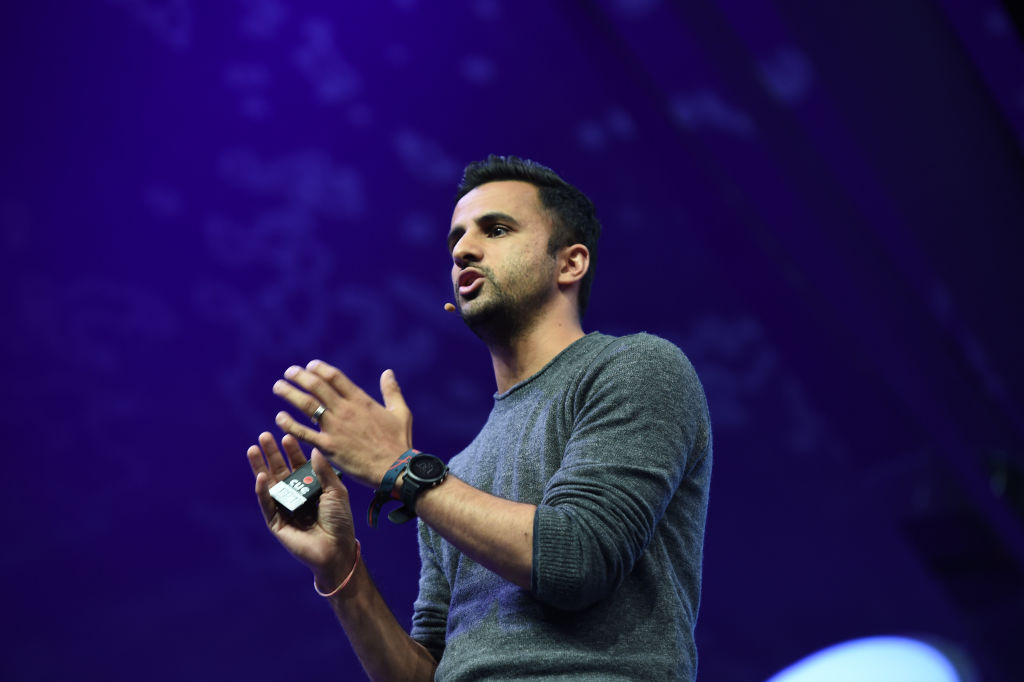
Sam Altman, a prominent figure in the artificial intelligence sector, has frequently articulated his vision for World as more than just an identity solution. During a recent gathering at World’s San Francisco headquarters, Altman reiterated that the project emerged from early discussions with co-founder and CEO Alex Blania about the necessity of a novel economic model. This model, rooted in web3 principles of decentralization and user empowerment, envisions a future where a verified digital identity could underpin new forms of economic participation, potentially including universal basic income (UBI) distribution, a concept Altman has publicly supported. The challenge, as Altman noted, lies in "both identifying unique people and doing that in a privacy-preserving way," a complex technical and ethical tightrope World aims to walk.
Evolution of the World Ecosystem
The journey to this expanded "super app" has been marked by continuous development and a clear strategic trajectory. Initially known as Worldcoin, the project garnered significant attention, and some controversy, for its unique biometric verification method involving iris scanning. Over time, the focus has shifted towards "World" as a broader ecosystem, emphasizing the utility of the verified World ID beyond just a cryptocurrency distribution mechanism.
The latest update builds upon the app’s existing functionalities, which already included a digital wallet for certain cryptocurrencies. The introduction of World Chat and a more robust payment system signals a move towards creating a more sticky and integrated user experience. Prior to this full rollout, World Chat had already been introduced in beta in March, allowing the team to gather feedback and refine the secure messaging component. Following that, in April, Tools for Humanity unveiled Orb Minis—hand-held, phone-like devices designed to make the iris-scanning verification process more accessible and less intimidating than the original, larger Orb units. These incremental releases illustrate a methodical approach to scaling the platform and addressing early adoption barriers.
Enhanced Communication: World Chat’s Secure Messaging
Among the most notable new features is World Chat, an integrated messenger service engineered with robust privacy at its forefront. This chat functionality leverages end-to-end encryption, a security standard widely recognized for protecting digital communications from interception. The company asserts that this encryption is on par with that offered by Signal, a messenger renowned for its stringent privacy protocols. This choice reflects a commitment to secure communication, a critical component of building trust in a digital identity platform.
Beyond encryption, World Chat introduces an innovative visual cue to enhance trust: color-coded speech bubbles. These visual indicators allow users to immediately discern whether the individual they are communicating with has been verified by World’s biometric system. The intent behind this feature is to incentivize verification by offering users a tangible benefit—the assurance of interacting with a confirmed human identity. In a landscape increasingly populated by bots, AI personas, and sophisticated disinformation campaigns, the ability to quickly ascertain "proof of human" status in real-time communication holds significant appeal.
Tiago Sada, World’s chief product officer, highlighted the user-driven impetus behind the chat integration. "What we kept hearing from people is that they wanted a more social World app," Sada explained. This feedback underscored a demand for more interactive features, pushing the development team to create a messenger that is not only secure but also feature-rich, akin to popular platforms like WhatsApp or Telegram, yet distinguished by its identity verification layer and Signal-level encryption. The effort to combine widespread usability with high-grade security represents a complex engineering feat.
Expanding Financial Horizons: Crypto Payments and Banking Integration
The other significant development is the expansion of the app’s digital payment system, greatly enhancing its capabilities for sending and receiving cryptocurrency. While the World app has long functioned as a digital wallet, the newest version elevates its utility to resemble a more comprehensive financial platform. Users can now engage in Venmo-like transactions, easily sending and requesting various cryptocurrencies within the app’s ecosystem.
A particularly impactful addition is the integration of virtual bank accounts. This feature allows users to receive traditional paychecks directly into their World App wallet and make deposits from their existing bank accounts. Once funds are within the app, users have the flexibility to convert them into supported cryptocurrencies. Crucially, the company has stated that these payment features do not require World ID verification, potentially broadening access to crypto finance for a wider audience, regardless of their willingness to undergo biometric scanning. This move could position World as a significant player in the evolving digital payments landscape, particularly for individuals in regions with underdeveloped traditional banking infrastructure or those seeking greater financial autonomy through decentralized finance. The blend of traditional banking access with crypto capabilities aims to lower the barrier to entry for mainstream cryptocurrency adoption, making it more accessible for everyday transactions and financial management.
The Core: Biometric Identity and the Orb
Central to the World project remains its unique biometric identity verification system. This process involves a user visiting one of the company’s designated locations, where a specialized device known as "the Orb" scans their iris. The Orb then converts the person’s unique iris pattern into a distinct, encrypted digital code, which forms their World ID. This verified World ID serves as the gateway to interact with World’s ecosystem of services accessible through its app. The goal is to create a globally accessible, privacy-preserving digital identity that can be used to prove humanness without revealing personal data.
The ambition for World is monumental: Sam Altman has publicly expressed a desire for the project to verify one billion people. However, scaling this vision has proven to be a significant challenge. Tools for Humanity currently reports fewer than 20 million verified individuals, a substantial number but still a fraction of the ultimate target. The initial process of standing in line to have one’s eyes scanned by a futuristic, metallic Orb has been a point of both fascination and contention.
Challenges, Controversies, and the Path to Mass Adoption
The path to mass adoption for World is fraught with challenges, primarily revolving around privacy concerns and the practicality of biometric verification. The collection of sensitive biometric data, even if encrypted and purportedly privacy-preserving, has raised red flags among privacy advocates and regulatory bodies worldwide. Several countries have initiated investigations or expressed concerns regarding World’s data handling practices, highlighting the complex regulatory landscape surrounding global biometric identity systems. The company asserts that the iris scan is converted into a hash and the original image is deleted, but the very act of collecting such data remains a point of debate.
To address the logistical and psychological barriers to verification, Tools for Humanity has introduced innovations like the Orb Minis. These smaller, more portable devices aim to decentralize the verification process, potentially allowing users to scan their eyes from the comfort of their homes or enabling a wider network of operators. Alex Blania has indicated future plans to evolve Orb Minis into mobile point-of-sale devices or license the ID sensor technology to third-party device manufacturers. Such steps could dramatically lower the barrier to entry for verification, paving the way for significantly broader adoption and fulfilling the vision of a ubiquitous digital identity.
The Broader Implications: A "Super App" for the AI Age
World’s aspiration to become a "super app"—a single platform integrating multiple functionalities like communication, payments, and identity—reflects a significant trend in the digital economy, particularly prevalent in Asia with examples like WeChat. However, replicating this model in Western markets, where digital ecosystems tend to be more fragmented and privacy concerns more pronounced, presents its own set of hurdles.
The convergence of secure identity, encrypted communication, and integrated cryptocurrency payments within the World app positions it as a unique proposition at the intersection of several critical technological and societal shifts. As artificial intelligence continues its rapid advancement, the need for robust "proof of human" mechanisms will only intensify, potentially making World’s offerings increasingly relevant. However, the project’s success will ultimately hinge on its ability to navigate complex regulatory environments, build unwavering user trust around biometric data, and demonstrate compelling, practical utility that outweighs privacy anxieties and adoption friction. The latest update marks a bold step in World’s ambitious journey to redefine digital identity and interaction in the twenty-first century.