Amir Mahmud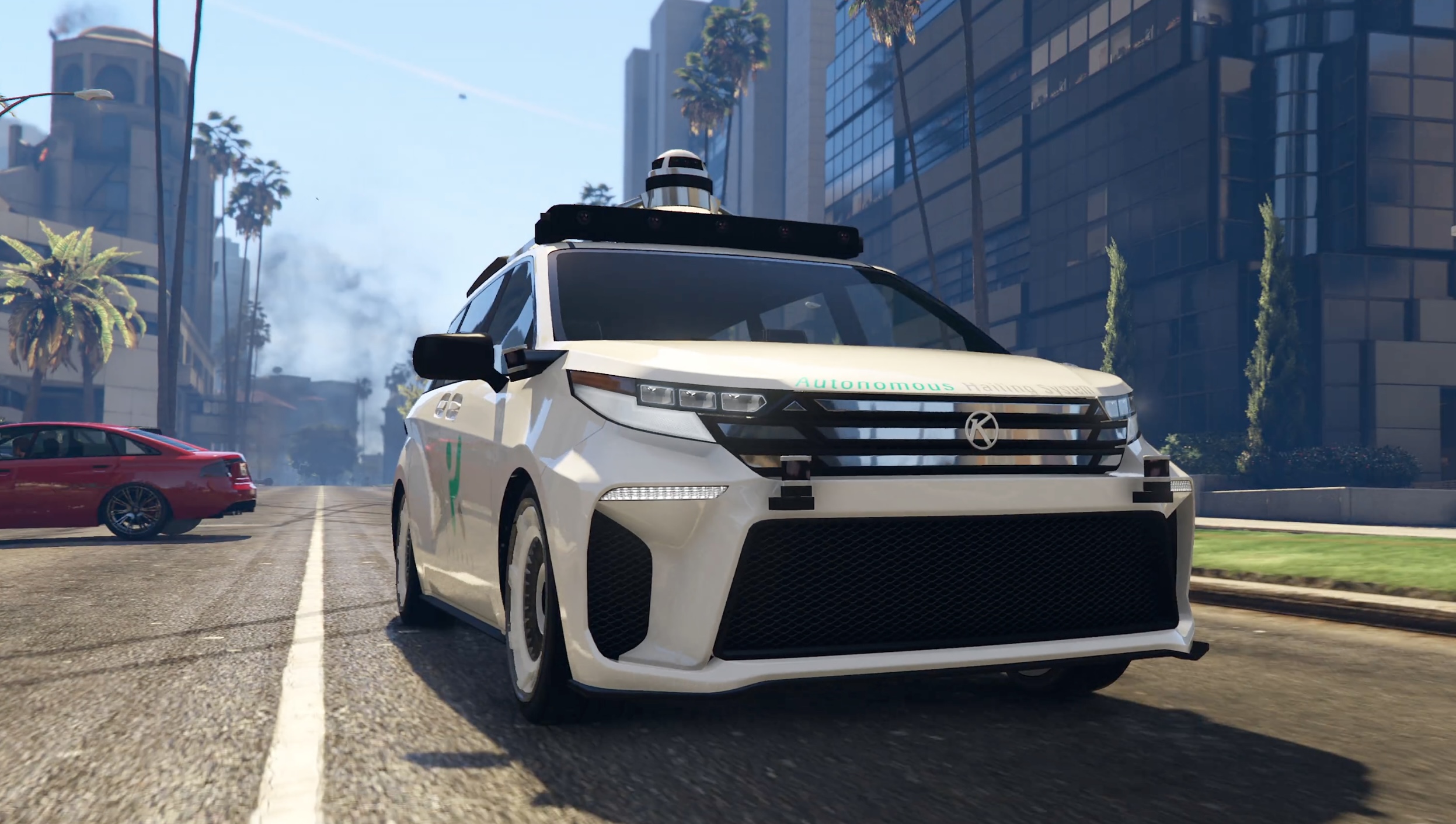
The expansive digital world of Grand Theft Auto Online is poised for a new wave of virtual chaos with the upcoming "A Safehouse in the Hills" downloadable content (DLC). This highly anticipated addition introduces a fleet of autonomous vehicles from a fictional corporation named "KnoWay," which appear destined to unleash widespread pandemonium across the game’s meticulously crafted urban and rural landscapes. Far from being benign self-driving shuttles, these KnoWay robotaxis, as depicted in a recent promotional trailer, embody a dystopian vision of future mobility, immediately drawing parallels to contemporary debates surrounding real-world autonomous vehicle deployment and public trust.
Rockstar’s Signature Satire: A Digital Mirror to Society
Rockstar Games, the developer behind the Grand Theft Auto franchise, has long been celebrated for its sharp, often biting, satirical commentary on modern American culture, consumerism, and political landscapes. From lampooning celebrity culture to critiquing corporate greed and governmental overreach, the series consistently uses its open-world sandbox as a canvas for social observation. The introduction of "KnoWay" robotaxis in GTA Online’s latest expansion aligns perfectly with this tradition, tapping directly into growing anxieties and controversies surrounding autonomous vehicle technology. The trailer showcases these KnoWay vans, distinctively adorned with lidar sensors, careening through city streets, causing multi-car pile-ups, and even crashing dramatically through a billboard advertising their own service. This exaggerated portrayal serves as a clear, albeit darkly humorous, reflection of real-world operational challenges and public skepticism.
The fictional company’s tagline, "We Kno where you’re going," is a thinly veiled jab at the pervasive data collection capabilities of modern technology, particularly in the context of self-driving vehicles. This phrasing directly plays into fears of surveillance and the erosion of privacy, themes further underscored by the DLC’s broader narrative, which encourages players to "stop the development of a mass surveillance network." The inclusion of an AI assistant named "Haviland" also suggests a wider critique of the burgeoning artificial intelligence sector, positioning the entire tech world as a central antagonist within this new storyline. For a franchise that thrives on giving players the freedom to cause mayhem, integrating a technology that many already view with suspicion provides a fertile ground for engaging and cathartic gameplay.
The Rise of Real-World Autonomous Vehicles: A Brief History
The concept of self-driving cars has captivated engineers and futurists for decades, evolving from science fiction into a tangible, albeit nascent, reality. The journey began in earnest with the Defense Advanced Research Projects Agency (DARPA) Grand Challenges in the early 2000s, which spurred significant advancements in autonomous navigation technology. These competitions encouraged university teams and private companies to develop vehicles capable of traversing desert courses and urban environments without human intervention. Google’s Waymo, initially a project within Google X (now an independent Alphabet subsidiary), emerged as a frontrunner, making considerable strides in developing and testing fully autonomous vehicles.
By the mid-2010s, companies like Waymo and General Motors’ Cruise were actively testing their robotaxis on public roads in select U.S. cities, including Phoenix, Arizona, and San Francisco, California. These vehicles, often recognizable by their distinctive sensor arrays—including lidar, radar, and cameras—promised a future of enhanced safety, reduced traffic congestion, and increased accessibility. The vision was compelling: a world where human error, responsible for the vast majority of road accidents, would be eliminated, and transportation would become more efficient and environmentally friendly. However, the path from ambitious vision to widespread reality has proven to be far more complex and fraught with challenges than initially anticipated.
Navigating the Autonomous Crossroads: Challenges and Controversies
Despite significant technological leaps, the deployment of real-world autonomous vehicles has been accompanied by a litany of operational hurdles and public controversies. Incidents ranging from vehicles unexpectedly stopping in traffic, blocking emergency services, or causing minor collisions have frequently made headlines, fueling public skepticism. While proponents argue that these incidents are statistically rare compared to human-driven accidents, each event draws intense scrutiny and erodes confidence. For instance, in cities like San Francisco, Waymo and Cruise vehicles have faced public frustration due to their perceived erratic behavior, sometimes causing gridlock or interfering with first responders.
This frustration has, in some instances, escalated into direct public backlash and vandalism. Reports have emerged from various cities detailing instances where autonomous vehicles have been targeted—burned, smashed, or had their tires slashed. While Waymo co-CEO Tekedra Mawakana has publicly condemned such acts, emphasizing the company’s commitment to working with law enforcement, these incidents highlight a deeper undercurrent of public distrust and resentment. Critics argue that these acts are not merely random vandalism but expressions of anger against a technology perceived as intrusive, untested, or simply an unwelcome addition to urban infrastructure. The in-game depiction of KnoWay robotaxis wreaking havoc could, therefore, serve as a virtual outlet for players to act on similar frustrations within a consequence-free environment.
The Surveillance State Debate: Privacy in the Age of AI
Beyond operational reliability, one of the most significant real-world concerns surrounding autonomous vehicles revolves around privacy and the potential for a "surveillance state." Robotaxis are equipped with a sophisticated array of sensors that constantly scan and map their surroundings to navigate safely. This includes high-definition cameras, lidar (light detection and ranging) systems that create detailed 3D maps, and radar. While essential for autonomous operation, these sensors continuously collect vast amounts of data about pedestrians, other vehicles, and the urban environment.
This extensive data collection raises critical questions about who owns this data, how it is stored, and with whom it might be shared. Privacy advocates have voiced concerns that this technology could inadvertently (or intentionally) contribute to a pervasive surveillance network. The data, potentially including footage of individuals, their movements, and even private property, could be accessed by law enforcement, government agencies, or even exploited by malicious actors. While companies like Waymo have stated policies to deny "overly broad and unlawful" government requests for footage, the very existence of such data collection capabilities generates unease. The "KnoWay" tagline in GTA Online, "We Kno where you’re going," directly exploits this real-world apprehension, portraying autonomous vehicles as extensions of an all-seeing, all-knowing corporate or governmental entity, thereby amplifying the surveillance fears that resonate deeply within public discourse.
Gaming as a Cultural Barometer: Reflecting Public Anxieties
Video games, particularly those with a strong narrative and open-world elements like Grand Theft Auto, often function as a powerful cultural barometer, reflecting and sometimes shaping societal attitudes. Rockstar Games has consistently demonstrated an ability to tap into contemporary zeitgeists, using humor and hyperbole to critique everything from consumer culture to political polarization. The inclusion of chaotic, surveillance-enabled robotaxis in GTA Online is no exception; it’s a direct acknowledgment of the ongoing public dialogue and anxieties surrounding advanced technology.
For players, encountering "KnoWay" vehicles that are either malfunctioning or part of a sinister surveillance plot offers a unique form of engagement. It allows them to interact with a virtual representation of a real-world technological phenomenon that many view with a mixture of awe, suspicion, and even fear. The opportunity to virtually dismantle, hijack, or otherwise wreak havoc upon these symbols of technological overreach can be incredibly cathartic. It transforms passive anxieties into active, if simulated, resistance, providing a safe space to explore the implications of a future increasingly shaped by autonomous systems and artificial intelligence. This engagement transcends mere entertainment, becoming a form of social commentary where players can directly confront and subvert the themes of control and surveillance embedded within the game’s narrative.
The Future of Virtual and Real Mobility: Diverging Paths?
The "A Safehouse in the Hills" DLC for Grand Theft Auto Online not only promises an exciting new adventure for players but also serves as a poignant commentary on the complex relationship between humanity and emerging technology. As the real world continues its journey towards a future of increasingly autonomous vehicles, grappling with regulatory frameworks, ethical considerations, and the constant push-and-pull of public acceptance, the virtual world of Los Santos offers a darkly humorous, exaggerated reflection.
While real-world developers strive for flawless operation and public trust, Rockstar Games embraces the potential for technological malfunction and malevolence, crafting a compelling narrative that resonates with existing societal fears. This ongoing interplay between technological advancement, societal perception, and the artistic expression found in popular entertainment highlights the complex, multifaceted nature of progress. As GTA VI looms on the horizon, promising even more immersive and relevant social commentary, the "KnoWay" robotaxis in GTA Online stand as a testament to the franchise’s enduring capacity to entertain while simultaneously provoking thought about the world we live in, and the future we are building.